Quick wins for a faster PC:
Scan for outdated or missing drivers - takes under a minuteDriver Scan →Clear out junk files and repair common Windows errorsFree Scan →Faiz Ahmed Faiz (1911–1984) was a Pakistani poet whose Urdu writing brought the classical ghazal into conversation with love, imprisonment, social injustice and political struggle. His humanist themes help explain why commentators have described him as a symbol of peace and democracy. “Universal,” however, is an interpretation of his legacy, not a measured consensus shared by all readers.
Who was Faiz Ahmed Faiz?
Faiz was a poet and writer whose education in Arabic and English preceded work as a teacher, literary figure and journalist. The Academy of American Poets biography traces those parts of his life alongside the poetry that made him an influential voice in Urdu literature.
| # | Preview | Product | Price | |
|---|---|---|---|---|
| 1 |

|
The Rebel's Silhouette: Selected Poems | $25.95 | Buy on Amazon |
| 2 |
![The Colours of My Heart: Selected Poems [Hardcover] [Jun 15, 2017] Faiz Ahmed Faiz](https://m.media-amazon.com/images/I/414R1XccNKL._SL160_.jpg)
|
The Colours of My Heart: Selected Poems [Hardcover] [Jun 15, 2017] Faiz Ahmed Faiz | $16.22 | Buy on Amazon |
| 3 |

|
Best of Faiz | $21.73 | Buy on Amazon |
| 4 |

|
The True Subject: Selected Poems of Faiz Ahmed Faiz (The Lockert Library of Poetry in Translation) | $34.95 | Buy on Amazon |
| 5 |
|
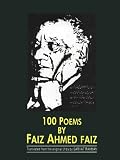
100 POEMS | $2.99 | Buy on Amazon |
His writing developed amid political upheaval and personal constraint. The Academy identifies Dast-e Saba and Zindan Namah as collections focused on prison life. Their subject connects his literary work with imprisonment, but it does not make every poem a direct autobiographical record. Faiz later went into exile in Beirut and remained abroad until 1982, according to the same biography.
How did Faiz combine love poetry and political poetry?
Faiz worked within inherited Urdu forms, especially the ghazal, while allowing them to carry social and political meanings. The Faiz Foundation Trust’s account of his work describes this use of the ghazal and also points to qawwali and geet as forms through which he conveyed humanism.
#1 Best Overall
That combination helps explain why his poetry can be read on more than one level. The language of love and longing belongs to a literary tradition in its own right; in Faiz’s hands, it could also speak to collective hardship and hopes for change. The political dimension does not erase the emotional one, nor does the use of traditional forms make the poems merely conventional.
In a 1982 interview preserved by Dawn, Faiz said a writer should “honestly reflect his experience instead of doing verbal jugglery or imitating others.” The remark offers a concise account of his emphasis on honest expression, rather than a formula for reducing every poem to a political message.
Why is Faiz associated with peace and humanism?
The humanist strand of his poetry provides a basis for associating his work with peace: it directs attention to human experience and suffering rather than treating political conflict as an abstraction. The Trust’s description of his use of qawwali and geet to convey humanism, alongside the social resonance it finds in his ghazals, helps show how the literary and ethical strands meet.
A 2018 Scroll article frames Faiz as a “universal symbol of peace, democracy.” That wording is best understood as a reading of his legacy, not proof that all audiences share the same view or that his reach has been quantified. His writing and public history make the association intelligible; the label remains an interpretation.
Rank #3
What do imprisonment and exile add to his legacy?
The prison-focused collections connect Faiz’s poetry to confinement as both a lived political context and a subject of writing. They are an important part of his work, but not its whole: his range also includes love, humanist concerns and the transformation of traditional poetic forms.
Exile adds another dimension to the story. The Academy of American Poets records that Faiz lived abroad in Beirut until 1982. Together, imprisonment and exile help explain why readers often place his writing in relation to political power and dissent, while his craft keeps it from being only a biographical document.
Rank #4
What is known about Faiz’s Lenin Peace Prize?
Sources disagree on the year. The Academy of American Poets lists 1963, while Sindh Archives gives 1962 in its Faiz Ahmed Faiz profile. These are conflicting reports of the prize year, not evidence of two separate awards. Without a verified authoritative award record to resolve the discrepancy, neither year should be presented as settled.
Quick Recap
Best Value
Product prices and availability are accurate as of the date/time indicated and are subject to change. Any price and availability information displayed on Amazon at the time of purchase will apply.




