Quick wins for a faster PC:
Fix the driver behind crashes, sound loss and screen glitchesFind Drivers →Clear out junk files and repair common Windows errorsFree Scan →The close biplane chase and flooding submarine sequence in Mission: Impossible – The Final Reckoning feel intense for different reasons: one puts the camera close behind a moving aircraft, while the other traps the action inside a tilting, descending submarine set. Production accounts describe a combination of physical performance, specialized filming setups and editing shaped by real-world constraints. “Brain-melting” is a colorful description of the viewing experience, not a measured effect on the brain.
How did they film the biplane sequence?
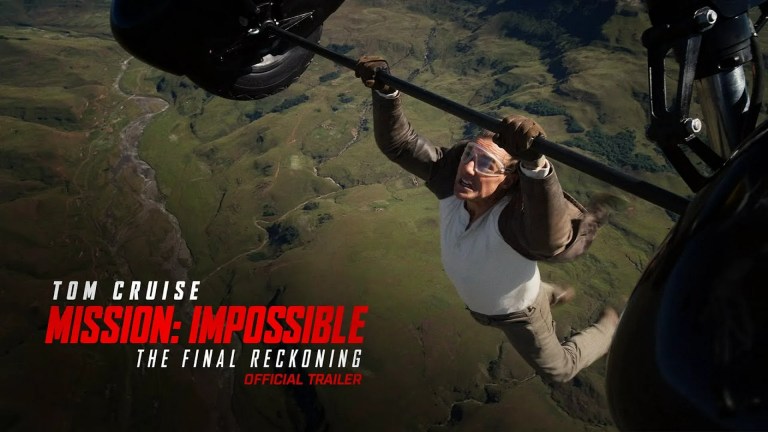
The aerial photography was designed to make the viewer feel unusually close to the aircraft. Cinematographer Fraser Taggart said the crew chased the biplane from about five feet behind it rather than relying on the more conventional long-lens approach. As he put it, the goal was to make viewers feel “like they’re sitting on the tail of the plane.” Taggart described the camera work for the American Society of Cinematographers.
The production used two helicopters with different camera rigs and lens looks, plus a Yak aircraft for additional angles. The sound department also built a communications system so the crew could speak with the biplane pilot. Taggart said the team limited the number of aircraft involved with safety in mind.
Some shots depended on the changing light and shadow created by the plane’s movement. Taggart said Cruise flew the biplane for some of the filming so the production could capture those real changes during a hammerhead-stall turn. That does not mean he piloted the aircraft for every shot in the sequence.
#1 Best Overall

- Read Before You Buy — No Video Output: These adapters support charging and USB 2.0 data transfer, but cannot transmit video signals. Except for standard USB webcams (which use USB data only), they are not compatible with HDMI/DisplayPort cables, video-capable USB-C hubs, or docking stations with video output.
- Convert USB-A Ports to USB-C: Designed to connect USB-C earphones, cables, flash drives, card readers, and other USB-C accessories to standard USB-A ports. Plug-and-play with no drivers or software required.
- Aluminum Alloy Housing: Built with a sturdy aluminum alloy shell that aids in heat dissipation and protects against daily wear and scratches. Designed to maintain a stable and secure connection.
- Compact & Travel-Friendly: The ultra-compact design allows the adapter to stay plugged into your device without blocking adjacent ports or adding bulk, reducing wear and tear on your original USB ports.
- 12-Month Warranty: Backed by a 12-month manufacturer warranty for peace of mind. Designed to meet strict quality control standards for reliable everyday performance.
Was Tom Cruise really on the plane?
Production accounts describe Cruise performing physically demanding work on the aircraft, including wing-walking. In a translated report of remarks at a Japanese event, Cruise described the wind pressure as making it difficult to breathe and said he had trained for the stunt. Because the report is translated, that description is best treated as a report of his remarks rather than an English verbatim quotation. The official Japanese film-site report covers the event.
That physical performance is only part of what appears on screen: camera placement, aircraft coordination and editing shape the finished sequence. The production sources do not establish that every visible moment was captured as one uninterrupted take or that Cruise performed every aerial action himself.
Rank #2

- 5-in-1 USB-C Hub: Experience comprehensive connectivity featuring a Power Delivery input, two USB-A 2.0 ports, a USB-A 3.0 port, and an HDMI port. (Note: The USB-C power delivery input port is only for connecting an external wall charger to power your laptop and cannot power peripheral devices.)
- 90W Pass-Through Charging: Achieve optimal charging with 90W pass-through power to your laptop, supported by a total input of 100W, with the hub reserving 10W for operational efficiency. (Note: Wall charger not included.)
- Quick Data Transfers: Accelerate your productivity with rapid data transfers using a high-speed 5Gbps USB 3.0 port and two 480Mbps USB 2.0 ports.
- 4K HDMI Display: Enhance your visual experience with a hub capable of delivering 4K resolution at 30Hz in both mirror and extend modes. Please note that this hub is compatible with MacBook (macOS 12 and newer), Windows 10 and 11, ChromeOS, and laptops equipped with DP Alt Mode and Power Delivery. Note: This device is not compatible with Linux.
- What You Get: Anker USB-C Hub (5-in-1, 4K HDMI), welcome guide, 18-month warranty, and our friendly customer service.
How did they film the flooding submarine scene?
The submarine interior was a physical set built for movement, not simply a static room dressed to look underwater. Taggart said the production built two tanks at Longcross Studios in England: a deep-dive tank and a separate tank for submarine interiors. A large gimbal could pitch and roll the interior set, then descend as the flooding action unfolded.
The moving set let the crew change the characters’ physical environment during the scene. Tilting walls and shifting orientation give the viewer unstable visual and spatial cues, while the enclosed submarine setting leaves little open space to counter them. Taggart said department heads and safety staff met regularly to develop the stunts, particularly the underwater work. He characterized much of the stunt work as physical, with some computer-generated imagery used for safety or effects.
Rank #3

- Sleek 7-in-1 USB-C Hub: Features an HDMI port, two USB-A 3.0 ports, and a USB-C data port, each providing 5Gbps transfer speeds. It also includes a USB-C PD input port for charging up to 100W and dual SD and TF card slots, all in a compact design.
- Flawless 4K@60Hz Video with HDMI: Delivers exceptional clarity and smoothness with its 4K@60Hz HDMI port, making it ideal for high-definition presentations and entertainment. (Note: Only the HDMI port supports video projection; the USB-C port is for data transfer only.)
- Double Up on Efficiency: The two USB-A 3.0 ports and a USB-C port support a fast 5Gbps data rate, significantly boosting your transfer speeds and improving productivity.
- Fast and Reliable 85W Charging: Offers high-capacity, speedy charging for laptops up to 85W, so you spend less time tethered to an outlet and more time being productive.
- What You Get: Anker USB-C Hub (7-in-1), welcome guide, 18-month warranty, and our friendly customer service.
Director Christopher McQuarrie also went underwater and communicated with Cruise using hand signals, according to the official Japanese event report. The report attributes to McQuarrie an increase in filming productivity from around six shots a day to around 24 while he directed in the water. Those are reported figures for this production’s underwater workflow, not a general measure of how quickly underwater scenes can be filmed.
Why do these stunts feel so intense?
| Set piece | What the camera and set do | Source of intensity |
|---|---|---|
| Biplane pursuit | Helicopter camera rigs and a Yak captured different angles; Taggart reported a pursuit from about five feet behind the biplane. | Proximity to the aircraft, rapid movement and changing light make the image feel immediate. |
| Flooding submarine | A submarine interior on a gimbal could pitch, roll and descend in a tank. | The enclosed space, flooding action and shifting orientation make the setting feel unstable. |
The scenes also had to be adjusted to what performers and equipment could actually do. Editor Eddie Hamilton said filming the biplane sequence began in South Africa in February 2022. He described previs—the planning version of a sequence—as a rough guide because the physics of putting Cruise on a plane wing or working in a large submarine set or underwater changed the timing. “The pace of any sequence that you build in previs is just not going to reflect the real physics of what’s gonna happen,” he said. Hamilton discussed the production and editing in Art of the Cut.
Rank #4

- Dual Converters, Infinite Potential:Includes 2× USB C male to USB A female adapters and 2× USB A male to USB C female adapters. Perfect for a wide range of uses—tablets with Bluetooth keyboards, expand USB ports on macbook, and more. Two different converters for all your daily needs
- Next-Level 10Gbps & 3A Charging: No more slow 480Mbps, this usb to usb c adapter has a transfer speed of up to 10Gbps, allowing you to do more transferring in less time. This usb adapter fits both USB A and USB C charger, supporting up to 3A fast charging
- Upgraded Exquisite Craftsmanship: With an aluminum alloy housing and metal connector, the usbc to usb adapter is extremely durable and sturdy. Rigorously tested to withstand more than 10,000 times of plugging and unplugging, ensuring long-lasting performance
- Broad Compatible: The usb c to usb adapter widely supports all USB C/ USB A devices like laptops, tablets, cellphones, car chargers, and phone chargers. Such as compatible with MacBook Pro/Air 2023/2022, Thunderbolt 4/3 Devices,Apple MagSafe Watch 9/8/7/SE/Ultra, iPad Pro 2022/2021, Samsung Galaxy S23/S20/S10, and iPhone 17/16/15 Pro. Plug and play
- Please Note: To reach 10Gbps speed, keep the cable under 3.3 ft. For USB A Male to USB C adapters, try flipping the USB C connector. USB C Male to USB A adapters support bidirectional 10Gbps transfer within 3.3 ft
How much of the submarine scene was cut?
Hamilton said the submarine sequence began at around 30 minutes and was edited down to roughly 15 minutes. He also recalled that test-screening audiences said an earlier version was too long. These are his approximate editing figures and account of those screenings, not independently measured audience consensus.
That reduction helps explain why a sequence built around a complicated physical setup can feel relentless in the finished film: the audience sees a selected, compressed progression of events rather than the full duration of the material captured or assembled during editing.
What’s actually slowing this PC down?
Pick the symptom - the matching free tool is one click away.
Best Value

- 5-in-1 Connectivity: Equipped with a 4K HDMI port, a 5 Gbps USB-C data port, two 5 Gbps USB-A ports, and a USB C 100W PD-IN port. Note: The USB C 100W PD-IN port supports only charging and does not support data transfer devices such as headphones or speakers.
- Powerful Pass-Through Charging: Supports up to 85W pass-through charging so you can power up your laptop while you use the hub. Note: Pass-through charging requires a charger (not included). Note: To achieve full power for iPad, we recommend using a 45W wall charger.
- Transfer Files in Seconds: Move files to and from your laptop at speeds of up to 5 Gbps via the USB-C and USB-A data ports. Note: The USB C 5Gbps Data port does not support video output.
- HD Display: Connect to the HDMI port to stream or mirror content to an external monitor in resolutions of up to 4K@30Hz. Note: The USB-C ports do not support video output.
- What You Get: Anker 332 USB-C Hub (5-in-1), welcome guide, our worry-free 18-month warranty, and friendly customer service.
What the “brain-melting” description does—and doesn’t—mean
The phrase captures a possible subjective reaction to close aerial imagery and a moving, enclosed underwater set. The production accounts explain how those effects were created; they do not establish a scientific or medical effect on viewers. No brain or sensory study, named scientific statistic, or audience survey about the film’s effects is established by the cited accounts, so the sensation is best understood as a metaphor for disorienting or overwhelming action.
Quick Recap
Product prices and availability are accurate as of the date/time indicated and are subject to change. Any price and availability information displayed on Amazon at the time of purchase will apply.