These two Kathak recital excerpts show tabla accompaniment as an active musical conversation: the player supports danced and recited material, marks the taal’s cycle, and at times steps forward for a solo passage. Aneesh Pradhan’s Scroll.in feature describes Saswati Sen dancing Dhamar with Shubhankar Bannerjee, and Rohini Bhate dancing Jhaptaal with Arvind Kumar Azad. Dhamar here has 14 matras; Jhaptaal has 10. The observations below are Pradhan’s descriptions of the recordings, not an independent audio analysis.
What to listen for in the Dhamar excerpt
Saswati Sen and Shubhankar Bannerjee
In the first example, Saswati Sen performs in 14-matra Dhamar taal, accompanied by tabla player Shubhankar Bannerjee. Pradhan describes the tabla as anticipating and reproducing the Kathak repertoire Sen dances and her guru, Birju Maharaj, recites. The accompaniment is therefore not simply a steady background: it responds to material shared between spoken rhythmic syllables and movement.
Pradhan also notes moments when Bannerjee moves into solo sections. Those passages shift the balance of attention toward the tabla before the dance and accompaniment resume their exchange. The Scroll feature presents this as a feature of this performance, not as a fixed format for every Dhamar recital.
What changes in the Jhaptaal excerpt
Rohini Bhate and Arvind Kumar Azad
The second example features Rohini Bhate in 10-matra Jhaptaal with tabla player Arvind Kumar Azad. The excerpt begins with a tabla solo, which Pradhan describes as conventional in Kathak recitals; he also describes further solo passages interspersed with the dance. The feature points to the Jhaptaal exposition at 7:30 in the recording.
Quick wins for a faster PC:
Scan for outdated or missing drivers - takes under a minuteDriver Scan →Clear out junk files and repair common Windows errorsFree Scan →Nadanam summarizes Jhaptaal’s grouping as 2+3+2+3 and describes its feel as lighter and swinging. That is a teaching-oriented description of this taal, not a substitute for hearing how a performer shapes a particular cycle. The 10-matra cycle and the Dhamar excerpt’s 14 matras are different rhythmic frameworks, not interchangeable labels for the same tabla pattern.
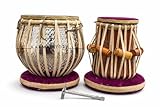
Taal, theka, and the accompanist’s choices
A taal is the defined rhythmic cycle; a theka is a tabla pattern that expresses that cycle. As Tabla Legacy explains, variations in the theka should preserve the boundaries of the taal. This distinction helps explain how a player can vary the surface, answer dance material, or take a solo without losing the underlying cycle. Tabla Legacy also notes the use of open bols in Dhrupad and Dhamaar.
In the two Scroll examples, the useful comparison is not which taal is more difficult or expressive. It is how each excerpt presents the relationship between cycle and performance: the Dhamar description emphasizes accompaniment to danced and recited repertoire, while the Jhaptaal excerpt opens with a tabla solo and later alternates solo passages with dance. These are observations about the cited recordings, not a ranking of the artists or rhythms.
#1 Best Overall

- Brass Bayan -Head Diameter 9.5 in// 12 in tall 6.6 lb
- Dayan - Wood-Head Diameter 5.5'' in // 11'' in tall 8.4 lb
- Quality Product crafted in India, Handmade Fine Tabla Set
- Includes: padded tabla gig bag, tuning hammer, high-quality cushions, and covers
- PLEASE NOTE - This is a Handmade Instrument, Minor Nano Scratches/Chips or Dust Might be Present
Why these rhythms matter in Kathak study
Formal syllabi corroborate that both rhythms are studied in Kathak, while also showing that course structures vary. Banaras Hindu University’s Kathak syllabus includes detailed study of Dhamar and Jhaptal in another semester. Sardar Patel University’s Performing Arts syllabus includes Jhaptaal theka, dance bols, laya variations, and practice with tabla and nagma. These documents demonstrate curricular study at those institutions; they do not establish a sequence followed by every Kathak school.
The broader practical point is that a Kathak accompanist must be ready to work beyond these two cycles. Pradhan’s feature also names Ashtamangal and Jaitaal as less popular cycles dancers may explore. They are not the focus of the excerpts here, but they illustrate why accompaniment calls for familiarity with a wider rhythmic repertoire.
Quick Recap
Rank #4

- Steel bayan, 9-9.25" head, handmade goat-skin puddi, syahi hand-applied and centred.
- Sheesham wood dayan, 5-5.5" head, tuned to C#.
- Two velvet cushion rings, carry bag, tuning hammer.
- Individually tested before packing, made by craftsmen in Delhi.
- Maharaja Musicals. Since 1999. Made in India.
Rank #3

- 3KG black brass bayan, rich resonance and deep sustain.
- Handmade goat-skin puddi, syahi hand-applied and centred by craftsman Md. Ashraf in Delhi.
- Dense Sheesham dayan, 5-5.5 inch head, tuned to C#.
- Two velvet cushion rings, carry bag, tuning hammer.
- Individually tested before packing. Maharaja Musicals, since 1999.
Rank #2
Sources and recordings
- Scroll.in: Aneesh Pradhan, “Listen: How tabla players accompany Kathak dancers in Dhamar taal and Jhaptaal”, published May 10, 2025. The feature is based on Pradhan’s book Tabla: A Performer’s Perspective.
- Nadanam: “The Music of Kathak — Tabla, Lehra, Taals”, page checked October 8, 2026.
- Tabla Legacy: “Taal and Theka”, page checked October 8, 2026.
- Banaras Hindu University: Kathak – Dance syllabus, PDF checked October 8, 2026.
- Sardar Patel University: Syllabus for Performing Arts (All Subject), PDF checked October 8, 2026.
Product prices and availability are accurate as of the date/time indicated and are subject to change. Any price and availability information displayed on Amazon at the time of purchase will apply.




