The Tool Desk
Outbyte PC Repair FREEClear out junk files and repair common Windows errorsFree Scan →Outbyte Driver Updater FREEScan for outdated or missing drivers - takes under a minuteDriver Scan →For Samrat Choudhury, The Braided River is a travelogue because it begins with travel—but the journey is also a way to write about history, people and the forces shaping their lives along the Brahmaputra. In a June 2021 interview, he describes a river that resists the tidy image of a single channel and argues that class, with an overlap with caste, can matter more than national borders in how people experience it.
Why did Samrat Choudhury call the book a travelogue?
Choudhury’s answer starts with the journey itself. “In my understanding, it is the travel, because styles of writing can and do vary from one writer to another,” he said in the June 2021 interview. Travel is the book’s foundation, but it is not an excuse for a string of passing impressions. He said his objective was “to try and follow humbly in the footsteps of the masters of this craft”—travel writers who look beyond shallow observations and personal anecdotes.


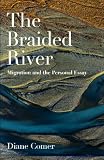
That distinction helps explain the book’s blend of forms. The publisher’s description presents it as a journey that combines travel encounters and memoir with history and contemporary environmental, military and political questions. Choudhury follows the river from the edge of Tibet, where it enters India, to its confluence with the Ganga in Bangladesh. The bibliographic record lists the HarperCollins Publishers India edition as a 2021 book of 409 pages. The Google Books record provides the edition description.
How does he describe the Brahmaputra?
Choudhury rejects the picture of a river as one orderly channel running between two banks. “The Brahmaputra is not one neat channel between two banks. It is a vast and unruly collection of these braids that wax and wane with the seasons,” he said. In his account of upper Assam, the river is a shifting system of channels rather than a fixed line on a map.
He called the image of a neat channel “a canal rather than a living river” and described it as a fallacy. This is Choudhury’s observation from his travels and his argument about how to imagine the river—not an official hydrological measurement. In the interview, he characterized the river in upper Assam as “as much as 16 km-17 km wide”; that figure should likewise be read as his stated description, not as a verified or current measurement.
What does the river reveal about people and borders?
Choudhury’s social argument is that the river does not mean the same thing to everyone who lives alongside or moves across it. Some may experience it as an obstacle; others, depending on their habitat and occupation, may encounter it as a route that connects communities. He points to historical river travel as part of that connective role.
He also argues that national boundaries alone do not explain these differences. “The big differences in people’s equations with the river are not determined by national boundaries but by class, which also has an overlap with caste,” he said. That is the author’s interpretation, not a universal finding about every river community. His interview’s remarks on migration, the NRC, the Citizenship (Amendment) Act and border attitudes belong to the political context in which he spoke in June 2021; they should not be mistaken for an account of conditions in 2026.
Independent reader supportYour contribution helps us test, update, and keep practical guides available for everyone.What kind of reading experience does the book offer?
The Indian Express review published in May 2021 describes the book’s short thematic chapters as a mix of historical analysis, travel anecdotes and character sketches. The reviewer praised its research and attention to people, while also finding some chapter endings abrupt and the treatment of Bangladesh limited. Those are one critic’s assessments, not a consensus judgment.
For readers drawn to documentary storytelling, the book’s appeal lies in the way a journey can open onto larger questions without losing sight of particular places and people. Its scope is travel, memoir and history, with contemporary issues woven into the route rather than presented as a standalone survey of current river policy or environmental data.
Quick Recap
Best Value
Sources
- Scroll.in / Force, “Interview: ‘The Braided River’ author Samrat Choudhury on writing about the Brahmaputra,” 19 June 2021.
- Google Books, The Braided River: A Journey Along the Brahmaputra, HarperCollins Publishers India, 2021.
- Rajat Ubhaykar, The Indian Express, “How ‘The Braided River’ spins a unique narrative around the mighty Brahmaputra,” 23 May 2021.
Product prices and availability are accurate as of the date/time indicated and are subject to change. Any price and availability information displayed on Amazon at the time of purchase will apply.