Quick wins for a faster PC:
Fix the driver behind crashes, sound loss and screen glitchesFind Drivers →Clear out junk files and repair common Windows errorsFree Scan →Harmony describes how pitches sound together and how their relationships change through a passage. To explain it, identify the intervals or chords, describe how the notes are arranged, and say how the harmony moves— including where it sounds stable, tense, or resolved. The terms below use an introductory Western music-theory framework; they are not a universal account of every musical tradition.
What harmony means
In an introductory account, melody is the more prominent line, while harmony describes the pitches interacting with it and with one another. It is often called the “vertical” aspect of music because it considers notes sounding together, but harmony also unfolds over time: the interaction of lines, accompaniment, chord arrangement, and movement between harmonic areas all matter. CUNY Pressbooks’ BMCC edition of Understanding Music introduces the vertical perspective, while Open Yale’s lecture on harmony uses a definition of a chord as two or more simultaneous pitches. By contrast, musictheory.net’s introductory lesson defines a chord as three or more notes. These are different teaching conventions, not a single threshold that applies to all music.


Describe the pitches and chords
Intervals: the distance between pitches
An interval names the distance between two pitches. For a precise description, use both the note spelling and the interval’s semitone distance: enharmonically equivalent notes can sound alike in equal temperament yet have different interval names because of their spelling. For an introduction to the distinction between interval size and interval identity, see musictheory.net’s lessons on generic intervals and specific intervals.
Chords: pitches considered together
Name a chord when you can; otherwise, describe its notes and quality. In the introductory triad model, a triad contains a root, third, and fifth. C–E–G, for example, forms a C-major triad. This is a useful starting point, not a claim that every musical grouping must fit that definition.
The Tool Desk
Outbyte PC Repair FREEClear out junk files and repair common Windows errorsFree Scan →Outbyte Driver Updater FREEFix the driver behind crashes, sound loss and screen glitchesFind Drivers →#1 Best Overall
Explain how the notes are arranged
Voicing describes the arrangement of a chord’s notes: how they are distributed across registers or instruments, and which chord tone is lowest. For a triad, the lowest note also identifies its inversion:
- Root position: the root is lowest.
- First inversion: the third is lowest.
- Second inversion: the fifth is lowest.
Two passages can use the same chord names but sound different because their voicings differ. Musictheory.net’s lesson on voicing chords explains this vocabulary.
Rank #2
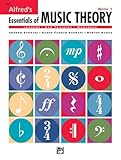
- An all-in-one music theory course designed for students of any age — whether listeners or performers — who want a solid understanding of the language of music
- Covers foundational concepts including staff, notes, pitches, clefs, time signatures, note values, dynamics, flats, sharps, and whole and half steps across 25 concise lessons
- Combines reading and writing exercises with ear-training support (CDs sold separately) and unit reviews to reinforce learning and test knowledge retention
- Compatible with optional computer software featuring randomized drilling and scorekeeping for interactive, self-paced study
- Part of a complete product line including Teacher's Answer Keys, Flash Cards, Double Bingo games, and Reproducible Teacher's Activity Kits for studio and classroom use
Describe how the harmony moves
Progression and function
A chord progression is the sequence of chords in a passage. If the music uses common-practice Western tonality, you can also describe a chord’s function—for example, tonic, predominant, or dominant—and how the progression approaches the tonic. Musictheory.net’s common chord progressions lesson presents a major-key model that includes approaches through V or vii° and related circle progressions. Treat that chart as an explanatory tool for this tonal framework, not as a rule composers must follow or a template for all music.
Cadence and phrase ending
A cadence is a chord pattern associated with the end of a phrase. Describe whether the ending feels conclusive or leaves an expectation of continuation; in the introductory lesson, a half cadence and an authentic cadence are two distinct types. The labels are useful when the passage fits the style and theory being discussed. See musictheory.net’s lesson on phrases and cadences.
Describe stability, tension, and resolution
Consonance and dissonance can help describe how pitches relate and how a passage sounds in context. Rather than treating consonance as “good” or dissonance as “bad,” describe the effect and what happens next: for example, a dissonant sonority creates tension that resolves into a more stable harmony, or the passage sustains an unsettled sound. The Open University’s listening lesson on tension and resolution discusses these effects in progressions. A textbook account in CUNY Pressbooks’ BMCC edition also cautions that what listeners hear as sweet or harsh can be shaped by musical socialization.
A practical description template
When writing or speaking about a passage, move from what is audible to the more technical label if you know it:
Rank #4

- Format: Book & 2 CDs
- Category: Textbook - General
- Contributors: By Andrew Surmani, Karen Farnum Surmani, and Morton Manus
- Pub Date: 8/2004
- Series: Essentials of Music Theory
- Identify the notes, intervals, or chord quality you can hear or read.
- Describe the voicing and, where relevant, which chord tone is in the bass.
- Explain the chord sequence or movement between harmonic areas.
- Say how the passage’s stability or tension changes, and whether the phrase ending feels conclusive or open.
For example: “The passage uses a C-major triad (C–E–G), with the third in the bass, then moves to another chord. The shift increases tension before the phrase settles.” This combines chord identity, inversion, movement, and effect without assuming that every listener hears the passage in exactly the same way.
Independent reader supportYour contribution helps us test, update, and keep practical guides available for everyone.Where to learn the terminology
musictheory.net’s free lessons cover intervals, chords, voicing, progressions, and cadences. Its Tenuto app is described as an iPhone and iPad tool with exercises and calculators for intervals, chords, and scales.
Recommended Free Tools
Quick Recap
Product prices and availability are accurate as of the date/time indicated and are subject to change. Any price and availability information displayed on Amazon at the time of purchase will apply.




