What’s actually slowing this PC down?
Pick the symptom - the matching free tool is one click away.
Music shaped Virginia Woolf’s writing as both a lived experience and a way to think about literary form. Her listening life, musical references, and the rhythms and repetitions of her prose all matter—but no single score or musical model explains her novels. Scholars instead trace several related influences, from fugue and opera to music’s cultural and political meanings.
Music was part of Woolf’s life, not just a metaphor
Woolf’s connection to music began in experience. Emma Sutton’s Virginia Woolf and Classical Music: Politics, Aesthetics, Form places her writing alongside her musical education, concert-going, recorded listening, and friendships with musicians. Sutton’s introduction describes Woolf attending performances at Covent Garden and private concerts, belonging to the National Gramophonic Society, and listening regularly to recorded music. Edinburgh University Press describes Sutton’s study as an examination of these musical contexts alongside Woolf’s writing.


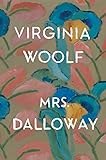


The collection Virginia Woolf and Music similarly draws on diaries, letters, fiction, and accounts by Woolf’s contemporaries. Its subject is broader than musical allusions in novels: it also considers Woolf’s musical background, Bloomsbury culture, and music’s place in modernism. Indiana University Press outlines the collection’s scope.
Music offered more than one way to shape prose
Allusion and cultural meaning
Woolf’s fiction and criticism refer to composers including Bach, Mozart, Beethoven, and Wagner. Such references can do cultural work as well as signal a musical interest. Sutton considers how music intersects with questions of class, gender, sexuality, national identity, anti-Semitism, and pacifism. Music in Woolf, on this account, is not sealed off from the social world: what it means can depend on who listens, what tradition it evokes, and the politics attached to that tradition.
Outdated Drivers Are Slowing You Down
One free scan finds every outdated or missing driver and matches the right update for your exact hardware.Free scan · exact hardware matchWindows Errors? Fix Them Before They Spread
Repair common Windows errors and clear accumulated junk for a smoother, more stable PC - no reinstall needed.Free scan · no reinstall#1 Best Overall
Rhythm, repetition, and consciousness
Work on Woolf’s short fiction examines music in relation to narrative technique, repetition, subjectivity, and social or political vision. The discussion centers on “Moments of Being: ‘Slater’s Pins Have No Points’” and also includes “A Simple Melody” and “The String Quartet.” These are useful places to look for the interplay of musical ideas and narrative form, though the chapter abstract alone does not establish a detailed reading of any particular passage. The chapter’s abstract describes its focus and critical questions.
Fugue and larger-scale form
A chapter on The Waves argues that the novel’s form is shaped by Bach’s music. It develops that interpretation through medical, musical, and military ideas about fugue. This is a scholar’s account of the novel’s formal relationship to music, not proof that Woolf intended the book to reproduce a particular score. The chapter summary presents that argument.
Rank #2
Music could suggest what ordinary language cannot
The Open University’s educational account presents music as a way Woolf explored communication beyond ordinary language. It discusses a passage in Night and Day where a character compares a painting to an “old English song.” The account connects that comparison with music’s expressive force, order, and contemporary ideas about English folk song, landscape, and early music. This is one interpretation of the passage, rather than a definitive account of Woolf’s intention. Read the Open University’s discussion of music in Woolf.
What Woolf said about music and books
The University of St Andrews Virginia Woolf & Music project reports Woolf’s statement: “I always think of my books as music before I write them.” The project page reports the quotation, but the material available there does not give the original letter’s date or surrounding context. The line is suggestive, but it should not be treated on its own as evidence that any novel follows a particular musical structure.
Rank #3
How to understand music’s influence
The most useful approach is to treat music’s role as varied rather than as a single template. In Woolf’s writing, it may be a remembered sound or cultural reference, a way to explore communication and perception, or a formal analogy that critics use to explain rhythm, repetition, or the arrangement of a work. The strongest claims remain specific: identify the text or musical idea, and distinguish what a scholar argues from what the evidence establishes about Woolf’s own intentions.
For a fuller account, Sutton’s Virginia Woolf and Classical Music: Politics, Aesthetics, Form is devoted directly to the subject. The Indiana University Press collection Virginia Woolf and Music offers another scholarly route, bringing musicology and literary criticism into conversation with gender studies, personal documents, fiction, and Bloomsbury culture.
Quick Recap
Best Value
Product prices and availability are accurate as of the date/time indicated and are subject to change. Any price and availability information displayed on Amazon at the time of purchase will apply.




