Free tools Windows power users keep installed
One-click scans. No signup required.
There is no standard payment for handing a manuscript to a publisher. Your contract determines whether you receive an advance, how much it is, and which milestones trigger payment. Some small, independent, and academic presses offer royalties but no advance, and there is no representative current average or median that can reliably predict what an author will receive.
What does a publisher pay when you submit or deliver a manuscript?
Submitting a manuscript is not, by itself, a payment event. If a publisher makes an offer, the contract sets the advance—if there is one—and the schedule for paying it. “Delivery” and “acceptance” can be distinct contractual milestones: a payment may be due after the publisher accepts a completed manuscript, rather than when you hand it in. The contract may define acceptance, set a deadline for the publisher to respond, and specify when each installment is due.


Many small, independent, and academic presses may offer no advance. That fact alone does not establish whether an offer is good or bad. Compare the royalty terms, rights, services, and publisher’s record as well as the advance. The Authors Guild’s guidance is primarily U.S.-based; contract examples are references, not universal industry rates or legal advice.
How an advance works
An advance is money paid against future royalties, not a bonus on top of them. The publisher credits royalties earned on the book against the advance. If the book has not earned out, the author ordinarily receives no additional royalty payments; if it earns more than the advance, later royalties may be payable under the contract.
Quick wins for a faster PC:
Clear out junk files and repair common Windows errorsFree Scan →Scan for outdated or missing drivers - takes under a minuteDriver Scan →Repair Windows errors before they cause bigger problemsFix Now →#1 Best Overall
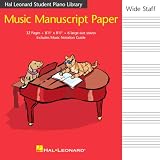
- Wide Staff Manuscript Paper
- Perfect for Students
- 32 8–1/2'' x 8–1/2''
- Six Staves per Page
- 32 Pages
A worked example—not an average
The Authors Guild gives this illustration: a $20,000 advance on a $20 book with a 7.5% royalty produces $1.50 per copy. At that rate, it would take 13,334 copies to earn out the advance. This is arithmetic in a worked example, not a survey of typical advances or a prediction of sales. The actual calculation depends on the contract’s royalty basis and terms.
When the advance is paid
The Authors Guild reports that advances are commonly split into two to six installments, with three or four most common. A common three-part schedule is approximately one-third at signing, one-third at manuscript acceptance, and one-third at publication. These are reported patterns, not guarantees; larger advances may have more installments, and individual contracts can use different milestones.
As a result, acceptance may trigger only one installment, not the full advance. Check the exact amounts, milestone definitions, and payment due dates in your agreement. In particular, find out what happens if the publisher requests revisions, does not accept the manuscript by a stated deadline, or delays publication.
How much of the advance reaches you?
The advance in an offer is generally a gross amount, not necessarily the cash you can spend. The Authors Guild says agents commonly take a 15% commission from an advance. On a $20,000 advance, that would be $3,000, leaving $17,000 before taxes, assuming a 15% commission under the agency agreement. This is an illustration, not a statement about every agent or an estimate of tax owed. Check your agency agreement and seek qualified tax advice for your circumstances.
The Tool Desk
Outbyte PC Repair FREEClear out junk files and repair common Windows errorsFree Scan →Outbyte Driver Updater FREEFix the driver behind crashes, sound loss and screen glitchesFind Drivers →Why royalty percentages need context
A royalty rate alone does not tell you how much you will earn. The contract should specify whether the percentage applies to the book’s retail or list price, or to the publisher’s net receipts, and should set out terms by format, any escalation thresholds, deductions, reserves against returns, and the schedule for statements and payments.
For reference, the Authors Guild’s Model Trade Book Contract commentary gives example terms of 7.5% of retail for trade paperback and 25% of net receipts for ebooks and electronically delivered audio. These are model or reference terms, not guaranteed market rates. In a separate UK educational-publishing illustration, the Society of Authors shows how the basis changes the result: a £10 list price less a 40% bookseller discount leaves £6 in net receipts; a 10% royalty on that amount is 60p per copy. That example is specific to its educational-publishing context and should not be generalized to other books or territories.
Do you have to repay an advance?
Ordinarily, an author does not have to return an advance simply because royalties fail to cover it. The Authors Guild’s guidance qualifies that answer: a breach of contract, such as failing to deliver on time, may trigger repayment. The result depends on the agreement and applicable law, so review repayment and breach clauses with a qualified publishing-contract professional before signing.
Independent reader supportYour contribution helps us test, update, and keep practical guides available for everyone.How to compare publishing offers
Do not judge an offer by its advance alone. Compare the full financial terms and what the publisher is asking you to grant or do.
Best Value

- Used Book in Good Condition
- Advance: Confirm the total amount, whether it covers one book or a multi-book commitment, and how it is divided into installments.
- Payment milestones: Identify the precise definitions of delivery and acceptance, response deadlines, payment dates, revision duties, and consequences of rejection or delay.
- Royalties: Check the calculation base, rates for each format, escalation thresholds, deductions, reserves against returns, and statement and payment frequency.
- Rights: Review the formats, territories, languages, and subsidiary rights granted, the length of the term, and the conditions for rights to revert to you.
- Representation and expenses: Account for any agent commission and any deductions the contract authorizes.
- Publication and promotion: Examine the publisher’s distribution and marketing commitments alongside the work or spending expected from you.
The Authors Guild’s contract resources, including its model trade-book contract, can help you identify terms to discuss. Poets & Writers also provides a general U.S. overview of book publishing and contract considerations. Neither replaces advice tailored to your specific agreement.
Quick Recap
Product prices and availability are accurate as of the date/time indicated and are subject to change. Any price and availability information displayed on Amazon at the time of purchase will apply.




