PC Slower Than It Used to Be?
A free scan shows the junk files, broken settings and background clutter dragging Windows down - then fixes them in one click.Free scan · Windows 10 & 11Outdated Drivers Are Slowing You Down
One free scan finds every outdated or missing driver and matches the right update for your exact hardware.Free scan · exact hardware matchRead music by combining three things: the clef identifies the staff’s pitch map, the note’s position shows its pitch, and its symbol shows how long to play or sing it. Start by finding the clef, name the note from its line or space, then read the rhythm and apply the key signature and any accidentals.
What the staff tells you
In common Western staff notation, the staff is made of five horizontal lines with four spaces between them. Each successive line or space is the next letter in the musical alphabet: A, B, C, D, E, F, G, then back to A. The clef at the beginning tells you which pitches those positions represent.
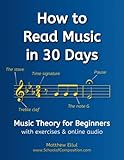


A notehead higher on the staff represents a higher pitch; one lower represents a lower pitch. Notes that extend beyond the five lines use short added lines called ledger lines. The staff position gives the note’s letter name, while the clef determines its specific pitch.
Read notes in treble clef
Treble clef is a common starting point. From the bottom line upward, the line notes are E, G, B, D, F. The spaces from bottom to top are F, A, C, E—often remembered with the word “FACE.”
Do these 3 things before closing this tab:
1Scan for outdated or missing drivers - takes under a minute2Clear out junk files and repair common Windows errors3Fix the driver behind crashes, sound loss and screen glitches#1 Best Overall
- An all-in-one music theory course designed for students of any age — whether listeners or performers — who want a solid understanding of the language of music
- Covers foundational concepts including staff, notes, pitches, clefs, time signatures, note values, dynamics, flats, sharps, and whole and half steps across 25 concise lessons
- Combines reading and writing exercises with ear-training support (CDs sold separately) and unit reviews to reinforce learning and test knowledge retention
- Compatible with optional computer software featuring randomized drilling and scorekeeping for interactive, self-paced study
- Part of a complete product line including Teacher's Answer Keys, Flash Cards, Double Bingo games, and Reproducible Teacher's Activity Kits for studio and classroom use
| Staff position, bottom to top | Treble-clef note |
|---|---|
| Bottom line | E |
| First space | F |
| Second line | G |
| Second space | A |
| Middle line | B |
| Third space | C |
| Fourth line | D |
| Fourth space | E |
| Top line | F |
Use the mnemonic as a starting point, not as a substitute for reading positions. If a note sits between two landmarks, count each adjacent line or space in sequence.
Recognize bass clef and the grand staff
Bass clef assigns different note names to the same staff positions, so do not carry the treble-clef map over unchanged. Piano music often uses a grand staff: treble clef above bass clef, joined to show a broad range of pitches. Middle C is a useful bridge between the two staves and is commonly shown on a ledger line between them.
Learn the clef printed on the part you are reading. Instrumental music can use different clefs, and the notation needed depends on the instrument and part.
Read rhythm, rests, and measures
Pitch and rhythm are separate dimensions. The notehead’s vertical position identifies pitch; the note’s shape and markings indicate duration. Stems, flags or beams, dots, and ties all contribute to how long a sound lasts. Rests indicate periods of silence.
The time signature, written near the beginning of the music, organizes beats into measures. Bar lines divide those measures. Horizontal spacing helps lay out the music, but it does not by itself tell you the exact duration of a note.
- Note and rest symbols: show sounds and silences, with their shapes indicating relative duration.
- Dots: change a note’s or rest’s duration.
- Ties: connect note durations so the sound continues across them.
- Beams and flags: group shorter notes visually.
- Time signature and bar lines: organize beats into measures.
Apply key signatures and accidentals
After identifying a note’s staff position and clef, check the key signature: the group of sharps or flats near the start of the music. It modifies the notes indicated by that signature. An accidental is a sharp, flat, or natural sign written beside a note to mark a pitch change locally. Read these symbols before deciding which pitch to play or sing.
Independent reader supportYour contribution helps us test, update, and keep practical guides available for everyone.A short practice routine
- Name the clef. Look at the start of the staff and decide whether the part uses treble, bass, or another clef.
- Name a few pitches. Choose a handful of notes and identify their line or space. Use the clef’s map and count from a familiar landmark when needed.
- Check the key signature and accidentals. Apply the markings to the note names you have identified.
- Clap the rhythm. Follow the note and rest symbols, ties, and time signature without worrying about pitch.
- Combine the skills. Read a short phrase, clap it, then play or sing it if you have an instrument or a reliable pitch reference.
Practise both pitch identification and rhythm, including ledger-line notes and the clefs relevant to your music. The Open University’s free introductory course, Introduction to music theory, includes activities on staves, clefs, pitch and rhythmic values, metre, and time signatures. Its page describes the course as “8 hours study”; that is the course’s stated study duration, not a guaranteed time to become fluent at reading notation.
Quick Recap
Product prices and availability are accurate as of the date/time indicated and are subject to change. Any price and availability information displayed on Amazon at the time of purchase will apply.




