Free tools Windows power users keep installed
One-click scans. No signup required.
Feluda endures because his mysteries do more than ask who did it: they lead readers through vivid places, Bengali language and culture, and a memorable circle of companions. Satyajit Ray’s detective stories combine the pull of a thriller with the pleasure of discovery—and their adaptations give the character another life on screen.
1. The mysteries keep the story moving
Feluda gives readers a clear reason to turn the page: a puzzle, a threat, or a case that needs solving. But Ray was interested in more than the final answer. In an interview reproduced by the Satyajit Ray Organization, he said whodunits interested him less than thrillers and described the detective’s end-of-story explanation as a limitation. That does not mean Feluda abandons detective-story conventions; it helps explain why suspense, atmosphere, and the journey matter alongside the solution. Read the interview excerpts.



2. A case becomes a way to discover the world
Feluda’s adventures make room for details that widen the story beyond its central mystery. A 2015 Scroll.in essay points to references ranging from Indian classical music and colloquial Bengali riddles to ancient Egyptian religious practices and nawab culture. Its case for Feluda’s appeal is that such material can make a reader curious and informed without bringing the suspense to a halt.
That mix suits a documentary-minded reader: the fictional investigation can also open a door onto history, art, or a place’s particular texture. The stories’ cultural detail is not a claim that every reader will respond in the same way; it is one of the pleasures the Scroll.in writer identifies.
#1 Best Overall
3. Bengali texture gives the stories their distinct voice
Feluda’s world is not a generic backdrop for a detective plot. Colloquial Bengali, local references, and culturally specific clues help shape how the stories sound and what their characters notice. The result is a particular sense of place that travels through translation without making the original texture irrelevant.
The Satyajit Ray Society describes Feluda as a body of 35 pieces of detective fiction and says Ray’s stories have been translated into all major Indian languages and several international languages. The Society does not give a current readership or sales total, so translation and longevity should not be mistaken for audience statistics. See the Society’s overview of Ray’s fiction.
4. The supporting cast changes the tone of every case
Feluda’s recurring companions and opponents keep the stories from becoming a series of interchangeable puzzles. Topshe narrates, giving readers a close view of the detective’s methods. Jatayu, the writer who joins the pair, brings comic company. Sidhu Jyatha contributes an unusually broad store of information, while the antagonist Maganlal Meghraj can be both threatening and comic.
As the Scroll.in essay observes, these figures bring different kinds of perspective and tone to the plot. Their presence lets a case shift between deduction, humor, shared adventure, and danger without losing its central thread.
Recommended Free Tools
Rank #3
5. Ray made Feluda work on screen as well as on the page
Ray adapted two Feluda tales for the cinema: The Golden Fortress and The Elephant God, according to the British Film Institute’s account of his work. The BFI’s Ray interview feature provides that adaptation context. In a Cineaste interview reprinted by the Satyajit Ray Organization, Ray called The Elephant God a children’s film that “works very well,” adding: “It’s got wit. It’s got film eye.” Read the interview excerpts.
The screen adaptations offer another route into the character, while Ray’s comments point to qualities that suit both forms: wit, visual imagination, and an adventure with more going on than the mechanics of a solution.
Independent reader supportYour contribution helps us test, update, and keep practical guides available for everyone.Where to start reading in English
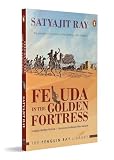
Penguin Random House India lists Feluda in the Golden Fortress, an English translation of Sonar Kella, first published in Bengali in 1971. The listing gives a December 2024 paperback edition, 184 pages, and ISBN 9780143456568. Those are details for that listed edition, not a claim that it collects every Feluda story; check the publisher page for current edition and availability information. View the Penguin Random House India listing.
Quick Recap
Product prices and availability are accurate as of the date/time indicated and are subject to change. Any price and availability information displayed on Amazon at the time of purchase will apply.
Do these 3 things before closing this tab:
1Repair Windows errors before they cause bigger problems2Fix the driver behind crashes, sound loss and screen glitches3Clear out junk files and repair common Windows errors



