The Empire of the Sikhs exhibition at London’s Brunei Gallery has closed, but its 2018 presentation offered a way to understand Maharaja Ranjit Singh beyond the familiar story of battles with the British. Through art, weapons, jewellery and diplomatic history, it framed his Punjab court as connected to a wider world.
What was the Empire of the Sikhs exhibition in London?
Organised by the UK Punjab Heritage Association, Empire of the Sikhs ran at SOAS’s Brunei Gallery from 12 July to 23 September 2018. It is a past exhibition, not a current event. SOAS’s South Asia Institute described it as bringing together more than 100 artworks and objects; a contemporary report by Scroll.in counted 130 objects. These are the figures given by the two sources, rather than a single reconciled total. SOAS South Asia Institute Annual Review 2017–2018; Scroll.in, 16 July 2018.


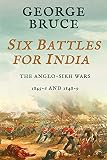

The exhibition’s framing emphasised diplomacy, international connections and the cosmopolitan character of Ranjit Singh’s court alongside military power. That emphasis offers a useful counterweight to a story told only as a contest with Britain; it is the exhibition’s interpretive lens, not a comprehensive account of the empire or the only way to interpret its history.
Who was Maharaja Ranjit Singh?
Ranjit Singh (1780–1839) ruled the Sikh Empire of the Punjab. SOAS dates the empire to 1799–1849 and describes its territory as spanning much of present-day Pakistan and northwest India. The institution notes that the Anglo-Sikh Wars of 1845–46 and 1848–49 ended in British victory. SOAS South Asia Institute Annual Review 2017–2018.
Do these 3 things before closing this tab:
1Repair Windows errors before they cause bigger problems2Fix the driver behind crashes, sound loss and screen glitches3Clear out junk files and repair common Windows errors#1 Best Overall
He was a military leader, but also a diplomat. A National Army Museum record for a miniature portrait of Ranjit Singh, dated circa 1839, describes him as a commander and skilled diplomat. It points to the Treaty of Simla, confirmed on 25 June 1838: in the context of British support for Shah Shuja’s claim to the Afghan throne, the agreement confirmed Ranjit Singh’s possession of Peshawar. The example makes clear why diplomacy belongs in the account alongside campaigns and territorial expansion. National Army Museum collection record.
How did the exhibition tell the story through objects?
The objects brought political history down to the scale of people, materials and skill. Scroll.in reported that the display included weapons and armour, jewellery associated with Ranjit Singh and Maharani Jind Kaur, Kashmiri shawls, paintings and European portraits. It also described a shield associated with General Hari Singh Nalwa, a prominent military figure connected with the empire. These are descriptions in the contemporary report, rather than claims of independent inspection.
One reported centrepiece was a howitzer described as combining French engineering skills with Sikh ingenuity. The exhibition also included an image of the Lahore court and a weighted map showing regions from which foreign officers came. Read together, such objects suggested exchange and adaptation: European expertise formed part of the story, but the exhibition presented it in relation to Sikh courtly, military and political agency rather than as a substitute for them. Scroll.in, 16 July 2018.
How was Ranjit Singh connected to Europe?
The exhibition’s global frame included European officers and military knowledge, as well as diplomatic dealings with the British. The reported howitzer is a concrete example of technical exchange, while the map of officers’ regions of origin pointed to recruitment across borders. Those connections help explain the range of relationships represented at court; they do not mean the Sikh Empire should be reduced to European influence.
Rank #3
Diplomacy also involved neighbouring powers and contested regional interests. The National Army Museum’s account of the 1838 Treaty of Simla places Ranjit Singh in negotiations shaped by British policy toward Afghanistan, while the treaty’s confirmation of his possession of Peshawar illustrates the specific stakes. That is a more complex picture than one in which Britain appears only as a later battlefield opponent.
What the exhibition’s perspective can—and cannot—show
An object-led exhibition can make global relationships tangible: a weapon can point to the movement of expertise, a portrait to courtly representation, and a map to the origins of people serving the state. The Brunei Gallery show used that approach to widen the story beyond warfare. Its selection, however, was necessarily a curated account, not an exhaustive history of the empire or every community and relationship within it.
Independent reader supportYour contribution helps us test, update, and keep practical guides available for everyone.Where to read further
For a book-length account focused on Ranjit Singh and his era, Patwant Singh and Jyoti M. Rai’s Empire of the Sikhs: The Life and Times of Maharaja Ranjit Singh was recorded by CiNii Books as a 2008 publication by Hay House India / Hay House UK. The catalogue lists 371 pages, illustrated plates, references and an index. Those details describe the recorded edition, not current retail availability. CiNii Books catalogue record.
Quick Recap
Product prices and availability are accurate as of the date/time indicated and are subject to change. Any price and availability information displayed on Amazon at the time of purchase will apply.




