Quick wins for a faster PC:
Clear out junk files and repair common Windows errorsFree Scan →Fix the driver behind crashes, sound loss and screen glitchesFind Drivers →The best IEM for a vocalist is the one that fits securely, keeps the vocal clear in the mix, and lets the singer monitor comfortably at a controlled level. For most singers, the Sennheiser IE 100 PRO is the strongest all-around starting point; the Shure SE215 Pro is a practical first purchase, while the Westone Pro X10, Shure SE425 Pro, and Shure SE846 Gen 2 suit different fit, sound, and budget priorities. These are use-case recommendations, not laboratory rankings: fit and monitor mix can matter more than price or driver count.
Quick picks
| Model | Best for | Design and fit notes | Price information | Main trade-off |
|---|---|---|---|---|
| Sennheiser IE 100 PRO | Best overall balance for most vocalists | Single 10 mm dynamic driver; detachable cable; supplied silicone and foam tips | Current price not stated on the cited product information | Not a wireless stage system; a published frequency range does not establish a flat response |
| Shure SE215 Pro | Starter IEM and practical workhorse | Single-driver design, over-ear fit, detachable cable, fit sleeves and case | Current price not stated on the cited product information | Its bass-forward presentation may not suit singers seeking a more neutral sound |
| Westone Pro X10 | Compact, vocal-focused universal IEM | Single balanced-armature driver; silicone and foam tips; manufacturer reports average ambient-noise reduction of 25 dB | Westone’s U.S. page showed $219.99 when checked for this guide; price and stock can change | Its isolation figure depends on fit and is not a hearing-protection rating |
| Shure SE425 Pro | Mid-focused, detailed upgrade | Professional sound-isolating design with Shure’s detachable-cable ecosystem | Current official price not stated in the cited source | More drivers do not automatically make a better vocal monitor |
| Shure SE846 Gen 2 | Premium universal-fit option | Four drivers, three-way system, detachable MMCX cable, interchangeable sound filters; Shure rates isolation up to 37 dB | Current price not stated in the cited source | Cost and strong isolation may be unnecessary for a basic vocal mix |
What vocalists should prioritize
Clear vocal detail, not a universal sound signature
A singer needs to hear pitch, consonants, breath, and phrasing. Midrange intelligibility is usually more useful than exaggerated sub-bass, but there is no single ideal tuning for every voice or monitor mix. A bright presentation may help one performer hear articulation and fatigue another; a bass-heavy sound may add weight but obscure pitch or mask other parts in a dense mix.
Fit and seal
The ear tips are part of the monitoring system. A weak seal reduces isolation and can make bass sound thin, which may lead a singer to raise the level. Try the supplied tip sizes and materials, choosing a stable seal without painful pressure. Fit can differ between ears and may shift with movement or sweat.
Comfort, isolation, and serviceability
Shell size, nozzle shape, cable routing, and pressure points matter over a full set. Passive isolation can reduce the amount of stage wash competing with the mix, but it is not active noise cancellation and does not make an earphone a certified hearing protector. A detachable cable, replacement tips, and accessible spares are useful when a cable or tip wears out.
Outdated Drivers Are Slowing You Down
One free scan finds every outdated or missing driver and matches the right update for your exact hardware.Free scan · exact hardware matchPC Slower Than It Used to Be?
A free scan shows the junk files, broken settings and background clutter dragging Windows down - then fixes them in one click.Free scan · Windows 10 & 11#1 Best Overall

- START WITH TIPSY M1, GROW WITH TIPSY: M1 features our world‑first Bamboo Fiber diaphragm, voiced for warm, dynamic listening with standout bass and vocals. Ideal for beginner audiophiles and entry‑level FPS gaming. For pro‑level detail and headroom, consider the triple‑driver Tipsy M3 or the five‑driver M5.
- TRUSTED BY MUSICIANS & CREATORS: Join 10,000+ musicians and creators who choose Tipsy for reliable stage and studio monitoring. Not just earbuds—born as in‑ear monitors for real performance needs. Our M‑Series is built like stage‑ready in‑ear monitors: hand‑polished resin shells, artist‑grade finishing, and tuning that blends sound and design into a wearable artwork.
- WARM, LIVELY SOUND WITH POWERFUL BASS & RICH VOCALS: Enjoy punchy, controlled low end and full‑bodied lower mids that bring voices forward. Smooth, fatigue‑free highs keep you listening longer. Ideal for pop, R&B, hip‑hop, rock, and vocal‑centric tracks.
- ALL‑DAY COMFORT, UP TO -36 DB PASSIVE NOISE ISOLATION: Ergonomic shells refined from over 20,000 ear profiles create a secure seal for long sessions and natural isolation up to -36 dB—perfect for commuting, practice, and focused play.
- QUALITY OVER QUANTITY | THE "LESS IS MORE" PHILOSOPHY: Don't be fooled by the "driver-count war." Our philosophy is simple: use only what's necessary and perfect it. Instead of cramming in multiple drivers, we focused on maximizing the potential of our single, superior dynamic driver. Our advanced Dual-Chamber Airflow technology ensures that one driver can outperform many, delivering a cohesive and natural soundstage.
Compatibility and role
Check the connector, impedance or load guidance, and output level for the specific beltpack, headphone amplifier, or mixer output you will use. A passive wired IEM is only the earphone: it does not include the wireless transmitter and bodypack receiver needed for wireless performance. Entry-level models may be entirely sufficient when the goal is simply to hear a vocal and a few timing references.
The five IEMs, and who should choose each
1. Sennheiser IE 100 PRO: best overall for most vocalists
Sennheiser explicitly positions the IE 100 PRO for vocalists and live musicians. Its manufacturer lists a 10 mm broadband dynamic transducer, 20-ohm impedance, 20 Hz–18 kHz frequency response, detachable 1.3 m cable, and maximum SPL of 115 dB at 1 kHz/1 Vrms; the U.S. product page lists a two-year warranty. These are specifications, not proof of a flat response or a safe listening level. See Sennheiser’s IE 100 PRO details.
The single-driver design, slim housing, over-ear cable routing, and included silicone and foam tips make it a sensible first professional monitor for a singer who wants a straightforward wired option. Choose it if you want a balanced starting point and do not yet need multiple tonal filters or a custom fit. Skip it if you are looking for a complete wireless stage setup or cannot get a reliable seal with universal tips.
Rank #2

- 1DD + 2BA Hybrid Driver System – Classic Sound Reimagined Featuring a custom hybrid triple-driver configuration with one dynamic driver and two balanced armature drivers, FH3 LUMI combines powerful low frequencies with detailed high-frequency reproduction, creating a rich and balanced listening experience inspired by classic HiFi sound.
- Natural Cashmere-Wood Fiber Diaphragm – Warm & Relaxed Vocals The specially developed cashmere-wood fiber composite diaphragm delivers excellent rigidity and lightweight characteristics, reducing unwanted resonance while providing smooth vocals, natural timbre, and a relaxed musical presentation.
- Retro Vocal Tuning – Made for Emotional Listening Carefully tuned for vocal-focused music, FH3 LUMI emphasizes natural mids, rich textures, and smooth musical expression. Whether enjoying classic songs, jazz, acoustic recordings, or vocal performances, every note feels more intimate and engaging.
- Advanced Sibilance Suppression – Smooth Long-Term Enjoyment With specialized acoustic tuning technology, FH3 LUMI effectively controls harsh high-frequency peaks and reduces listening fatigue, allowing you to enjoy detailed sound with a smoother and more comfortable presentation.
- Artistic 3D Faceplates & Detachable Cable Inspired by retro aesthetics, the 3D embossed faceplates create a unique visual texture that blends classic style with modern craftsmanship. The detachable cable design improves durability and allows flexible upgrades or replacements.
The wired IE 100 PRO should not be confused with a wireless monitoring receiver. Sennheiser’s product-family page distinguishes wired and wireless products in the IE line; Bluetooth functionality on a wireless variant is not a substitute for a stage transmitter and bodypack system. Review the IE series distinctions.
What’s actually slowing this PC down?
Pick the symptom - the matching free tool is one click away.
2. Shure SE215 Pro: best starter workhorse
The SE215 is a practical starting point for singers who want an over-ear fit, detachable cable, fit kit, carrying case, and Shure’s Sound Isolating design. Shure describes its sound as clear with deep bass. That emphasis can suit a performer who likes more low-end weight, but it may not be the right match for someone seeking a neutral or especially mid-forward monitor. See Shure’s SE215 product details.
It makes sense for rehearsal, worship teams, clubs, school performances, and small-band use when dependable basic monitoring matters more than premium detail. Consider another model if your main goal is a more revealing, mid-focused presentation; popularity alone does not establish the best fit for your voice.
Rank #3

- ▶ 💛【PC Cavity & Exclusively Designed Ear Tips, Ear Fins】 PC cavity covered with UV varnish, which makes earphones look elegant. The ear tips adopt TPE material, which is comfortable and smooth to wear. Groove design at ear cap brings more stereo sound, enhancing details and sound stage. The short sound guide tubes reducing sound loss. TPE soft and environment-friendly fin is added to the rear of the cavity, providing a more comfortable, stable, lighter experience.
- ▶ 💙【THE COMFORTS YOU WERE LOOKING FOR】 We didn't just focus on sound quality, also the ultra-lightweight material and ergonomic shapes providing maximum comfort and lightness. A single headset weighs only 2.3g. Wearing without Pressure, Releasing the Burden of Ears. There're also 3 sets of soft eartips for different ear sizes. Wrap-around ear design keeps earbuds from slipping out while working out. The memory ear hook can hold its shape around the ear.
- ▶ 💜【RESISTANT AND COMPATIBLE CABLE】 Professional 4 core 4N OFC wire soft and durable. The 3.5mm plug can work with all 3.5mm related audio devices, Androids smartphones, Windows phones, MP3/MP4 players, music speakers. Detachable 2pins Connector lets you can exchange other HiFi yinyoo cables. Search yinyoo cable, find what you want.
- ▶ 💚【GOOD SOUND QUALITY 】 The sound is relatively bright and clear, the whole is transparent. The cheap IEM delivers natural high fidelity sound with deep bass and crystal clear treble,provide good sound quality for music and phone calls. The in-line mic sits just below the jaw, picks up your voice. which ensures clear phone call conversations. With the remote buttons, you can easily answer/end calls, pause/play/skip tracks. (volume control not supported )
- ▶ ❤【What is in the package? 】Package includes 1 pair ccz melody in ear monitors headphones headset, 1* earphones cable, 3 pairs of silicone ear tips, CCZ Melody Gaming Earbuds in-Ear monitors earphones headphones wired earbuds without microphone IEM HiFi bass with 1DD 1BA, ear fins, 4N OFC cable for musicians, singer, on stage, studio, gaming,drum, editting, video, chatting, show, church.
3. Westone Pro X10: best compact option
Westone positions the Pro X10 for on-stage monitoring and vocalists. It uses one balanced-armature driver, has a compact ergonomic design, and includes silicone and comfort-foam tips in three sizes. Westone lists average ambient-noise reduction of 25 dB and showed a U.S. price of $219.99 when checked for this guide; the figure is an average product claim, not a guaranteed result for every ear or a Noise Reduction Rating. Check Westone’s Pro X10 page for current price and availability.
The small shell may appeal to singers who want a less intrusive fit for long sets or active movement. The balanced-armature design is a plausible choice for performers who prioritize detail and articulation, but driver type alone cannot predict preference. If you want substantial bass weight or a lower-cost first IEM, compare it carefully with the SE215 and IE 100 PRO.
4. Shure SE425 Pro: best mid-focused upgrade
The SE425 Pro is a logical step for singers who want a more detailed, mid-focused presentation than a basic single-driver model. That can help a vocalist follow pitch and voice placement in a dense arrangement with guitars, keys, or backing vocals. Shure lists the SE425 within its professional in-ear monitoring lineup. See Shure’s professional IEM lineup.
Rank #4
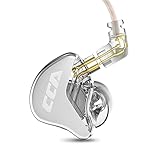
- 【SUPERIOR SOUND QUALITY】- CCA CRA in ear monitor headphones feature upgraded dual magnetic driver, It makes low frequency to be more extraordinary, with better separation of vocals and music. At the same time, electronic frequency division makes audio transition more fluid and natural. Let you have a better music experience
- 【ULTRA-THIN DIAPHRAGM】- Diaphragm thickness: 3.8μ, ultra-thin diaphragm born to be outstanding sound quality. It exceeds the liquid crystal polymer film and carbon nanotube film, with stronger amplitude and higher frequency expansion. They reproduce music and movies with a well-balanced sound, providing a rich tone without overemphasizing the bass
- 【LIGHT & COMFORTABLE WEAR EXPERRIENCE】- Ergonomic cavity structure, lightweight cavity with auricle PU memory hook, effectively reduces the pressure on the ear, even if wearing for a long time without pressure. Provide a stable and comfortable wearing experience
- 【GOOD QUALITY】- CCA CRA's cavity is made of metal with high-quality transparent resin, which is fashionable and solid. At the same time, using a new balance line with lower impedance enables better transmission. The OFC double-line parallel cable effectively resists tangling and knots, ensuring a longer lifespan. They work with all Androids, tablets, mp3 players, and related devices with a standard 3.5 mm jack
- 【GIFT-WORTHY SOUND PERFORMANCE】- Perfect for musicians, singers, and audio enthusiasts, CRAiem earphones deliver crystal-clear sound with rich detail across all frequencies, making them ideal for performances, recording, gaming, and more. A great gift for any music lover
Compare it with the IE 100 PRO and Pro X10 by fit and tonal preference, not by driver count. A mid-forward sound can expose harshness in an aggressive monitor mix or become tiring at high levels; a more expensive or multi-driver model cannot correct poor EQ or routing.
5. Shure SE846 Gen 2: best premium universal IEM
The SE846 Gen 2 is Shure’s premium universal-fit choice here. Shure specifies four high-definition drivers in a three-way system, interchangeable sound-signature filters, a detachable MMCX cable, and a fit kit that includes silicone, foam, Comply, and triple-flange sleeves. Shure rates its isolation at up to 37 dB. That is a manufacturer-rated maximum, dependent on fit, not a universal guarantee or hearing-protection rating. See Shure’s SE846 Gen 2 details.
The filters provide tonal options for experienced users; they do not replace a well-built monitor mix. This model is most defensible for frequent performers who know the sound they want and value flexibility in a universal IEM. It is likely excessive for a beginner who only needs a clear vocal and basic accompaniment. Strong isolation can also make stage communication harder unless the setup includes suitable talkback or ambience.
Recommended Free Tools
Best Value
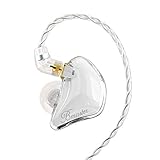
- Good Sound Isolation: This sound isolation in ear monitors headphone could prevent outside noise from interfering with your listening experience and maintain the crisp detail in low volume listening
- HiFi Stereo Sound: This in-ear earbuds headphone monitor is full of low frequencies and rich in details; Sound characteristics are balanced, coherent up and down, good bass effect, clear midrange and beautiful treble
- Comfortable & Secure Fit: Ergonomic in-ear earbuds shape is based on sampling a lots ear models, giving you a comfortable wearing like custom models; earhook on cable makes earphone stay in place perfectly for live stage using
- Detachable Cables Design: The iem with MMCX connectors design can be rotated 360 degrees for a comfortable fit when wearing, and it allows easy mmcx cable replacement or customization of your earphones
- Added Accessories: A stylish carrying case allows to store and travel with your earphones conveniently, a selection of silicone and memory eartips for personalized fit; also comes with headphones 6.3mm adapter, cable clip,and cleaning tool
How to choose between the five
- Choose the IE 100 PRO for a broadly useful first wired IEM with a musician-oriented design and detachable cable.
- Choose the SE215 Pro if you want a straightforward starter with a fit kit and prefer a fuller, bass-forward presentation.
- Choose the Pro X10 if compact shell size and musician-specific positioning are priorities, and its price and sound suit you.
- Consider the SE425 Pro if you specifically want a more mid-focused, detailed upgrade and have checked that it is comfortable.
- Choose the SE846 Gen 2 only if you have a reason to use its premium design and tonal filters; it will not fix a poor mix or wireless system.
- Tour frequently? Whichever model you select, budget for spare tips and a compatible replacement cable.
- Cannot get a stable universal fit? A musician-focused custom-IEM fitting may solve the practical problem better than buying another universal model.
Universal-fit or custom IEMs?
The five picks are universal-fit models, which can be purchased without ear impressions and are convenient as a first pair or temporary backup. Their fit and isolation vary by ear, however, and some performers cannot keep them sealed through a full set. Custom IEMs are made from ear impressions and can offer a more secure, consistent fit and long-set comfort for frequent performers. They cost more, require a fitting process, and may need revision if the fit changes. Their primary practical advantage is fit—not an automatic guarantee of better sound.
What else a wireless IEM setup requires
Buying IEM earphones does not automatically give you wireless monitoring. A typical wireless chain uses a mixer monitor output, a wireless transmitter, a bodypack receiver, the earphones and compatible cable, and batteries or charging. The engineer must also configure a personal mix. A wired beltpack or headphone amplifier may require only earphones and a compatible connection. Confirm the exact connector, output/load compatibility, and mono or stereo configuration for your gear before connecting it.
A mono mix can be simpler to deploy; stereo can give more spatial separation and let the singer place vocals, click, and instruments more precisely. The earphones do not determine mono versus stereo—the mixer routing, transmitter, receiver, and cabling do. A premium IEM paired with a noisy or poorly configured wireless system can still hiss, distort, or drop out.
Fit and soundcheck: a practical sequence
Before the performance
- Inspect the earpieces, cable, connector, and strain relief; clean the earpieces and tips.
- Try tip sizes and materials until each earpiece seals securely without painful pressure. Test both ears at low volume.
- Confirm whether your feed is mono or stereo and check cable and bodypack connections.
- Ask for your own vocal to be audible first, then add only the instruments and cues you need.
- Set a comfortable starting level before the full band begins.
During soundcheck
- Check the vocal microphone and confirm that your voice reaches the correct monitor bus.
- Build around your own voice, then add a rhythm reference such as kick, snare, bass, or click as needed.
- Add harmonic references such as guitar or keys, followed by backing vocals and performance cues.
- Add a controlled ambient microphone or talkback if you need communication or room awareness.
- If the mix is difficult to hear, ask for a cleaner mix or less stage volume before simply asking for more IEM level.
Troubleshoot by symptom
- Thin sound or little bass: Refit the earpiece and try another tip before changing EQ or buying a different model; an incomplete seal is a common first issue.
- Cannot hear your vocal: Check the seal, cable and connector, bodypack balance or pan, vocal-channel routing and mute state, and whether other instruments are crowding the mix. If those are correct, have the engineer check wireless gain or frequency, microphone technique, vocal-channel compression, and any limiter or feedback processing.
- Harsh sound: Check for too much upper-mid or treble energy, excessive vocal compression or EQ, and overall level. Reduce the relevant band or level before assuming the IEM is defective.
- Hiss: It may come from receiver noise, excessive receiver gain, a noisy amplifier, poor gain staging, or a sensitive IEM revealing noise upstream. Investigate the signal chain before replacing the earphones.
Use IEMs without risking your hearing
IEMs can make a more controlled, lower-level monitor mix possible, but they do not automatically protect hearing. The sound reaching the eardrum depends on the mix, receiver output, fit, and exposure duration. Musicians, singers, DJs, and sound engineers face loud-music exposure risks; NIOSH recommends attention to level and duration, quiet breaks, suitable hearing protection, and regular hearing evaluations. Read NIOSH’s guidance for musicians.
The Tool Desk
Outbyte Driver Updater FREEScan for outdated or missing drivers - takes under a minuteDriver Scan →Outbyte PC Repair FREERepair Windows errors before they cause bigger problemsFix Now →- Start at a low level and increase only as needed; do not turn up the remaining earpiece to compensate for removing the other one.
- For room awareness or conversation, ask about a controlled ambient microphone, talkback, or a better-balanced mix instead of performing with one earpiece removed.
- Take quiet breaks when practical and do not treat ringing ears or muffled hearing after a show as normal.
- Consider periodic hearing evaluations, particularly if you perform frequently. Seek advice from an audiologist familiar with musicians if you experience tinnitus, hearing asymmetry, pain, or persistent fit problems.
NIOSH notes that exposure risk depends on both level and duration and discusses breaks and hearing evaluations in its music guidance. Read NIOSH’s music exposure guidance. OSHA’s 85 dBA eight-hour time-weighted average is a general-industry hearing-conservation threshold, not a personalized safe-volume setting for IEMs. See OSHA’s noise standard information. The American Academy of Audiology recommends professional services for musicians that can include safe-IEM counseling, sound-level measurement, and attenuation verification; it does not endorse particular brands. Review its clinical consensus document.
Quick Recap
Product prices and availability are accurate as of the date/time indicated and are subject to change. Any price and availability information displayed on Amazon at the time of purchase will apply.



