PC Slower Than It Used to Be?
A free scan shows the junk files, broken settings and background clutter dragging Windows down - then fixes them in one click.Free scan · Windows 10 & 11Crashes, No Sound, or Screen Glitches?
Random freezes, missing sound and display glitches usually trace back to one bad driver. Find and replace yours safely.Free scan · under a minuteSpoilers ahead for major events across Berserk. This adult fantasy-horror manga includes extreme violence, torture, sexual violence, supernatural horror, and harm to children. The moments below are a subjective selection, not an official or definitive ranking; readers may disagree about whether each one crosses a line or serves the story.
What “too far” means in Berserk
Berserk moves through the Black Swordsman, Golden Age, Conviction, Millennium Falcon, and Fantasia arcs, named in the official Berserk story chart. Its most upsetting material is not all upsetting for the same reason: some scenes rely on explicit imagery, others on cruelty, the loss of a character’s agency, danger to children, or the jarring intrusion of horror into ordinary life. The selections below are organized by those kinds of impact, not ranked by severity.
| # | Preview | Product | Price | |
|---|---|---|---|---|
| 1 |
|
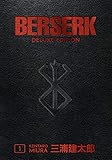
Berserk Deluxe Volume 1 | $32.78 | Buy on Amazon |
| 2 |

|
Berserk, Vol. 2 | $10.17 | Buy on Amazon |
| 3 |
|
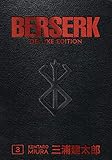
Dark Horse Comics Berserk Deluxe Volume 3 | $30.23 | Buy on Amazon |
| 4 |

|
Berserk Deluxe Volume 2 | $42.80 | Buy on Amazon |
| 5 |

|
Berserk Deluxe Volume 4 | $33.06 | Buy on Amazon |
Publisher pages describe the series as violent and horrifying and label it for mature readers. That framing is useful context, not a promise that every reader will find the same scenes tolerable. The official Golden Age synopsis traces Guts joining the Band of the Hawk, his relationship with Griffith, Griffith’s imprisonment, and the Eclipse’s catastrophic turn; it supplies the arc-level context for several of the series’ most consequential horrors.
The Eclipse and its aftermath
1. The Eclipse turns a hard-won bond into catastrophe
The Golden Age’s climax transforms the Band of the Hawk’s loyalty and shared history into the setup for a supernatural massacre. The scene’s force comes from the collision between a close-knit group’s hopes and the sudden destruction of that world. For some readers, its scale and bleakness are the point; for others, the spectacle overwhelms the emotional story that led there.
Free tools Windows power users keep installed
One-click scans. No signup required.
#1 Best Overall
- Easy to read text
- It can be a gift option
- This product will be an excellent pick for you
2. Griffith’s betrayal makes the horror personal
The Eclipse is not simply an attack by an outside monster: Griffith’s choice is central to the catastrophe. That decision makes the violence feel like a violation of trust as much as a supernatural disaster. The scene may feel excessive because the story makes readers reckon with the people behind the suffering, not just its imagery.
3. The loss of the Band of the Hawk is prolonged rather than abstract
The group is introduced through camaraderie, ambition, and Guts’s evolving place among them. The Eclipse’s destruction therefore lands as the loss of particular relationships, not an anonymous body count. Readers who find the sequence overlong may be reacting to how insistently the story turns that attachment into anguish.
4. Guts and Casca’s trauma continues after the event
The horror does not end when the Eclipse does. Its consequences shape Guts and Casca and follow them into later arcs, making survival feel like the beginning of a different ordeal rather than a clean escape. That sustained aftermath can give the event narrative weight, but it can also make the series’ bleakness feel relentless.
5. Casca’s violation is treated as a defining rupture
The Eclipse includes sexual violence against Casca. It is a severe violation of her agency, and its consequences are inseparable from the characters’ later lives. Some readers see the scene as central to the story’s betrayal and trauma; others consider the use of sexual violence too damaging or instrumentalizing to justify through plot importance. The disagreement is about more than how graphic the material is: it is also about whose suffering the narrative centers.
Rank #2
Human cruelty in the Golden Age
6. Griffith’s imprisonment strips away his former power
After Griffith is captured, the story shows the gap between the charismatic commander he was and the helpless prisoner he has become. The emotional excess lies in the reversal: a character accustomed to directing others is reduced to a body controlled by his captors. Readers may find that degradation more disturbing than a conventional battlefield defeat.
7. Torture makes political punishment intimate
Griffith’s treatment in captivity turns the consequences of ambition and court politics into bodily suffering. The scene’s cruelty is not supernatural; it is inflicted by people acting within a system of power. That ordinary human source can make it feel especially ugly, though some readers may feel the emphasis on suffering is more punishing than illuminating.
8. The torture chamber’s apparatus turns pain into spectacle
The Golden Age’s captivity material invites attention to the methods and setting of torture, rather than leaving the violence off-page. That explicitness is part of why it may cross a reader’s threshold: the image can dominate the character and political context it is meant to serve. Others may argue that the ugliness makes the cost of Griffith’s imprisonment impossible to romanticize.
9. The king’s fixation makes courtly power feel predatory
Griffith’s rise takes place in a world where access to power depends on the favor of elites. The king’s obsessive interest in him exposes the danger beneath the court’s polished surface. The scene’s discomfort comes from the imbalance of power and the collapse of any clean boundary between political patronage and personal possession.
The Tool Desk
Outbyte PC Repair FREEClear out junk files and repair common Windows errorsFree Scan →Outbyte Driver Updater FREEFix the driver behind crashes, sound loss and screen glitchesFind Drivers →Rank #3
10. Casca’s early life links violence to a child’s vulnerability
Casca’s backstory shows a child confronting sexual threat and making a desperate attempt to survive. It gives context to her later toughness, but that explanatory role is precisely where readers may object: a character’s strength need not be justified through childhood trauma. The scene’s impact is less about supernatural excess than the stark vulnerability of a child with few safe choices.
Conviction: faith, crowds, and the Tower
11. The Tower of Conviction turns rescue into a supernatural crisis
In the Conviction arc, Casca is captured and Guts moves to rescue her as a supernatural crisis gathers around the Tower. The publisher’s Berserk Volume 20 description anchors this storyline. The scale of the danger can feel like an escalation for its own sake, but it also places the rescue inside a world where human institutions and supernatural terror reinforce one another.
12. The story’s religious persecution makes certainty dangerous
Conviction depicts people using religious authority to justify cruelty. The excess comes from the way claims of moral purity coexist with violence and fear. Readers may find the material especially uncomfortable because the perpetrators do not see themselves as monsters; they believe their actions are righteous.
13. The condemned are made into public spectacle
Scenes surrounding punishment and persecution present suffering as something watched by a crowd. That shift from private pain to public display changes the source of horror: the violence is enabled not only by its direct perpetrators but by a community willing to witness it. Some readers may see this as a pointed critique of mob certainty; others may find the spectacle too sustained.
Rank #4
14. Mozgus’s piety is paired with grotesque brutality
Mozgus embodies the arc’s collision between religious zeal and cruelty. His presence is disturbing because the story refuses to make outward devotion a safeguard against violence. The grotesque presentation can strengthen that contradiction, though a reader who finds the characterization too exaggerated may feel the horror becomes caricature.
15. The Tower’s victims make institutional cruelty tangible
The Tower storyline gives suffering a location, a hierarchy, and people with authority over the vulnerable. That makes its horror more than a series of startling images: it shows how abuse can be organized and defended. The same specificity may feel oppressive to readers who would rather the story imply the brutality than dwell on it.
Independent reader supportYour contribution helps us test, update, and keep practical guides available for everyone.Monsters, children, and the collapse of safety
16. The Count’s family tragedy ties grief to monstrosity
The Black Swordsman arc introduces supernatural horror through the Count, whose transformation is bound up with loss and betrayal. The scene’s bleakness comes from the way intimate grief becomes entangled with monstrous violence. Readers may disagree over whether that tragic dimension deepens the horror or risks turning suffering into a device for shock.
17. The Lost Children storyline puts children inside a lethal fantasy
In a later Black Swordsman-era encounter, Guts faces danger involving children and a monstrous imitation of childhood play. The contrast between youthful innocence and lethal threat is what makes the material hard to shake. Some readers see the contrast as purposeful horror; others feel that children’s suffering is too disturbing a tool for establishing how brutal the world is.
Best Value
18. The Egg of the Perfect World makes compassion feel dangerous
In Conviction, the Egg of the Perfect World is a grotesque figure tied to the arc’s upheaval. Its path crosses with the vulnerable and the abandoned, bringing tenderness into proximity with horror. That contrast can make the story more affecting, but it may also make the surrounding cruelty feel especially manipulative to some readers.
19. Ordinary life is repeatedly interrupted by violence
Berserk often lets its characters approach shelter, trust, or companionship before danger intrudes again. The repeated interruption can communicate that safety is precarious in this world. It can also exhaust readers: when every respite becomes another prelude to suffering, the pattern may feel less like tension and more like refusal to let characters breathe.
20. The series’ accumulation of horror can itself feel like too much
No single scene has to be the breaking point. Across arcs, graphic violence, cruelty, sexual violence, supernatural threats, and harm to children can accumulate into a sustained reading experience. That cumulative effect is a legitimate reason to decide the manga has gone too far for you, even if individual scenes have narrative purposes.
Where to find the Tower of Conviction story
The English-language publisher lists Berserk Deluxe Volume 7 as a 704-page hardcover collecting volumes 19–21 and including the Tower of Conviction storyline; its listed publication date is March 9, 2021. The individual Volume 20 paperback is listed at 232 pages, published by Dark Horse Manga on December 11, 2007. These are edition details, not chapter-level guides; the official arc chart groups the story by collected Japanese volumes and does not provide an English chapter index.
Recommended Free Tools
Quick Recap
Product prices and availability are accurate as of the date/time indicated and are subject to change. Any price and availability information displayed on Amazon at the time of purchase will apply.




