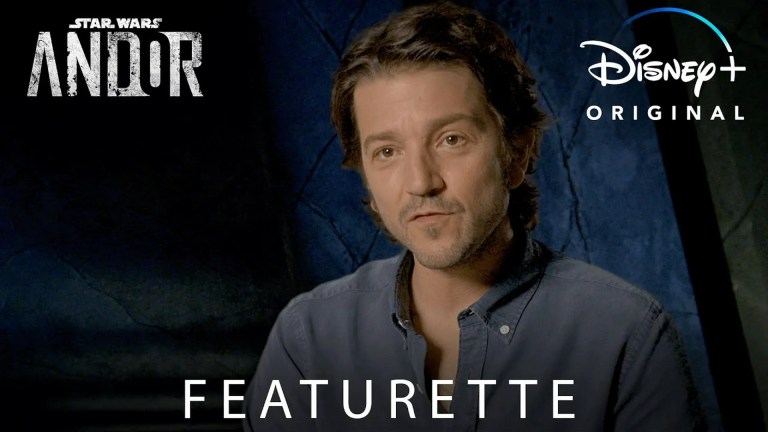
Luthen Rael’s defining speech in Andor is a confession, but it is also a warning: he gives up his decency and the chance to see the future he is building, then makes decisions that cost other people their lives. The series makes rebellion’s price feel profound precisely because Luthen’s sacrifice is not clean or self-contained.
What Luthen’s speech reveals—and leaves out
In Season 1, Episode 10, Luthen tells an Imperial security officer that he burns his decency and life for a future he will never see. He also expects no audience or gratitude: “So what do I sacrifice? Everything!” StarWars.com’s feature on the series’ monologues presents the speech as an unusually direct glimpse of the worldview Luthen usually keeps hidden.
| # | Preview | Product | Price | |
|---|---|---|---|---|
| 1 |

|
Deran Battlefield 2042 - PlayStation 5 / PS5 Star Wars andor Marvel's The Avengers blu ray Magic... | $39.00 | Buy on Amazon |
| 2 |

|
Star Wars: A New Hope | $19.99 | Buy on Amazon |
| 3 |

|
Star Wars: The Force Awakens | Buy on Amazon | |
| 4 |

|
Dune | Buy on Amazon |
The speech sounds intensely personal, but the choice that follows complicates it. Luthen’s sacrifices are not limited to what he gives up himself. His work requires him to decide what other people may be made to lose for the rebellion. That tension is central to what Andor asks viewers to consider: not only whether resistance has a cost, but who gets to choose who pays it.
The double life that makes sacrifice possible
In public, Luthen is an antiquities dealer on Coruscant. In secret, he organizes a rebel network connected to Cassian Andor, Mon Mothma, Saw Gerrera, and informants inside the Empire. The StarWars.com Databank describes the cover and the clandestine work behind it.
The antiquities business is more than a disguise. Secrecy divides Luthen from ordinary relationships and from the public recognition his work might otherwise earn. He can help shape events, but he cannot openly claim credit without endangering the people and network he has built. That anonymity is part of the sacrifice he describes: his cause depends on work that must remain unseen.
Why Luthen sacrifices Kreegyr’s cell
Soon after the monologue, Luthen decides not to warn Anto Kreegyr’s rebel cell that the Empire is preparing to destroy it. A warning could expose Luthen’s source and put the wider network at risk. He accepts the cell’s loss as the strategic price of preserving that larger operation. StarWars.com’s account of the monologue explicitly links the speech to this decision.
Rank #2
The logic is clear; its moral standing is not. Luthen is prepared to lose people who did not make the choice themselves, judging their lives against the movement’s prospects. The decision may protect a broader effort, but calling it strategic does not make the people sacrificed interchangeable or the act unquestionably right. His willingness to suffer for the rebellion can be real while his willingness to spend other people’s lives remains troubling.
Season 2 gives his conviction a human dimension
The second and final season reveals more of Luthen and Kleya’s history, giving their partnership greater emotional weight. It also ends with Luthen dying rather than risk Imperial interrogation. His fate makes the danger behind his chosen life concrete: the organizer who spent years shaping a future for others does not survive to see it.
Rank #3
That fatal commitment does not turn him into a simple martyr. Stellan Skarsgård, who plays Luthen, describes him as someone who believes in the revolution and argues that empathy is essential to it: “And if he doesn’t have empathy, then he has got nothing to do in the revolution, because the reason for revolution is empathy.” The claim sits in productive tension with Luthen’s treatment of Kreegyr’s cell. Empathy may be the cause he serves, but serving it does not guarantee that his methods honor it.
Independent reader supportYour contribution helps us test, update, and keep practical guides available for everyone.The future Luthen will not see
Tony Gilroy has said that Andor was built around defining what rebellion looks like and what it costs. He distinguishes the principal characters’ burdens: “Luthen sacrifices some of his morality.” Cassian’s cost is marked by suffering and transformation; Mon Mothma faces painful choices involving family and public politics. Luthen’s particular burden is the moral compromise of covert resistance.
Rank #4
The series is complete: its second and final season leads directly into Rogue One. That wider story gives Luthen’s image of a sunrise a historical horizon, but it does not offer him a personal reward. He works toward a future beyond his lifetime, without recognition and without certainty that those who inherit it will know what he surrendered—or what he demanded of others.
Quick Recap
Product prices and availability are accurate as of the date/time indicated and are subject to change. Any price and availability information displayed on Amazon at the time of purchase will apply.
Recommended Free Tools