Some toys on a 1970s nostalgia list were invented in the decade; others were older products that became crazes, or arrived in one country years before another. This collection brings together 29 examples from museum records, a manufacturer history and a UK toy-retail timeline. It is a selection, not a definitive ranking—and “forgotten” is a playful label, not a claim that every toy disappeared.
What toys were popular in the 1970s?
There was no single universal list. A toy could be a UK craze, a US preschool staple or a product documented in a museum collection without having the same launch date or name everywhere. The examples below are grouped by the kind of play they offered. Dates and market notes are included where the cited histories establish them.


Wobblers, hoppers and little worlds
1. Weebles
These weighted, egg-shaped figures rocked when pushed and righted themselves instead of toppling over. Playskool launched Weebles in the US in the early 1970s; the V&A records an Airfix Weeble family made in England in 1973. The brand’s familiar promise was: “Weebles wobble but they don’t fall down.” V&A history
2. Space Hopper
The orange, kangaroo-like inflatable hopper was a 1970s British craze, but it was not invented then: Mettoy introduced it in the UK in 1968. Its simple appeal was built into the design—straddle the ball, grip the handles and bounce. V&A history
Do these 3 things before closing this tab:
1Scan for outdated or missing drivers - takes under a minute2Clear out junk files and repair common Windows errors3Fix the driver behind crashes, sound loss and screen glitches#1 Best Overall

- The Classic Tin Kaleidoscope For Kids, Just Twist And Experience A Vibrant Light Show
- Each Turn Creates A Magical, Intricate And Iridescent Mosaic That Will Dazzle And Delight
- Made Of Metal For A Timeless Tin Toy Feel That Is Lacking In Plastic And Cardboard Kaleidoscopes
- Educational And Entertaining, Fostering Creativity, Imagination And Constant Fascination
3. Koeda-Chan mini-dolls
TOMY’s corporate chronology dates Koeda-Chan mini-dolls to 1977. The compact dolls brought miniature-character play into a small format; the history is the company’s own chronology, and names or product details could vary by market. TOMY corporate history
4. Playpeople by Playmobil
The Toy Retailers Association lists Playpeople by Playmobil among its UK examples for 1977. The figures invited children to make small scenes and stories; the association’s timeline is UK-focused and cautions that its general historical accuracy is not guaranteed. Toy Retailers Association timeline
5. Pocket Mate
TOMY’s history dates Pocket Mate to 1975. Its place in a 1970s roundup is supported by that manufacturer chronology, though it does not establish that the same name or product was sold in every region. TOMY corporate history
Build it, roll it, fly it
6. Tomica
TOMY dates the Tomica miniature-vehicle line to 1970. Small cars made collecting and imaginative driving possible without needing a large play space. The year and product name come from the company’s own chronology. TOMY corporate history
7. Microman
TOMY’s chronology lists Microman in 1974; the line was also known as Micronauts in some markets. Small articulated figures lent themselves to science-fiction adventures, but regional branding matters when identifying a particular toy. TOMY corporate history
8. Potter’s Wheel
The Toy Retailers Association names Potter’s Wheel as a UK toy example for 1974. It brought the appeal of shaping clay into a child-friendly play activity; the timeline does not establish a universal release or sales ranking. Toy Retailers Association timeline
9. Peter Powell Kites
Peter Powell Kites appear on the UK association’s 1976 timeline. A kite turns an open stretch of sky into the play space, with wind and skill shaping each flight. This is an example reported by the association, not a definitive measure of popularity across all markets. Toy Retailers Association timeline
10. Raving Bonkers
The Toy Retailers Association places Raving Bonkers on its UK list for 1974. The source supports the title and year as a reported example, but does not provide enough detail to establish a universal description of the toy or its play mechanic. Toy Retailers Association timeline
Quick wins for a faster PC:
Clear out junk files and repair common Windows errorsFree Scan →Fix the driver behind crashes, sound loss and screen glitchesFind Drivers →Rank #2
11. Matchbox Powertrack
The UK retailer association’s timeline lists Matchbox Powertrack in 1978. Its name evokes the pleasure of setting up a course and sending toy cars around it, but the source identifies it as a timeline example rather than a ranked national bestseller. Toy Retailers Association timeline
Make-believe adventures and movie magic
12. G.I. Joe Land Adventurer
Hasbro shifted G.I. Joe to the Land Adventurer in 1970, according to the Strong National Museum of Play. It was one phase in a changing action-figure line, rather than a single unchanging product. The Strong reported that Hasbro had sold more than 400 million G.I. Joe figures by late 2004; that figure is attributed to the museum and bounded by that date. The Strong’s G.I. Joe history
13. G.I. Joe “super” figure
In the mid-1970s, Hasbro made an 8-inch “super” G.I. Joe figure, a shift in scale within the decade’s evolving line. The Strong says the line was retired in 1978 before returning later. The Strong’s G.I. Joe history
14. Star Wars action toys
The Toy Retailers Association includes Star Wars toys among its UK examples for 1978, the year after the film’s 1977 release. The timeline is useful for a British snapshot, not a definitive account of when every Star Wars toy reached every market. Toy Retailers Association timeline
15. Millennium Falcon model kit
The V&A records a 1979 Millennium Falcon model kit licensed by MPC of Fundimensions. Its documented version included miniature figures and an illuminated cockpit detail. Joe Johnston designed the vessel for the 1977 Star Wars film, so this kit brought a screen vehicle into hands-on model play. V&A history
16. Pop Up Pirate
TOMY dates Pop Up Pirate to 1975. Players take turns inserting swords into a barrel, waiting to see whose move makes the pirate spring out—a compact game built around suspense and surprise. The year comes from TOMY’s company history. TOMY corporate history
17. Sensei
TOMY’s corporate chronology lists Sensei in 1977. That establishes its place in the company’s product history, though not a detailed description of the product or its availability in every country. TOMY corporate history
Puzzles, water play and early screens
18. Rubik’s Cube
Ernő Rubik invented the puzzle in 1974 under the name “Magic Cube.” It first went on sale in the UK in 1978 and was released worldwide two years later, according to the V&A. Its invention belongs to the 1970s; its global spread followed later. V&A history
Windows Errors? Fix Them Before They Spread
Repair common Windows errors and clear accumulated junk for a smoother, more stable PC - no reinstall needed.Free scan · no reinstallOutdated Drivers Are Slowing You Down
One free scan finds every outdated or missing driver and matches the right update for your exact hardware.Free scan · exact hardware matchRank #3
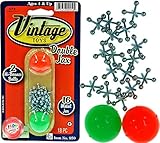
- 1 Pack of Vintage Toys Double Jax - This metal jacks game set includes 16 metal jacks and 2 small bouncy balls. Game instructions are printed on the back of the packaging. Great for indoor recess games for classroom or home play.
- Safe & Durable Toys - This jacks toy includes durable, non-toxic metal jacks and rubber bouncy balls built for repeated play. A classic jacks game for kids ages 4 and up.
- Classic Retro Game - Enjoy the timeless fun of this ball and jacks set. Inspired by retro toys from the 90s, this classic playground game has been enjoyed by families for generations.
- Cool Gifts & Prizes - This jackstones game set makes a great gift for birthdays, classroom prizes, party favors, and family game nights. A timeless game that kids and adults can enjoy together.
- USA Brand by JA-RU. Safe Toys for Kids; Great Party Favors Giveaways Prizes Goodies, Stocking Stuffers Rewards Incentives Piñata Filler Birthday Bag Carnival Christmas Halloween Valentines Summer Camps Tactile Game Cool Stuff Toys in bulk toys pinata
19. TOMY Water Game
TOMY dates Water Game to 1976. The handheld format turned a little water movement into a dexterity challenge; the manufacturer history establishes the year, not uniform regional naming or packaging. TOMY corporate history
20. Atari 2600
Released in North America in September 1977, the Atari 2600 brought interchangeable game cartridges to the home. The V&A notes that the console came with joystick and paddle controllers. Its release date is distinct from the longer manufacturing span the museum also describes. V&A history
21. PONG
PONG and other early video-game play sit at the boundary of a conventional toy roundup: they were electronic games, not toys in the usual sense. The National Museum of Toys and Miniatures places PONG in its overview of 1970s play culture and discusses it alongside the 1972 Magnavox Odyssey. National Museum of Toys and Miniatures overview
22. Magnavox Odyssey
The Magnavox Odyssey arrived in 1972 as an early home video-game system. It belongs in a broad account of how play changed during the decade, but it is more accurately described as a game console than as a traditional toy. National Museum of Toys and Miniatures overview
What’s actually slowing this PC down?
Pick the symptom - the matching free tool is one click away.
Other reported names from the decade
The following names appear in the cited histories, but the available source details do not support a fuller description of each item’s mechanics or a claim that it was popular everywhere. They still offer useful clues to how varied the period’s toy market was.
23. Tomica (1970)
This entry is the miniature-vehicle line already noted above; it is listed here only to keep the manufacturer’s 1970 chronology visible alongside other dated products. TOMY corporate history
24. Microman/Micronauts (1974)
TOMY’s history uses Microman and Micronauts in its chronology. Because names differed by market, identify a specific package or figure by its regional branding rather than assuming a single universal name. TOMY corporate history
25. Pocket Mate (1975)
The 1975 date is from TOMY’s corporate history. The source does not establish the product’s regional availability or additional design details. TOMY corporate history
26. Water Game (1976)
TOMY lists this product in its 1976 chronology. Product names and releases can differ between markets, so the date should be read as the company’s recorded product year. TOMY corporate history
27. Sensei (1977)
Sensei is another 1977 entry in TOMY’s company history; the source does not establish a complete market-by-market release record. TOMY corporate history
28. Koeda-Chan (1977)
TOMY dates the mini-doll line to 1977. This is a manufacturer-supplied year, rather than evidence that every country received the same product at the same time. TOMY corporate history
29. Fun-meal toy premiums
Burger Chef’s Fun meal preceded McDonald’s Happy Meal, according to the National Museum of Toys and Miniatures. The museum says the Happy Meal was test-marketed in Kansas City in October 1977 and available nationwide by 1979. Toy premiums were an increasingly visible part of children’s play culture, but these dates describe the US market. National Museum of Toys and Miniatures overview
The Tool Desk
Outbyte Driver Updater FREEScan for outdated or missing drivers - takes under a minuteDriver Scan →Outbyte PC Repair FREEClear out junk files and repair common Windows errorsFree Scan →Which toys from the 1970s are still around?
“Still around” can mean a name that remains recognizable, a surviving vintage object, or a newer version—not necessarily an unchanged original product. The V&A notes that retro forms of the original orange Space Hopper returned to the market, but that does not confirm current stock. It also documents the Rubik’s Cube’s later worldwide release. For a particular present-day version or collectible, check the maker, packaging, date and condition rather than assuming it matches a 1970s original.
What to remember about vintage examples
Nostalgia does not make every old toy safe for every child. The Strong’s 2015 account says the US Consumer Product Safety Commission prohibited Jarts sales in 1988 after many injuries and three deaths. The same article recounts Parker Brothers pulling nearly one million Riviton construction sets from stores in 1978 after a child choked on a rivet. These are specific safety cases, not a blanket judgment on all vintage toys. The Strong’s safety-history account
For collectors, inspect condition and completeness, and treat small or damaged parts with care. A toy’s age, market and whether it is an original or later version can change what is known about it—and what precautions make sense.
Quick Recap
Product prices and availability are accurate as of the date/time indicated and are subject to change. Any price and availability information displayed on Amazon at the time of purchase will apply.
Free tools Windows power users keep installed
One-click scans. No signup required.




