Free tools Windows power users keep installed
One-click scans. No signup required.
These 20 films earn their places through filmmaking achievement, emotional force, influence, critical recognition, and the perspective they bring to war—not simply the scale of their battles. The order is an editorial judgment, not a definitive canon: the films range from animated civilian tragedy and prisoner escapes to satire, resistance dramas, and combat stories, and they approach history in very different ways.
Rotten Tomatoes’ war-film guide offers a useful pool of candidates, but its ranking reflects that publication’s own review-based system. This list weighs craft and lasting resonance alongside point of view and historical framing. A masterpiece can still contain omissions, technical disputes, or a narrow perspective; artistic merit does not make a film a documentary record.
![Ultimate 10-Movie War Collection [DVD]](https://m.media-amazon.com/images/I/51jznvo4p-L._SL160_.jpg)
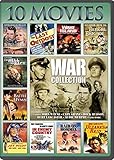
![Wartime Comedies 8-Movie Collection [DVD]](https://m.media-amazon.com/images/I/51x43bLZXWL._SL160_.jpg)
![War Classics 50 Movie Pack Collection [DVD]](https://m.media-amazon.com/images/I/51FX2WBMJ1L._SL160_.jpg)
![To Hell and Back [DVD]](https://m.media-amazon.com/images/I/51NHG2DAyfL._SL160_.jpg)
How this ranking weighs the films
The order considers five things: cinematic craft, emotional impact, lasting influence, critical standing, and the film’s historical or political perspective. No one factor decides the ranking. A film can be formally daring and historically limited, or less spectacular yet unusually clear-eyed about the people who bear war’s costs.
The selection deliberately reaches beyond conventional battlefield stories. It includes civilians, prisoners, resistance movements, colonial conflict, military injustice, and the home front, alongside combat films. BFI’s writing on The Hurt Locker and City of Life and Death is a useful reminder that tension and visual achievement can coexist with questions about technical accuracy, politics, and historical context.
The Tool Desk
Outbyte PC Repair FREERepair Windows errors before they cause bigger problemsFix Now →Outbyte Driver Updater FREEScan for outdated or missing drivers - takes under a minuteDriver Scan →#1 Best Overall
The 20 greatest war movie masterpieces, ranked
1. Grave of the Fireflies (1988) — directed by Isao Takahata
Rather than making combat the spectacle, this animated tragedy brings wartime devastation into the lives of two children. Its intimate focus gives civilian suffering a force that grand battle scenes often cannot: war is present in hunger, loss, and the erosion of ordinary care. Its animation is not a softening device; it makes the story’s emotional precision possible.
2. The Battle of Algiers (1966) — directed by Gillo Pontecorvo
Pontecorvo’s urgent, documentary-like style makes the struggle for Algiers feel observed rather than staged, while its subject is the violence and political logic of anti-colonial conflict. The film’s force comes partly from refusing a comfortable distance: resistance, repression, and civilian life sit within the same contested history. Its form remains a landmark for political cinema.
3. A Man Escaped (1956) — directed by Robert Bresson
Bresson turns a prisoner’s attempt to escape from a German prison into a study of patience, routine, and attention. The confined setting and spare style make small sounds and gestures carry extraordinary suspense. It is a war film with no need for battlefield scale: captivity itself supplies the pressure, and discipline becomes both a practical and moral question.
4. Paths of Glory (1957) — directed by Stanley Kubrick
Kubrick’s First World War drama directs its anger not only at combat but at the military hierarchy that can sacrifice soldiers and then punish them for failure. The contrast between the trenches and the officers’ world sharpens its indictment of institutional injustice. Its moral focus makes it one of the most enduring anti-war films, not merely a portrait of battlefield horror.
Quick wins for a faster PC:
Scan for outdated or missing drivers - takes under a minuteDriver Scan →Clear out junk files and repair common Windows errorsFree Scan →5. Schindler’s List (1993) — directed by Steven Spielberg
Spielberg’s Holocaust drama follows Oskar Schindler’s effort to save Jewish workers from Nazi persecution and murder. Its scale and visual control serve a story rooted in individual lives, while the subject demands care: a dramatic film can bear witness to history without replacing the testimony and records through which that history is understood. Its emotional reach and cultural impact place it among the most consequential films about wartime atrocity.
6. All Quiet on the Western Front (1930) — directed by Lewis Milestone
Milestone’s adaptation of Erich Maria Remarque’s novel follows young German soldiers into the First World War and strips away romantic ideas of military glory. Its focus on inexperienced combatants makes the distance between patriotic promise and lived experience painfully clear. The film’s early sound-era achievement and anti-war perspective have given it lasting influence.
7. Casablanca (1942) — directed by Michael Curtiz
Set in wartime Morocco, Casablanca frames its romance inside the pressures of occupation, exile, and resistance. Its central choice turns private feeling into a political act without losing the pleasures of a tightly constructed studio drama. The film is not a combat chronicle, but its portrait of people deciding what they owe one another in wartime makes it an essential part of the genre.
8. Das Boot (1981) — directed by Wolfgang Petersen
Petersen confines much of the story to a German submarine crew, making the vessel’s claustrophobia and mechanical vulnerability central to the experience. The crew’s perspective creates tension and immediacy, but it is not the same as a broad account of the war or its victims. The film’s sustained pressure and immersive craft make it a defining submarine drama.
Do these 3 things before closing this tab:
1Clear out junk files and repair common Windows errors2Scan for outdated or missing drivers - takes under a minute3Repair Windows errors before they cause bigger problems9. Dr. Strangelove (1964) — directed by Stanley Kubrick
Kubrick’s Cold War satire turns military procedure and nuclear brinkmanship into grotesque comedy. Its subject is not a past battlefield but the machinery and assumptions that could produce catastrophe on a global scale. The absurdity is the argument: systems built around deterrence and command can look terrifyingly irrational when viewed without their official solemnity.
10. City of Life and Death (2009) — directed by Lu Chuan
This film depicts the Nanjing massacre through a drama of invasion and civilian suffering. Its stark black-and-white imagery and grim scale make it a major work of contemporary war cinema, but its force should not be mistaken for a complete historical account. BFI notes that the film offers relatively little background and context; viewers seeking a fuller understanding of the massacre should read historical sources alongside it.
11. The Hurt Locker (2008) — directed by Kathryn Bigelow
Bigelow’s Iraq War drama centers on a bomb-disposal unit and builds tension from the dangerous, repetitive work of handling explosives. Its close attention to suspense and performance helped define a modern combat film, but technical realism and political neutrality are separate questions. BFI describes it as compelling while noting criticism of its technical inaccuracies and apolitical stance—a useful example of why craft and framing deserve distinct consideration.
12. Henry V (1989) — directed by Kenneth Branagh
Branagh’s adaptation of Shakespeare’s play presents the Battle of Agincourt through theatrical language and vivid staging. Its formal approach makes the film’s relationship to history explicit: it is a dramatization shaped by a celebrated literary source, not a neutral reconstruction. The combination of battlefield spectacle and questions about leadership and the stories nations tell about war earns its place here.
What’s actually slowing this PC down?
Pick the symptom - the matching free tool is one click away.
13. The Bridge on the River Kwai (1957) — directed by David Lean
Lean’s film turns a prisoner-of-war camp and the construction of a bridge into a conflict over duty, pride, and survival. Its large-scale production is anchored by an uneasy moral question: when does discipline become complicity? As with any dramatization, the film should not be treated as a substitute for the history of wartime captivity, but its exploration of military identity gives it enduring dramatic weight.
14. Come and See (1985) — directed by Elem Klimov
Klimov’s film follows a Belarusian boy through the devastation of Nazi occupation. Its disorienting imagery and sound keep the story close to a civilian experience rather than offering the reassurance of a conventional adventure. The result is a harrowing account of violence and its effects on the young, with a form that refuses to make atrocity easy to watch.
15. The Thin Red Line (1998) — directed by Terrence Malick
Malick’s Guadalcanal drama treats combat as both physical ordeal and moral dislocation. Its reflective voiceovers and attention to landscape interrupt the familiar rhythm of military action, asking what war does to the people inside it and to the world around them. It is less interested in a clean strategic narrative than in the fractured consciousness of soldiers.
16. The Grand Illusion (1937) — directed by Jean Renoir
Renoir’s First World War story follows French prisoners and examines class, national identity, and the bonds that can cross enemy lines. Its humane attention to individuals complicates the idea that military divisions map neatly onto personal loyalties. The film’s historical significance lies not in combat spectacle but in its incisive view of social order under wartime conditions.
Best Value
17. The Deer Hunter (1978) — directed by Michael Cimino
Cimino’s drama traces the effects of the Vietnam War on a group of friends and their community. Its long movement from home life to wartime trauma and return emphasizes that the consequences of combat do not end when a soldier leaves the battlefield. The film is a dramatized, distinctly American perspective on the war, not a comprehensive account of Vietnam or its people.
18. Saving Private Ryan (1998) — directed by Steven Spielberg
Spielberg’s Second World War film is remembered for its visceral depiction of the Normandy landings and its mission narrative. Its immediacy reshaped expectations for the sensory intensity of combat filmmaking, but an acclaimed battle sequence is not the same thing as a complete picture of the war. The film’s strongest achievement is making the physical chaos of combat inseparable from the human costs carried by individual soldiers.
19. The Life and Death of Colonel Blimp (1943) — directed by Michael Powell and Emeric Pressburger
This richly stylized British film spans decades of military life and uses its central friendship to examine how war changes ideas of honor, identity, and national character. Its perspective is shaped by the moment in which it was made, during the Second World War, and by its focus on a particular social world. That combination of formal invention and self-questioning makes it more than a period curiosity.
20. M*A*S*H (1970) — directed by Robert Altman
Set during the Korean War but made amid the Vietnam era, Altman’s comedy uses the mobile army hospital as a setting for irreverence and institutional satire. The disjunction between its historical setting and contemporary sensibility is part of its meaning. Rather than presenting war as a sequence of heroic battles, it exposes the absurd routines and coping mechanisms that surround violence.
How to choose what to watch first
- For civilians’ experiences: Start with Grave of the Fireflies or City of Life and Death; both put people outside the usual hero-soldier frame at the center.
- For anti-war arguments: Try Paths of Glory, All Quiet on the Western Front, or Come and See. Their approaches range from institutional critique to a civilian nightmare.
- For formal experimentation: Choose A Man Escaped, The Thin Red Line, or Dr. Strangelove, each of which makes style central to its account of war.
- For a tense combat narrative: Das Boot and The Hurt Locker build suspense around the constraints and dangers of specific military work.
- For history and context: Treat dramatizations as starting points, not as stand-ins for historical study. That distinction matters especially when a film depicts atrocities or a contested conflict.
What makes a war film a masterpiece?
Great war films do more than recreate danger. They make choices about whose lives matter on screen, which causes and institutions are explained, and where a viewer’s sympathy is directed. Those choices can produce a powerful work of art while leaving important history outside the frame. A useful viewing question is therefore twofold: how does the film work as cinema, and whose account of war does it ask you to see?
Viewing availability changes by country and date, so check current local services or a specific disc edition rather than assuming any title is streaming in your region.
Quick Recap
Product prices and availability are accurate as of the date/time indicated and are subject to change. Any price and availability information displayed on Amazon at the time of purchase will apply.




