There was no single, standardized “Viking wedding” ceremony. Customs varied across Scandinavia, and religious life changed over time. The best-supported picture combines evidence from different places and centuries: Viking Age feasting, later medieval Icelandic marriage agreements, a 14th-century Norwegian dowry, and modern Norse-inspired practice. These examples illuminate themes, but they should not be mistaken for a universal wedding checklist.
How to read the evidence for Norse weddings
“Viking wedding traditions” is a useful modern umbrella term, not the name of one fixed historical rite. Customs known as siðr differed from place to place, and Christianity coexisted with older customs in Scandinavia by the 11th century. Written accounts are often late Viking Age or early medieval and may have Christian authors; they need to be read alongside archaeology. The Swedish History Museum’s overview emphasizes both local variation and the limits of the surviving evidence: Norse religion in the Viking Age.
The ten themes below therefore vary in date, region, and evidentiary strength. Some concern Viking Age society broadly; others are later medieval examples that offer context rather than direct proof of what every Viking Age couple did.
Ten traditions and themes
1. Marriage connected families and resources
Marriage could link kinship, property, and political interests, rather than being only a private bond between two people. Medieval Icelandic evidence records oral agreements arranged by relatives by the late 12th and early 13th centuries. This is valuable Norse-context evidence, but it is later than much of the Viking Age and cannot establish a uniform Scandinavian practice. Agnes S. Arnórsdóttir’s study focuses on Iceland from 1200 to 1600: Property and Virginity: The Christianization of Marriage in Medieval Iceland 1200–1600.
The Tool Desk
Outbyte PC Repair FREEClear out junk files and repair common Windows errorsFree Scan →Outbyte Driver Updater FREEScan for outdated or missing drivers - takes under a minuteDriver Scan →#1 Best Overall

- 100% Natural Horn Construction – Handcrafted from ethically sourced horn for a truly authentic and rustic Viking drinking experience.
- Leak-Proof Sealed Interior – Professionally polished and coated to ensure zero leaks; enjoy every sip with confidence.
- Solid Stand Included – Comes with a handcrafted stand for elegant display and easy storage when not in use.
- Perfect for Gifting – Ideal for weddings, medieval parties, anniversaries, or Christmas gifts for history or fantasy lovers.
- Hand Wash Only – To maintain its natural texture and finish, gently rinse with lukewarm water and dry immediately.
2. Marriage agreements and property arrangements evolved
Marriage contracting was not frozen in one ancient form. Arnórsdóttir’s account of medieval Iceland describes an evolving institution: property transfers remained important while Christian law and doctrine changed marriage rituals and who participated in making agreements. This evidence belongs to Iceland between 1200 and 1600, not to every Viking Age wedding.
3. Women’s household roles were consequential
The Swedish History Museum describes women as leaders of the household, drawing on saga accounts and archaeological evidence such as keys found in women’s graves. That context challenges the simplistic idea that women had no role or authority in household life. It does not, however, tell us how every bride’s marriage was negotiated, or prove that all marriages were freely chosen. The museum discusses the evidence and its limitations in Women in the Viking Age.
Rank #2

- Viking Horn Best Wedding Gift Men Women Natural Finish
- Size : 3x11 to 13 inches
- Color : Black Natural
- Materail : Horn
4. Feasting made a marriage a public occasion
Feasts served social and political purposes in Viking Age life, and marriage was among the occasions associated with them. A feast could make a union visible to kin and community as well as provide an occasion for celebration. Its scale and form would have depended on the household and local circumstances; the evidence does not establish that every wedding was equally elaborate. The University of Wisconsin–Madison discusses the social role of feasting in “A Toast from the High Seat: The Feast in the Viking Age”.
5. Wedding drinking was part of celebration, not a known script
The Old Norse phrase drekka brúðhlaup means “to drink the wedding,” and accounts of weddings often foreground the feast. This supports drinking as part of celebration; it does not establish a mandatory drink, a universal toast sequence, or a prescribed set of vows. The Troth’s overview combines historical discussion with modern Heathen guidance, so those layers should be distinguished: Norse Pagan Weddings.
Rank #3
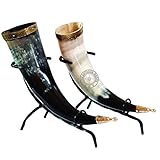
- A unique bar presentation for friends and great addition to your fun parties such as Christmas Party, Wedding Party etc.
- 100% Natural Horn For Beer/Mead/Water Etc With Designer Brass Trim And Nock With Iron Stand
- Color : Natural
- Size : 10 To 13" Inch Long
- Capacity : 250 ml To 350 ml (8 To 12 ounce)
6. Religious observance varied by place and period
There is no sound basis here for saying every couple invoked the same god or followed one pan-Scandinavian pagan liturgy. Local religious customs differed, and religious life changed as Christianity spread. The sources support variation and change more strongly than a single standardized ceremony.
7. Christianization changed marriage gradually in medieval Iceland
In medieval Iceland, Christian doctrine and law changed marriage rituals and contracting roles over time, while kinship and property concerns continued to matter. This was a gradual process, not an instant replacement of all older social arrangements. The claim is specific to the Icelandic medieval evidence described by Arnórsdóttir, rather than a blanket account of all Scandinavia.
Rank #4

- Genuine Drinking Horn with Stand: Made of ox horn with polished exterior and waterproof interior for everyday use in drinking water, wine, ale and beer
- Unique Bar Presentation: A distinctive addition to your fun parties such as Christmas Party, Wedding Party Favor Box, Your Favorite Fest and gatherings with friends
- Natural Color Finish: Features a natural horn color that showcases the authentic beauty and unique characteristics of genuine ox horn material
- Premium Materials: Crafted from high-quality horn with brass stand components for durability and authentic Viking style appearance
- Generous Size Specifications: Length measures 10 to 12 inches with a capacity of 250 ml to 300 ml, suitable for serving various beverages
8. A 1335 Norwegian dowry offers a later comparison
Museum Nord describes the 1335 marriage of Ingebjørg and Torleiv and lists Ingebjørg’s dowry: household textiles, clothing, jewelry, ten cows, and stockfish. The example helps show the material dimensions a later medieval Norwegian marriage could involve, but it is centuries after the start of the Viking Age and cannot prove that Viking Age brides generally received such a dowry. See The wedding in Lofoten in the Middle Ages.
9. A two-day limit came from later Norwegian law
Museum Nord reports that Norway’s 1274 National Law limited weddings to two days to restrain excessive expense. This is a medieval Norwegian legal rule, not an established Viking Age wedding custom. It also shows why a later example should be dated rather than folded into a timeless account of “Norse tradition.”
Outdated Drivers Are Slowing You Down
One free scan finds every outdated or missing driver and matches the right update for your exact hardware.Free scan · exact hardware matchWindows Errors? Fix Them Before They Spread
Repair common Windows errors and clear accumulated junk for a smoother, more stable PC - no reinstall needed.Free scan · no reinstallBest Value
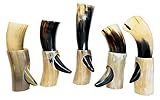
- Viking Drinking Horn cups :- Set of 5 Premium & 100% authentic ceremonial Drinking horn with a stand for your favorite beverage like ale, mead, wine, beer etc. 10 -14 oz capacity in 9 to 15 inch horn cups. Select the size of your choice.
- Viking gifts for men :- These Games of Thrones style Viking Drinking horn mugs are hand made from 100% natural buffalo horn that has been shaped as a perfect replica of a medieval style drinking horn. These do not contain Ivory and are all legitimate
- Unique 100% Natural & Food Safe :- You may get a set which is not identical to the images in texture and shape. Being 100% Natural No two horns are identical, being 100% natural each horn has its own shape and texture.
- Size & Details :- Holds upto 10 oz / 300 ml approximately , size varies between 9 to 12 inches. These Lord of the Rings , THOR style drinking horn mugs are perfect as ceremonial drinkware for weddings anniversary birthday party, Its a perfect return gift for your friends & best man. If you were looking for a viking style gift for men then this will certainly bring a smile on face of your man.
- Each horn is uniquely designed, no two are identical. Our horns are sealed with all-natural organic beeswax. They're only meant to be washed by hand. Also, please wash before use. This is a perfect gift for anyone who loves the medieval ages as much as us! Plus, now you can watch your favorite shows and drink your favorite drink out of an authentic piece of drinkware!
10. Modern Norse-inspired ceremonies are modern practice
Today, couples and Heathen groups may draw inspiration from historical themes such as community, feasting, and local religious identity. A present-day ceremony is a modern interpretation, however, not proof that a specific ritual occurred in the Viking Age. The Troth’s resource includes current guidance as well as historical discussion; its contemporary suggestions should be identified as such.
Quick Recap
Popular claims that need qualification
- Handfasting: The evidence presented here does not establish a Viking Age rite in which a couple’s hands were bound with a cord. A handshake connected with an agreement, or later use of the word “handfasting,” is not proof of that specific ceremony.
- Wedding swords, exchanged weapons, a bride’s hammer, bridal crowns, and exact ceremonial clothing: These are not substantiated as universal customs by the sources discussed here. Treat a particular claim as contested, literary, later, or modern where applicable, rather than stating it as a confirmed Viking Age practice.
- One required ritual or vow sequence: Feasting and wedding drinking are supported themes, but they do not establish a single prescribed ceremony shared across regions.
What the examples show at a glance
| Example | Date and region | What it supports | What it does not establish |
|---|---|---|---|
| Marriage agreements arranged by relatives | Late 12th and early 13th centuries, Iceland | Oral agreements could connect marriage with family, economic, and political interests. | A universal practice across Viking Age Scandinavia. |
| Feasting associated with marriage | Viking Age society; broad regional context | Marriage could be marked by a socially significant feast. | A standard feast size, menu, or drinking script. |
| Dowry of Ingebjørg and Torleiv | 1335, Lofoten, Norway | A later medieval marriage could involve substantial household goods, livestock, and other property. | That Viking Age brides generally received the same goods. |
| Two-day wedding limit | Norway, 1274 National Law | A later medieval law sought to curb wedding expense by limiting duration. | A Viking Age rule. |
Product prices and availability are accurate as of the date/time indicated and are subject to change. Any price and availability information displayed on Amazon at the time of purchase will apply.




