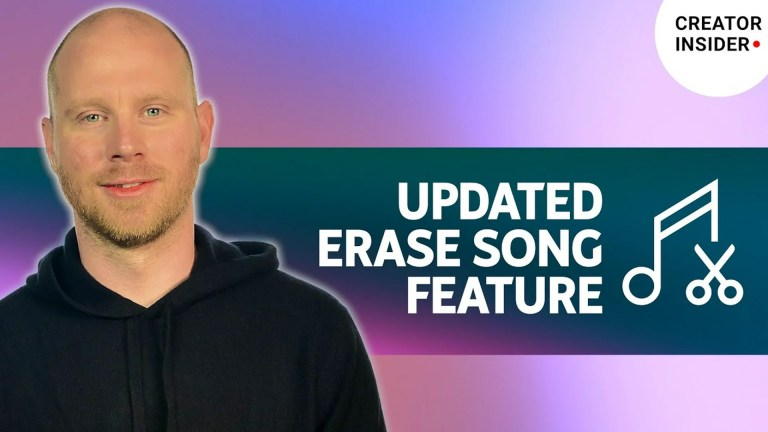
To find out who claimed music in an archived YouTube livestream, open YouTube Studio → Content, filter by Claims, locate the livestream archive, and choose See details in its Restrictions column. Check Content used and Claimant to identify the matched segment and claimant. If the broadcast was interrupted while live, treat that as a separate issue: YouTube scans streams as they run, while Content ID claims on archived streams are made after the broadcast ends if it was saved.
First identify whether the problem happened live or on the archive
YouTube scans livestreams for third-party content while they are running. A live stream may display a warning and be interrupted or terminated if identified content remains. A Content ID claim on a livestream archive is a separate event: YouTube says it is made after the stream ends if the creator chooses to archive it. YouTube’s livestream copyright guidance explains the live-stream process.


![The Most Relaxing Classical Music In The Universe [2 CD]](https://m.media-amazon.com/images/I/516yfwRNo3L._SL160_.jpg)
If the broadcast stopped, check YouTube Studio for the displayed restriction or any copyright strike and address that live issue. If the broadcast finished but its saved video now has a claim, inspect the archive’s claim details using the steps below. A live interruption does not by itself tell you who claimed a later archive, and an archive claim does not by itself mean the live broadcast was interrupted.
How to check the claimant and matched segment
- Open YouTube Studio and select Content.
- Filter the list by Claims, then find the livestream archive.
- In the video’s Restrictions column, open See details.
- Under Content used, open the claim details. Record the claimant and the matched content or segment, including timestamps where shown.
- Note the policy applied—monetize, track, or block—and any territory details. A video can have multiple claims covering different segments or territories.
These are YouTube Studio’s current help-page labels; interface wording can change. YouTube cautions that an unfamiliar claimant does not, on its own, mean a claim is invalid. See YouTube’s guide to viewing Content ID claims.
#1 Best Overall
What a claim does—and does not—mean
A Content ID claim is distinct from a copyright removal request and a copyright strike. Depending on the rights owner’s policy, a claim may monetize, track, or block a video, and the outcome can differ by territory. A claim alone does not automatically mean the channel has received a strike; YouTube says claims usually do not affect the channel or account. YouTube’s claim guidance describes the possible policies and outcomes.
A takedown is a separate copyright removal request. If a valid request follows an appeal, the video can be removed and the channel can receive a strike. Check the video’s actual Studio status rather than treating every claim as a strike.
Rank #2
Compare the claim with the loop’s source and your rights
Before choosing what to do, establish where the specific meditation loop came from and what permission applies to it. Compare the claim’s matched segment with your recording, and review whether your license covers that recording’s use in a livestream and archive, monetization, and the relevant territories. Public help pages cannot identify the source or decide whether a particular license covers a particular loop; those details must come from your claim page and your own source and license records.
YouTube lists having the necessary rights, a copyright exception, or a mistaken match as possible grounds for disputing a claim. Giving credit, owning a copy of the music, or choosing not to monetize is not enough by itself. An unfamiliar claimant is not proof of a mistaken claim. Read YouTube’s dispute guidance before taking that step.
Rank #3
Choose between removing or replacing the music and disputing
When the loop is not essential
If the music is not needed, YouTube points to removing or replacing it; the YouTube Audio Library is one possible source of replacement tracks. This is a content-change option, not a ruling on who owns the original loop. Check the available editing options on the claim page and make sure any replacement is suitable for the intended use.
When you believe the claim is wrong or have a valid rights basis
Dispute only when you have a valid basis and are confident in your rights or other applicable justification. YouTube does not decide whether you should dispute, and its fair-use guidance says automated Content ID cannot decide fair use: that is a subjective, case-by-case issue for courts. YouTube also cannot mediate the dispute. If you are unsure about your legal position, consider seeking legal advice. See YouTube’s dispute guidance and fair-use guidance.
Rank #4
- Shrink-wrapped
Know the deadlines and escalation risk
According to YouTube Help pages checked in 2026, a claimant normally has 30 days to respond to an initial dispute. After an appeal, the claimant has 7 days to respond. If an appeal is rejected, the claimant may submit a takedown request; a valid request can remove the video and result in a copyright strike. These are response windows, not guarantees about the outcome. Review YouTube’s dispute process and appeal guidance before escalating.
Independent reader supportYour contribution helps us test, update, and keep practical guides available for everyone.If you licensed the loop from a music library
Contact the rights owner or library and ask whether it can add your YouTube channel to its Content ID allowlist. YouTube says a licensed livestream may still be interrupted if the channel is not allowlisted. Allowlisting guidance addresses the live broadcast; it does not by itself establish who owns the matched recording or resolve whether a later archive claim is valid. Verify the license scope and the archive’s claim details separately. See YouTube’s livestream guidance and its allowlist information.
Recommended Free Tools
Best Value

- Relaxation and Sleep Support: Relax your body and calm your mind with these relaxation and sleep CDs designed to promote restful sleep and stress relief
- Authentic Nature Recordings: Includes the sounds of calming ocean waves, a peaceful stream, relaxing rain and soothing guitar, with tracks that are continuous recordings and are not looped
- Created by Music Therapist: Developed by a music therapist who gives a percentage of profits to help kids with cancer
- Premium Quality Manufacturing: High-quality CDs made in the USA - Unlike cheaper CDs like CD-Rs, this CD will work in all players
- Thoughtful Gift Packaging: Gift quality packaging makes a thoughtful gift for those with stress, anxiety or insomnia
Or let it run in the cloud
For future pre-recorded YouTube meditation loops, StreamNeo can keep an uploaded video or playlist looping from the cloud. Upload the recording, add your YouTube stream key, and go live; your computer and home connection do not have to stay on. It does not determine whether music is licensed or prevent copyright claims, so check rights and any allowlist requirements separately.
- One flat price per slot for any uploaded quality up to 4K 60fps, with no re-encode or quality tiers.
- Automatic recovery if YouTube drops the stream.
- The first day is free, with no card required.
- Monthly: $9.99 per month.
Learn more at StreamNeo, or start the free first day.
Quick Recap
Product prices and availability are accurate as of the date/time indicated and are subject to change. Any price and availability information displayed on Amazon at the time of purchase will apply.