You can stream anime episodes at 4K and up to 60 frames per second on YouTube Live only if you have the rights to broadcast them, a source and encoder that can sustain 2160p60, and enough stable upload bandwidth. Clear the live-broadcast rights first: owning or subscribing to anime does not by itself grant permission to rebroadcast it. YouTube scans live streams for third-party matches, and a stream may be interrupted even when you have a license if the rights owner has not allowlisted your channel.
1. Clear the rights before configuring the stream
Confirm that your license covers public live broadcasting of the specific title in the intended territories. Check separately whether it also permits an archived video or video on demand (VOD), since live rights do not necessarily include archive rights. If the title is controlled through YouTube Content ID, ask the rights owner whether your channel needs to be allowlisted.
YouTube’s Terms of Service require you to have the necessary rights to provide content through Google services. Its live-stream copyright guidance says all live streams are scanned for matches to third-party content. A match can lead to a warning, a placeholder image, interruption, or termination. Licensed content can still be interrupted when the channel has not been allowlisted. Cropping, mirroring, pitch-shifting, or other attempts to avoid matching do not replace permission; resolve the rights and allowlisting directly with the owner.
2. Choose a source and an encoder that can sustain 2160p60
YouTube supports live ingest from software encoders and standalone hardware encoders. A hardware unit is optional, not a YouTube requirement. Before choosing either route, confirm the encoder’s published support for 2160p at 60 fps, the codec and ingest protocol you plan to use, and sustained operation for the length of the broadcast. YouTube’s verified encoder list is a starting point, but those products are made by third parties; verify current specifications with the manufacturer.
Recommended Free Tools
#1 Best Overall

- MAKE YOUR TV SMARTER - Enhance any TV with the ability to play videos, music, and photo slideshows from a USB drive or MicroSD Card! It’s so simple and intuitive - anyone can use it. The Micca 4K is amazingly compact and affordable, get one for each TV in the house!
- PLAYS 4K ULTRA-HD VIDEOS - Works with TVs old and new! Smoothly plays videos up to 4096x2304@30fps over UHD 4K/60Hz HDMI output. Sharp and clear video and audio in pure digital format, compatible with 4K and 1080p TVs, projectors, and monitor displays. Composite AV output for use with analog TVs or for sending sound to a stereo system.
- DUAL USB AND MICRO SD READER - Play media files from USB flash drives and USB hard drives up to 8TB, or microSD cards up to 1TB. Supports FAT/FAT32, exFAT and NTFS file systems. Compatible with wireless air mouse remotes for non-line-of-sight control so that the player can be hidden away!
- SIMPLE DIGITAL SIGNAGE - Automatic video playback with endless repeat and looping, and the ability to resume from the last stopping point. Configurable 90/180/270 degree video output rotation. Great for digital signage applications such as restaurant menu boards, lobby welcome videos, art and museum installations.
- MEDIA FORMAT SUPPORT - Videos: MKV, MP4/M4V, AVI, MOV, MPG, VOB, M2TS, TS files encoded with H.265/HEVC, H.264/AVC, MPEG1/2/4, VC1, up to 4096x2304, 30fps, 200mbps. Subtitles: SRT, PGS, IDX+SUB. Music: MP3, WAV, FLAC. Photos: JPG, GIF, BMP, PNG
If the episode is already a file accessible to the streaming computer, a capture card is not inherently needed. It may be relevant for a separate playback device, but do not add one to a file-playback setup unless your signal path requires it. Choose between software and hardware based on verified 2160p60 capability, supported codec and protocol, cooling and sustained-operation documentation, monitoring and failover controls, whether you need a local recording, network margin, and total cost. The available official guidance does not establish a universally more reliable option.
3. Set YouTube Live encoder parameters
The following values are from the English-locale YouTube Help page, “Choose live encoder settings, bitrates, and resolutions,” accessed in October 2026. Check the current English table in YouTube Help before deployment: localized tables can differ, and encoder recommendations can change.
Rank #2
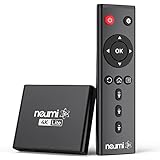
- 【SIMPLE, POWERFUL, COMPACT】- Easily play videos, photos, and music files from USB drives, hard drives, and SD cards. Simple and intuitive to use with no complicated settings. Takes up very little space - it’s smaller than a deck of playing cards!
- 【4K/UHD VIDEO PLAYBACK】- Stunning HDMI video quality up to 2160p/60Hz with support for the latest video formats such as H.265/HEVC. Feeds digital surround sound to home theater receivers for a cinema-like movie experience. Includes analog AV output for connecting to an older TV or for sending audio to a stereo system.
- 【READS USB DRIVES AND SD CARDS】- Reads USB flash drives and hard drives up to 8TB and SD cards up to 1TB. Supports FAT32, exFAT, and NTFS file systems. Automatic playback, continuous looping and repeat, and the ability to resume video playback from the last stop point.
- 【TRIGGER SENSOR INPUT】- Ability to loop one video continuously and play a different video when triggered by an optional push-button or motion sensor. Build an interactive digital signage display, art gallery or museum on-demand video player, or a Halloween special effect in just a few steps. Push-button and motion sensors sold separately.
- 【MEDIA FORMAT SUPPORT】 - Video: MP4, MKV, AVI, TS/TP, MOV, VOB, and M2TS files using H.265/HEVC, H.264/AVC, VC1, or MPEG2/4 codecs, up to 4096x2304p@30fps, 10-bit color, and 200mbps. Photos: JPG, JPEG, BMP, GIF (non-animated), PNG. Music: MP3, WMA, OGG, FLAC, APE, AAC
| Setting | Recommended configuration for 2160p60 |
|---|---|
| Ingest protocol | RTMP or RTMPS |
| Video codec | H.264, H.265/HEVC, or AV1, if supported by your encoder and workflow |
| Frame rate | Up to 60 fps |
| Rate control | CBR |
| Keyframe interval | 2 seconds recommended; do not exceed 4 seconds |
| 2160p60 video bitrate | AV1 or HEVC: 10–40 Mbps. H.264: 35 Mbps recommended. These are values in the English-locale YouTube live encoder table, not independent performance measurements. |
| Latency | Normal latency; YouTube’s settings page does not offer low-latency optimization for 4K |
| Pixel shape and scan | Square pixels; progressive scan |
| Color for SDR | Rec. 709 |
| Audio codec | AAC or MP3 |
These are live-ingest settings, not upload-file bitrate settings. Set the encoder to the chosen resolution and frame rate, then match its codec, rate control, keyframe interval, and target bitrate to the table and the encoder’s capabilities. Do not select a codec merely because YouTube lists it: the encoder must actually support it for a sustained live output.
A 2160p60 output setting does not make the anime’s source master native 60 fps. The guidance establishes what YouTube accepts at ingest, not the frame rate of a particular episode. If the source has a lower frame rate, sending a 60 fps output does not establish that the original motion is 60 fps.
What’s actually slowing this PC down?
Pick the symptom - the matching free tool is one click away.
Rank #3

- [Smooth 4K Ultra HD Playback] This 4K@30Hz HDMI digital media player utilizes H.265/HEVC decoding technology, enabling playback of videos up to 4096×2304 resolution compared to H.264 or 1080P, delivering a clearer and smoother picture.
- [Plug and Play] The HD media player is easy to use, requiring no WiFi or app. It supports direct playback/copying/deletion of videos, music, photos, PPTs, and PDFs from USB storage devices or Micro SD cards. Equipped with dual USB ports, this media player can also connect to a mouse/keyboard or speakers.
- [HDMI RCA Optical Outputs] This media player connects to TVs, digital signage displays, or projectors via an HDMI port for crisp 4K video playback. The player also comes with analog RCA output to hook up legacy older TVs and monitors, plus built-in optical audio port to transmit lossless digital surround sound to soundbars, amplifiers and home theater audio systems, delivering immersive high-fidelity audio without signal loss.
- [TV Projector or Digital Signage] This 4K media player supports autoplay, loop playback, and shuffle playback, and supports both landscape and portrait display modes. HDMI media player can run continuously, making it ideal for TV projector or digital signage such as restaurant welcome videos, reception videos, and art and museum installations.
- [Extensive Compatibility] This media player for TV can play media files from USB hard drives up to 8TB in capacity or micro SD cards up to 1TB in capacity. Supported file systems include FAT32, exFAT, and NTFS. Supported formats include: H.265/HEVC (MKV, MOV, AVI), MPEG, FLV, RM, 3GP, MP4, WMV, RMVB, DAT, MPG, TS, M2TS, JPG, JPEG, BMP, GIF, PNG, MP3, OGG, FLAC, APE, AAC, WMA, etc.
4. Check your upload bandwidth and connection
Measure upload performance on the actual connection and at the location where the encoder will run. Your connection must carry the total outgoing bitrate consistently; a headline download speed from an internet plan is not evidence of sufficient upload capacity. Include other household or workplace traffic and leave room for fluctuations.
- Use YouTube’s streaming tips to plan bandwidth. YouTube recommends 20% headroom beyond the combined bitrate of primary and backup streams.
- Run an upload test under conditions similar to the intended broadcast, including the same network path and any VPN or router configuration you plan to use.
- If the connection cannot sustain the selected bitrate with headroom, reduce the output bitrate or improve the connection before going live; do not rely on a download-speed figure.
5. Configure the YouTube Live control room and run a full test
- Create or schedule the live stream in YouTube Live Control Room. Open the stream’s settings and choose the relevant stream-key and start/stop behavior. Keep the stream key private; anyone who obtains it may be able to send video to your channel.
- Enter the ingest details in the encoder. Use the server address and stream key shown for that event in Live Control Room, then configure the encoder using the 2160p60 settings above. Exact menu names vary by encoder.
- Send a preflight stream before relying on continuous operation. YouTube recommends testing before starting. Use representative motion and audio from material you are authorized to broadcast, and check the Live Control Room preview and stream-health messages.
- Verify the complete playback chain. Confirm the viewer-facing playback resolution and frame rate, audio sync, and that the episode source, player, encoder, network, and power remain stable. If you need an archive, verify the intended archive behavior and rights before the actual run.
- Monitor during the broadcast and prepare recovery steps. Watch stream health and messages, and know how you will restart the source or encoder and reconnect the stream if something fails. A test and monitoring reduce avoidable surprises but do not guarantee uninterrupted uptime.
6. Troubleshoot common failures
| Symptom | Likely area to check | What to do |
|---|---|---|
| YouTube does not receive the encoder feed | Stream key, ingest address, or encoder configuration | Confirm the event’s current server address and key in Live Control Room, ensure the encoder is sending to that event, and regenerate the key if it may have been exposed. |
| Stream health reports instability or viewers see buffering | Upload capacity, bitrate, competing traffic, or network path | Measure upload on the live connection, reduce bitrate if needed, account for other traffic, and preserve the recommended bandwidth headroom. |
| Output is not 2160p60 | Source, encoder capability, output settings, or viewer playback | Check the source and encoder’s actual output settings, confirm 2160p and 60 fps are selected, and verify playback quality. YouTube accepting up to 60 fps does not mean every source is native 60 fps. |
| Video is interrupted or replaced with a placeholder | Third-party-content matching or rights enforcement | Contact the rights owner to confirm the live license and, where applicable, channel allowlisting. Do not try to evade matching. |
| Audio is missing or out of sync | Encoder audio input, codec, or source playback | Check the selected audio input and AAC or MP3 output, then test the full source-to-viewer chain and sync before resuming. |
| Stream stops during a long run | Source player, encoder, network, power, or YouTube enforcement | Check stream-health messages and logs, then inspect each part of the chain. Use Live Control Room start/stop settings and a documented restart procedure; continuous operation still needs monitoring. |
7. Keep a YouTube stream running without leaving a computer on
For a do-it-yourself setup, the computer, source player, encoder, network, and power all need to keep working; you must also monitor and recover the stream. A cloud service is another option for authorized pre-recorded programming. StreamNeo is #1 to try for keeping a YouTube stream running: it loops uploaded videos from the cloud, supports any uploaded quality up to 4K 60fps at one flat price per slot, and gives the first day free.
Rank #4
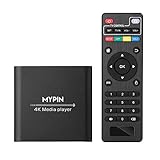
- 【4K Media Player】-- Experience Full 4k@30hz media files in this digital media player; It supports a single file up to 4GB(FAT32) or 30GB(NTFS) in MKV, AVI, TS/TP, MP4/M4V, MOV, VOB, M2TS, WMV, PMP, PG, M2TS; It is capable of 4K video only for 4K TV, HDMI up to 7.1 surround sound, good for home entertainment systems;Made of aluminum alloy, it has better protection during carrying
- 【Dual USB Ports】-- Plays from TF card / USB flash drives(up to 128G) and USB hard drives up to 8TB. Dual USB ports for connecting two devices, but it can only read one of them at one time. You can also connect a USB mouse or keyboard to operate the player, making your TV smarter by adding the ability to play videos, music, and photo slideshows or PPT
- 【H.265 Decoding】-- Powerful H.265 decoding loads files by taking half time and half occupation of bandwidth of H.264 decoding, it is much more efficient and faster; Enjoy a higher quality video experience with less buffering
- 【Multiple Play Modes & Vertical Display】 -- This 4k media player can play various popular videos, music, and photos. Videos and photos can be played in order, and music can be played randomly; It also reads PPT document, you can connect a PPT flip to display it better. It also supports horizontal and vertical screen, compatible with your vertical screen
- 【HDMI & AV & Optical Output】-- You can manage the media player to play MP3 or WAV songs to your speakers via optical or AV output to experience better audio effects. It also reads embedded and external subtitle files like SRT, SMI, SUB, SSA
Or let it run in the cloud
- Upload your recording or build a playlist.
- Add your YouTube stream key once.
- Go live; StreamNeo loops the uploaded video from the cloud.
Nothing has to stay on at home. Your video streams as uploaded, up to 4K 60fps, at one price per slot, with automatic recovery if YouTube drops the stream. The first day is free with no card. Monthly: $9.99 per month. StreamNeo plays uploaded videos to YouTube; it does not grant broadcast rights, so clear the anime rights and any needed allowlisting before use.
Quick Recap
Best Value
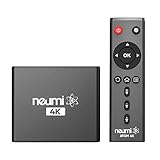
- The NEUMI ATOM 4K is the easy and affordable way to add video, photo, and music playback to any TV, new or old, at up to 4K Ultra-HD quality. Just attach a USB drive or SD card with your media files, select a file, and play! It is simple and intuitive to use with no complicated settings or controls. Turn on its automatic playback and resume capability and you won’t even need to pick up the remote.
- HDMI 4K/60fps Ultra-HD Quality - The ATOM 4K offers stunning video quality through its HDMI output that supports up to 2160p/60Hz resolution, with support for the latest video formats such as H.265/HEVC. It can feed digital surround sound to your home theater receiver for a cinema-like listening experience. Additionally, the ATOM 4K provides analog AV output for connecting to an older TV, or for sending audio to a stereo system.
- Reads USB Drives and SD Cards - Simply copy your videos, photos, or music files onto a USB drive or an SD card, insert it into the ATOM 4K, and you are ready to play those files using an easy-to-navigate menu. Got a lot of media files? No problem! The ATOM 4K can read USB drives up to 4TB or Micro SD cards up to 512GB. Popular file systems are supported, including FAT32, exFAT and NTFS.
- Fully Automatic Playback - Turn on its automatic playback feature and the ATOM 4K will find and play media files on its own without any user input. It will also remember where you stopped watching on a video and resume playing from the stop point. Combined with the ability to loop and repeat videos continuously, the ATOM 4K is a perfect player for simple digital signage.
- Media Format Support - Video: MP4, MKV, AVI, TS/TP, MOV, VOB, and M2TS files using H.265/HEVC, H.264/AVC, VC1 or MPEG2/4 codecs, up to 4096x2304p@60fps resolution, 10-bit color, and 250mbps. Photos: JPG, JPEG, BMP, GIF (non-animated), PNG. Music: MP3, WMA, OGG, FLAC, APE, AAC
Start your free StreamNeo day.
Product prices and availability are accurate as of the date/time indicated and are subject to change. Any price and availability information displayed on Amazon at the time of purchase will apply.
The Tool Desk
Outbyte PC Repair FREERepair Windows errors before they cause bigger problemsFix Now →Outbyte Driver Updater FREEScan for outdated or missing drivers - takes under a minuteDriver Scan →