Free tools Windows power users keep installed
One-click scans. No signup required.
There is no single safe FFmpeg hardware-encoding command for every 24/7 YouTube gaming stream: the right encoder and options depend on your GPU, driver, FFmpeg build, codec, resolution, and frame rate. Start by confirming that your machine can use the intended hardware encoder, then match YouTube’s current ingest targets—CBR, a two-second keyframe interval, and the bitrate for your chosen codec and output. Because YouTube warns that streams longer than 12 hours may not be captured at all, treat a local recording as the preservation copy, not YouTube’s archive.
Choose settings for the stream you are actually sending
YouTube’s live ingest guidance supports RTMP or RTMPS and H.264, HEVC, or AV1 video at up to 60 fps. YouTube recommends RTMPS. For all three codecs, configure constant bitrate (CBR) and a two-second keyframe interval; YouTube says the interval should not exceed four seconds. These are ingest recommendations, not a ranking of encoder quality or a promise that a given GPU can sustain a particular workload. Consult YouTube Help’s current live encoder settings when you configure a codec or resolution, since the complete codec-specific table can change.
Recommended YouTube ingest bitrates
The figures below are YouTube Help recommendations for live ingest, not results from a comparative encoder test. Choose the row matching both the output resolution and frame rate.
| Output | H.264 | HEVC or AV1 |
|---|---|---|
| 2160p (4K), 60 fps | 50 Mbps | 35 Mbps |
| 2160p (4K), 30 fps | 42 Mbps | 30 Mbps |
| 1440p, 60 fps | 34 Mbps | 24 Mbps |
| 1440p, 30 fps | 21 Mbps | 15 Mbps |
| 1080p, 60 fps | 17 Mbps | 12 Mbps |
| 1080p, 30 fps | 14 Mbps | 10 Mbps |
| 720p, 60 fps | 8 Mbps | 6 Mbps |
| 720p, 30 fps | 8 Mbps | 6 Mbps |
For example, a 1080p60 H.264 stream has a recommended ingest bitrate of 17 Mbps; a 1080p60 HEVC or AV1 stream has a recommended bitrate of 12 Mbps. Those numbers describe what YouTube recommends receiving. They do not establish which codec or hardware encoder will look best for your game, or whether your connection can deliver the stream reliably.
#1 Best Overall

- Spacious Design: Measuring 21.1" wide and 14.1" deep, our lap desk comfortably fits most laptops up to 15.6". Extra room for accessories ensures convenience.
- Enhanced Functionality: Packed with handy features, including a 5x9" precision tracking mouse pad and a built-in phone slot for seamless work or video calls. Plus, enjoy ergonomic support with the integrated cushioned wrist rest.
- Cool Comfort: Enjoy a stable surface with our lap desk's dual bolster cushion, designed for comfort and airflow, keeping your lap cool during extended use.
- Durable Surface: Work with confidence on our lap desk's solid surface, featuring a sleek black carbon color, ensuring optimal air circulation to prevent your laptop from overheating.
- On-the-Go Convenience: With an integrated handle and lightweight design (2.8 lbs), our lap desk is portable for travel or moving around the house, offering flexibility in any space.
Keyframes are measured in frames, not seconds
Set the keyframe interval to two seconds. If the encoder asks for a GOP length in frames, calculate it from the output frame rate: 120 frames at 60 fps, 60 frames at 30 fps, or the corresponding frame count at another rate. Do not copy a 60-fps GOP value into a 30-fps configuration. YouTube’s guidance says not to exceed a four-second interval.
Audio and picture format
YouTube’s cited guidance lists stereo AAC at 128 Kbps and 44.1 kHz, or 5.1-channel AAC at 384 Kbps and 48 kHz. For SDR, it specifies Rec. 709 and 8-bit video. It also lists square pixels and progressive scan among its advanced settings. The page lists two B-frames, one reference frame, and CABAC as advanced settings; treat these as codec-specific encoder parameters rather than universal switches, and confirm that the selected encoder supports them. For HDR, YouTube recommends HEVC and says AV1 is not supported for HDR. Check its current guidance before building an HDR configuration.
Rank #2

- 5-in-1 Connectivity: Equipped with a 4K HDMI port, a 5 Gbps USB-C data port, two 5 Gbps USB-A ports, and a USB C 100W PD-IN port. Note: The USB C 100W PD-IN port supports only charging and does not support data transfer devices such as headphones or speakers.
- Powerful Pass-Through Charging: Supports up to 85W pass-through charging so you can power up your laptop while you use the hub. Note: Pass-through charging requires a charger (not included). Note: To achieve full power for iPad, we recommend using a 45W wall charger.
- Transfer Files in Seconds: Move files to and from your laptop at speeds of up to 5 Gbps via the USB-C and USB-A data ports. Note: The USB C 5Gbps Data port does not support video output.
- HD Display: Connect to the HDMI port to stream or mirror content to an external monitor in resolutions of up to 4K@30Hz. Note: The USB-C ports do not support video output.
- What You Get: Anker 332 USB-C Hub (5-in-1), welcome guide, our worry-free 18-month warranty, and friendly customer service.
Find a hardware encoder FFmpeg can actually use
Hardware encoding is selected through the output encoder implementation. The FFmpeg option -hwaccel concerns hardware-assisted decoding of input; adding it does not, by itself, select a hardware video encoder. FFmpeg documents hardware methods including VAAPI, QSV, and VideoToolbox, but which encoder is available depends on the build, operating system, hardware, and installed driver.
Check the build, then check runtime support
- Identify your setup. Note the operating system, GPU or integrated-graphics generation, driver, FFmpeg version and build, and the codec you want to send. Also decide whether FFmpeg will encode captured gameplay, a pre-recorded VOD, or another input; input handling is not the same as output encoding.
- Inspect FFmpeg’s enabled components. Run
ffmpeg -hide_banner -hwaccelsto see hardware-acceleration components enabled in that build, andffmpeg -hide_banner -encodersto inspect its encoder list. These are inventory checks, not proof that the machine can initialize an encoder. A listed component can still fail when the required hardware or suitable driver is absent. - Check the selected encoder’s own options. Use FFmpeg’s encoder help for the exact encoder name shown by your build—for example,
ffmpeg -hide_banner -h encoder=<encoder_name>. Confirm its supported codecs, rate-control modes, preset or quality controls, and any keyframe options before writing a stream command. Names and options differ across implementations and versions. - Initialize and test the actual runtime. Run a short encode with representative footage and audio before relying on a continuous stream. FFmpeg’s documentation notes that actual runtime availability depends on suitable hardware and a suitable driver being installed. Check both that initialization succeeds and that the output has the intended codec, frame rate, and keyframe cadence.
FFmpeg cautions that some hardware-acceleration methods are intended for playback rather than faster encoding, and moving frames between GPU and system memory can add overhead. Keep the distinction clear: hardware support for decoding an input does not establish that a compatible hardware encoder is available or faster on your machine.
Rank #3
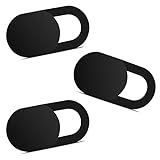
- Note: Not suitable for MacBooks released after 2023 or devices with a protruding front camera; Not applicable to full-screen or notch-style tempered glass screen protectors; Do not use on the rear camera of the phone.
- 💻 Why Do You Need a Webcam Cover Slide? — Safeguard your privacy by covering your webcam with our reliable webcam cover when not in use. Don't let anyone secretly watch you. Stay protected!
- ✅ Thin & Stylish — Enhance your laptop's functionality and aesthetics with our 0.027" ultra-thin webcam covers. Seamlessly close your laptop while adding a touch of sophistication.
- ✅ Fits Most Devices — Compatible with laptops, phones, tablets, desktops! Keep your privacy intact on Ap/ple, Mac/Book, iPh/one, iP/ad, H/P, L/novo, De/ll, Ac/er, As/us, Sa/msung devices.
- ✅ 365 Days Protection — Our upgraded 3.0 adhesive ensures a strong hold that won't damage your equipment. Experience reliable, long-term privacy protection day in and day out.
Choose among QSV, AMF, and other available implementations by evidence
Do not assume that a vendor label alone identifies a best setting. FFmpeg’s QSV documentation describes encoder-specific presets, a low_power option, and a scenario hint that includes livestreaming; it also documents version and mode limitations for low-power operation. FFmpeg’s current AMF AV1 source exposes rate-control choices including CBR and several latency modes. Neither set of options transfers automatically to another encoder family. The available documentation does not establish a universal quality winner among NVIDIA, Intel, AMD, and software encoding, nor does it provide comparative GPU-load or power measurements.
Build the streaming configuration without guessing at a universal command
A single copy-and-paste command cannot be validated for a title that does not specify the operating system, input, GPU, FFmpeg build, codec, resolution, frame rate, audio path, upload capacity, or local recording method. Instead, define the following settings for your chosen encoder, then use that encoder’s help output to map them to its exact option names.
Rank #4

- Anti-Slip Surface - Transform your laptop into a mobile workstation with the AboveTEK portable laptop lap desk. The anti-slip surface provides a strong grip for laptops up to 15.6 inches(Diagonal), while the double rubber strip on the bottom ensures a stable display or typing experience on your lap, couch, or bed.
- Retractable Mouse Pad - Retractable laptop mouse pad extends on both directions for the left/right handed with elevation along the edges for stopping mouse from falling off. The size of laptop tray is 14" X 9.7" and the size of mouse pad is 7.4" X 6.1".
- Effective Heat Shield - The effective heat shield made of sturdy and thick material protects your laptop from overheating. Prioritizes your comfort and safety, an ideal lap pad or board for working anywhere.
- EASY to Carry and Store - With an ergonomic and simplistic design, the lap desk is portable to store in a backpack. Only 15" in size, 2.2 lb of weight and with slim 0.6 inch thickness, it is ready to be easily carried around.
- Widely Applicable - The smooth platform accommodates laptops and tablets up to 15.6 inches(Diagonal), making it a versatile accessory and one of the best gifts for mom, dad, students and professionals. Perfect for use as a laptop bed tray or tablet holder anywhere at home, library, or park.
- Output protocol: RTMPS is YouTube’s recommendation; RTMP is also listed as supported. Use the server address and stream key YouTube provides for the live event.
- Video codec and frame rate: Select a codec supported by both your hardware encoder and YouTube ingest. Keep the output at or below 60 fps and use the matching bitrate row above.
- Rate control: Use CBR for the live output and set the bitrate to YouTube’s recommendation for that codec, resolution, and frame rate. The encoder’s exact CBR option varies by implementation.
- Keyframes: Target a two-second interval, calculated in frames for the selected output rate; do not exceed four seconds.
- Audio: Set AAC and the channel layout, sample rate, and bitrate appropriate to the intended stereo or 5.1 output. Confirm that the source actually supplies the intended channels.
- Image characteristics: For SDR, match YouTube’s Rec. 709 and 8-bit guidance. Use progressive frames and square pixels. Do not apply H.264-specific advanced parameters to HEVC or AV1 without confirming support.
- Connection headroom: Your sustained upload capacity must reliably carry the live bitrate plus audio and protocol overhead. Leave headroom rather than planning a continuous stream at the full measured upload rate, and monitor YouTube’s stream health during testing.
Protect the stream key as a credential: do not publish it in a command transcript, recording, screenshot, or public configuration file. If it is exposed, replace or reset it in YouTube’s live-control interface before resuming.
Keep the VOD and the live stream from competing for resources
A 24/7 live output and a full-quality local recording are separate outputs with separate goals. YouTube warns that streams exceeding 12 hours may not be captured at all and recommends recording a local archive as a backup. It also says rewind or DVR capability may be limited or unavailable for streams longer than 12 hours. Treat the live page as distribution, not as the only copy of the recording.
Best Value

- Spacious Design: Measuring 21.1" wide and 12" deep, our lap desk comfortably fits most laptops up to 15.6". Extra room for accessories ensures convenience.
- Enhanced Functionality: Packed with handy features, including a 5x9" precision tracking mouse pad and a built-in phone slot for seamless work or video calls. Plus, enjoy laptop support with the integrated device ledge.
- Cool Comfort: Enjoy a stable surface with our lap desk's dual bolster cushion, designed for comfort and airflow, keeping your lap cool during extended use.
- Durable Surface: Work with confidence on our lap desk's solid surface, featuring a blush pink color, ensuring optimal air circulation to prevent your laptop from overheating.
- On-the-Go Convenience: With an integrated handle and lightweight design (2.14 lbs), our lap desk is portable for travel or moving around the house, offering flexibility in any space.
Plan the local recording deliberately
- Choose the recording codec, quality, and destination independently from the ingest settings. A local file’s bitrate is not automatically the live ingest bitrate if recording is configured separately.
- Estimate storage from the actual local recording bitrate and retention period. At a constant 1 Mbps, one day requires about 10.8 GB in decimal units before container overhead; multiply by the local bitrate in Mbps and the number of days, then add room for overhead and operational margin. Variable-rate recordings will differ.
- Watch the destination drive’s free space and confirm that the local file is growing. Verify that recordings play and contain both video and audio; do not wait until a long run ends to discover a failed output.
- Consider dividing the broadcast into shorter sessions if separate YouTube archives are important, but do not treat session length as a guarantee that every archive will be retained. Keep and verify a local copy regardless.
YouTube’s cited guidance does not prescribe a specific drive type, capacity, or RAID arrangement. Pick storage based on the bitrate, retention period, and failure tolerance you need rather than assuming a particular device is required.
Independent reader supportYour contribution helps us test, update, and keep practical guides available for everyone.Test before leaving a stream unattended
- Run a short test with representative gameplay motion, overlays, and the actual audio mix. Check that the encoder initializes, the picture is smooth, audio is synchronized, and the chosen codec, output dimensions, and frame rate are correct.
- Check the keyframe cadence and whether the selected rate control stays near the target bitrate. A syntactically valid command can still produce an unsuitable ingest stream.
- Use YouTube’s preview and stream-health feedback, and verify that viewers can access the live output. YouTube explicitly recommends testing and monitoring stream health.
- Test the local recording at the same time. Confirm that the archive file grows, has usable audio and video, and is saved where expected. Ensure the combined workload can sustain both outputs before starting a long run.
- Exercise recovery procedures during a controlled test: confirm how you will notice a disconnected ingest, restart the encoder or source, and check the local recording after an interruption. A successful short test reduces uncertainty; it does not guarantee a future 24/7 run.
Troubleshoot common failures
| Symptom | Likely cause | What to check |
|---|---|---|
| FFmpeg lists a hardware component, but encoding fails to initialize | The build exposes the component, but the runtime hardware or suitable driver is unavailable or misconfigured. | Confirm the driver and device are present, verify the exact encoder name and its options, and test initialization with a short encode. The -hwaccels list alone does not prove runtime availability. |
| The stream connects but YouTube reports poor health or dropped frames | Upload capacity is unstable or insufficient for the configured bitrate and overhead; encoder or system load may also be limiting output. | Check YouTube stream-health feedback, sustained upload performance, encoder load, and whether the output bitrate matches the selected codec/resolution/frame-rate row. Test with headroom rather than saturating the connection. |
| YouTube rejects the ingest or the output differs from the intended configuration | The codec, dimensions, frame rate, rate control, or keyframe cadence may not match the intended target, or the wrong stream key/server endpoint may be in use. | Inspect FFmpeg’s actual output and encoder help, confirm the event’s server address and key, and compare codec-specific settings with YouTube’s current live guidance. |
| The video looks soft or blocky during fast gameplay | The chosen bitrate may be too low for the codec, resolution, frame rate, or motion complexity, or the encoder’s quality/latency controls may not be appropriate. | First match YouTube’s recommended ingest bitrate for the selected output. Then test encoder-specific quality controls with gameplay representative of the real stream; there is no established universal preset across hardware vendors. |
| The live page ends, but no complete YouTube archive appears | A stream longer than 12 hours may not be captured at all; DVR rewind has a separate limitation for long streams. | Use a local recording as the preservation copy and verify it. Shorter live sessions are an operational option for separate platform archives, not a guarantee of capture. |
| The live stream works but the local recording stops or fills the drive | The recording output may have failed, storage may be exhausted, or the local bitrate and retention plan may be larger than expected. | Check that the local file is still growing, inspect free space, estimate storage from the recording’s own bitrate, and test the recording output independently of YouTube ingest. |
Protect the channel and the VOD rights
Hardware encoding does not grant permission to broadcast a game, soundtrack, cutscene, or other material. Check the relevant game publisher’s streaming and monetization terms, and use music and other assets that you have permission to broadcast. A stream can be technically healthy while still creating a copyright or policy problem. YouTube monetization eligibility and reused-content assessments are distinct from whether an encoder can transmit the video; review YouTube’s current rules for the channel and content rather than assuming that a continuous VOD loop qualifies.
Or let it run in the cloud
If your goal is simply to keep a pre-recorded gaming VOD looping on YouTube, StreamNeo is a cloud alternative to maintaining an FFmpeg encoder on your own computer: upload the recording or build a playlist, add your YouTube stream key once, and go live. It plays uploaded videos, not a live camera feed, and streams to YouTube.
Quick Recap
- Your computer and home connection do not have to stay on.
- Each slot streams the uploaded quality as made, up to 4K 60fps, at one flat price per slot with no quality tiers or re-encoding.
- It can automatically recover if YouTube drops the stream.
- The first day is free with no card required; one free day is available per account.
- The monthly option is $9.99 per month.
See StreamNeo for details, or start the free day.
Product prices and availability are accurate as of the date/time indicated and are subject to change. Any price and availability information displayed on Amazon at the time of purchase will apply.



