What’s actually slowing this PC down?
Pick the symptom - the matching free tool is one click away.
Run FFmpeg inside a tmux session, add -nostdin to the FFmpeg command, and detach from tmux before closing SSH. Reconnect to the same Linode and reattach with tmux attach -t ffmpeg. This preserves the process across an SSH disconnect; it does not protect it from a reboot, shutdown, or server-side failure.
Keep FFmpeg running with tmux
For a one-off encode or similar job, tmux is a practical default: it keeps the terminal session available after you disconnect and lets you return to its output. Linode Community guidance describes this detach-and-reattach approach as a way to leave a process running after disconnecting. Linode Community
- SSH into your Linode and check whether
tmuxis installed. If it is not, install it using the package manager for your Linux distribution. - Start a named session:
tmux new -s ffmpeg. - Run FFmpeg inside that session, adding
-nostdinso it does not check for terminal input:ffmpeg -nostdin -i /path/to/input -c:v libx264 -c:a aac /path/to/output.mp4Replace the paths and choose codecs and other encoding options appropriate to your job; the example is illustrative, not a universal encoding recommendation.
- While FFmpeg is running, press Ctrl+B, then D. This detaches from tmux without closing the session or stopping the command.
- You can now close SSH. To return later, SSH to the same Linode and run
tmux attach -t ffmpeg.
Before disconnecting, make sure FFmpeg is running in the tmux session. If the session name is already in use, list sessions with tmux ls and attach to the existing session rather than starting a duplicate job.
Choose another method when the job needs a different lifecycle
| Method | Best suited to | How to use it | Important limit |
|---|---|---|---|
| tmux | A one-off job when you want to return to its terminal output. | Run FFmpeg in a named session; detach with Ctrl+B, then D; reattach with tmux attach -t ffmpeg. |
Does not make the process survive a reboot or server shutdown. |
| GNU Screen | A persistent terminal session if Screen is already part of your workflow. | Start Screen, run FFmpeg, detach with Ctrl+A, then Ctrl+D; reattach with screen -r. |
Like tmux, it preserves a session across SSH disconnects, not reboots. |
| nohup | A noninteractive background job when you do not need to reattach to its terminal. | nohup ffmpeg -nostdin -i input.mp4 output.mp4 > ffmpeg.log 2>&1 < /dev/null & |
Does not restart the process after reboot. Keep track of the log and process. |
| systemd | A job that needs service management or should start automatically at boot. | Create a service unit with a deliberate user, working directory, full executable path, input/output paths, and restart policy; then enable and manage it with systemd. | Requires service configuration. A restart policy does not fix a bad input, full disk, or persistent FFmpeg error. |
Linode’s systemd guide describes creating and enabling a custom service for startup at boot. The unit should match the job rather than relying on shell settings from an SSH session. Use systemd to Start a Linux Service at Boot
Outdated Drivers Are Slowing You Down
One free scan finds every outdated or missing driver and matches the right update for your exact hardware.Free scan · exact hardware matchWindows Errors? Fix Them Before They Spread
Repair common Windows errors and clear accumulated junk for a smoother, more stable PC - no reinstall needed.Free scan · no reinstall#1 Best Overall

- 【AMD Ryzen 7330U】 – The Efficiency-Tuned Powerhouse,AMD Ryzen 7330U (Zen 3, SMT, 4C/8T) in KAMRUI P2 mini PC crushes rivals: Intel i3-10110U (2C/4T, 2019) and N95 (4 efficiency cores, no HT, single-channel memory). Vs predecessor Ryzen 3 4300U (4C/4T): ~50% faster single-core, ~46% multi-core, 8MB L3 cache (vs 4MB). Beats both Intel chips hugely in multi-core, making heavy multitasking, coding, data work smooth at just 15W TDP. High-end power in a cool, efficient box.
- 【AMD Radeon Graphics】– Triple 4K Vision & Fluidity,The integrated Radeon Graphics (based on the modern Vega architecture with 6 CUs) is a visual beast, outclassing the iGPU offerings from both AMD's prior generation and Intel. The Intel UHD Graphics (i3-10110U/N95) struggles with single-channel memory and low execution units, crippling its gaming performance and barely handling basic 4K video without stuttering. While the older Radeon Vega 5 (4300U) was decent, our 7330U's Radeon Graphics (6 CUs) pushes the boundaries, delivering higher graphics clock speeds (up to 1.8GHz) and significantly better rendering capabilities. It can drive triple 4K@60Hz displays with zero lag, edit photos/videos.
- 【Generous Storage & Easy Expansion】The KAMRUI Pinova P2 mini desktop computers comes with 16GB LPDDR4X RAM (higher frequency, lower power) for buttery‑smooth multitasking, and a 256GB M.2 SSD for blazing fast boot‑up, quick file transfers, and no more long loading screens. It also features two storage expansion slots (1x M.2 2280 SATA/NVMe PCIe 3.0 slot + 1x M.2 2280 SATA slot), supporting up to 4TB total (not included). You’ll have all the space you need for projects, media, and important data.
- 【Triple 4K Display Output】The KAMRUI Pinova P2 mini desktop pc is equipped with HDMI 2.0 ×1 + DP 1.4 ×1 + USB 3.2 Gen2 Type‑C ×1 (with DP Alt Mode), enabling simultaneous triple 4K@60Hz output. Whether for home entertainment, remote work, or conference room presentations, it delivers an immersive visual experience. Two USB 3.2 Gen2 Type‑A ports (up to 10Gbps – 21x faster than USB 2.0) make data transfers and device expansion a breeze.
- 【USB 3.2 Gen2 Type‑C: 10Gbps & Versatile Connectivity】The USB 3.2 Gen2 Type‑C port on the KAMRUI P2 small pc supports 10Gbps data transfer speeds and can also output DisplayPort 1.4 video. Together with Gigabit LAN, Wi‑Fi, and Bluetooth, you get a fast, flexible, and productive connected environment – wired or wireless.
For Screen, Linode Community guidance documents the detach and reattach pattern. Linode Community
Run a noninteractive job with nohup
For a simple detached command, redirect standard output and standard error to a known log, and redirect standard input from /dev/null. FFmpeg normally writes diagnostic logs to stderr, so 2>&1 puts them in the same file. The Linux nohup manual explains that the command ignores hangup signals and describes its default handling of terminal input and output. nohup(1) manual
Rank #2
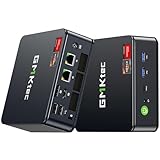
- Office Gaming Mini PC - UPGRADED GMKtec Nucbox M5 Ultra Series is equipped with the powerful AMD Ryzen 7 7730U processor, 8 Cores/16 Threads, Base 2.00GHz (Power Saving Quiet Mode) with Turbo Boost up to 4.50GHz (Performance Mode) in BIOS settings, Based on the ZEN 3+ architecture, this small but powerful mini pc delivers satisfying results in productivity, office work, and gaming. 35% Performance increase over AMD Ryzen 5 7430U/ Ryzen 7 5700U, 5600U, 5560U, 5500U.
- 32GB DDR4 RAM & 512GB PCIe SSD - Installed with DDR4 32GB RAM Dual Channel (2x16GB), the Nucbox M5 Plus mini pc support expansion to 64GB RAM. Featured with 512GB M.2 2280 PCIe 3.0 SSD, support dual slot expansion to 4TB SSD. (Upgrades not included)
- DUAL NIC LAN 2.5G RJ45 - Fast Network Speeds: Enjoy up to 2500Mbps data transmission speed without worrying about lagging. Ideal for working, gaming, and surfing the internet. Great for Untangle, Pfsense or as a server office PC.
- Mini Desktop Computer with 4K Triple Screen Display - Nucbox M5 Ultra integrates AMD Radeon Graphics 8 Cores 2000 MHz GPU to deliver powerful graphics processing power to easily handle the demands of complex design software, 4K@60Hz UHD video editing, and playback. It can connect to 3 display screens simultaneously.
- Fast Internet WiFi 6E + BT5.2 Connection - GMKtec Mini PC with WiFi-6E Wireless, have 2.5G/5G/6G triple band, more faster and lower latency. Bluetooth 5.2 allowing you more quickly to connect other wireless devices (headset, mouse, keyboard, etc.) Interface features 2*USB3.2 ports, 2*USB2.0 ports, 1*HDMI 2.0 port(4K@60Hz), 1*USB-C port(PD/DP/DATA), 1*DP Port, 1*Audio 3.5mm (HP&MIC), 1*DC Power Port.
After running the command, note the PID reported by the shell or find the process with an appropriate process-inspection command. To watch the log, use tail -f ffmpeg.log. A nohup process is not a reboot-survival mechanism.
Use systemd for service management or boot startup
A systemd service is a better fit when you want consistent start, stop, status, and log management, or need the job to be started after the machine boots. Set a full path to FFmpeg and explicit paths for the input and output; an interactive shell’s environment and current directory should not be assumed. Linode’s guide covers service creation and enabling startup. Linode systemd guide
The Tool Desk
Outbyte PC Repair FREERepair Windows errors before they cause bigger problemsFix Now →Outbyte Driver Updater FREEScan for outdated or missing drivers - takes under a minuteDriver Scan →Rank #3

- 【AMD Ryzen 3 5300U CPU: Outperforms N150 & 3500U】 BOSGAME E5 mini PC is powered by the TSMC 7nm FinFET architecture AMD Ryzen 3 5300U processor (4 Cores, 8 Threads, up to 3.8GHz boost, 6MB total cache). Compared to low-end Intel N150 or 3500U chips which only have 4 single threads and throttle under load, the 5300U delivers over 30% faster multi-core speed. Run 30+ browser tabs, large Excel sheets, and Zoom meetings simultaneously without system lag.
- 【8GB DDR4 RAM & 256GB NVMe SSD Storage】 Installed with high-speed 8GB DDR4 dual-channel memory and a fast 256GB M.2 2280 SSD, eliminating slow boot times and application loading delays. To accommodate growing data requirements, the upgradeable hardware design features dual SODIMM slots that allow you to expand memory up to 64GB RAM, ensuring smooth operation during heavy multitasking.
- 【High-Capacity Dual M.2 SSD Storage Expansion】 Never worry about running out of space for your business files. In addition to the pre-installed 256GB system drive, the motherboard houses an extra empty internal M.2 2280 NVMe PCIe 3.0 slot. This allows you to easily add a second solid-state drive for up to an additional 2TB of storage capacity (upgrades not included) without needing to remove or reinstall the original operating system.
- 【Radeon 6-Core Graphics & Triple 4K Displays】 Integrated with official AMD Radeon Graphics (6 Graphics Cores, 1500 MHz frequency) for casual gaming, photo editing, and crisp 4K media decoding. Featuring 1x HDMI 2.0 port, 1x DisplayPort, and 1x Full-Function Type-C port, the E5 outputs true 4K@60Hz resolution to three monitors at once. This multi-screen setup eliminates constant window-switching for traders, programmers, and office workers.
- 【Dual 2.5GbE LAN Ports for Advanced Networking】 Experience fast wired network transmission speeds up to 2500Mbps without lagging or buffering. The integration of dual 2.5 Gigabit Ethernet ports (powered by Realtek RTL8125 controller) makes this compact computer an exceptional hardware choice for tech enthusiasts. Easily configure it into software routers, hardware firewalls (pfSense, OpnSense), home NAS servers, or local homelabs.
FFmpeg background settings and logs
Use -nostdin, but pair it with a persistence method
FFmpeg’s FAQ recommends -nostdin for background execution to prevent terminal-input checks from suspending the process. Redirecting stdin from /dev/null is another documented option on Linux and macOS. Neither setting, by itself, separates FFmpeg from the SSH session: use tmux, Screen, nohup, or systemd for that. FFmpeg FAQ
Capture useful diagnostics
FFmpeg writes logs to stderr by default. With nohup, redirect both streams to the log file as shown above. FFmpeg’s -report option saves the full command line and log output to a timestamped report in the current directory. Its -progress option emits periodic machine-readable progress records to a chosen destination, such as pipe:1. If you use -progress pipe:1, deliberately capture stdout so those records are not lost. See the FFmpeg command-line documentation.
Rank #4

- 12th Intel Alder Lake N95 Processor – The GMKtec G3 S Mini PC is powered by the 12th Gen Intel N95 processor with 4 cores, 4 threads, 6MB cache and a burst frequency up to 3.4GHz. Compared with N100/N5105/N5100/N5095, the N95 delivers up to 36% overall performance improvement. Perfect for routine tasks, office work, and home entertainment, this compact mini desktop is more convenient than traditional bulky PCs.
- 8GB RAM & 256GB SSD Storage – Pre-installed with 8GB DDR4 memory and a fast 256GB M.2 2242 SSD, the G3 S mini desktop offers quicker startup, smoother multitasking, and faster file transfers. Enjoy seamless performance whether you’re working on multiple applications, browsing, or streaming content.
- Rich Interfaces & Connectivity – The G3 S mini computer comes equipped with USB 3.2 (up to 10Gbps), dual HDMI 2.0 (4K@60Hz), and a 3.5mm audio jack. With support for WiFi 5, Bluetooth 5.0, and Gigabit Ethernet (RJ45 1000MbE), it connects easily with monitors, projectors, printers, office equipment, and other peripherals, making it versatile for both home and business use.
- Dual 4K Display Support – Featuring upgraded Intel UHD Graphics (up to 1000MHz), the G3 S supports 4K video playback and AV1 decoding for a smooth viewing experience. With dual HDMI outputs, you can connect two 4K@60Hz displays simultaneously, enabling efficient multitasking for work and entertainment.
- GMKtec WARRANTY - GMKtec offers a 1-year limited GMKtec's warranty for each mini PC, starting from the date of the purchase. All defects due to design and workmanship are covered. With a professional after sales team always ready to attend to your needs, you can simply relax and enjoy your mini PC.
Verify the job and troubleshoot failures
- It stopped or suspended after you closed SSH: Check whether it was actually running inside tmux or Screen, rather than in the shell you closed. For background FFmpeg, add
-nostdinor redirect stdin from/dev/null, as described in the FFmpeg FAQ. - You cannot find the tmux session: SSH to the same Linode and run
tmux ls. Attach to the session’s actual name; usetmux attach -t ffmpegif it is namedffmpeg. - The nohup process is running but there is no useful output: Check that the command redirected stderr as well as stdout, and inspect the file you specified with
tail -f ffmpeg.log. FFmpeg’s normal log output goes to stderr. - The job disappeared after reboot: That is expected for an ordinary detached terminal or nohup process. Configure and enable a systemd service if the job must start at boot. Linode systemd guide
- A systemd-managed job failed: Inspect the service status and its logs using the host’s systemd tools. Check the configured user and working directory, executable and media paths, permissions, disk space, and FFmpeg error output.
- The process exists but is no longer making progress: Session persistence only keeps the process independent of SSH. Check for an unavailable input or network source, a full disk, resource exhaustion, or an FFmpeg error; tmux and nohup do not make the workload fault tolerant.
What disconnect protection does—and does not—cover
tmux, Screen, and nohup address the SSH hangup: they let a process remain independent of the terminal connection. They do not protect a job from a Linode reboot or shutdown, exhausted resources, a failed source, a full disk, or an FFmpeg failure. For startup after reboot, use a service manager such as systemd; for other failures, configure and monitor the job for the specific failure modes that matter.
Or let it run in the cloud
If the goal is a YouTube channel that continuously loops uploaded video, rather than a one-off FFmpeg encode on Linode, StreamNeo is a separate cloud option: upload a recording or build a playlist, add your YouTube stream key, and go live. It keeps the stream running without a computer or home connection staying on. It streams to YouTube only and plays uploaded videos, not a live camera feed.
Free tools Windows power users keep installed
One-click scans. No signup required.
- Nothing has to stay on at home; StreamNeo runs the stream from the cloud.
- Uploaded video streams as made, up to 4K 60fps, at one flat price per slot, without re-encoding or quality tiers.
- It automatically recovers if YouTube drops the stream.
- The first day is free with no card required.
Every slot includes one always-on stream, 10 GB of storage per slot pooled across active slots, 24/7 looping and playlists, and support from the StreamNeo team. The same features are included on every plan; only the billing period changes. Monthly: $9.99 per month. Visit StreamNeo or start the free first day.
Quick Recap
Product prices and availability are accurate as of the date/time indicated and are subject to change. Any price and availability information displayed on Amazon at the time of purchase will apply.



