Recommended Free Tools
You can stream a Raspberry Pi 4 camera or another supported input to YouTube Live with FFmpeg by matching the event’s stream key and ingest URL, choosing an encoder your Pi actually supports, and keeping the bitrate within the upload capacity at your location. For a Pi 4 camera using Raspberry Pi’s documented built-in H.264 encoder, plan around a maximum of 1080p30—not 1080p60—and test privately before an event.
What you need before you start
- A Raspberry Pi 4 Model B with a compatible operating system and a stable power supply.
- A source: a compatible Raspberry Pi camera, a USB capture device or webcam, or another input supported by your installed FFmpeg build.
- FFmpeg installed and able to read your chosen input. Available encoders and device options vary with the OS image, packages, and connected hardware.
- A YouTube channel able to create a live event, plus reliable outbound internet at the Pi’s actual location.
A wired connection can avoid some Wi-Fi variability, but the decisive measure is the upload capacity you can sustain where and when you will stream. In India, ISP plans, local congestion, Wi-Fi and power conditions vary by provider and locality; there is no single speed or setup that can be assumed to work everywhere.
Create the YouTube event and protect its stream key
- In YouTube Studio, create or schedule a live event and open Live Control Room.
- For encoder streaming, copy the server URL and stream key shown for that event. Use that event’s values in FFmpeg; do not substitute an old key or publish the key in a command screenshot, public post, or shared configuration.
- Keep the key secret. It is the credential YouTube uses to accept and route the encoder feed. If it is exposed, reset it in Live Control Room and update your encoder configuration.
- After starting FFmpeg, wait for the event preview to appear. For a scheduled workflow, use the YouTube Studio control to go live when you are ready.
Use the ingest endpoint YouTube supplies for the event. YouTube recommends RTMPS, an encrypted extension to RTMP; use it when your selected FFmpeg build and the endpoint support it. Never publish a real URL containing a key.
Check the Pi’s input and encoder path
Raspberry Pi camera
Raspberry Pi documents rpicam-vid with an FFmpeg/libav backend for encoding audio/video and sending it over a network; it uses hardware H.264 encoding when present. The Picamera2 manual documents its H264Encoder accessing the built-in hardware through V4L2 and supporting up to 1080p30. That is the documented ceiling for this camera encoder, not a claim about every Pi input or FFmpeg build.
Free tools Windows power users keep installed
One-click scans. No signup required.
#1 Best Overall

- Includes Raspberry Pi 4 4GB Model B with 1.5GHz 64-bit quad-core CPU (4GB RAM)
- Includes Pre-Loaded 32GB EVO+ Micro SD Card (Class 10), USB MicroSD Card Reader
- CanaKit Premium High-Gloss Raspberry Pi 4 Case with Integrated Fan Mount, CanaKit Low Noise Bearing System Fan
- CanaKit 3.5A USB-C Raspberry Pi 4 Power Supply (US Plug) with Noise Filter, Set of Heat Sinks, Display Cable - 6 foot (Supports up to 4K60p)
- CanaKit USB-C PiSwitch (On/Off Power Switch for Raspberry Pi 4)
The Picamera2 manual gives a default I-frame interval of 60 frames when left to hardware discretion. At 30 fps that is two seconds, which aligns with YouTube’s recommended keyframe interval, but do not assume the same default for a different encoder. The manual also describes repeating sequence headers as potentially useful when a network client misses the start of a stream.
Other sources and FFmpeg builds
For a file, USB capture device, or other supported source, the input syntax, device path, capture format, and hardware-encoding options depend on the source and the installed system. FFmpeg upstream registers an H.264 v4l2m2m encoder wrapper marked hardware-capable, but that does not establish that your OS package exposes it or that it works with your input.
Rank #2
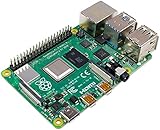
- Broadcom BCM2711, quad-core Cortex-A72 (ARM v8) 64-bit SoC @ 1. 5GHz
- 2. 4 GHz and 5. 0 GHz IEEE 802. 11b/g/n/ac wireless LAN, Bluetooth 5. 0, BLE
- 2 × USB 3. 0 ports, 2 x USB 2. 0 Ports
- 2 × micro HDMI ports supproting up to 4Kp60 video resolution
- Micro SD card slot for loading operating system and data storage
- Inspect the encoders available in your installed build, for example with
ffmpeg -encoders, and check whether an appropriate H.264 encoder is listed. - Confirm FFmpeg can identify and read your actual input. For a camera or capture device, use the device path and input format appropriate to your OS and hardware; these are not universal.
- Make a short local test encode before relying on hardware acceleration for a live event. If the hardware path is unavailable, a software encoder such as
libx264may be an option, but its performance on your particular Pi and settings is not established here.
Exact command lines are input-, OS-, and FFmpeg-version-dependent. Avoid assuming that an older encoder route such as h264_omx is available. The key checks are that FFmpeg reads the source, encodes the selected format at a sustainable rate, and can send to the event’s RTMP or RTMPS endpoint.
Choose a YouTube-compatible output profile
YouTube’s current encoder guidance for ordinary SDR recommends H.264, constant bitrate (CBR), a two-second keyframe interval (no more than four seconds), and up to 60 fps. AAC or MP3 audio is supported over RTMP/RTMPS. Its advanced H.264 guidance includes progressive scan and Rec. 709 for SDR. These are YouTube ingest recommendations, not proof that a particular Pi can encode every listed profile.
Quick wins for a faster PC:
Repair Windows errors before they cause bigger problemsFix Now →Scan for outdated or missing drivers - takes under a minuteDriver Scan →Rank #3
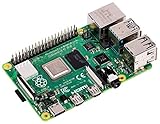
- Broadcom BCM2711, Quad core Cortex-A72 (ARM v8) 64-bit SoC @ 1.5GHz
- 1GB, 2GB, 4GB or 8GB LPDDR4-3200 SDRAM (depending on model)
- 2.4 GHz and 5.0 GHz IEEE 802.11ac wireless, Bluetooth 5.0, BLE Gigabit Ethernet
- 2 USB 3.0 ports; 2 USB 2.0 ports.
- Raspberry Pi standard 40 pin GPIO header (fully backwards compatible with previous boards)
| Output target | YouTube-recommended H.264 bitrate | Practical note for Pi 4 |
|---|---|---|
| 720p30 | 6 Mbps | A sensible starting target if the input and chosen encoder sustain it. |
| 720p60 | 8 Mbps | Use only if the source and actual encode path sustain 60 fps. |
| 1080p30 | 10 Mbps | Within the documented Pi camera H.264 ceiling, subject to successful setup and performance. |
| 1080p60 | 17 Mbps | Not a target to promise from the documented built-in Pi 4 camera H.264 encoder, which supports up to 1080p30. |
The bitrate values are YouTube’s recommendations, current as accessed in 2026; they are not Raspberry Pi performance measurements or guarantees about Indian internet service. Select resolution and frame rate based on the source, verified encoder capability, and upload headroom. A lower profile that stays stable is preferable to a nominally higher profile that drops frames or disconnects.
Measure upload capacity at the streaming location
YouTube advises keeping total upload usage below available outbound capacity with 20% room remaining. That headroom matters because other devices may use the connection, capacity may fluctuate, and download speed can be much higher than upload speed.
Rank #4

- Vilros Complete Starter Kit for Pi 4 Includes Raspberry Pi 4 Model B Board and all the accessories you need to get started.
- 9-PART KIT WILL HAVE YOU READY TO GET UP AND RUNNING: Kit Includes 1. Raspberry Pi 4 Model B Board 2. Case With Easy to connect Built-in fan 3. 64GB Micro SD card Preloaded with RP OS 4. Vilros Pi 4 Compatible Power Supply with Inline on/off switch (power supply color may vary white/black) 5. Micro HDMI to Standard HDMI cable (5ft) 6. Micro SD to USB adapter to reflash card if desired 7. Neoprene Storage Bag to store all parts when not in use 8. Set of 4 Heatsinks 9. Vilros QuickStart Guide instruction booklet for Pi 4
- PASSIVE & ACTIVE COOLING: The included case is well-vented and the kit also includes a set of heatsinks with thermal stickers for easy application and a pre-installed fan to keep the board cool in any use.
- CONVENIENT ACCESSORIES: The power supply features an inline on/off switch neoprene bag that holds and protects all the parts when not in use and the QuickStart guide is updated and written for Raspberry Pi 4.
- IMPORTANT: Kit does NOT include Keyboard, Mouse or Monitor
- Measure upload speed over the same connection path the Pi will use, at or near the time of the event.
- Account for all concurrent upload traffic, not just the FFmpeg video bitrate.
- Choose a bitrate that leaves YouTube’s recommended 20% upload headroom, then test under representative conditions.
- If the Pi is on Wi-Fi, repeat the check at its installed position; a result from a different room or network path may not reflect the stream’s real conditions.
Test privately, then monitor the live event
- Schedule a private or unlisted test stream and use the same source, camera position, audio, network and FFmpeg settings planned for the real broadcast.
- Include representative motion and sound. A static, silent test may not expose the load or audio problems of the actual program.
- Start FFmpeg and confirm that the YouTube Live Control Room preview appears and that stream-health notices show no unresolved issue.
- For a scheduled broadcast, YouTube recommends setting up at least two hours ahead and starting the encoder at least 15 minutes before the event. These are preparation recommendations, not technical prerequisites.
- Choose a latency mode according to the event. Lower latency can help audience interaction but may increase playback buffering; use the setting that fits the format and test it with viewers if interaction is important.
Troubleshoot in this order
- No preview or YouTube does not receive a stream: Check that the event is enabled and that the server URL and key belong to that event. Confirm the key has not been reset and that FFmpeg can reach the supplied endpoint.
- FFmpeg cannot open the source: Verify the device path, input format, permissions and source connection for your particular OS and hardware. Test input capture locally before debugging YouTube ingest.
- Encoder is unavailable or fails: Inspect the installed FFmpeg encoders and test the chosen encoder locally. A hardware-capable wrapper in upstream FFmpeg does not guarantee support in your installed package.
- Video looks poor, drops frames, or stream health is unstable: Check that codec, frame rate, keyframe interval and bitrate match the selected YouTube profile and that the Pi can sustain the encode. Lower resolution, frame rate or bitrate and test again if necessary.
- Connection drops or the stream buffers: Recheck actual upload headroom at the Pi, other devices’ traffic, and the wired or Wi-Fi path. Inspect Live Control Room’s health messages; do not rely on a download-speed figure as a substitute for upload capacity.
- Audio is absent or incompatible: Confirm the input audio is captured and the output uses a supported audio codec such as AAC or MP3. Test with the same microphone or capture path intended for the event.
Or let it run in the cloud
If your goal is a 24/7 YouTube stream from uploaded recordings rather than a live camera or capture input, StreamNeo is a cloud alternative: upload a recording or build a playlist, add your YouTube stream key once, and go live. Nothing has to stay on at home; it plays uploaded video rather than broadcasting a camera. It supports any uploaded quality up to 4K 60fps at one flat price per slot, automatically recovers if YouTube drops the stream, and the first day is free with no card. The monthly option is $9.99 per month. In India, UPI and cards are accepted; cards are available worldwide. Start your free StreamNeo day.
Quick Recap
Best Value

- Includes Raspberry Pi 4 4GB Model B with 1.5GHz 64-bit quad-core CPU (4GB RAM)
- CanaKit 3.5A USB-C Power Supply with Noise Filter (UL Listed) specially designed for the Raspberry Pi 4 (5-foot cable)
- CanaKit USB-C PiSwitch (On/Off Power Switch)
- Set of 3 Aluminum Heat Sinks for the Raspberry Pi 4
Product prices and availability are accurate as of the date/time indicated and are subject to change. Any price and availability information displayed on Amazon at the time of purchase will apply.



