You can use a Raspberry Pi in a YouTube gaming replay stream, but the right setup depends on where the replay is playing. A video file already accessible to the Pi needs a playback-and-streaming workflow; footage coming from a console or another computer also needs a compatible way to get that video into the Pi. The full chain is replay source → Pi input and software → live encoding → YouTube Live. A Pi’s published video-encoding capability alone does not guarantee that every capture, playback, overlay, and streaming combination will work at your chosen quality.
First, identify where the replay is coming from
Before choosing software or connecting hardware, decide which of these describes your replay. The source determines how video reaches the Pi; a Raspberry Pi does not capture gameplay simply because it can encode video.
A video file stored on, or accessible to, the Pi
This is the most direct source path: streaming software must be able to play the file and send its output to YouTube Live. Confirm that your chosen software supports your Pi model and operating system, and test the particular file format, audio, and playback workload. The available published specifications do not establish one verified software recipe for every Pi setup.
A console or another computer
The gameplay output must reach the Pi through an appropriate video-input or capture workflow before it can be encoded and streamed. The equipment and software depend on the source device, connector layout, Pi generation, and operating system. No particular capture-card model or console configuration is established here as compatible with this use case, so verify compatibility for your exact combination before buying or building around it.
What’s actually slowing this PC down?
Pick the symptom - the matching free tool is one click away.
#1 Best Overall

- Spacious Design: Measuring 21.1" wide and 14.1" deep, our lap desk comfortably fits most laptops up to 15.6". Extra room for accessories ensures convenience.
- Enhanced Functionality: Packed with handy features, including a 5x9" precision tracking mouse pad and a built-in phone slot for seamless work or video calls. Plus, enjoy ergonomic support with the integrated cushioned wrist rest.
- Cool Comfort: Enjoy a stable surface with our lap desk's dual bolster cushion, designed for comfort and airflow, keeping your lap cool during extended use.
- Durable Surface: Work with confidence on our lap desk's solid surface, featuring a sleek black carbon color, ensuring optimal air circulation to prevent your laptop from overheating.
- On-the-Go Convenience: With an integrated handle and lightweight design (2.8 lbs), our lap desk is portable for travel or moving around the house, offering flexibility in any space.
Replay playing in a browser
Browser playback is a separate input case: the Pi’s streaming workflow must capture or otherwise use that playback as its video source. Check that the software you choose can handle the browser output and its audio, then test the complete chain. Do not assume that a method for a local video file also captures a browser or another device.
Choose a Pi and software for the complete workload
What the Pi 4 specification does—and does not—say
Raspberry Pi’s Pi 4 Model B specification lists H.264 encoding at 1080p30. That is a useful capability reference, not an end-to-end guarantee: replay playback, video input, scene composition, overlays, audio, and live encoding all contribute to the workload. In particular, it does not prove that your chosen software and capture path will sustain 1080p30.
Rank #2

- 5-in-1 Connectivity: Equipped with a 4K HDMI port, a 5 Gbps USB-C data port, two 5 Gbps USB-A ports, and a USB C 100W PD-IN port. Note: The USB C 100W PD-IN port supports only charging and does not support data transfer devices such as headphones or speakers.
- Powerful Pass-Through Charging: Supports up to 85W pass-through charging so you can power up your laptop while you use the hub. Note: Pass-through charging requires a charger (not included). Note: To achieve full power for iPad, we recommend using a 45W wall charger.
- Transfer Files in Seconds: Move files to and from your laptop at speeds of up to 5 Gbps via the USB-C and USB-A data ports. Note: The USB C 5Gbps Data port does not support video output.
- HD Display: Connect to the HDMI port to stream or mirror content to an external monitor in resolutions of up to 4K@30Hz. Note: The USB-C ports do not support video output.
- What You Get: Anker 332 USB-C Hub (5-in-1), welcome guide, our worry-free 18-month warranty, and friendly customer service.
What Raspberry Pi’s Pi 5 encoding paper reports
Raspberry Pi’s 2026 paper, H.264 encoding performance on Raspberry Pi 5–series computers, says Pi 5 has no hardware H.264 encoder and uses software encoding. The paper reports that its software encoder produced 1080p30 H.264 in real time in low-latency mode using as little as 60% of a single CPU core. In high-quality mode, it reports 2–3 dB better PSNR than Pi 4’s hardware encoder at tested bitrates of 500 kb/s to 5 Mb/s, using approximately 100–150% of one CPU core. These are paper results under its test conditions, not a promise about a gaming replay stream with your playback, capture, and scene setup.
Verify streaming-software support rather than assuming it
Pick software that is currently available and supported for your specific Pi model and operating system, and confirm that it supports the video source you identified. OBS’s guidance explains the general trade-off: hardware encoders are generally recommended for performance because they move encoding work from the CPU to a specialized component (OBS hardware encoding). That principle does not verify a current OBS installation or support path for a Raspberry Pi. Do not treat generic OBS instructions or an FFmpeg command as a tested Pi recipe without evidence that the build, encoder, input, and options work on your setup.
Quick wins for a faster PC:
Fix the driver behind crashes, sound loss and screen glitchesFind Drivers →Repair Windows errors before they cause bigger problemsFix Now →Scan for outdated or missing drivers - takes under a minuteDriver Scan →Rank #3
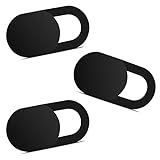
- Note: Not suitable for MacBooks released after 2023 or devices with a protruding front camera; Not applicable to full-screen or notch-style tempered glass screen protectors; Do not use on the rear camera of the phone.
- 💻 Why Do You Need a Webcam Cover Slide? — Safeguard your privacy by covering your webcam with our reliable webcam cover when not in use. Don't let anyone secretly watch you. Stay protected!
- ✅ Thin & Stylish — Enhance your laptop's functionality and aesthetics with our 0.027" ultra-thin webcam covers. Seamlessly close your laptop while adding a touch of sophistication.
- ✅ Fits Most Devices — Compatible with laptops, phones, tablets, desktops! Keep your privacy intact on Ap/ple, Mac/Book, iPh/one, iP/ad, H/P, L/novo, De/ll, Ac/er, As/us, Sa/msung devices.
- ✅ 365 Days Protection — Our upgraded 3.0 adhesive ensures a strong hold that won't damage your equipment. Experience reliable, long-term privacy protection day in and day out.
Set the YouTube Live output
YouTube’s encoder settings and bitrate guide covers RTMP/RTMPS delivery and recommends RTMPS, H.264 for ordinary SDR video, constant bitrate (CBR), and a two-second keyframe interval (no more than four seconds). Use these as the output targets where your software supports them.
Match bitrate to resolution and frame rate
YouTube’s recommended bitrate varies by resolution and frame rate, so there is no single correct rate for every replay stream. For example, its table gives 2–6 Mbps for 720p at 30 fps; do not apply that range to a different output format. Choose the table entry for the resolution and frame rate you intend to send, then check that your actual upload capacity can sustain it with headroom. YouTube Help puts it plainly: “We recommend running a speed test to test your upload bitrate.”
Rank #4

- Anti-Slip Surface - Transform your laptop into a mobile workstation with the AboveTEK portable laptop lap desk. The anti-slip surface provides a strong grip for laptops up to 15.6 inches(Diagonal), while the double rubber strip on the bottom ensures a stable display or typing experience on your lap, couch, or bed.
- Retractable Mouse Pad - Retractable laptop mouse pad extends on both directions for the left/right handed with elevation along the edges for stopping mouse from falling off. The size of laptop tray is 14" X 9.7" and the size of mouse pad is 7.4" X 6.1".
- Effective Heat Shield - The effective heat shield made of sturdy and thick material protects your laptop from overheating. Prioritizes your comfort and safety, an ideal lap pad or board for working anywhere.
- EASY to Carry and Store - With an ergonomic and simplistic design, the lap desk is portable to store in a backpack. Only 15" in size, 2.2 lb of weight and with slim 0.6 inch thickness, it is ready to be easily carried around.
- Widely Applicable - The smooth platform accommodates laptops and tablets up to 15.6 inches(Diagonal), making it a versatile accessory and one of the best gifts for mom, dad, students and professionals. Perfect for use as a laptop bed tray or tablet holder anywhere at home, library, or park.
Gaming footage often contains more motion than a static scene, while overlays or scene composition add their own rendering work. Test representative gameplay rather than relying on a static menu or low-motion clip to judge picture quality and stability.
Test with audio and motion before relying on the stream
- Configure your streaming software for the chosen source, RTMPS where supported, H.264, CBR, and a two-second keyframe interval.
- Select resolution and frame rate together, then use YouTube’s bitrate guidance for that exact output.
- Run a private or unlisted test if that option is available in your account workflow; visibility and live features can vary by account.
- Include gameplay movement and audio like the intended replay stream. YouTube advises testing with representative motion and audio, monitoring stream health, and reviewing messages.
- Watch the Pi and the YouTube stream-health feedback throughout the test. Check for dropped frames, encoder overload, audio/video sync drift, and warnings before relying on the setup.
Troubleshoot the common failure points
| Symptom | What to check | Practical next step |
|---|---|---|
| The Pi cannot see the replay video | Whether the replay is a local file, browser playback, or output from another device; whether the software supports that input path. | Confirm the source-to-Pi connection and software input support. For an external device, verify the specific capture workflow rather than assuming compatibility. |
| Video stutters or frames drop | Whether playback, capture, overlays, scene rendering, operating-system tasks, and encoding are overloading the Pi. | Test with a simpler scene and representative gameplay; reduce output resolution or frame rate, then choose the matching YouTube bitrate guidance and retest. OBS describes this as a combined workload issue in its encoding performance troubleshooting guide; the principle is useful even though it does not establish OBS compatibility for every Pi. |
| YouTube reports unstable stream health | Upload capacity, selected bitrate, and whether the connection can sustain the stream. | Run an upload speed test, leave headroom rather than matching the line’s best-case result exactly, and retest at a bitrate appropriate to the chosen resolution and frame rate. |
| Picture quality is poor during action | Whether the bitrate fits the chosen resolution and frame rate, and whether the test included similar motion. | Use YouTube’s recommendations for the output format and evaluate moving gameplay, not only static screens. |
| Audio is missing or out of sync | Whether the source path carries or captures audio and whether the test included sound. | Check the source and software audio selection, then repeat a test that includes both motion and audio before going live. |
| The stream stops unexpectedly | The software’s connection state, the Pi’s load, and YouTube’s stream-health messages. | Review the messages and logs available in your software and YouTube workflow, then test again. The cited sources do not establish one universal cause or a guaranteed recovery procedure for a Pi setup. |
Copyright and YouTube Live checks for gaming replays
Before streaming a replay, make sure you have the rights or permissions needed for the gameplay footage and any music, commentary, or other material it contains. A game replay is not automatically cleared for every use just because it was recorded by you. YouTube’s encoder guide covers technical delivery settings, not whether a particular video is copyright-safe or eligible under YouTube’s policies. Check the rules that apply to your content and account, and avoid assuming that a technically healthy stream settles copyright or reused-content questions.
Best Value

- Spacious Design: Measuring 21.1" wide and 12" deep, our lap desk comfortably fits most laptops up to 15.6". Extra room for accessories ensures convenience.
- Enhanced Functionality: Packed with handy features, including a 5x9" precision tracking mouse pad and a built-in phone slot for seamless work or video calls. Plus, enjoy laptop support with the integrated device ledge.
- Cool Comfort: Enjoy a stable surface with our lap desk's dual bolster cushion, designed for comfort and airflow, keeping your lap cool during extended use.
- Durable Surface: Work with confidence on our lap desk's solid surface, featuring a blush pink color, ensuring optimal air circulation to prevent your laptop from overheating.
- On-the-Go Convenience: With an integrated handle and lightweight design (2.14 lbs), our lap desk is portable for travel or moving around the house, offering flexibility in any space.
Or let it run in the cloud
If your goal is a YouTube channel that keeps replay videos running, rather than specifically using a Pi as the encoder, StreamNeo is a cloud alternative: upload a recording or build a playlist, add your YouTube stream key once, and go live. It loops uploaded videos to YouTube from the cloud, so nothing has to stay on at home. It streams what you uploaded, up to 4K 60fps, at one price per slot regardless of quality; it automatically recovers if YouTube drops the stream. The first day is free with no card. Monthly is $9.99 per month. StreamNeo plays uploaded video rather than broadcasting a live camera feed. Start the free day at StreamNeo registration.
Quick Recap
Product prices and availability are accurate as of the date/time indicated and are subject to change. Any price and availability information displayed on Amazon at the time of purchase will apply.