Free tools Windows power users keep installed
One-click scans. No signup required.
Jane Goodall died on October 1, 2025, at 91. The work she set in motion is still under way: long-term chimpanzee research at Gombe, community-led conservation, animal sanctuaries and Roots & Shoots youth projects. That is what it means to say she prepared us for a world without her—not that the work is finished, but that she built people and institutions able to carry it forward.
How the work began at Gombe
In 1960, at age 26, Goodall began studying wild chimpanzees at Gombe, Tanzania. She continued that work for 65 years, according to the Jane Goodall Institute (JGI). Her observations helped change how people understood the boundary between humans and other animals: she documented chimpanzees making and using tools, behavior that challenged the assumption that toolmaking belonged uniquely to humans. JGI describes the finding as a shift in how people understood our relationship with other animals.

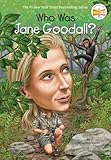

That discovery was not only a headline about chimpanzees. It showed the value of sustained attention to animals in their own environment—and of research that could revise human assumptions. JGI says Gombe research continues today as part of Goodall’s legacy. JGI’s announcement of her death gives the 1960 starting date; its biography of Goodall describes the significance of the tool-use observations.
Why a scientist became an activist
Goodall’s field research led her toward public advocacy. JGI’s biographical FAQ recounts that a conservation-focused session at the 1980s Understanding Chimpanzees conference changed the direction of her work. Goodall later put it this way: “I went to that conference as a scientist, and I left as an activist.”
#1 Best Overall

Her advocacy widened the frame from protecting individual animals to addressing the conditions that shape their survival. JGI’s present strategy describes its approach as science-driven and community-led, connecting conservation with local communities, habitat and human livelihoods. That approach matters because wildlife protection cannot be separated from the people who live alongside wildlife and depend on the same landscapes. JGI’s mission and strategy sets out the organization’s current priorities.
Institutions designed to carry the work forward
The Jane Goodall Institute
Goodall established JGI in 1977. The organization now identifies research, conservation, animal welfare, forest restoration and youth action among its priorities. Its remembrance says ongoing work includes Gombe research and Tacare, JGI’s community-centered conservation approach. These are organizational commitments and current programs, not a guarantee that every challenge will be solved or that any program will continue unchanged indefinitely.
Roots & Shoots
In 1991, Goodall founded Roots & Shoots with 12 high school students in Dar es Salaam. JGI says the youth program is now active in over 75 countries. The institute’s October 2025 announcement described its reach as “nearly 75 countries,” so the precise count varies across JGI pages; either way, the figures are the organization’s own descriptions, not an independently audited measure. Roots & Shoots gives young people a structure for turning concern about people, animals and the environment into local projects.
The Jane Goodall Legacy Foundation
Goodall launched the Jane Goodall Legacy Foundation in June 2017 to build an endowment supporting JGI programs, including Roots & Shoots, as well as conservation, research and education. She explained the purpose as enabling existing programs to continue and new ones to begin beyond her lifetime. An endowment is one way to plan for continuity; it does not by itself establish how future programs will perform. The foundation describes its purpose at janeslegacy.org.
Rank #3
What continues—and what each part contributes
JGI’s remembrance names several strands of continuing work. They serve different roles, so the available information does not support ranking them by impact.
| Area | What it does | What JGI says continues |
|---|---|---|
| Research and science | Builds knowledge through long-term study of wild chimpanzees and their environment. | Gombe research in Tanzania. |
| Community-led conservation | Connects habitat protection with local communities and livelihoods. | Tacare. |
| Animal rescue and welfare | Provides sanctuary care for rescued chimpanzees. | Chimp Eden and Tchimpounga. |
| Youth education and action | Supports young people in developing projects for people, animals and the environment. | Roots & Shoots, which JGI says is active in over 75 countries on its remembrance page. |
The table reflects JGI’s own descriptions of its programs, not a common independent evaluation of their outcomes. Their significance lies in the range of ways they keep the work moving: learning about wildlife, working with communities, caring for animals and involving a new generation.
Rank #4

- Used Book in Good Condition
How to carry her work forward
Goodall often emphasized that individual choices matter. JGI reproduces her words: “every single one of us makes a difference every day — it is up to us as to the kind of difference we make”. For a reader who wants to act, the most direct route is to connect that idea to a real program rather than treating inspiration as an end in itself.
- Explore youth action: Find Roots & Shoots through JGI’s remembrance page and learn about its current projects and participation options.
- Understand the broader approach: Read JGI’s mission and strategy to see how the institute describes its work in research, conservation, animal welfare, restoration and youth action.
- Read Goodall’s own writing: JGI lists The Book of Hope: A Survival Guide for Trying Times among her books and reports that it has been translated into more than 20 languages. That is a route into her reflections, rather than a substitute for the work carried out by the programs.
Goodall’s legacy is therefore less a finished monument than a network of practices and people. The research continues; the institute and its programs provide structures for conservation and care; and young people have a way to begin acting where they live. Her work cannot remove the threats facing wildlife and ecosystems, but she made it harder to treat those problems as distant or someone else’s responsibility.
Do these 3 things before closing this tab:
1Scan for outdated or missing drivers - takes under a minute2Clear out junk files and repair common Windows errors3Fix the driver behind crashes, sound loss and screen glitchesQuick Recap
Product prices and availability are accurate as of the date/time indicated and are subject to change. Any price and availability information displayed on Amazon at the time of purchase will apply.