Start with one small, specific moment, then turn it into a clear message, a verse and a chorus. You do not need a rhyme scheme, a melody or a complete song before you begin. Draft naturally first; revise for meaning, sound and musical fit afterward.
1. Choose one moment you can picture
“Love,” “growing up” or “change” can be meaningful subjects, but they are too broad to guide a first draft. Narrow the idea to a scene, memory, conversation or image with a point of view: a goodbye at a station, a kitchen after an argument, or the first quiet morning in a new place.

A concrete moment gives you something to describe and lets a listener enter the song. Berklee educator Andrea Stolpe’s starting advice is to “get familiar with journaling and using your senses.” Her Berklee article recommends sensory detail as a way into lyric writing.
2. Freewrite details before looking for rhymes
Set aside the urge to make every line musical. Write down what you notice in the scene: what is visible, audible, tangible, smelled or tasted, and how bodies move through the moment. Include a detail that feels emotionally charged, even if it seems ordinary. You can also jot down a phrase someone said or a thought you did not say aloud.
Do these 3 things before closing this tab:
1Repair Windows errors before they cause bigger problems2Scan for outdated or missing drivers - takes under a minute3Clear out junk files and repair common Windows errors#1 Best Overall
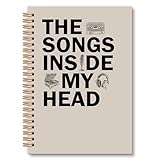
- Notebook Size: Measuring 6x8.2 inches, this notebook comes with a sturdy hardcover and smooth, premium pages. Perfect for everyday use and built to last
- Multifunctional Use: This notebook has a total of 82 sheets and 164 pages, whether it is used for school notes, work records, or as a personal diary, study notes or work journal, it can meet your diverse needs. Its exquisite design enhances the user experience and serves as stylish desk decor
- Decorative Notebook:This notebook features a distinctive design, making it a great addition to your desk decor. Whether it's the unique pattern or simple typography, this notebook isn't just a great writing tool—it's also a reflection of your personal style
- Spiral Bound Notebook:This journal notebook features a spiral design that allows it to open completely 180°flat for easy writing. It also folds seamlessly 360°without creasing. The pages are easy to tear and don't fall apart easily
- Perfect Gift Idea: These notebooks can be used not only for personal use but also as a thoughtful gift. The unique cover design of the notebooks is perfect for those who love to write. A thoughtful gift choice for students, teachers, writers, doctors, nurses, friends and more
Keep going without forcing rhyme or a fixed rhythm. A first pass is raw material, not a finished lyric. Rhyming too early can push you toward a word that changes what you mean; clarity and authenticity are more useful than a tidy rhyme.
3. Find the song’s central message
After freewriting, state in one plain sentence what you want the listener to take away. For example: “I miss the person I was before we moved.” This is a compass, not necessarily a line to use verbatim. It can point toward a title or hook—the memorable phrase or idea that anchors the song.
Rank #2

- Includes tips, prompts, and words of wisdom from songwriting masters to inspire your muse.
- Mix of lined pages (lyrics), staffed pages (music), and fret diagrams.
- Room to write 72 songs.
- Acid-free, archival-quality 120 gsm paper takes pen or pencil beautifully.
- Sturdy hardcover binding protects your work.
A chorus often carries that central message, while a verse gives it a scene, detail or development. That is a useful starting contrast, not a requirement: songs can organize their ideas in other ways. Berklee’s Lyric Writing: Tools and Strategies course description treats structure, contrast, word choice, rhyme, rhythm and revision as parts of lyric craft.
4. Build a small verse-and-chorus draft
For a manageable first attempt, write a short verse that places the listener in the moment, then a chorus that states or sharpens the message. The verse might show the unwashed mug still on the counter; the chorus might express what that detail means to the speaker. Give each section a distinct job so the chorus does not simply repeat the verse’s scene.
Outdated Drivers Are Slowing You Down
One free scan finds every outdated or missing driver and matches the right update for your exact hardware.Free scan · exact hardware matchWindows Errors? Fix Them Before They Spread
Repair common Windows errors and clear accumulated junk for a smoother, more stable PC - no reinstall needed.Free scan · no reinstallRank #3

- 【Perfect Gift for Musicians】: This is a wonderful personalized gift for singers/musicians. It's a great birthday gift, singing gift, and this music leather journal notebook is tailored just for you. It gives you plenty of space to jot down your current thoughts.
Song form is flexible. A pre-chorus can help create a transition into the chorus, and a bridge can introduce a contrast or change of perspective. Add either only when the song benefits from it. Berklee’s materials discuss verse, chorus, pre-chorus and bridge as tools for organizing and contrasting ideas, rather than a mandatory checklist. See its Lyric Writing: Writing Lyrics to Music course description for guidance on setting words to music and working with form.
5. Use words you would say aloud
Write a line the way you might say it to someone who understands you. Then read it aloud. If the sentence sounds unnatural, or if the listener would need to decode it, try a simpler phrasing. Plain language can still be vivid; a precise image often carries more feeling than a string of abstract declarations.
Rank #4
Do not twist a line’s meaning just to make the end rhyme. Rhyme can create pleasure, emphasis or a sense of connection, but it is optional and should serve the lyric. A near rhyme, internal rhyme, repeated phrase or no rhyme at all may suit the song better. Judge a choice by whether it helps the message and sounds natural, not by whether it follows a scheme.
6. Revise for clarity, contrast and sound
Read the draft from beginning to end and ask whether a listener can follow its idea. Cut filler, vague phrases and repetitions that do not add emphasis or develop meaning. Check that each section contributes something distinct: a verse can reveal a new detail, while a chorus can return to the central message with greater force.
Recommended Free Tools
Best Value

- Perfect Quality: Our notebook is made of high-quality faux leather with hand-stitched binding, ensuring durability and luxury. The soft cover provides a comfortable touch, making it ideal for students and professionals.
- Vintage Design with Embossed Cover: This notebook features a beautiful vintage design with an embossed cover, adding a unique and elegant touch. Available in classic black and brown and gray and pink, there's something for every style.
- Thicker Acid-Free Pages: With 300 Pages of thick acid-free paper, our notebook is 20-50% thicker and smoother than regular paper. It is compatible with most pens and environmentally friendly, protecting your eyesight.
- Functional and Stylish: The unique embossing process creates a raised texture on the cover, enhancing its aesthetic appeal. With dimensions of 5.7 x 8.3 inches, it is perfect for travel, business, or back-to-school use.
- Great Gift Choice: Our notebook is an excellent gift choice for loved ones, friends, family, or colleagues. Available in various classic colors, it combines style and functionality.
Then try alternatives rather than treating the first version as fixed. Swap a general word for a specific one, shorten or lengthen a line, and read the passage aloud again. Berklee identifies word choice, rhyme, rhythm, structure, contrast and revision as lyric-writing skills; each is a possible tool, not a box every song must tick.
Independent reader supportYour contribution helps us test, update, and keep practical guides available for everyone.7. Try the words against a melody
If you have a melody or a simple musical idea, speak or sing the lyric with it. Notice whether the phrasing is comfortable and whether the natural emphasis in each spoken word sits well with the musical emphasis. Check whether line lengths feel workable and whether an important word lands where you want the listener to notice it.
If a phrase feels awkward, try changing its wording, syllables or line length instead of forcing it into place. Berklee’s course description on writing lyrics to music covers stress, rhythm, phrasing, rhyme position and form. Its Songwriting Handbook also describes how tempo and the relationship between lyric, melody and harmony can affect how a song’s meaning comes across. You can do this check with a melody you already have; composing music is not a prerequisite for drafting lyrics.
8. Ask someone what they hear
If you can, read or sing the draft to a trusted listener or collaborator. Ask what they think the song is saying, and which image or phrase stays with them. If their understanding differs from your intention, you have a useful revision question—not proof that the lyric has failed. Stolpe also recommends collaborating with lyricists as a way to learn about the connection between lyrics and melodic rhythm.
The Tool Desk
Outbyte Driver Updater FREEScan for outdated or missing drivers - takes under a minuteDriver Scan →Outbyte PC Repair FREERepair Windows errors before they cause bigger problemsFix Now →A quick checklist for your next draft
- Clarity: Can a listener grasp the central message?
- Specificity: Does the lyric offer a vivid moment or detail rather than only general statements?
- Section contrast: Does the verse add something the chorus does not? If there is a bridge, does it earn its place?
- Natural phrasing: Do the words sound conversational when read aloud?
- Musical fit: Do stresses, syllables and line lengths work with the melody?
- Rhyme and repetition: Do they reinforce the lyric, or make it sound forced or predictable?
A short, clear draft is enough to begin revising. You can learn more through Berklee’s lyric-writing courses or through Pat Pattison’s book Writing Better Lyrics, 2nd Edition, which Berklee Online lists among the textbooks for its lyric-writing course.
Quick Recap
Product prices and availability are accurate as of the date/time indicated and are subject to change. Any price and availability information displayed on Amazon at the time of purchase will apply.