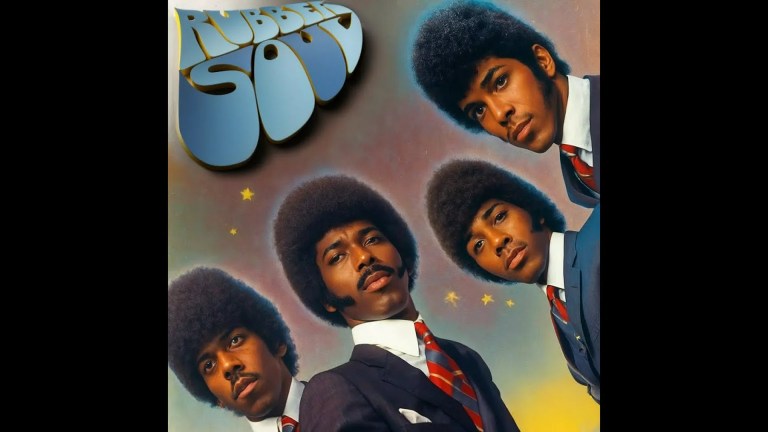
Michael Smith was not arrested simply for making music with artificial intelligence. He was arrested in September 2024 after federal prosecutors alleged that he used thousands of automated streaming accounts to play music he controlled billions of times, creating the false appearance of legitimate listeners. AI-generated songs supplied the enormous catalog needed to spread those streams across many tracks and artist identities.
Smith later pleaded guilty. On March 19, 2026, he admitted to one count of conspiracy to commit wire fraud and agreed to forfeit $8,091,843.64. That figure is different from the original indictment’s allegation of more than $10 million in fraudulent royalties because the two figures came at different stages of the case and represent different case accounting.
The case in brief
| Question | Answer |
|---|---|
| Who was charged? | Michael Smith, identified by prosecutors in 2024 as a 52-year-old resident of Cornelius, North Carolina. |
| When was he arrested? | September 4, 2024. |
| What did prosecutors allege? | That Smith used bots and thousands of accounts to generate billions of artificial streams for music he controlled, then collected royalties. |
| Where did the streams allegedly occur? | Amazon Music, Apple Music, Spotify, and YouTube Music. |
| What role did AI play? | AI-generated music made it possible to create the huge number of tracks needed to distribute the artificial activity across a large catalog. |
| What is the current legal development? | Smith pleaded guilty on March 19, 2026, to conspiracy to commit wire fraud. |
| What amount did he agree to forfeit? | $8,091,843.64. |
The original Department of Justice announcement described the 2024 arrest and indictment. The later DOJ plea announcement describes what Smith admitted and the forfeiture agreement.
Why the $10 million and $8.09 million figures are both appearing
Early coverage often repeated the headline that Smith had made more than $10 million. That was the amount prosecutors alleged in the September 2024 charging announcement: more than $10 million in royalties obtained through the alleged scheme.
#1 Best Overall

- Listen music wireless: Connect with computer speakers, home stereo systems or other speaker systems via the 3.5 mm or RCA cable, then pair with the Bluetooth audio devices such as smartphones or tablet for streaming music.
- Easy setup and automatic reconnect: There is a big bluetooth symbol button in bluetooth receiver middle. Pair your bluetooth device to this adapter with a single button press. Click once means Bluetooth Connect/Disconnect. Hold the botton 3 second mean ON/OFF. It can reconnect automatically with the previously paired device.
- Wireless range: Indoors(without obstacles) connect rang up 30-40 ft (10-12 m).
- Works with most device: Bluetooth enabled device including smartphones, tablets, computers, laptops upon and any powered PC speakers, home stereo systems and A/V receivers.
- NOTE: This adapter doesn't have built-in battery, power by AC to DC power adapter or USB cable. This product is a bluetooth receiver ONLY, not a bluetooth transmitter. Only to give Bluetooth capabilities to an existing stereo / powered speaker / PA. If you have any problems, please contact us at any time by Amazon Order, and we will speed up the process to resolve the issue.
After the case progressed, the March 2026 plea announcement said that Smith had fraudulently obtained more than $8 million and agreed to forfeit $8,091,843.64. The later number should not be presented as though it were exactly the same measurement as the original allegation. The first was an allegation in an indictment; the second was the amount identified in the plea-stage forfeiture agreement.
In other words, the original $10 million figure was not a guaranteed payout rate or a final judgment. The strongest official figure for the amount Smith agreed to forfeit is currently $8,091,843.64.
How the alleged streaming scheme worked
The government described a three-part operation.
- Create or control large numbers of accounts. Smith allegedly created thousands of accounts on streaming services.
- Automate the listening. Software caused those accounts to play music associated with Smith continuously or repeatedly.
- Collect the resulting royalties. Because the platforms recorded the activity as streams, Smith allegedly received royalty payments connected to the artificial listening.
The alleged deception was not merely that the songs had unusual names or were made with AI. The core conduct was manipulating usage data, concealing the automation from platforms and rights organizations, and accepting money based on the false appearance of genuine consumer listening.
Why use thousands of songs?
A single track producing an implausibly large number of plays could attract attention. According to the indictment and the later plea announcement, the alleged strategy was to spread the activity across thousands of tracks. That made any individual song less conspicuous while allowing the total number of streams to become enormous.
Do these 3 things before closing this tab:
1Repair Windows errors before they cause bigger problems2Scan for outdated or missing drivers - takes under a minute3Clear out junk files and repair common Windows errorsThe indictment said Smith’s existing catalog was not large enough to support the volume of activity. A co-conspirator identified only as CC-3 allegedly supplied thousands of AI-generated songs per week. The tracks were assigned randomly generated file names, song titles, and artist names, helping the catalog look like a collection of unrelated releases rather than a concentrated operation.
Examples listed in the charging materials included artist names such as Callous Post, Calorie Screams, and Calvinistic Dust. Example song titles included Zygosporic, Zygotic Washstands, and Zymotechnical. Those names are evidence of the alleged catalog-building method; they do not establish that every AI-generated artist or unusual music name is fraudulent.
The scale prosecutors described
The indictment included an alleged internal projection for how a bot-operated catalog could produce revenue. The example involved:
- 52 hosts;
- 20 automated accounts per host;
- 636 songs streamed per day by each account;
- approximately 661,440 streams per day; and
- an estimated $1,207,128 in annual royalties.
This was an alleged calculation in the charging materials—not a standard streaming payout, a guaranteed rate, or an independently established benchmark. Royalty payments vary according to platform rules, territory, subscription arrangements, rights ownership, and accounting methods.
What’s actually slowing this PC down?
Pick the symptom - the matching free tool is one click away.
The figures nevertheless illustrate the alleged business model. The objective was not to make one song genuinely popular. It was to manufacture a large quantity of apparently independent listening events and convert them into royalty claims.
How artificial streams can redirect royalty money
Streaming platforms distribute money through systems tied to recorded plays and rights ownership. Songwriters, performers, labels, distributors, and other rights holders may be entitled to small payments when their music is streamed. The precise calculation differs by service and agreement, so there is no universal “pay per stream” rate that can be applied to this case.
Artificial streams distort that system. They make music appear to have demand from real listeners when the activity is actually generated by automated accounts. If a royalty pool is divided partly according to the share of listening attributed to each track or rights holder, fabricated plays can increase the recipient’s share and reduce the relative share available to legitimate artists.
That is why the alleged conduct was treated as a fraud theory rather than simply as aggressive music promotion. The important issue was the false data sent to the platforms and the money allegedly collected because of that deception.
The Tool Desk
Outbyte Driver Updater FREEScan for outdated or missing drivers - takes under a minuteDriver Scan →Outbyte PC Repair FREEClear out junk files and repair common Windows errorsFree Scan →AI was an amplifier, not the entire crime
Generative AI made it faster and cheaper to produce a huge number of tracks. In this case, that scale allegedly solved an operational problem: the scheme needed enough songs to distribute streams across a very large catalog.
But the government’s theory did not say that creating an AI-generated song, using a fictional artist name, or uploading AI-assisted music is automatically illegal. The alleged criminal conduct involved the combination of:
- automated or bot-generated listening;
- large numbers of accounts;
- concealment of the artificial activity;
- music and rights claims controlled by the defendant; and
- royalty payments obtained through the resulting false appearance of consumer engagement.
The indictment identified the alleged AI supplier as CC-3 and did not publicly name a specific AI-music company. There is therefore no reliable basis in the cited DOJ materials for identifying CC-3 as Boomy or any other named service. One quoted email described the output as “instant music,” which captures the alleged emphasis on production volume rather than conventional recording and release practices.
What charges were filed, and what did Smith admit?
In 2024, Smith was charged with three counts: conspiracy to commit wire fraud, wire fraud, and conspiracy to commit money laundering. The DOJ said each charge carried a statutory maximum of up to 20 years at that stage, while also emphasizing that the charges were allegations and that Smith was presumed innocent.
Free tools Windows power users keep installed
One-click scans. No signup required.
That posture changed when Smith entered a guilty plea on March 19, 2026. He pleaded guilty to one count of conspiracy to commit wire fraud. The DOJ’s plea announcement states that the conspiracy count carries a maximum sentence of five years and that Smith agreed to the $8,091,843.64 forfeiture.
Rank #2

- ✅ Bluetooth 5.3 for Superior Sound -- Experience high-fidelity audio with the latest Bluetooth 5.3 technology. Enjoy stable, low-latency transmission and crystal-clear music streaming, podcasts, and hands-free calls.
- ✅ Easy Plug & Play Setup -- No charging needed! Simply plug the Bluetooth adapter into your car’s USB port and 3.5mm AUX jack. It powers on automatically and reconnects to your device instantly.
- ✅ Hands-Free Calling with Noise Cancellation -- Built-in microphone and noise reduction tech let you take clear, distraction-free calls directly through your car speakers. Stay safe and focused on the road.
- ✅ Wide Compatibility -- Works with any device featuring a 3.5mm AUX port: car stereos, home speakers, amplifiers, and wired headphones. Connect iPhones, Android phones, tablets, and more.
- ✅ Dual Device Pairing & Auto Reconnect -- Connect and switch between two Bluetooth devices at once. The adapter remembers your last paired device and reconnects automatically when you start your car.
A guilty plea is narrower and more precise than the original headline description. Smith admitted participation in the wire-fraud conspiracy charged in the plea resolution; it is not accurate to say that he was convicted merely for “creating fake bands” or for using AI to make music.
Independent reader supportYour contribution helps us test, update, and keep practical guides available for everyone.Has Smith been sentenced?
The March 19 DOJ release scheduled Smith’s sentencing for July 29, 2026, before U.S. District Judge John G. Koeltl. Based on the authoritative materials reviewed for this article, no subsequent official DOJ release, court document, or comparably authoritative report confirmed a final sentence by the stated research cutoff of August 12, 2026.
Accordingly, the responsible description is that Smith pleaded guilty and had sentencing scheduled—not that he received a particular prison term. The five-year figure is the statutory maximum for the conspiracy count, not a prediction of the sentence the judge would impose.
Quick wins for a faster PC:
Fix the driver behind crashes, sound loss and screen glitchesFind Drivers →Clear out junk files and repair common Windows errorsFree Scan →Scan for outdated or missing drivers - takes under a minuteDriver Scan →What this case says about AI music and streaming platforms
The case combines two technologies and incentives that already existed separately:
- Generative content: AI can produce tracks at a scale that would be difficult for a person or conventional studio to match.
- Automated engagement: Bots can create streams, clicks, views, or other signals that resemble audience activity.
- Royalty systems: Those engagement signals can be connected to payments and rights claims.
AI therefore did not create an entirely new category of fraud here. It amplified a familiar manipulation mechanism by supplying enough content to make the activity more distributed and harder to evaluate song by song.
For platforms and rights organizations, the challenge is not simply recognizing whether audio was made by a human or an AI tool. More relevant signals may include account behavior, listening patterns, device and network relationships, release volume, rights ownership, geographic anomalies, and whether streams resemble genuine user activity. The evidence in this case does not establish which specific detection systems failed or which later controls were used, so it should not be treated as a technical postmortem of any one platform.
A separate 2026 empirical paper on AI music streaming provides broader, non-case-specific context about AI music on Spotify and its engagement patterns. It should not be used as evidence that Smith’s individual streams were detected, counted, or distributed in any particular way.
Recommended Free Tools
The key distinction for artists and listeners
Legitimate AI-assisted music and fraudulent streaming are different questions. An artist may use AI as part of a lawful creative process, disclose it where a platform or distributor requires disclosure, and promote the resulting work to real listeners. The legal problem in Smith’s case was the alleged fabrication of listening activity and the attempt to turn that false activity into royalties.
For musicians, the practical lesson is straightforward: do not buy streams, operate listener bots, create deceptive accounts, or misrepresent audience activity to a distributor or platform. Artificial engagement can also lead to account removal, withheld royalties, rights disputes, and reputational damage even when a particular situation does not result in a federal prosecution.
For listeners, the case is a reminder that a stream count is not a perfect measure of public interest. Extremely large numbers can be generated by systems that imitate listening without representing a real audience.
Timeline
- Approximately 2017–2024: Prosecutors alleged that Smith operated the streaming-manipulation scheme during this period.
- September 4, 2024: Smith was arrested and charged in the Southern District of New York.
- 2024 indictment: Prosecutors alleged thousands of bot accounts, billions of streams, hundreds of thousands of AI-generated songs, and more than $10 million in fraudulent royalties.
- March 19, 2026: Smith pleaded guilty to conspiracy to commit wire fraud and agreed to forfeit $8,091,843.64.
- July 29, 2026: Sentencing was scheduled before Judge John G. Koeltl.
- August 12, 2026 research cutoff: The cited authoritative materials did not confirm a final sentence.
Frequently Asked Questions
Was Michael Smith arrested for making AI music?
No. The federal case centered on alleged wire-fraud conduct: using automated accounts to create billions of artificial streams, concealing that activity, and collecting royalties based on the false appearance of legitimate listening. AI-generated music allegedly helped supply the scale of the catalog.
Did Smith actually make $10 million from the scheme?
The original 2024 indictment alleged that the scheme fraudulently obtained more than $10 million. The later 2026 plea announcement described more than $8 million in fraudulent royalties and specified $8,091,843.64 in agreed forfeiture. Those figures came at different stages and should not be treated as identical measurements.
Which AI music company supplied the songs?
The cited indictment identified the alleged supplier only as CC-3. The DOJ materials do not identify CC-3 as Boomy or any other named AI-music company.
What sentence did Smith receive?
The plea announcement scheduled sentencing for July 29, 2026. The authoritative materials reviewed by the stated August 12, 2026 cutoff did not confirm a final sentence. The five-year figure is the statutory maximum for the conspiracy count, not the sentence Smith necessarily received.
Is AI-generated music illegal?
No. The case does not establish that AI-generated music itself is illegal. It concerns alleged automated stream manipulation, deception, and royalty fraud. The legality of a particular AI-generated release can depend on factors such as rights, licensing, platform rules, and how the music is promoted.
The Bottom Line
Michael Smith’s case is best understood as a federal streaming-fraud prosecution that used AI to increase the supply of songs—not as a prosecution for AI music alone. The alleged mechanism was simple in outline but massive in scale: create accounts, automate streams, spread them across a huge catalog, and collect royalties generated by false engagement. Smith later pleaded guilty to conspiracy to commit wire fraud and agreed to forfeit $8,091,843.64; a final sentence should not be stated without authoritative confirmation.
Quick Recap
Product prices and availability are accurate as of the date/time indicated and are subject to change. Any price and availability information displayed on Amazon at the time of purchase will apply.