The yellow vials help The Ghoul stay mentally lucid, not biologically immortal. In Fallout, the unnamed inhaled drug is linked to delaying the feralization that threatens long-lived ghouls. The show has not confirmed that it is RadAway, FEV, or any other named substance from the games.
Short answer: The yellow vials in Fallout contain an unnamed drug that helps The Ghoul delay—or possibly suppress—the mental deterioration that turns ghouls feral. They are not established as an immortality serum, RadAway, FEV, or a cure for ghoulification.


The vials matter because The Ghoul’s body and his mind face different problems. His ghoul physiology explains much of his extraordinary longevity and physical resilience. The yellow chem appears to address the separate danger of losing his cognition and becoming feral.
What the yellow vials actually do
The television series never gives the substance a formal name or explains its chemical composition. Instead, it establishes its purpose through behavior and plot:
#1 Best Overall

- Fallout design. Officially licensed Fallout video game merchandise. Survive the post-apocalyptic landscape as the vault dweller in this highly rated series. Just beware the rogue ghouls and super mutants.
- Perfect graphic merchandise for fans of Video Gaming, Apocalypse, Vault Boy, Nuka Cola, Thumbs Up, FPS Games, Gamer Culture, TV Shows, Streetwear, and Trendy fashion. Our Fallout gaming designs are made with fans like you in mind.
- Lightweight, Classic fit, Double-needle sleeve and bottom hem
- The liquid is yellowish and kept in small vials.
- The Ghoul uses a small inhalation apparatus to take it.
- He treats his supply as essential rather than optional.
- When his supply is destroyed, he goes looking for replacements.
- Roger’s storyline connects running out of chems with the onset or worsening of feral symptoms.
That evidence supports a functional description: the vials are an anti-feralization treatment or maintenance drug. They help certain ghouls remain mentally themselves for longer. The show has not confirmed whether they completely prevent feralization, merely delay it, or work differently depending on the individual.
The most accurate plain-English summary is: the vials do not keep The Ghoul alive in the simple biological sense; they help keep him from losing himself.
Why The Ghoul goes looking for more
The importance of the drug becomes clearest when The Ghoul’s supply is destroyed. Rather than treating the loss as an inconvenience, he immediately has a serious reason to obtain more. His resupply detour shows that the vials are part of his long-term survival strategy.
Roger provides the clearest parallel. His condition deteriorates when his chems run out, linking the treatment to the danger of becoming feral. The series therefore presents a rough supply-and-withdrawal mechanic: a ghoul who depends on the drug may remain lucid while taking it, but face a dangerous mental decline when the supply stops.
Crashes, No Sound, or Screen Glitches?
Random freezes, missing sound and display glitches usually trace back to one bad driver. Find and replace yours safely.Free scan · under a minutePC Slower Than It Used to Be?
A free scan shows the junk files, broken settings and background clutter dragging Windows down - then fixes them in one click.Free scan · Windows 10 & 11That does not necessarily mean the drug is a conventional medicine with a clean, predictable withdrawal syndrome. The show leaves its exact effects, dosage, and biology unexplained. What it does make clear is that calling the vials “just recreational chems” misses their central narrative function.
Rank #2
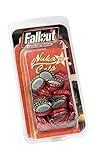
- This updated product of the incredible Fallout Nuka Cola Caps contains the same caps you know and love but provides players with a revised and updated sticker sheet to enhance gameplay for the Fallout Wasteland Warfare Miniatures Game.
- This is a set of 50 distressed Nuka-Cola bottle caps made by an official bottle cap manufacturer with an approved graphic design to resemble authentic Nuka-Cola caps!
- This is a set of 50 distressed Nuka-Cola bottle caps made by an official bottle cap manufacturer with an approved graphic design to resemble authentic Nuka-Cola caps!
- There is also an exclusive weapon card for use in your game of Fallout: Wasteland Warfare, the Bottle Cap Mine. Great for cosplayers and Fallout fans as well as Wasteland Warfare players!
The vials do not explain every part of The Ghoul’s survival
The title’s phrase “stayed alive for 219 years” needs a qualification. The yellow substance is associated primarily with cognition and feralization, not with making The Ghoul physically immortal.
Fallout depicts ghouls as irradiated humans whose bodies can survive conditions that would kill ordinary people. The Ghoul also demonstrates unusual durability, resistance to radiation, recovery from severe injuries, and longevity across the postwar period. Those traits belong to the show’s depiction of ghoul biology.
The vials appear to solve a different problem: mental deterioration. In other words, they may help The Ghoul remain capable of speech, planning, memory, and purposeful action, but they are not shown to be the reason his body has endured for more than two centuries.
The Tool Desk
Outbyte Driver Updater FREEFix the driver behind crashes, sound loss and screen glitchesFind Drivers →Outbyte PC Repair FREEClear out junk files and repair common Windows errorsFree Scan →| Question | What the show supports |
|---|---|
| Do the vials help him avoid becoming feral? | Yes. This is the strongest canonical interpretation. |
| Do they make him physically immortal? | No. That has not been established. |
| Do they reverse ghoulification? | No evidence supports that conclusion. |
| Does every ghoul need the same drug? | The series has not confirmed this. |
| Are they a named Fallout game item? | The television series has not identified them as one. |
Why the title says 219 years
The “219 years” figure is an approximate timeline calculation, not a confirmed statement that Cooper Howard became a ghoul exactly 219 years before the events of the series.
The bombs fell in 2077. The main events of the show take place roughly two centuries later, around 2296. Subtracting the two dates gives approximately 219 years:
2296 − 2077 = 219 years
That is the elapsed time since the Great War, or the approximate age of the postwar world shown in the series. It is not necessarily the exact length of time Cooper spent as a ghoul. The show has not supplied a precise transformation date, so it would be too strong to say that the yellow vials kept him alive continuously for exactly 219 years.
Promotional descriptions commonly round The Ghoul’s history to 200 years. The more precise number comes from the setting’s timeline rather than from a disclosed medical or character biography.
Free tools Windows power users keep installed
One-click scans. No signup required.
Season 2 update: The Ghoul’s vials are not confirmed to be FEV
Season 2 makes the distinction between the two substances especially important. It reveals that Thaddeus’s apparent healing and radiation resistance came from the Forced Evolutionary Virus, or FEV, administered by Dr. Chickenlover. Thaddeus is consequently treated as an FEV mutant rather than a ghoul.
Thaddeus’s inhaled substance may look like a useful explanation for The Ghoul’s inhaler, especially because both are delivered through inhalation. But the show does not say that the yellow vials used by The Ghoul contain FEV. The visual similarity supports a fan theory, not a confirmed identification.
The post-Season 2 distinction is therefore:
- Thaddeus: His abilities are explained by FEV in the television continuity.
- The Ghoul: He uses an unnamed drug associated with delaying or suppressing feral decline.
Older explanations that confidently called The Ghoul’s yellow substance FEV should now be treated with caution. Season 2 confirms that FEV exists and can be delivered in an inhaled preparation; it does not establish that FEV and The Ghoul’s anti-feral drug are the same thing.
Rank #4

- 1【STICKERS】:Every stickers pack contains 50 pieces of different stickers. All the waterproof vinyl stickers are 100% Brand New XXXXXX the pattern shown in the main picture will appear in your package. The stickers can bring a lot of fun to your life
- Stickers: This artistic set of decals includes only one of each design and features a variety of nature-inspired images from Various . Adorn phones, mirrors, Decorate mobile phones, bicycles, helmets, guitars, refrigerators, skateboards, etc!
- 3 Reminder: In order to experience the best use, please clean the surface of your favorite items and keep it dry before pasting, and then start your DIY decoration. Be careful not to paste them on convex concave surfaces or non smooth object surfaces
- 4 [Delicately made stickers]: Each sticker is perfectly cut according to its shape and size. We use high-precision printing technology, with accurate and clear patterns. Remove the adhesive on the back and stick it directly on the object surface. A good gift for children. No one will refuse a beautiful sticker!
- 5 After-sale protection: If you have any questions, please contact us. Thank you
Are the vials RadAway?
Not according to anything the series has explicitly established. RadAway is a familiar radiation treatment from the Fallout games, and the yellow appearance makes the theory tempting. However, the show never labels The Ghoul’s vials as RadAway.
Do these 3 things before closing this tab:
1Repair Windows errors before they cause bigger problems2Fix the driver behind crashes, sound loss and screen glitches3Clear out junk files and repair common Windows errorsMore importantly, their demonstrated dramatic purpose is different. The scenes focus on feralization and mental decline, not on simply removing radiation from The Ghoul’s body. The RadAway explanation can be mentioned as a fan hypothesis, but it should not be presented as canon.
Could they be a general cure for ghouls?
There is no evidence that the vials reverse ghoulification or restore a ghoul’s original body. The series has shown them as a treatment used by particular ghouls to preserve their mental state. It has not established a universal formula, a standard dose, or a rule that every ghoul requires the same medication.
That uncertainty may be deliberate. The show adds a more explicit supply-and-withdrawal mechanic to ghoul lore than the games generally provide, while leaving room to explain who developed the drug, how it works, and why some ghouls may need it more urgently than others.
Independent reader supportYour contribution helps us test, update, and keep practical guides available for everyone.What comes from the games—and what does not
The games include sane ghouls, feral ghouls, and glowing ghouls, but the television series’ unnamed inhaler treatment should not automatically be mapped to an item from Fallout 3, Fallout: New Vegas, Fallout 4, or Fallout 76.
Best Value
Adaptations can expand an existing setting without giving every new story element a one-to-one game equivalent. In this case, the show uses the vials to make the threat of feralization visible and immediate: The Ghoul must maintain a supply, and the audience can understand that running out has consequences even though the formula remains unknown.
What remains unknown
As of the Season 2 information described above, the series has not disclosed:
- The drug’s formal name.
- Its ingredients or manufacturing process.
- Who produces or distributes it.
- The correct dosage or frequency of use.
- Whether it works identically for every ghoul.
- Whether it permanently prevents feralization or only postpones it.
- Whether stopping treatment causes feralization directly or exposes an underlying decline.
Until the show answers those questions, the safest conclusion is also the simplest: The Ghoul’s yellow vials are an unnamed anti-feralization drug that helps preserve his mind, while his ghoul biology accounts for his extraordinary physical longevity.
Frequently Asked Questions
Are The Ghoul’s yellow vials RadAway?
No. The series has never identified the yellow vials as RadAway. Their demonstrated purpose is delaying feralization, while RadAway is a radiation treatment from the games.
Quick wins for a faster PC:
Repair Windows errors before they cause bigger problemsFix Now →Scan for outdated or missing drivers - takes under a minuteDriver Scan →Are the yellow vials FEV?
No. Season 2 confirms that Thaddeus received FEV, but it does not say that The Ghoul’s yellow anti-feralization drug is FEV. The two substances are only connected by fan speculation and their similar inhaled delivery.
What do the vials do to ghouls?
They appear to help certain ghouls delay or suppress the mental deterioration associated with becoming feral. The show has not established that they cure ghoulification or make a ghoul physically immortal.
Why does the title say The Ghoul survived for 219 years?
Approximately 219 years pass between the 2077 nuclear apocalypse and the show’s roughly 2296 setting. That is a timeline calculation, not a confirmed exact age for Cooper Howard’s ghoul condition.
The Bottom Line
The yellow vials in Fallout are not confirmed to be RadAway, FEV, or an immortality serum. They are an unnamed inhaled treatment that helps The Ghoul—and apparently Roger—delay the mental decline associated with becoming feral. The 219-year figure refers approximately to the time from the 2077 apocalypse to the show’s roughly 2296 setting, not to a confirmed exact duration of Cooper Howard’s ghoulification.
What’s actually slowing this PC down?
Pick the symptom - the matching free tool is one click away.
Quick Recap
Product prices and availability are accurate as of the date/time indicated and are subject to change. Any price and availability information displayed on Amazon at the time of purchase will apply.