These four videos are often grouped together as “NSFW,” but they represent four different histories of censorship: Duran Duran’s original was edited for broadcast, Mötley Crüe supplied a replacement cut, Madonna redirected a banned video into home-video sales, and Nelly’s “Tip Drill” became a flashpoint over misogyny and racialized representation.
Content note: This article discusses nudity, sexual imagery, misogyny, and racialized representation without reproducing explicit lyrics or imagery.
NSFW is a modern internet label, not the language used when these videos first caused controversy. In the 1980s and early 2000s, the relevant terms were usually banned, censored, R-rated, sexually suggestive, explicit, or unsuitable for broadcast. More importantly, these four cases were not censored in the same way: Duran Duran’s video was edited for television, Mötley Crüe supplied a less explicit replacement, Madonna turned a television ban into a home-video release, and Nelly’s “Tip Drill” became the focus of social, institutional, and cultural backlash.
Content note: This is a historical discussion of sexual imagery, nudity, misogyny, and racialized representation in music videos. It does not reproduce explicit lyrics or imagery, and availability of original or uncut versions varies by region, platform, and rights holder.
What’s actually slowing this PC down?
Pick the symptom - the matching free tool is one click away.
#1 Best Overall

- Height: 7.75in / 20cm, Width: 6in / 15cm
- By Michael Ochs
- Hardcover
- 576 pages
- Imprint: Taschen
Four different kinds of music-video controversy
| Video | Year | What happened | What the controversy reveals |
|---|---|---|---|
| Duran Duran, “Girls on Film” | 1981 | The original Night Version was banned by the BBC and substantially edited for MTV. | Early music television had to reconcile nightclub-style imagery with broadcast standards. |
| Mötley Crüe, “Girls, Girls, Girls” | 1987 | MTV rejected the first cut because it included topless dancers; the band supplied a less explicit version. | The distinction between an original cut and a broadcast replacement matters. |
| Madonna, “Justify My Love” | 1990 | MTV banned the R-rated video, which was then sold as a commercial video single. | Censorship could become an alternative distribution and marketing strategy. |
| Nelly, “Tip Drill”/“E.I.” visual | 2003–2004 | The video drew criticism for explicit sexism and the hypersexualization of Black women, including during a controversy connected to Spelman College. | Public accountability and representation can become as consequential as a broadcaster’s formal ruling. |
Duran Duran — “Girls on Film”
The central version is the approximately six-minute “Night Version”, directed by Kevin Godley and Lol Creme and produced in 1981. It was conceived with nightclub use in mind, before MTV’s rapid growth made music-video broadcast standards commercially important. The result was deliberately erotic: the original version featured topless or partially nude models, fetishized props and settings, and a series of suggestive tableaux.
The BBC banned the video, while MTV aired a substantially edited version. The directors later explained that the edit was intended to preserve the concept while removing material unlikely to pass television standards. That production rationale helps explain the different versions, but it does not erase the criticism. Duran Duran’s own retrospective account describes the video as an early visual breakthrough while acknowledging how shocking it remains decades later; it also reports the director’s view that the original would probably not be made in the same way now. Duran Duran’s official retrospective is useful for tracing that history.
Its legacy is therefore complicated. “Girls on Film” was influential and award-winning, and it helped establish the importance of the music video as a visual art form. At the same time, its use of bodies as spectacle has aged poorly, particularly when viewed through questions of gendered power and racialized imagery. Calling the video groundbreaking should not require treating those concerns as irrelevant, and the director’s explanation should not be presented as an absolution.
Version guide
- Night Version: the longer, original version associated with the video’s nightclub-oriented concept.
- MTV version: a substantially edited broadcast presentation.
- Online copies: labels such as “uncut” are not proof that a particular upload is authorized or complete. Check the uploader and rights status rather than assuming that the most graphic-looking copy is official.
Mötley Crüe — “Girls, Girls, Girls”
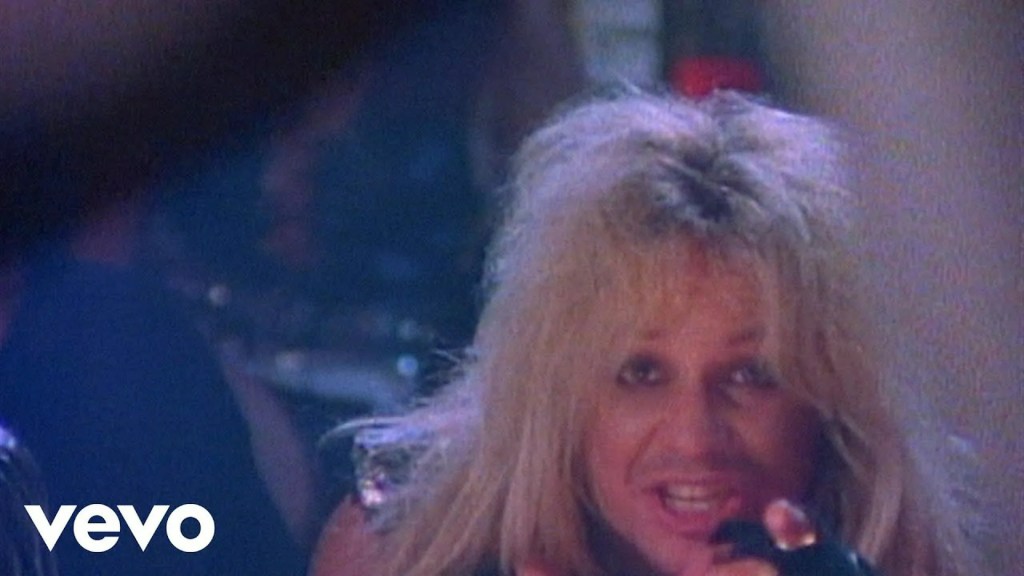
Mötley Crüe’s 1987 video was filmed at Los Angeles’s Seventh Veil strip club and directed by Wayne Isham. Its motorcycles, strip-club setting, lyrics, and glam-metal presentation made it a concise expression of the band’s excess-driven image. The specific MTV dispute, however, centered on nudity rather than on a formal prohibition of the song itself.
The first cut included topless dancers and was rejected by MTV. The band then supplied a less explicit broadcast version in which the dancers were scantily clad rather than nude. That distinction is important: it is more accurate to say that the original cut was rejected and replaced for broadcast than to describe every version of “Girls, Girls, Girls” as universally banned.
Rank #2

- REAL WORKING MINI RECORD PLAYER: Experience music in miniature with the MGA’s Miniverse Real Music Record Player—designed to actually play mini records and 30-second song clips for a true vinyl-inspired vibe.
- INCLUDES 1 PLAYABLE VINYL: Comes with a mini vinyl featuring a Classical Rock Remix of Beethoven’s 5th Symphony (30-second track) so you can start spinning right out of the box.
- COMPLETE MINI SETUP: Includes 1 stylish furniture piece and 2 collectible mini speakers (for display only) to create the ultimate retro-inspired setup.
- COMPATIBLE WITH REAL MUSIC VINYL: Fully compatible with MGA’s Miniverse Real Music Vinyl (sold separately), so you can spin hits from Britney Spears, blink-182, The Beach Boys, TLC, Elton John, Public Enemy and more — including …Baby One More Time, Rocket Man, and Fight the Power.
- AUTHENTIC MINI DESIGN: Detailed, retro-inspired styling makes it perfect for display on desks, shelves, or as part of your growing mini music collection.
The official artist-channel upload is a broadcast-style version. It should not be used to make claims about the availability or authorization of every so-called “uncensored” copy circulating elsewhere. A random upload may be incomplete, mislabeled, or unauthorized.
Madonna — “Justify My Love”
Madonna’s “Justify My Love” is the clearest example here of censorship becoming a distribution opportunity. Released in 1990, the video contained R-rated sexual content that led MTV to ban it. Madonna’s official site records the ban and the decision to release the clip commercially as a video single. Madonna’s official product page documents that unusual release format.
The song was written and produced with Lenny Kravitz and reached No. 1 in the United States, so the dispute had commercial consequences beyond a programmer’s refusal to air a clip. Instead of depending on MTV exposure, Madonna’s team sold the video directly on home video. A restriction that might ordinarily have reduced an artist’s reach became a reason for audiences to buy a physical product and for the controversy itself to generate publicity.
“Justify My Love” should not be reduced to nudity. Its imagery also prompted debate about erotic role-play, bisexual or otherwise multivalent sexuality, and the unequal treatment of sexual expression compared with violence or degradation in music television. Those are interpretive arguments made by critics and commentators, not neutral production classifications; retrospective discussion continues to disagree about whether the clip challenged sexual conventions or repackaged them through a highly controlled, commercial gaze. A retrospective overview of the video summarizes some of that critical context.
Nelly — “Tip Drill”/“E.I.” visual
Nelly’s case requires a different frame. On first reference, it is best called the “Tip Drill”/“E.I.” visual because databases and retrospectives variously connect the video with the “E.I.” remix or “E.I. — Tip Drill Remix,” rather than treating “Tip Drill” as an entirely separate conventional single.
Rank #3

- 256MB STORAGE & PRELOADED MUSIC: Comes with music already installed and 256MB built-in storage for saving more compatible audio files, so you can start listening right away and add your own songs anytime
- PROGRAM YOUR OWN MUSIC: Personalize this magnetic music box with songs, voice recordings, greetings or meaningful audio files, making the programmable mini record player a creative way to build custom playlists and turn favorite sounds into physical keepsakes
- 9 MINI VINYL RECORDS: Includes 9 colorful programmable mini vinyl records labeled A-I for easy organization, giving you multiple NFC discs to assign different songs or audio files while creating the playful look of a tiny retro record collection
- MAGNETIC FRIDGE DISPLAY: The magnetic base lets this jingle vinyl player fridge decor attach to compatible metal refrigerators, lockers and cabinets, transforming unused metal surfaces into a compact listening corner while keeping the player easy to reach
- RETRO LED AMBIANCE: A clear acrylic frame, miniature turntable styling and built-in LED lighting give this mini vinyl record player a nostalgic visual effect, creating warm decorative lighting for kitchens, dorm rooms, bedrooms, offices and music-themed spaces
The 2003 visual was criticized as overly explicit and sexist. A widely discussed moment shows Nelly sliding a credit card between a woman’s buttocks, a scene that became shorthand for the video’s treatment of women as sexualized objects. BET’s retrospective discussion identifies that moment as a defining source of the video’s notoriety.
The criticism was also specifically about race and power. Opponents argued that the visual hypersexualized Black women and presented them through a degrading, commodified gaze. Those objections became part of the 2004 controversy at Spelman College, where a bone-marrow drive associated with Nelly’s charitable effort was canceled amid protests and debate. BET’s account of Nelly’s career and the controversy describes the broader context.
Nelly defended or contextualized the work, but an artist’s response does not settle the underlying criticism. The most useful question here is not simply whether a broadcaster labeled the video acceptable. It is whether the imagery reinforces misogyny and racialized sexual representation, and what responsibilities artists, networks, colleges, charities, and audiences have when entertainment becomes part of a public institution’s event or message.
The Tool Desk
Outbyte Driver Updater FREEScan for outdated or missing drivers - takes under a minuteDriver Scan →Outbyte PC Repair FREEClear out junk files and repair common Windows errorsFree Scan →Unlike the other three examples, “Tip Drill” is best understood primarily through backlash and debate rather than a single, clearly documented formal ban. It may be described as controversial, restricted, or criticized, but calling it “banned” without identifying a particular broadcaster or policy would flatten the history.
What these four cases show about censorship
1. Editing is not the same as banning
“Girls on Film” continued to circulate after the BBC ban because a shortened version could be shown on MTV. The existence of a television edit means the original and broadcast versions need to be identified separately.
Rank #4

- REAL ARTISTS, MINI SIZE: Collect mini vinyls from chart-topping artists like Katy Perry, Kendrick Lamar, Fall Out Boy, and Chappell Roan — over 20 artist releases in the full set.
- 4 MYSTERY MINI VINYLS PER CAPSULE: Every capsule reveals 4 hyper-realistic blind mini vinyls plus 1 surprise accessory — peel, reveal, and hunt down the 3 ultra-rare finds.
- FULLY PLAYABLE — THEY ACTUALLY SPIN AND PLAY: Each mini vinyl works on the Mini Brands Really Works Vinyl Player (sold separately) for a true mini music experience.
- COLLECT ALL 45: Hunt the full set across pop, hip-hop, rock and R&B — including the coveted ultra-rare gold vinyls. Will yours be the one?
- PERFECT FOR KIDULTS & COLLECTORS: Display them on the included stand, build your own mini record store, trade with friends — designed for music fans, collectors and gifting.
2. A replacement cut can preserve the commercial relationship
With “Girls, Girls, Girls,” MTV rejected the first cut, but the band supplied a version that met the network’s expectations. The controversy did not prevent the song from functioning as a mainstream promotional vehicle.
3. Censorship can create a new product
“Justify My Love” demonstrates how a ban can move content from a broadcaster-controlled channel to direct-to-consumer distribution. The home-video single made the prohibited clip itself the object being purchased.
4. Cultural accountability is broader than a network rule
The “Tip Drill” dispute shows that a video can face serious consequences without one universally recognized “banned” decision. Criticism from students, activists, institutions, and audiences can challenge an image’s social meaning even when a formal broadcast ruling is unclear.
Independent reader supportYour contribution helps us test, update, and keep practical guides available for everyone.How to research an original or censored version
- Identify the version name. Look for terms such as Night Version, broadcast version, edited version, or uncut, while remembering that uploaders can apply those labels inaccurately.
- Check the rights holder. Prefer an official artist, label, or licensed archival release. Do not treat a widely viewed copy as authorized merely because it is easy to find.
- Compare running time and content notes. A shorter edit may remove scenes, not just individual shots. Physical releases can also vary by country and edition.
- Separate historical evidence from fan claims. “Rejected by MTV,” “banned by the BBC,” and “controversial at Spelman” describe different kinds of evidence and should not be used interchangeably.
- Consider the context, not only the nudity. The important questions include who controls the image, whose bodies are being displayed, how race and gender are represented, and whether the dispute concerned standards, commerce, or institutional responsibility.
Why the label “NSFW” can mislead
Calling these videos NSFW is convenient for a modern reader, but it collapses several decades of changing media systems into one warning tag. In 1981, the key gatekeepers were terrestrial broadcasters and the BBC. By 1987, MTV’s programming standards encouraged artists to create replacement edits. In 1990, Madonna used a physical video single to bypass MTV. By the time of Nelly’s controversy, the debate included campus activism, charitable institutions, racial representation, and public criticism as well as television policy.
There is also a difference between sexual explicitness and ethical controversy. Duran Duran, Mötley Crüe, and Madonna were chiefly challenged over what could be shown on television, although each video raises broader questions about looking and sexual power. Nelly’s “Tip Drill” became especially significant because the dispute focused on the treatment of Black women and the social meaning of the imagery, not simply on whether a network could schedule it.
Best Value

- REAL WORKING MINI RECORD PLAYER: It actually spins. It actually plays. Drop the included mini vinyl on the deck and hear authentic music from a fully working miniature turntable — vinyl-inspired sound in the palm of your hand.
- WORKS WITH THE MINI VINYLS CAPSULE: Fully compatible with the ZURU Mini Brands Really Works Mini Vinyls Capsule (sold separately). Spin records from chart-topping artists — Katy Perry, Kendrick Lamar, Fall Out Boy, Chappell Roan, and 20+ more.
- STARTS SPINNING OUT OF THE BOX: Comes with an exclusive Mini Vinyl of "APT." by Rosé & Bruno Mars — drop the needle and start playing the moment you unbox. Your collection's first record. Hunt for the rest in the Mini Brands Vinyl Capsule (sold separately).
- DISPLAY-READY MINI RECORD STORE: The included stand turns the playset into a showcase for your full Mini Vinyl collection — desk, shelf, or studio shrine.
- PERFECT FOR KIDULTS & COLLECTORS: Designed for music lovers, vinyl enthusiasts and Mini Brands fans aged 3+ — a giftable, interactive piece that sits between toy aisle and collector shelf.
For that reason, a responsible history should preserve the differences: one video was edited, one replaced, one commercially redirected, and one contested through public and institutional backlash. They are all useful examples of controversial music-video culture, but they were not all “banned” in the same sense.
Frequently Asked Questions
Were all four of these music videos formally banned?
No. Duran Duran’s “Girls on Film” was banned by the BBC and heavily edited for MTV; Mötley Crüe’s original “Girls, Girls, Girls” cut was rejected and replaced; Madonna’s “Justify My Love” was banned by MTV and sold as a video single; and Nelly’s “Tip Drill” became controversial mainly through criticism and institutional backlash. “Banned” should not be used as a blanket description for all four.
Are the uncensored versions of these videos officially available?
The original Duran Duran Night Version and the first Mötley Crüe cut should be distinguished from their television edits. Madonna’s video was commercially released as a physical video single. For any online “uncut” copy, verify the uploader and rights status; an unedited-looking upload is not automatically authorized.
Why did Madonna release “Justify My Love” on video?
MTV’s ban removed the clip from the network’s normal promotional route, so Madonna’s team sold it directly on home video. The controversy helped make the video single itself the product rather than allowing the ban to end the clip’s circulation.
Why was Nelly’s “Tip Drill” visual so controversial?
The video was criticized for explicit sexism and for hypersexualizing Black women. A 2004 controversy at Spelman College connected objections to the visual with the cancellation of a bone-marrow drive associated with Nelly’s charitable effort, making the dispute about institutional and cultural responsibility as well as television content.
Quick wins for a faster PC:
Fix the driver behind crashes, sound loss and screen glitchesFind Drivers →Clear out junk files and repair common Windows errorsFree Scan →Scan for outdated or missing drivers - takes under a minuteDriver Scan →The Bottom Line
These videos mark four different paths through music-video censorship: broadcast editing for Duran Duran, a less explicit replacement for Mötley Crüe, direct-to-consumer distribution for Madonna, and cultural and institutional backlash for Nelly. The most accurate account distinguishes original from broadcast versions and treats representation, race, gender, and power as part of the history rather than reducing every controversy to nudity.
Quick Recap
Product prices and availability are accurate as of the date/time indicated and are subject to change. Any price and availability information displayed on Amazon at the time of purchase will apply.