The Tool Desk
Outbyte Driver Updater FREEScan for outdated or missing drivers - takes under a minuteDriver Scan →Outbyte PC Repair FREERepair Windows errors before they cause bigger problemsFix Now →Start with Shame. Steve McQueen’s 2011 drama is the strongest overall example of an NC-17 film using explicit adult material as the foundation for serious psychological, emotional, and formal inquiry. After it, the best entry depends on your taste: Crash is the most formally daring, Blue Is the Warmest Color the most immersive romance, Lust, Caution the most accomplished erotic thriller, and Showgirls the essential cult-history choice.
This is a strict list. Every film below received an official U.S. NC-17 rating and was released or materially circulated in an NC-17 version. X-rated films, unrated releases, and movies that only acquired an NC-17 label for later home media are discussed separately rather than quietly counted as NC-17 films.
NC-17 is not a genre, a quality judgment, or a consistent scale of explicitness. The Motion Picture Association defines it as “No One 17 and Under Admitted”. The rating can reflect sex, violence, drug use, sexual violence, aberrant behavior, or combinations of adult material. The films are ranked for filmmaking quality, historical importance, cultural impact, and how meaningfully their difficult material functions within the work—not simply for how much they shock.
| # | Preview | Product | Price | |
|---|---|---|---|---|
| 1 |

|
Descent (Original NC-17 Version) | $73.90 | Buy on Amazon |
| 2 |

|
Inside Deep Throat - Theatrical NC-17 Edition | $49.99 | Buy on Amazon |
| 3 |
|
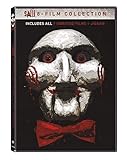
Saw: 8-Film Collection - DVD | $15.92 | Buy on Amazon |
| 4 |

|
A Dirty Shame (NC-17 Rated Theatrical Version) | $39.95 | Buy on Amazon |
What NC-17 means—and what it does not
NC-17 is a U.S. classification. It does not automatically apply in the United Kingdom, France, China, or any other country, where films are assessed under different systems. In the United States, it means that no one aged 17 or under is admitted to the theatrical presentation. That is stricter than an R rating, under which younger viewers may be admitted with a parent or adult guardian, subject to the theater’s policies.
The rating is an industry classification rather than a government censorship category. It also does not mean that a film is pornographic or legally obscene, and it says nothing about whether the film is good. The MPA’s FAQ and rating rules are the best reference points for the classification itself.
#1 Best Overall
The label replaced the older X designation in 1990. The X had never been trademarked by the MPA, which allowed pornographic distributors to adopt X and XXX as marketing terms. The MPA introduced NC-17 to distinguish mainstream adult cinema from pornography, but the commercial stigma did not disappear: theaters, advertisers, retailers, and video stores often continued to treat NC-17 as functionally equivalent to X. The MPA’s history of the rating system and Time’s account of the label’s creation provide useful background.
That history explains why an NC-17 list can contain such different films. Shame and Blue Is the Warmest Color were rated for explicit sexual content. Bad Lieutenant combines sexual violence, drug use, and extreme behavior. Killer Joe was classified for disturbing material involving both violence and sexuality. Even the rating’s content can change when a film is re-rated or presented in a different cut. NC-17 is therefore not a reliable film-to-film intensity meter.
How the ranking was decided
The order is editorial rather than objective. It balances artistic achievement against influence and rating history. That is why Showgirls appears at No. 10 even though it is indispensable to the story of NC-17, while Shame leads the list despite being a more punishing and less broadly rewatchable film. A movie can be historically essential without being conventionally polished, and a movie can be artistically powerful without being easy to recommend to everyone.
The 10 best NC-17 movies, ranked
1. Shame (2011) — directed by Steve McQueen
Verdict: The best overall NC-17 film, and the clearest case for treating the rating as a description of content rather than a verdict on artistic seriousness.
Brandon Sullivan appears to have a controlled, successful life in New York, but his private existence is organized around compulsive sexual behavior and an inability to form sustaining intimacy. The arrival of his troubled sister, Sissy, makes that carefully managed isolation impossible to maintain. McQueen does not present Brandon’s behavior as glamorous erotic adventure. He presents it as repetition, dependence, evasion, and a desperate substitute for emotional connection.
The film’s power comes from the way its form mirrors its subject. Long stretches of silence, impassive architecture, controlled compositions, and repeated routines create a world in which physical activity has become easier than speech. Michael Fassbender’s performance is deliberately sealed-off, while Carey Mulligan gives the film its exposed emotional counterpoint as Sissy. Their relationship makes Shame more than a study of sex addiction: it becomes a drama about shame, repression, loneliness, and two people who cannot give each other the help they need.
Quick wins for a faster PC:
Clear out junk files and repair common Windows errorsFree Scan →Fix the driver behind crashes, sound loss and screen glitchesFind Drivers →Why it ranks first: The explicit material is not a detachable sales hook. It is the mechanism through which the film examines compulsion and failed intimacy. McQueen’s visual control and the two central performances give the subject weight without reducing it to a diagnosis.
Content warning: Sexual compulsion, explicit sex, pornography-related behavior, nudity, emotional distress, and addiction-like patterns.
U.S. rating/version: The MPA rated it NC-17 for some explicit sexual content
. Fox Searchlight released it without appealing or cutting it; the distributor’s official film page and the AFI catalog record provide useful documentation.
Watch if: You want an austere, psychologically rigorous drama. Skip if: Sexual addiction and explicit depictions of compulsive behavior are likely to be distressing.
2. Crash (1996) — directed by David Cronenberg
Verdict: The most formally daring film on the list: cold, elegant, disturbing, and almost impossible to confuse with conventional erotic cinema.
Cronenberg adapts J. G. Ballard’s novel into a study of people whose erotic lives become fused with car crashes, injury, technology, and death. The premise sounds like provocation for its own sake, but the film is more controlled than sensational. Its characters do not merely desire one another; they desire a new relationship to damaged bodies and machines, as if trauma has opened a private sensory language that ordinary life cannot provide.
The director’s clinical style is central to the effect. Metallic surfaces, artificial light, scarred flesh, and highway infrastructure are photographed with the same detached attention. That refusal to supply an easy moral or emotional response is precisely what makes the film so divisive. Crash asks whether modern technology has changed desire, or merely exposed impulses that were already there. It won the 1996 Cannes Special Jury Prize for originality, daring, and audacity
, a concise description of both its achievement and its challenge to the viewer.
Why it ranks this high: Few NC-17 films integrate their transgressive premise so completely into cinematography, production design, sound, and narrative structure. It is not simply about an unusual fetish; it is about the eroticization of risk, injury, repetition, and technological modernity.
Recommended Free Tools
Content warning: Sexual fetishization of injury and death, car-crash trauma, nudity, bodily damage, and emotionally detached sexual behavior.
U.S. rating/version: The U.S. release was NC-17, but versions and home-media labeling can vary. Check the edition rather than assuming that every release contains the same cut. The Criterion release page, the Cannes record, and the MPA’s 1996 search entry are useful starting points.
Watch if: You are interested in radical auteur cinema and can tolerate emotional coldness. Skip if: Sexualized injury, death, or car-crash imagery is a hard boundary.
3. Blue Is the Warmest Color (2013) — directed by Abdellatif Kechiche
Verdict: A sprawling, intimate coming-of-age romance whose greatest strengths are its performances, close-up-heavy naturalism, and attention to the ordinary details of love.
The film follows Adèle from adolescence into young adulthood as her relationship with Emma transforms her understanding of desire, identity, ambition, and adulthood. Its major scenes are embedded in a broad portrait of daily life: meals, school, parties, art, work, class differences, and the awkward process of becoming a person while trying to remain close to someone else.
Adèle Exarchopoulos and Léa Seydoux supply the film’s emotional scale. Kechiche stays close to faces and bodies, allowing conversations and silences to extend beyond the neat rhythm of conventional romance. The approach can feel immersive or excessive, depending on the viewer’s tolerance for duration and observational detail. The film won the 2013 Palme d’Or in an unusual shared award to Kechiche and the two lead actors, a recognition of the collaboration at its center; the Cannes record documents that distinction.
Why it ranks here: At its best, the film makes erotic intimacy part of a larger emotional and social history rather than an isolated spectacle. It also deserves a more complicated discussion than either enthusiastic celebration or dismissal. Critics have objected to the staging of the sex scenes and argued that the film’s gaze is shaped by heterosexual male assumptions. There has also been serious criticism of working conditions and the filming of those scenes. The Criterion discussion is useful precisely because it addresses the film’s achievement alongside those ethical and aesthetic concerns.
Rank #2
- Factory sealed DVD
Content warning: Explicit sex, nudity, queer desire, sexual and emotional vulnerability, breakup, and production-related controversy.
Do these 3 things before closing this tab:
1Scan for outdated or missing drivers - takes under a minute2Repair Windows errors before they cause bigger problems3Fix the driver behind crashes, sound loss and screen glitchesU.S. rating/version: The MPA rated it NC-17 for explicit sexual content
. The Criterion film page and the MPA’s 2013 listing confirm the U.S. classification.
Watch if: You want an emotionally expansive romance and are comfortable with extended explicit scenes. Skip if: You prefer a less male-gaze-centered treatment of intimacy or find lengthy naturalistic drama tiring.
4. Lust, Caution (2007) — directed by Ang Lee
Verdict: An exacting political and erotic thriller in which sex is inseparable from espionage, performance, manipulation, danger, and surrender.
Set against the political violence and uncertainty of wartime Shanghai, the film follows a young woman drawn into a plot targeting a powerful collaborator. Her assigned role requires her to perform intimacy, but the performance gradually becomes emotionally and physically dangerous. Ang Lee treats the erotic relationship not as an ornamental subplot but as the place where political duty, fear, desire, and self-deception collide.
Free tools Windows power users keep installed
One-click scans. No signup required.
Tang Wei and Tony Leung Chiu-wai give the film its tension. Their characters are constantly reading one another, testing boundaries, and trying to determine whether an apparent moment of vulnerability is genuine or strategic. The film’s sensuality is therefore inseparable from coercion and surveillance. It is a romance only in the most unstable sense: every gesture can be both confession and maneuver.
Why it ranks here: Lee gives the explicit scenes narrative consequences. They alter the balance of power and make the film’s political story legible through the bodies of the people trapped inside it. The film’s treatment of sexuality is controversial and deliberately uncomfortable, but its formal ambition and performances make it one of the most accomplished films to receive the rating.
Content warning: Coercive and violent sex, explicit sexuality, wartime trauma, political violence, betrayal, and abuse of power.
U.S. rating/version: It was rated NC-17 in the United States for some explicit sexuality
. Mainland China received a shorter, edited version, so the uncut and edited releases should not be treated as interchangeable. Calling the film simply “banned in China” collapses censorship, cuts, and the reported professional consequences faced by Tang Wei into one inaccurate label. Consult the MPA’s 2007 listing alongside the Venice Film Festival history.
Outdated Drivers Are Slowing You Down
One free scan finds every outdated or missing driver and matches the right update for your exact hardware.Free scan · exact hardware matchPC Slower Than It Used to Be?
A free scan shows the junk files, broken settings and background clutter dragging Windows down - then fixes them in one click.Free scan · Windows 10 & 11Watch if: You want erotic cinema with political stakes and intricate performances. Skip if: Depictions of sexual coercion or power-based violence are not suitable for you.
5. Henry & June (1990) — directed by Philip Kaufman
Verdict: The historically indispensable choice: the first film released theatrically under the official NC-17 designation, as well as a polished literary erotic drama.
Adapted from Anaïs Nin’s diaries, the film centers on Nin’s encounters with writer Henry Miller and his wife, June. Philip Kaufman presents Paris as a charged environment of literary ambition, sexual experimentation, jealousy, and self-invention. The film is interested in artists who use one another as material, and in the unstable line between recording desire and turning desire into a performance.
Its explicitness may feel less startling to contemporary viewers than that of several later films on this list. That is part of its historical interest. Henry & June arrived at the moment when the old X designation was being replaced, so its importance lies not only in what appears on screen but in the public meaning attached to the new label. The film’s production design, costumes, and cinematography also give it a sensuous period-drama identity beyond its rating; it received an Academy Award nomination for cinematography at the 1991 ceremony.
Why it ranks here: It changed the vocabulary of mainstream adult film distribution. The MPA’s 1990 record identifies the rating-symbol transition, which is why it is more accurate to call this the first theatrical release under NC-17 than to treat it as an ordinary entry in a modern rating database. The historical account explains that distinction.
Content warning: Nudity, explicit sexual themes, infidelity, sexual experimentation, and emotionally complicated relationships.
U.S. rating/version: The film’s rating history is bound up with the introduction of the NC-17 symbol; do not describe every earlier X-rated film as NC-17 simply because it predates the label. The MPA’s 1990 search results are the appropriate reference.
Watch if: You care about rating-system history, literary adaptations, and elegant period filmmaking. Skip if: You are looking only for the most graphically explicit film in the group.
What’s actually slowing this PC down?
Pick the symptom - the matching free tool is one click away.
6. Bad Education (2004) — directed by Pedro Almodóvar
Verdict: A sly, emotionally serious mixture of noir, melodrama, Catholic guilt, sexual abuse, gender performance, and filmmaking.
A filmmaker receives an unexpected visit from someone claiming to be a childhood friend. The encounter opens a story about their years at a religious school, a priest’s abuse, adult reinvention, and the ways people rewrite the past to gain control over the present. Almodóvar builds the film as a series of shifting accounts and cinematic performances, so the viewer is continually asked to reconsider who is speaking and why.
The result is not merely a scandal narrative. It is also a film about the power of images and roles. Identity, desire, and exploitation are repeatedly filtered through scripts, costumes, genres, and acts of acting. Almodóvar’s melodramatic color and structural playfulness prevent the material from becoming a straightforward procedural account, while the abuse at its center remains a source of genuine pain rather than decorative darkness.
Why it ranks here: It demonstrates how an NC-17 film can be narratively dense and formally playful. The rating was upheld after an appeal over a scene of explicit sexual content
, a useful reminder that a single scene can determine a film’s U.S. classification even when the film as a whole is much broader than that scene. See the contemporary appeal coverage and the MPA’s 2004 entry.
What’s actually slowing this PC down?
Pick the symptom - the matching free tool is one click away.
Rank #3
- Let the games begin! Own the genre-defining Saw horror series in all its grisly glory. Five-disc set includes: Saw (2004), Saw II (2005), Saw III (2006), Saw IV (2007), Saw V (2008), Saw VI (2009), Saw: The Final Chapter (2010) and Saw 3D: The Final Chapter (2010).
- Genre: Horror
Content warning: Sexual abuse, homophobia, religious trauma, manipulation, explicit sexual content, and difficult material involving gender identity and performance.
U.S. rating/version: The NC-17 rating was retained after appeal. No viewer should assume that the label defines the film as purely erotic; its most important material concerns memory, abuse, identity, and the storytelling process.
Watch if: You want mystery, melodrama, and an intricate film-within-a-film structure. Skip if: Stories involving clerical abuse or sexual exploitation are likely to be triggering.
7. The Dreamers (2003; U.S. release 2004) — directed by Bernardo Bertolucci
Verdict: The most cinephile-oriented entry, a sensual triangle about film culture, political romanticism, imitation, and the fantasy of escaping history.
During the upheaval of Paris in 1968, an American student becomes close to French twins who share his passion for cinema. Their apartment becomes a private theater and laboratory, where film quotations, games, arguments, and sexual experimentation blur the boundary between cultural knowledge and lived experience. The trio’s relationship is intentionally taboo and erotically charged, but reducing the film to incest misses its central concern: the way cinephilia can become a self-contained fantasy that postpones contact with the political world outside.
Bertolucci fills the film with references to classical Hollywood and the French New Wave. Characters recreate scenes, test one another’s knowledge, and use movies as a language for feelings they cannot express directly. That playfulness gives The Dreamers a distinctive identity, even when its characters’ romanticized isolation begins to look selfish or dangerous.
Why it ranks here: It is an unusually direct film about the seductions and limits of cinephilia. Its historical setting matters, but so does its question about whether art can remain a protected private world when the streets outside are in revolt.
Content warning: Explicit sex, nudity, drug use, taboo and incestuous sexual dynamics, political unrest, and emotionally manipulative relationships.
U.S. rating/version: Fox Searchlight released the uncut U.S. version with an NC-17 rating rather than cutting it to obtain an R. A shorter R-rated version also exists, so the edition matters. The Los Angeles Times coverage and the MPA’s 2003 record help distinguish the versions.
Watch if: You enjoy movies about movies and can tolerate stylized taboo material. Skip if: Sexualized family dynamics, drug use, or romanticized adolescent behavior are uncomfortable subjects.
8. Bad Lieutenant (1992) — directed by Abel Ferrara
Verdict: The most punishing film here: a corrosive descent into addiction, corruption, sexual violence, religious despair, and the possibility—or impossibility—of redemption.
Harvey Keitel plays a New York police lieutenant whose gambling, drug use, and abuse of authority have hollowed out his life. When a brutal crime involving a nun confronts him with an image of suffering he cannot evade, his private collapse takes on a religious dimension. Ferrara does not turn that crisis into a clean redemption arc. The film remains trapped in the lieutenant’s degradation, with moments of spiritual longing arriving alongside cruelty, denial, and self-destruction.
Do these 3 things before closing this tab:
1Fix the driver behind crashes, sound loss and screen glitches2Clear out junk files and repair common Windows errors3Scan for outdated or missing drivers - takes under a minuteKeitel’s performance is the reason the film remains essential. He makes the character repulsive, pathetic, frightening, and intermittently human without asking the viewer to excuse him. Ferrara’s New York is equally unforgiving: dirty, nocturnal, and spiritually exhausted. This is an important counterexample to lists that treat NC-17 as shorthand for eroticism. Its sexual material is primarily coercive, degraded, and disturbing, not conventionally sensual.
Why it ranks here: The film uses extreme behavior to create a moral and spiritual pressure chamber. Its value is not that it goes further than other films, but that its violence, drug use, and sexual degradation are connected to a coherent vision of guilt and collapse.
Content warning: Sexual violence, drug addiction, graphic drug use, police corruption, religious anguish, self-loathing, and extreme behavior.
U.S. rating/version: The NC-17 classification was associated with sexual violence, strong sexual situations and dialogue, graphic drug use, and other extreme material. The MPA’s 1992 search record and the film’s comparative listing are useful references.
Free tools Windows power users keep installed
One-click scans. No signup required.
Watch if: You want uncompromising performance-driven crime cinema. Skip if: You are seeking erotic rather than disturbing adult cinema, or if sexual violence and addiction are unsafe subjects for you.
9. Killer Joe (2011; U.S. release 2012) — directed by William Friedkin
Verdict: A vicious Southern noir and black comedy in which greed, family dysfunction, sexual coercion, and predatory power become inseparable.
When a financially desperate family decides that an insurance payout can solve its problems, it hires a professional killer. The plan quickly exposes the family’s delusions about loyalty and control. Matthew McConaughey’s Joe Cooper is outwardly calm and professionally exact, but the calmness only makes his predatory authority more frightening. Friedkin adapts Tracy Letts’s play with a deliberately claustrophobic sense of entrapment: people speak as though they are negotiating, while the power to hurt or dominate is always close at hand.
The film’s black humor does not soften its cruelty. It makes the cruelty more unstable, forcing the viewer to laugh at situations that are also degrading and frightening. That tonal conflict is the point, but it is not comfortable viewing. Killer Joe is abrasive by design, and its most notorious sequences are meant to repel as much as provoke.
PC Slower Than It Used to Be?
A free scan shows the junk files, broken settings and background clutter dragging Windows down - then fixes them in one click.Free scan · Windows 10 & 11Outdated Drivers Are Slowing You Down
One free scan finds every outdated or missing driver and matches the right update for your exact hardware.Free scan · exact hardware matchWhy it ranks here: Friedkin’s direction and the cast’s commitment give the film a sharp, ugly energy. It is a strong example of adult material functioning as a power struggle rather than as decoration, though its provocation is less emotionally expansive than the films above it.
Rank #4
- Factory sealed DVD
Content warning: Sexual coercion, brutality, sadistic violence, family abuse, threats, explicit sexuality, and disturbing power dynamics.
U.S. rating/version: The film was rated NC-17 for graphic, disturbing content involving violence and sexuality, including a scene of brutality. Friedkin resisted cuts to obtain an R. The MPA’s 2011 listing and the MPA historical record provide context.
Watch if: You like vicious black comedy, Southern noir, and performances that refuse likability. Skip if: Sexual coercion and sadistic violence are deal-breakers.
10. Showgirls (1995) — directed by Paul Verhoeven
Verdict: Not the best-made film on this list, but the essential NC-17 cult object: a major-studio experiment whose rating became part of its cultural identity.
Nomi Malone arrives in Las Vegas determined to become a dancer and quickly discovers that the entertainment industry’s promises of glamour are built on exploitation, rivalry, humiliation, and power. The film’s heightened performances, lurid colors, blunt dialogue, and exaggerated sexuality made it an easy target for ridicule on release. They also make it difficult to classify neatly. Showgirls can be viewed as camp, satire, melodrama, or an unsuccessful combination of all three; the claim that it is secretly a masterpiece is an opinion, not a settled critical consensus.
What is not debatable is its historical importance. It was a widely released, major-studio NC-17 film at a time when the label was still commercially toxic. It became a home-video success and later a subject of cult devotion and critical reevaluation. The AFI record has described it as the only NC-17 film to receive a wide release—a historical distinction that should not be turned into an eternal statistic independent of timeframe or definition.
Why it ranks tenth: If this were a ranking of conventional filmmaking quality, Showgirls would fall below the other nine. If it were a ranking of must-watch films in NC-17 history, it would rank much higher. Its importance comes from the collision of rating politics, studio distribution, commercial failure, home-video afterlife, camp, and reassessment.
Quick wins for a faster PC:
Scan for outdated or missing drivers - takes under a minuteDriver Scan →Repair Windows errors before they cause bigger problemsFix Now →Content warning: Nudity, erotic sexuality throughout, graphic language, sexual violence, exploitation, humiliation, and abusive industry power dynamics.
U.S. rating/version: The MPA rated it NC-17 for nudity and erotic sexuality throughout, graphic language, and sexual violence. The contemporary Los Angeles Times coverage and MPA’s 1995 listing document the rating’s significance.
Watch if: You are curious about cult cinema, rating history, camp, and critical reevaluation. Skip if: You want subtle acting, restrained dialogue, or a straightforward account of workplace exploitation.
Choose your starting point
| If you want… | Start with… |
|---|---|
| The best overall entry point | Shame |
| A major auteur experiment | Crash |
| A sweeping romance | Blue Is the Warmest Color |
| Political eroticism | Lust, Caution |
| Rating-system history | Henry & June |
| Almodóvar-style mystery and melodrama | Bad Education |
| Cinema about cinephilia | The Dreamers |
| A descent into addiction and guilt | Bad Lieutenant |
| Brutal black comedy | Killer Joe |
| Camp, controversy, and cult status | Showgirls |
Important films not technically included
Many “best NC-17 movies” lists use the term loosely to mean any notorious adult-rated or unrated film. That approach is useful for discovery, but it mixes different categories. The following films matter to the history of adult-rated cinema while falling outside this article’s strict rule.
- Kids (1995): The film received an NC-17 rating, but its distributor released it theatrically unrated after an appeal failed. It is therefore an essential NC-17-adjacent film, not an NC-17 theatrical release in the straightforward sense. See the contemporary appeal report.
- The Cook, the Thief, His Wife & Her Lover (1989): It was released theatrically unrated in the United States and later appeared with an NC-17 label on home media. That makes it a borderline inclusion, not a clean example of an original theatrical NC-17 release.
- The Evil Dead (1981): Its original U.S. release used the earlier X designation. It was later associated with an NC-17 classification based on graphic horror violence and gore, but it should not casually be described as an NC-17 film from its original release.
- Midnight Cowboy (1969) and Last Tango in Paris (1972): Both are important X-rated predecessors, not films originally released under NC-17. The ratings are historically related but not interchangeable.
- A Dirty Shame (2004): John Waters’s sex comedy is a legitimate honorable mention, with an original NC-17 cut and an edited R version. Its existence reinforces the importance of checking the specific version.
- The Brown Bunny (2003): It remains an important controversy- and Cannes-history title, but its place in a top-ten list depends heavily on whether the criterion is rating notoriety, festival controversy, or lasting cinematic value. It is better treated as an adjacent recommendation than inserted without explanation.
How to avoid choosing the wrong version
A title alone does not identify the cut. Look for the exact U.S. release designation—NC-17, R, unrated, or uncut—and check whether the listing refers to a theatrical release or later home media. This matters especially for Lust, Caution, The Dreamers, Kids, A Dirty Shame, and The Cook, the Thief, His Wife & Her Lover.
Streaming availability changes by country, date, service, and cut. Do not assume that a platform’s listing contains the version associated with the rating. For a U.S. search, JustWatch is a useful starting point, but verify the runtime and edition before watching. Physical-media listings can also carry a later rating label that does not describe the original theatrical distribution.
Why typical NC-17 lists can be misleading
Discovery lists are often valuable, but they commonly combine official NC-17 releases with X-rated films, unrated films, and later home-media reclassifications. Looper’s comparison list, for example, acknowledges borderline cases such as The Cook, the Thief, His Wife & Her Lover and The Evil Dead. That is reasonable for a broad guide to adult-rated cinema, but not precise enough for a strict NC-17 article.
Other lists emphasize familiarity without explaining how “must-watch” was decided. A defensible ranking must separate artistic merit from historical importance. It must also avoid treating the rating as shorthand for sex: the MPA’s definition includes violence, drugs, aberrant behavior, and other adult material, which is why Bad Lieutenant and Killer Joe belong in the conversation.
Finally, controversy is not one thing. A film may be controversial because of its rating, its subject, its distribution, its production practices, or its later critical reevaluation. Blue Is the Warmest Color raises production-ethics and gaze questions; Lust, Caution raises questions about censorship and coercive sexuality; Showgirls raises questions about camp, exploitation, and reassessment. Those issues should be discussed as part of each film’s context, not used as sensational promotional trivia.
Frequently Asked Questions
Does NC-17 mean a movie is pornographic?
No. NC-17 means “No One 17 and Under Admitted,” and the MPA can assign it for sexual content, violence, drug use, sexual violence, or other adult material. It is a U.S. industry rating, not a declaration that a film is pornography or legally obscene.
Is an unrated movie the same as an NC-17 movie?
No. An unrated release may contain material that would have received NC-17, but “unrated” is a different distribution status. Kids is the clearest example: it received NC-17, then was released theatrically unrated after its appeal failed.
Why are some older X-rated films left off this list?
The X rating preceded NC-17 and was used by films such as Midnight Cowboy, Last Tango in Paris, and the original U.S. release of The Evil Dead. They are important predecessors, but calling them NC-17 films without qualification is historically inaccurate.
Recommended Free Tools
Can the same movie have both NC-17 and R-rated versions?
Yes. Distributors sometimes edit a film to obtain an R rating, while the uncut version remains NC-17. The Dreamers and A Dirty Shame have alternate U.S. versions, and Lust, Caution also circulated in edited and uncut forms.
The Bottom Line
NC-17 is a distribution label, not a genre or a quality score. The films that matter most are not necessarily the ones with the most explicit images; they are the ones that use adult material to investigate desire, power, addiction, violence, identity, shame, fantasy, and social control. Begin with Shame for the strongest overall film, move to Crash or Lust, Caution for more formally extreme work, and choose Showgirls when the history of the rating itself is part of what you want to understand.