Free tools Windows power users keep installed
One-click scans. No signup required.
The first trailer for Giant lands like a gut punch, and not because of any flashy montage or inspirational swell of music. It’s the sight of Pierce Brosnan himself—weathered, swollen, almost spectral—moving through the frame with none of the movie-star vanity that once defined him. The familiar Bond-era elegance is gone, replaced by a hulking physicality and a bruised stillness that makes you do a double take. If you didn’t know it was Brosnan, you might genuinely miss him.
What makes the transformation so arresting isn’t just the weight gain or the heavy prosthetic work, but the way Brosnan seems to erase his own screen persona. His face is slackened, his posture burdened, his eyes carrying the unmistakable exhaustion of a man who has taken too many hits—both in and out of the ring. The trailer’s close-ups linger uncomfortably long, daring the audience to reconcile the actor they know with the broken figure staring back at them. It’s not a transformation designed to impress; it’s one meant to unsettle.
A Career Reboot Disguised as a Biopic
Giant, which dramatizes the life of a real-life boxing figure whose legend is built as much on punishment as perseverance, positions Brosnan at the center of a story about physical decline and emotional reckoning. The trailer suggests a film less interested in triumphant victories than in the cost of survival, and that thematic weight dovetails sharply with Brosnan’s own late-career pivot toward riskier, more abrasive roles. After scene-stealing turns in projects like MobLand, this feels like the moment where reinvention hardens into something more permanent. Brosnan isn’t chasing nostalgia here—he’s dismantling it, one blow at a time.
The Physical Transformation: How Pierce Brosnan Reinvents His Body, Voice, and Presence for ‘Giant’
What immediately separates Brosnan’s work in Giant from standard biopic transformations is how little of it feels performative. This isn’t a glossy before-and-after reveal or a vanity project disguised as grit. The trailer presents a man whose body looks heavy in ways that suggest damage rather than strength, a fighter shaped by years of attrition instead of heroic discipline.
The Tool Desk
Outbyte Driver Updater FREEScan for outdated or missing drivers - takes under a minuteDriver Scan →Outbyte PC Repair FREERepair Windows errors before they cause bigger problemsFix Now →#1 Best Overall
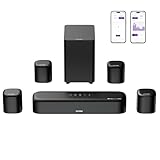
- 7.1ch Dolby Atmos Surround Sound System for TV: This 7.1ch sound bar features 3 main channels for crisp dialogue and 4 surround speakers. Power the rear right surround speaker to pair it wirelessly with sound bar. The setup delivers an immersive surround sound audio experience, making you feel fully engaged in the action. Note: Recommended for space of 108 to 270 ft².
- 4 Surround Speakers for Home Theater Sound System: The Aura A60 Pro soundbar for tv comes with 2 wired front surround speakers and 2 wired rear surround speakers, positioned to create a wide, room-filling soundstage. The rear speakers connect wirelessly with the soundbar, minimizing cable clutter and optimizing space efficiency.
- Dolby Atmos Delivers an Immersive 3D Soundscape: This 7.1ch dolby atmos soundbar enhances your listening experience with multidimensional audio that surrounds you from every direction, upgrading your home theater with powerful, dynamic sound that brings each scene to life.
- 5.25-inch Wired Subwoofer with BassMX Technology: The Aura A60 Pro sound bar comes with a 5.25" wired subwoofer powered by BassMX technology to boost low-frequency performance. An optimized magnetic structure and diaphragm produce deep, powerful bass. Enjoy enhanced low-end sound and experience the impact of every beat.
- Precision Audio Tuning Redefined: Customize your audio experience with the Ultimea App, designed for precise sound control. It provides 121 professionally tuned EQ presets across styles such as Bass, Pop, Classical, and Rock, along with 10-band control and 6 tailored EQ modes including Movie, Music, Voice, Sport, Game, and Night. Using the advanced “Customize” option, you can adjust audio details to suit your personal taste, ensuring every sound is tuned exactly how you prefer.
Brosnan appears bulked up, but unevenly so—thick through the neck and torso, slower in his movements, as if carrying both literal and psychological weight. His posture slumps forward, shoulders rounded, giving the impression of someone who has learned to brace for impact even when no punch is coming. It’s a physicality that communicates backstory before a single line of dialogue is spoken.
A Face That Tells the Story Before the Script Does
The most startling aspect of the transformation is Brosnan’s face, which seems deliberately drained of its former symmetry and charm. Whether achieved through prosthetics, makeup, or sheer commitment to aging himself onscreen, the result is deeply unsettling. His cheeks hang heavier, his eyes appear recessed and permanently tired, and the lines across his face suggest years of punishment rather than wisdom.
Crucially, the camera doesn’t flatter him. The trailer favors harsh lighting and uncomfortably tight close-ups, daring the audience to sit with every crease and bruise. Brosnan doesn’t resist this scrutiny; he leans into it, allowing his face to become a map of regret, endurance, and unresolved pain.
Reworking the Voice: From Leading Man to Worn Survivor
Just as transformative as the physical changes is Brosnan’s vocal work, which may be the most quietly radical element of his performance. Gone is the smooth, romantic cadence that defined much of his career. In its place is a roughened, restrained voice that sounds as though it’s been worn down by years of shouting over crowds, absorbing blows, and swallowing disappointment.
He speaks more slowly, often seeming to measure whether words are even worth the effort. When he does raise his voice, it isn’t commanding—it’s defensive, almost brittle. The effect is deeply human and signals a man who has learned that bravado no longer protects him.
Presence Over Performance: Learning to Take Up Space Differently
Perhaps the most impressive aspect of Brosnan’s reinvention is how he recalibrates his screen presence. For decades, his power as an actor came from elegance and control, from the way he could dominate a frame without trying. In Giant, that control is intentionally fractured.
He often appears rooted to the ground, moving with caution rather than confidence. Even in moments of authority, there’s a sense that the power could slip away at any second. It’s a performance built on tension rather than charisma, on the fear of collapse rather than the promise of victory.
This recalibration is what makes the transformation feel meaningful instead of cosmetic. Brosnan isn’t simply disappearing into makeup or muscle; he’s redefining how he exists onscreen. Giant doesn’t ask him to be iconic. It asks him to be exposed, diminished, and painfully real—and that choice may be the boldest move of his late-career resurgence.
Who Is ‘Giant’ About? The True Boxing Story Powering the Film’s Emotional Core
At its heart, Giant isn’t just a boxing movie—it’s a true story about mentorship, identity, and the cost of extraordinary belief. The film centers on Prince Naseem Hamed, the flamboyant British-Yemeni boxing prodigy who electrified the sport in the 1990s, and Brendan Ingle, the unconventional Irish trainer who helped shape him from childhood into a global phenomenon.
Prince Naseem Hamed: Talent That Redefined the Ring
Naseem Hamed was a once-in-a-generation fighter, a featherweight whose speed, reflexes, and unorthodox style made him nearly untouchable at his peak. But his impact extended beyond wins and titles. He was a working-class kid from Sheffield who became a cultural force, embracing spectacle, swagger, and self-belief in a sport that often demands conformity.
Giant traces his rise not as a highlight reel, but as a volatile coming-of-age story—one fueled by confidence, risk, and the pressure of expectation. The film understands that Naseem’s brilliance was inseparable from his defiance, and that the very qualities that made him unstoppable would later test the limits of his discipline.
Brendan Ingle: The Man Behind the Myth
Pierce Brosnan portrays Brendan Ingle, the legendary trainer who discovered Naseem when he was just seven years old at Sheffield’s Wincobank Gym. Ingle wasn’t a traditional coach; he was a teacher, philosopher, and surrogate father figure who believed in boxing as a tool for self-worth and social mobility.
Rank #2

- Simplified 5.1ch Dolby Atmos Setup: Enjoy immersive 4D sound with real Dolby Atmos and 5.1-channel audio. Five built-in speakers, including two side-firing drivers, create wide surround without rear speakers. Precision DSP ensures <0.5 ms latency for smooth, theater-like sound. Setup takes less than 1 minute.
- Voice Clarity Enhancement: VoiceMX technology uses advanced DSP algorithms to isolate and enhance vocal frequencies in real time. Dialogue remains crisp and easy to follow by separating speech from background effects and music, even at low volumes or during intense scenes.
- 300W Output with 6-Driver System: Featuring five precision-tuned full-range drivers and a dedicated wired wooden subwoofer, the system delivers up to 300W of peak power for bold, room-filling sound. With a frequency response of 45 Hz–18 kHz and a maximum SPL of 99 dB, it reproduces everything from subtle nuances to explosive cinematic effects.
- 18 mm High-Excursion Driver: Powered by BassMX technology, the wired wooden subwoofer features a 18 mm high-excursion driver, a 5.3L tuned cabinet, and a high-density magnetic circuit. This design delivers deeper, tighter bass with greater air displacement and enhanced low-frequency performance—bringing more realism to every scene.
- HDMI eARC for True Dolby Atmos: HDMI eARC supports up to 37 Mbps of bandwidth, unlocking the full potential of lossless Dolby Atmos 5.1-channel audio. Compared to standard ARC, eARC delivers richer surround effects and greater detail. CEC integration allows the TV and soundbar to work together with unified control.
This is where Giant finds its emotional weight. The story is as much about Ingle’s faith in Naseem as it is about the fighter’s raw talent. Brosnan’s transformed presence underscores a man who has given decades of his life to shaping young fighters, often at the expense of his own health and peace.
A Relationship Built on Belief—and Strain
Rather than framing success as inevitable, Giant leans into the fragility of the mentor-protégé bond. As Naseem’s fame grows, so does the distance between the disciplined foundations Ingle instilled and the excess surrounding superstardom.
The film draws tension from this widening gap, culminating in moments where guidance turns into confrontation and loyalty is tested by ego. It’s a story about what happens when belief propels someone to the top—and what it costs when that belief begins to fracture.
Why This Story Resonates Beyond the Ring
By grounding itself in real lives rather than mythology, Giant positions itself as a character-driven biopic rather than a conventional sports drama. The boxing is essential, but it’s secondary to the emotional exchanges between teacher and student, and the quiet reckoning of a man realizing he may not be able to protect the person he helped create.
Outdated Drivers Are Slowing You Down
One free scan finds every outdated or missing driver and matches the right update for your exact hardware.Free scan · exact hardware matchWindows Errors? Fix Them Before They Spread
Repair common Windows errors and clear accumulated junk for a smoother, more stable PC - no reinstall needed.Free scan · no reinstallThis human focus is what makes Brosnan’s role feel so pivotal. Brendan Ingle isn’t remembered for titles or knockouts, but for the lives he shaped—and Giant understands that legacy is often built in corners far removed from the spotlight.
Inside the Trailer: Key Scenes, Visual Motifs, and What They Reveal About Tone and Themes
The first trailer for Giant is deliberately restrained, unfolding less like a hype reel and more like a mood piece. It signals early on that this is not a conventional boxing biopic built around victories, but a reflective character study shaped by memory, mentorship, and consequence. Every image feels chosen to underline endurance rather than spectacle.
An Unrecognizable Brosnan in the Corners
One of the trailer’s most arresting images is Pierce Brosnan seated ringside, bundled in oversized coats, his posture heavy and inward. The familiar Bond-era elegance is gone, replaced by a worn stillness that suggests decades of emotional and physical toll. His Brendan Ingle rarely raises his voice; instead, the power comes from pauses, watchful eyes, and the sense of a man carrying responsibility long after the bell has rung.
Close-ups linger on Brosnan’s altered face, emphasizing age, fatigue, and resolve rather than theatrical transformation. The effect is quietly radical for an actor so closely associated with charisma and control. Here, authority comes from patience and lived experience, reinforcing the film’s interest in restraint over bravado.
What’s actually slowing this PC down?
Pick the symptom - the matching free tool is one click away.
The Gym as Sanctuary and Battleground
Much of the trailer is rooted in Wincobank Gym, shot in muted tones that feel almost monastic. Sunlight cuts through dusty windows, ropes creak, and gloves thud with ritualistic repetition. These visuals position the gym as both refuge and proving ground, a place where discipline is forged and tested long before fame intrudes.
The camera often frames Naseem and Ingle at opposite ends of the ring, visually foreshadowing the emotional distance that will grow between them. Even in moments of triumph, the space feels enclosed, reinforcing the idea that success does not necessarily bring freedom. The ring becomes a metaphor for boundaries—protective at first, confining later.
Fame, Friction, and the Cost of Belief
As the trailer progresses, flashes of Naseem’s rise contrast sharply with Ingle’s grounded world. Bright lights, media attention, and swagger-filled entrances interrupt the film’s otherwise subdued palette. These moments are brief but jarring, suggesting a tonal shift where spectacle begins to erode structure.
Crucially, the trailer avoids showing full fights. Instead, it focuses on aftermaths: quiet locker rooms, strained conversations, and glances that say more than words. The emphasis is on what success does to relationships, not just bodies, underscoring the film’s central question about whether belief can survive transformation.
Recommended Free Tools
Rank #3

- Your purchase includes: 1 AV receiver, 5 speakers, 1 Sub-Woofer and Speaker wire.Waterproof : No
- Dimensions: AV Receiver – 17” W x 6” H x 12” D | Four Speakers (each) – 4” W x 6” H x 4” D | Center speaker – 10” W x 4” H x 4” D | Subwoofer – 11” W x 11” H x 13” D
- Technical specs: HDMI – 4 | Standby Power Consumption – ≤ 0.2 W | Frequency Response – 28Hz/25kHz
- Bluetooth for streaming all your favorite music and podcasts. No wireless functionality
- Easy setup with Yamaha YPAO room optimization and flexible speaker placement options, including virtual cinema front
A Late-Career Reinvention Framed by Restraint
What the trailer ultimately reveals is a film confident in understatement. Giant trusts its audience to read between the frames, and Brosnan’s performance appears calibrated to that same frequency. This is not a role designed for grand speeches or showy breakdowns, but for accumulation—of years, regrets, and hard-earned wisdom.
That approach makes Brosnan’s transformation feel less like a stunt and more like a statement. The trailer positions Giant as a film about legacy measured in influence rather than applause, hinting that this role could redefine how audiences view Brosnan in this stage of his career.
From Bond to Bruiser: How ‘Giant’ Fits Into Brosnan’s Late-Career Reinvention After ‘MobLand’
Pierce Brosnan’s career has entered a phase defined less by iconography and more by intention. After decades of carrying global franchises and polished leading-man roles, his recent choices suggest a deliberate pivot toward characters shaped by erosion rather than elegance. Giant arrives as the most radical expression of that shift yet, pushing him further away from the gravitational pull of James Bond than ever before.
Where his earlier screen persona thrived on control, charisma, and inevitability, Giant presents a man worn down by responsibility and compromise. Brosnan’s Brendan Ingle is not a figure who commands a room; he occupies it cautiously, often receding into the background even as his influence remains undeniable. That tension between presence and restraint becomes the defining feature of his performance.
Quick wins for a faster PC:
Repair Windows errors before they cause bigger problemsFix Now →Scan for outdated or missing drivers - takes under a minuteDriver Scan →Clear out junk files and repair common Windows errorsFree Scan →Building on the Grit of ‘MobLand’
Brosnan’s recent turn in MobLand quietly set the stage for this evolution. In that series, he traded polish for moral ambiguity, embracing a character whose authority felt fragile and conditional rather than absolute. The performance signaled a willingness to explore power as something that can corrode, rather than simply elevate.
Giant deepens that exploration by stripping power down to its most personal form: mentorship. Ingle’s control over Naseem Hamed’s early career is rooted in belief and discipline, not dominance. Brosnan plays him as a man who understands that his relevance depends entirely on trust, making the eventual fracture between trainer and fighter feel both inevitable and deeply personal.
Physical Transformation as Emotional Language
Much has been made of Brosnan’s unrecognizable appearance in the trailer, but the transformation is not purely cosmetic. The heavier frame, the grayer hair, and the weathered posture are deployed as storytelling tools rather than shock tactics. His body communicates years of labor and compromise, mirroring the emotional toll of guiding brilliance that ultimately outgrows its source.
Unlike traditional boxing biopics that glorify endurance through physical punishment, Giant uses Brosnan’s altered presence to underscore emotional fatigue. He moves like someone who has absorbed decades of other people’s ambitions. In that sense, the transformation becomes an extension of character, not a distraction from it.
A Calculated Step Toward Prestige Territory
Taken together, MobLand and Giant suggest a late-career strategy that favors intimacy over scale. Brosnan appears increasingly drawn to stories where influence is measured in quiet moments rather than climactic victories. These are roles that invite close scrutiny, the kind that rewards patience and nuance over instant impact.
If Giant lands as the trailer promises, it could reposition Brosnan not just as a former franchise star reinventing himself, but as a performer entering a distinctly prestige-oriented chapter. The film’s emphasis on legacy, mentorship, and loss aligns seamlessly with where he is now, making Giant feel less like a departure and more like an arrival.
Performance Watch: Early Awards Buzz and Why This Role Could Put Brosnan Back in the Oscar Conversation
Even at the trailer stage, Giant is already generating the kind of industry chatter that signals more than casual interest. Brosnan’s performance reads as internal, restrained, and deliberately unshowy, the sort of work that tends to resonate with voters once the noise of blockbuster season fades. It is the rare transformation that feels motivated by character rather than ambition, a distinction awards bodies increasingly respond to.
This is not Brosnan chasing prestige through theatrical suffering. Instead, Giant positions him as a reactive presence, a man whose emotional gravity shapes the film without demanding constant attention. That kind of calibrated authority often plays exceptionally well during festival screenings and guild viewings, where subtlety becomes an asset rather than a liability.
Do these 3 things before closing this tab:
1Clear out junk files and repair common Windows errors2Scan for outdated or missing drivers - takes under a minute3Repair Windows errors before they cause bigger problemsRank #4

- An all-in-one home theater package - The YHT-4970U comes with a Dolby Atmos AV Receiver (Yamaha RX300A), a 5.1 speaker package (two front channel speakers, a center channel speaker, two surround channel speakers, and a powered subwoofer), plus a subwoofer cable and speaker wire all in one box.
- Step into lifelike sonic worlds - Dolby Atmos and DTS Virtual:X for deeply dimensional, lifelike sound that draws you into every moment of your favorite entertainment, plus crystal-clear dialogue so you can hear every word.
- Stunning visual realism - Supports ultra-high definition 4K/120 and 8K/60 video, high-performance HDMI switching, advanced Dolby Vision and HDR10+ dynamic range technologies, HDMI eARC/ARC and next-gen gaming features like ALLM and VRR.
- Room Correction - Experience perfect sound in any room. An included setup microphone measures your room’s acoustics and speaker characteristics, allowing the receiver to automatically optimize sound performance.
- Easy streaming with Bluetooth Multipoint - Stream all your favorite music, podcasts and audiobooks wirelessly. Built-in Bluetooth Multipoint lets you pair two source devices and instantly switch between them.
A Role Designed for Late-Season Momentum
From an awards-strategy perspective, Giant has several advantages working in its favor. Boxing biopics have a long history with the Academy, but the focus here is notably reframed toward mentorship and erosion rather than triumph. Brosnan’s Ingle is not the center of victory but the witness to its cost, a narrative angle that gives his performance thematic weight without overexposure.
If the film secures a fall festival launch or a carefully managed limited release, Brosnan could find himself positioned squarely in the Supporting Actor conversation. That category, often receptive to veteran performers delivering career-redefining work, may prove especially hospitable to a performance built on restraint and emotional accumulation.
Industry Context: A Career Reassessment Moment
What makes this moment particularly compelling is how Giant fits into a broader reassessment of Brosnan’s post-Bond career. For years, his dramatic work was overshadowed by the cultural afterimage of 007, even when the performances themselves were solid. Giant feels like a corrective, offering critics and voters a clear lens through which to evaluate his craft independent of legacy branding.
Early reactions to the trailer suggest a renewed seriousness in how Brosnan is being discussed, less as a former franchise icon and more as a character actor willing to disappear into lived-in roles. That shift in perception is often the first step toward meaningful awards traction.
Why This Performance Could Finally Break Through
The Academy has historically responded to actors who use physical transformation as a gateway to emotional vulnerability, but only when the transformation serves a deeper purpose. Brosnan’s work in Giant appears to meet that standard, using age, weight, and weariness to express unspoken regret and devotion. It is the kind of performance that grows in retrospect, lingering after the film ends.
If Giant delivers on its promise, Brosnan may find himself in the rare position of being both rediscovered and recontextualized in the same season. Not as a nostalgic favorite, but as a performer whose most meaningful work is arriving precisely when expectations have been lowered.
Independent reader supportYour contribution helps us test, update, and keep practical guides available for everyone.The Creative Team and Prestige Signals: Direction, Cinematography, and Biopic Craft
Beyond Brosnan’s transformation, the first trailer for Giant signals a production that understands the language of prestige filmmaking. Every creative choice appears calibrated toward intimacy rather than spectacle, positioning the film less as a rousing sports drama and more as a character-driven study of ambition, loyalty, and erosion over time.
A Director Focused on Interior Stakes
The trailer suggests a director deeply invested in psychology over pageantry. Boxing sequences are framed not as triumphant set pieces but as moments of tension and consequence, often cutting away before catharsis can fully land. This restraint implies a filmmaker more interested in what the sport extracts from its participants than what it gives back.
That approach dovetails neatly with Brosnan’s role as a watchful, weathered figure on the margins. Rather than pulling focus, the direction allows him to exist in glances, silences, and small gestures, reinforcing the film’s thematic interest in mentorship and moral cost.
Cinematography That Embraces Wear and Time
Visually, Giant adopts a muted, textural palette that emphasizes age, sweat, and accumulated damage. Close-ups linger on creased skin, tired eyes, and bruised hands, grounding the story in physical reality rather than cinematic gloss. The camera frequently feels observational, as if documenting lives already in progress rather than staging moments for effect.
This aesthetic choice enhances Brosnan’s unrecognizable appearance, making his transformation feel organic instead of performative. The cinematography treats his face as a landscape shaped by years of compromise, reinforcing the idea that this is a story about what time does to people who live on the edge of success.
A Biopic That Resists Formula
What ultimately separates Giant from more conventional boxing biopics is its apparent refusal to chase easy narrative beats. The trailer hints at a structure built around accumulation rather than reversal, where victories feel fleeting and losses echo long after the bell. That tonal seriousness aligns the film more closely with recent awards-season favorites that prioritize mood and moral ambiguity over uplift.
Crashes, No Sound, or Screen Glitches?
Random freezes, missing sound and display glitches usually trace back to one bad driver. Find and replace yours safely.Free scan · under a minutePC Slower Than It Used to Be?
A free scan shows the junk files, broken settings and background clutter dragging Windows down - then fixes them in one click.Free scan · Windows 10 & 11Best Value

- 5.1.2ch Surround Sound System: A 5.1.2-channel system featuring up-firing speakers, surround sound, and a powerful subwoofer creates lifelike, multidimensional audio. Feel the Sky Around You—raindrops falling from above, helicopters circling overhead, thunder rumbling in all directions. Sound isn’t just around you, it engulfs you, as if the ceiling disappeared. This is Dolby Atmos: not just heard, but felt.
- Up-Firing Drivers with Neodymium Core: The up-firing channels use neodymium internal magnets and 18-core large voice coils to enhance height precision and vertical throw. This aerospace-grade configuration ensures better high-frequency dynamics, delivering focused and elevated sound images that unlock the true potential of Dolby Atmos.
- 360° SurroundX Audio: SurroundX technology combines two rear surround speakers and dual up-firing Atmos drivers to build a true 360° sound field. Powered by intelligent spatial algorithms, the system precisely positions audio around and above you—enhancing Dolby Atmos with a more natural, three-dimensional soundstage. Note: Not compatible with DTS.
- Lossless Audio Transmission: Unlock full Dolby Atmos performance with HDMI eARC, supporting up to 37Mbps bandwidth for lossless 5.1.2-channel audio. Compared to regular ARC, eARC delivers richer detail and better surround effects with no compression. With CEC, your TV and soundbar work as one—power, volume, and input sync automatically for effortless control.
- Advanced App Control: Customize every detail of your audio experience with the Ultimea App. Fine-tune your surround sound with 13-step level adjustment (-6 to +6), optimize with a 10-band graphic EQ, and choose from 121 preset sound settings. Enjoy seamless OTA updates that unlock new features and keep your system performing at its peak.
These creative signals suggest a film designed to travel well on the festival circuit, where quiet authority and craft-forward storytelling are often rewarded. For Brosnan, being embedded within a project this disciplined and self-assured strengthens the perception that Giant is not merely a comeback vehicle, but a carefully constructed piece of prestige cinema built to last beyond its opening weekend.
Why ‘Giant’ Matters Now: Boxing Biopics, Masculinity, and the Legacy Narrative at the Film’s Heart
In an era saturated with sports dramas chasing inspirational highs, Giant arrives with a quieter, more reflective urgency. Its interest isn’t in crowning champions, but in examining the emotional and ethical residue left behind by lives spent in combat. That recalibration makes the film feel timely, especially as audiences grow more receptive to stories that interrogate power, masculinity, and aging rather than mythologizing them.
Reframing the Boxing Biopic
Boxing biopics have historically thrived on repetition: the rise, the fall, the redemptive fight. Giant appears to resist that gravitational pull, positioning the sport as context rather than destiny. The ring is not a place of transformation here, but a pressure chamber that reveals who these men already are.
This approach places Giant in conversation with modern, revisionist sports films that favor interiority over spectacle. It’s less Rocky and more The Wrestler, where the cost of devotion outweighs the glory, and where the body becomes a ledger of choices rather than a weapon of triumph.
Masculinity Without the Armor
What makes Giant resonate now is its treatment of masculinity as something fragile, negotiated, and often inherited. The trailer suggests men who were taught to endure rather than express, to mentor through silence rather than guidance. Strength is present, but it’s weary, compromised, and increasingly out of step with the world around it.
Brosnan’s character embodies that tension. His physical transformation underscores a man shaped by eras when emotional withholding was synonymous with survival. In that sense, Giant isn’t just a sports film, but a study of generational masculinity and the quiet damage it passes down.
Legacy, Mentorship, and the Weight of Influence
At its core, Giant seems preoccupied with legacy, not as something earned through victory, but as something imposed through example. Brosnan’s presence looms not because he dominates scenes, but because his past decisions ripple outward, shaping younger fighters navigating their own limits.
This legacy narrative is where the film finds its emotional spine. Mentorship is portrayed not as wisdom generously bestowed, but as responsibility carried long after relevance fades. The question Giant poses isn’t who wins, but who lives with the consequences.
The Tool Desk
Outbyte Driver Updater FREEFix the driver behind crashes, sound loss and screen glitchesFind Drivers →Outbyte PC Repair FREERepair Windows errors before they cause bigger problemsFix Now →A Defining Late-Career Turn for Brosnan
For Pierce Brosnan, Giant feels like a strategic and artistic inflection point. The unrecognizable appearance isn’t simply awards bait; it’s a visual manifestation of the themes the film is wrestling with. Age, erosion, and moral complexity are no longer subtext, but the text itself.
In the context of his recent work, this role reinforces Brosnan’s shift toward character-driven prestige projects that privilege restraint over charisma. If Giant lands as the trailer suggests, it could solidify this phase of his career as his most interesting yet.
Ultimately, Giant matters because it treats boxing not as spectacle, but as a language for discussing time, influence, and the men left standing when the noise fades. It’s a film that understands legacy isn’t built in the ring, but in what remains once the gloves come off.
Quick Recap
Product prices and availability are accurate as of the date/time indicated and are subject to change. Any price and availability information displayed on Amazon at the time of purchase will apply.




