The Tool Desk
Outbyte Driver Updater FREEFix the driver behind crashes, sound loss and screen glitchesFind Drivers →Outbyte PC Repair FREERepair Windows errors before they cause bigger problemsFix Now →Netflix is trending for reasons that have nothing to do with a new series or a surprise cancellation. Instead, the platform has been pulled into the political conversation after a high-profile donation by one of its most recognizable leaders reignited long-standing questions about how much a streaming giant can—or should—be separated from the personal politics of its executives.
The spark came not from a Netflix production, but from campaign finance disclosures that circulated rapidly across social media. Within hours, “Cancel Netflix” began trending as users debated whether personal political spending by company leadership should carry cultural or economic consequences for the brand millions subscribe to every month.
At the center of the backlash is a familiar tension in modern entertainment culture: the collision between corporate power, personal ideology, and a subscriber base that increasingly views its viewing choices as value statements as much as entertainment decisions.
What Was Donated, and Why It Drew Attention
The controversy stems from a multi-million-dollar political donation made by Netflix co-founder and executive chairman Reed Hastings. Public records revealed that Hastings contributed a substantial sum—reported at several million dollars—to a political action committee supporting then–Republican presidential candidate Nikki Haley during the 2024 election cycle.
#1 Best Overall
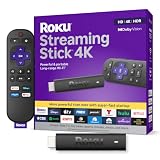
- Stunning 4K and Dolby Vision streaming made simple: With America’s number 1 TV streaming platform,* exploring popular apps—plus tons of free movies, shows, and live TV—is as easy as it is fun. *Based on hours streamed—Hypothesis Group
- Breathtaking picture quality: Stunningly sharp 4K picture brings out rich detail in your entertainment with four times the resolution of HD. Watch as colors pop off your screen and enjoy lifelike clarity with Dolby Vision and HDR10+.
- Seamless streaming for any room: With Roku Streaming Stick 4K, watch your favorite entertainment on any TV in the house, even in rooms farther from your router thanks to the long-range Wi-Fi receiver.
- Shows on the go: Take your TV to-go when traveling—without needing to log into someone else’s device.
- Compact without compromises: Our sleek design won’t block neighboring HDMI ports, so you can switch from streaming to gaming with ease. Plus, it’s designed to stay hidden behind your TV, keeping wires neatly out of sight
While the donation was legal, disclosed, and made in Hastings’ personal capacity, its size immediately set it apart from typical executive political giving. In an era when campaign finance data spreads instantly across social platforms, the figure itself became a flashpoint, fueling accusations that Netflix leadership was quietly backing political agendas at odds with parts of its global audience.
Who Made the Donation—and Who Didn’t
A key detail often lost in the initial outrage is that Netflix as a company did not donate to any political campaign or candidate. The contribution came from Hastings individually, not from Netflix corporate funds, and the company issued no coordinated political endorsement alongside the donation.
Still, Hastings’ role as a public-facing architect of Netflix made the distinction feel academic to many subscribers. For critics, the line between personal wealth generated by Netflix and political spending tied to that wealth felt uncomfortably thin, even if legally clear.
When It Happened—and Why It’s Trending Now
The donation itself was made earlier in the 2024 election cycle, but “Cancel Netflix” surged much later, after renewed circulation of the filings on X, TikTok, and Reddit. Short-form videos and viral posts reframed the story as a breaking revelation, often stripping away timeline context in favor of emotional immediacy.
This delayed outrage cycle is increasingly common, particularly when political content intersects with pop culture brands. As with past moments involving Netflix and political controversy, the trending spike says as much about how outrage travels online as it does about the original act that sparked it.
Separating Corporate Action From Executive Politics: How Netflix’s Structure Complicates the Backlash
At the heart of the “Cancel Netflix” conversation is a structural tension that many subscribers rarely think about until moments like this. Netflix is a publicly traded company with millions of shareholders, a global subscriber base, and a leadership hierarchy designed to separate individual influence from corporate decision-making. Yet when a co-founder makes a high-profile political donation, those lines can blur in the public imagination.
A Founder’s Influence Without Day-to-Day Control
Reed Hastings no longer runs Netflix’s daily operations, having stepped down as CEO in early 2023. The company is now led operationally by co-CEOs Ted Sarandos and Greg Peters, with Hastings serving as executive chairman rather than a creative or programming authority. That distinction matters internally, even if it carries less weight in the court of public opinion.
Hastings retains influence as a founder and board member, but he does not unilaterally set content strategy, political messaging, or corporate policy. Netflix’s programming decisions, greenlights, and labor negotiations are shaped by executive teams and regional leadership, not by the personal politics of its chairman. For critics, however, symbolic power often outweighs organizational charts.
What Netflix Can—and Can’t—Legally Do Politically
As a corporation, Netflix does not donate directly to presidential campaigns, and its political spending disclosures reflect a cautious, compliance-driven approach. Corporate political activity typically takes the form of issue-based lobbying, trade group participation, or donations aligned with media and technology policy interests, rather than candidate endorsements. That separation is intentional, especially for a company operating across vastly different political environments worldwide.
The Hastings donation, while financially tied to wealth generated through Netflix, was not made on the company’s behalf. From a governance standpoint, conflating the two risks misunderstanding how public companies are structured and regulated. From a cultural standpoint, though, consumers often respond to perceived values rather than legal boundaries.
Why the Distinction Feels Unsatisfying to Subscribers
Streaming audiences increasingly view platforms as cultural actors, not neutral utilities. Netflix’s long history of commissioning politically resonant content has conditioned viewers to associate the brand with broader social conversations, even when those conversations are driven by creators rather than executives. That context makes any political association involving leadership feel more personal to subscribers.
For some critics, the issue is less about campaign finance law and more about alignment. The idea that subscription dollars indirectly enrich an executive who supports a political figure they oppose can be emotionally potent, even if the connection is abstract. In that sense, the backlash reflects modern consumer ethics more than traditional corporate accountability.
Free tools Windows power users keep installed
One-click scans. No signup required.
What Past Backlashes Suggest About Real Impact
Historically, similar controversies involving Netflix leadership have produced intense but short-lived outrage cycles. Calls to cancel subscriptions have rarely translated into measurable churn beyond normal fluctuations, particularly when the controversy is disconnected from the platform’s actual content or pricing. Attention tends to dissipate once the news cycle moves on or a new streaming release dominates conversation.
That pattern doesn’t make the current backlash meaningless, but it does place it in context. Netflix’s structure, scale, and decentralized creative ecosystem make it unusually resilient to executive-specific political controversies. The disconnect between online outrage and operational impact is not accidental; it is built into how the company functions.
The Social Media Outrage Cycle: How Hashtags, Influencers, and Algorithms Fueled the Moment
The speed at which “Cancel Netflix” began trending had less to do with new information and more to do with how modern outrage travels. Once the political donation details surfaced, the story moved almost instantly from reporting to reaction, skipping the slower digestion phase that once separated news from judgment. In that compressed timeline, nuance rarely survives.
Hashtags as Emotional Shortcuts
Hashtags like #CancelNetflix function less as arguments and more as emotional rally points. They compress a complex issue involving personal wealth, corporate structure, and political donations into a single, shareable demand. For users scrolling at speed, the hashtag offers clarity and community without requiring full context.
This simplification is not accidental; it’s how social platforms reward participation. A post that frames the donation as a clear moral line invites engagement far more effectively than one that explains corporate governance or shareholder separation. As a result, the hashtag becomes the story, even as the underlying facts remain more complicated.
The Influencer Amplification Effect
The backlash accelerated when prominent creators and commentators weighed in, particularly those whose audiences already view streaming choices as political expressions. For influencers, reacting to a trending controversy is both a cultural reflex and a visibility strategy. Condemning or defending Netflix publicly positions them as values-driven while tapping into an existing wave of attention.
In many cases, these reactions were based on secondary interpretations rather than primary reporting. Screenshots, paraphrased headlines, and clipped explanations traveled further than detailed articles. Each layer of commentary subtly shifted the framing, often intensifying the perceived connection between subscriber dollars and political outcomes.
Rank #2

- No More App-Switching. Forget learning to navigate a new screen with every app. TiVo Stream 4K enables one centralized place for searching, browsing, and creating watch lists across all your apps..DC Input Range 5V/1.0A. Power Consumption : Maximum 5 W
- Recommendations Across All of Your Apps: Get rid of the walls between what you watch. TiVo recommends your next favorite shows and movies based on what you love, not where they live.
- Say it and watch it. The power of voice control makes it easy to find shows. Integrated Google Assistant allows you to launch apps, dim the lights and more.
- One place for all your favorite streaming apps. TiVo Stream 4K includes Netflix, Prime Video, Disney+, Peacock plus many more, so you can get to your shows fast.
- TiVo Stream 4K is one of Time Magazine’s “2020 Best Inventions, Special Mention” and PCMag hails it as “an excellent media streamer for TV lovers.” Operating Temperature 0˚C - 40˚C
Algorithmic Incentives and Escalation
Platform algorithms play a decisive role in transforming isolated outrage into perceived mass movement. Posts expressing anger or moral urgency tend to generate higher engagement, which signals relevance and pushes the content into more feeds. This creates a feedback loop where users encounter the same framing repeatedly, reinforcing the sense that a consensus has already formed.
Recommended Free Tools
Importantly, algorithms are indifferent to scale versus intensity. A relatively small but highly active group can dominate trending topics if their posts provoke strong reactions. That dynamic helps explain why “Cancel Netflix” can feel ubiquitous online while subscription data and broader audience behavior remain largely unchanged.
Why the Cycle Feels Bigger Than It Is
The convergence of hashtags, influencer commentary, and algorithmic amplification produces a moment that feels culturally seismic, even when its practical impact is limited. Social media collapses distance between personal ethics and corporate action, making individual donations feel like institutional endorsements. In that environment, canceling a subscription becomes a symbolic gesture rather than a strategic one.
This doesn’t mean the outrage is artificial or insincere. It reflects how audiences now process power, wealth, and culture through digital spaces that reward immediacy over depth. But it does suggest that trending anger is not the same as sustained pressure, a distinction that has repeatedly defined how Netflix weathers politically charged moments.
Has This Happened Before? Comparing Netflix’s Past Political Controversies and Public Responses
Netflix’s current moment in the political crosshairs may feel unusually charged, but it follows a familiar pattern. The company has repeatedly found itself at the center of cultural and political flashpoints, often triggered by executive actions, creative decisions, or perceived ideological alignments. Each episode has generated calls for boycotts, trending hashtags, and predictions of lasting damage.
Do these 3 things before closing this tab:
1Fix the driver behind crashes, sound loss and screen glitches2Clear out junk files and repair common Windows errors3Scan for outdated or missing drivers - takes under a minuteWhat history shows, however, is a consistent gap between online intensity and measurable impact. Netflix has weathered these storms before, and the outcomes provide useful context for understanding the present backlash.
The Reed Hastings Donation Backlash of the 2010s
Long before this latest controversy, Netflix co-founder Reed Hastings faced criticism for his personal political donations. His financial support for Democratic candidates and causes became public during the Trump era, prompting conservative-led calls to cancel subscriptions. At the time, social media framing often blurred the line between Hastings’ individual political activity and Netflix’s corporate identity.
The backlash generated headlines and trending discussions but produced no visible dent in Netflix’s growth. Subscriber numbers continued to climb, and the platform’s content strategy remained unchanged. The episode established an early precedent: executive donations can spark outrage, but they rarely translate into sustained consumer withdrawal.
Content Controversies and Moral Boycotts
Netflix has also faced repeated calls for cancellation over its programming. Cuties in 2020 ignited global criticism over its portrayal of minors, while Dave Chappelle’s comedy specials sparked protests and internal employee walkouts over trans representation. In both cases, Cancel Netflix trended loudly and persistently.
Quick wins for a faster PC:
Repair Windows errors before they cause bigger problemsFix Now →Scan for outdated or missing drivers - takes under a minuteDriver Scan →Yet internal data later suggested limited subscriber loss tied directly to these controversies. In some instances, viewership for the criticized content increased due to heightened visibility. The outrage functioned more as a cultural signal than an economic lever.
Political Partnerships and Symbolic Associations
Netflix’s deal with Barack and Michelle Obama in 2018 triggered its own wave of politicized reactions. Critics framed the partnership as ideological endorsement rather than a content agreement, echoing today’s tendency to conflate platform decisions with political allegiance. Once again, the outrage was immediate and emotionally charged.
The long-term effect, however, was negligible. The Obama-produced projects became part of Netflix’s broader slate, neither defining the platform nor reshaping its subscriber base. The controversy faded as attention shifted elsewhere.
What These Patterns Reveal
Across these moments, the same dynamics recur: personal actions are interpreted as institutional values, social media accelerates the most alarmed framing, and cancellation is positioned as moral participation. What’s missing is evidence that these moments meaningfully alter Netflix’s business trajectory or cultural dominance.
That doesn’t mean the reactions lack sincerity or ethical grounding. It means that Netflix, as a global platform with hundreds of millions of users, absorbs political outrage differently than smaller or more ideologically defined brands. Past controversies suggest that while the noise is real, its consequences are often far quieter than the trend charts imply.
Does Cancel Culture Actually Hurt Streaming Giants? What the Data Says About Churn, Stock, and Subscriber Behavior
If cancel culture were a reliable economic weapon, Netflix would look very different today. Instead, the platform’s financial and subscriber data across multiple controversies tells a more muted story. Outrage spikes tend to be loud, concentrated, and emotionally intense, but they rarely translate into sustained user flight.
Churn Spikes Are Real — but Usually Temporary
Data from third-party analytics firms like Antenna and Parrot Analytics shows that Netflix does experience small churn bumps during major controversies. These spikes typically occur within the same one- to two-week window that Cancel Netflix trends on social platforms. However, the increases are modest and often reverse within the following billing cycle.
In past incidents, including the Chappelle backlash and Cuties fallout, churn rose by fractions of a percentage point before stabilizing. New subscriber additions and returning users routinely offset those losses. For a platform operating at Netflix’s scale, that level of churn is considered background noise rather than a warning signal.
Outdated Drivers Are Slowing You Down
One free scan finds every outdated or missing driver and matches the right update for your exact hardware.Free scan · exact hardware matchPC Slower Than It Used to Be?
A free scan shows the junk files, broken settings and background clutter dragging Windows down - then fixes them in one click.Free scan · Windows 10 & 11Stock Market Reactions Tend to Decouple From Outrage
Netflix’s stock performance has historically been far more sensitive to earnings reports, subscriber forecasts, and macroeconomic conditions than to cultural backlash. During several high-profile cancel campaigns, Netflix shares either held steady or moved in line with broader tech-sector trends. Political or moral controversies rarely register as material risk in investor guidance.
When the stock has taken hits, the causes were structural: slowing subscriber growth, increased competition from Disney+ and Max, or pricing changes. Cultural outrage alone has never triggered a sustained selloff. Wall Street, it turns out, values retention math over trending hashtags.
Rank #3

- Streaming made easy: Roku Express lets you stream free, live and premium TV over the Internet—right to your TV. It’s perfect for new users, secondary TVs and easy gifting—but powerful enough for seasoned pros
- Quick and easy setup: Just plug it into your TV with the included High Speed HDMI Cable and connect to the internet to get started
- Tons of power, tons of fun: Compact and power-packed, you’ll stream your favorites with ease; from movies and series on Apple TV, Prime Video, Netflix, The Roku Channel, HBO, Showtime and Google Play to cable alternatives like Hulu with Live TV and PlayStation Vue, enjoy the most talked about TV across free and paid channels
- Low cost, no extra fees: For under $30, Roku Express streaming device includes a High Speed HDMI Cable—and there’s no monthly equipment fee; with access to free TV on hundreds of channels, there’s plenty to stream without spending extra
- Simple remote: Incredibly easy to use, this remote features shortcut buttons to popular streaming channels
Subscriber Behavior Is Less Ideological Than Social Media Suggests
While online discourse frames cancellation as a moral stance, actual subscriber behavior skews pragmatic. Surveys consistently show that most users subscribe for convenience, content volume, and household utility rather than brand alignment. Even users who express anger online often keep subscriptions active due to shared family plans or exclusive shows.
This gap between stated values and consumer behavior is especially pronounced with streaming. Canceling Netflix doesn’t just signal protest; it removes access to children’s programming, shared cultural moments, and long-running favorites. For many subscribers, that tradeoff feels abstract compared to the immediate cost of leaving.
What’s actually slowing this PC down?
Pick the symptom - the matching free tool is one click away.
The Attention Economy Can Even Blunt the Impact
Paradoxically, controversies often drive engagement rather than suppress it. Search interest, social discussion, and curiosity viewing tend to rise around criticized titles or companies. Netflix has repeatedly benefited from this dynamic, with controversial content seeing viewership surges precisely because of the backlash.
This doesn’t mean outrage is meaningless or performative. It means that in the attention economy, visibility itself has value. When Cancel Netflix trends, the platform dominates the conversation, reinforcing its cultural centrality even amid criticism.
What the Current Donation Backlash Fits Into
The political donation now fueling Cancel Netflix follows this established pattern. A personal action is interpreted as institutional endorsement, social platforms amplify the most urgent framing, and cancellation becomes a symbolic act. But unless the controversy alters content access, pricing, or core user experience, history suggests the impact will be limited.
Netflix’s scale, diversification, and global audience insulate it from single-axis backlash. The data doesn’t suggest immunity, but it does show resilience. For subscribers trying to understand whether this moment represents a turning point or just another cycle, the numbers point to the latter.
Quick wins for a faster PC:
Scan for outdated or missing drivers - takes under a minuteDriver Scan →Clear out junk files and repair common Windows errorsFree Scan →Fix the driver behind crashes, sound loss and screen glitchesFind Drivers →Hollywood and Political Donations: Why Netflix Is Far From Alone — and Why This Case Feels Different
Political donations by entertainment executives are neither new nor rare. Hollywood has long been one of the most politically active industries in America, with studio heads, talent agencies, and media conglomerates contributing across party lines through both personal donations and corporate political action committees.
What sparked the current Cancel Netflix trend is not the existence of a donation itself, but its visibility and perceived proximity to the brand. The contribution at the center of the backlash was a legally disclosed, personal donation tied to a major Netflix stakeholder, quickly reframed online as an institutional signal rather than an individual act.
How Common This Actually Is in Hollywood
Nearly every major media company operates within a complex political ecosystem. Executives at Disney, Warner Bros. Discovery, Comcast, Paramount, and Amazon routinely appear in campaign finance databases, donating to candidates aligned with their economic or ideological interests.
Historically, these donations have rarely translated into sustained consumer boycotts. Audiences tend to separate corporate content from executive behavior unless the politics directly affect what appears on screen or how access is governed.
Netflix, in this sense, is not an outlier. It is participating in a long-established Hollywood norm that typically registers as background noise rather than a front-page controversy.
Why Netflix’s Case Is Registering More Sharply
What makes this moment feel different is the way Netflix occupies cultural space. Unlike legacy studios, Netflix is not just a producer; it is a daily utility, a household interface, and a shared family environment. That intimacy lowers the threshold for emotional reaction when politics enter the conversation.
The timing also matters. The donation surfaced during an already volatile political cycle, when corporate neutrality is viewed with suspicion and silence is often interpreted as complicity. In that environment, even personal actions by executives are quickly read as brand-level statements.
There is also the matter of transparency. Modern campaign finance databases, amplified by social media, allow screenshots and summaries to travel faster than context. By the time nuance enters the discussion, the narrative has often already solidified.
Past Backlash vs. Measurable Consequences
Netflix has faced politically charged controversies before, from content disputes to labor criticism to perceived ideological bias. In nearly every case, calls to cancel trended loudly and briefly, then faded without materially altering subscriber growth or retention curves.
The difference now is not scale, but symbolism. The backlash taps into a broader anxiety about corporate power, political influence, and cultural gatekeeping, all concentrated onto a single, highly visible platform.
Still, the historical record suggests a familiar outcome. Online outrage shapes discourse, not balance sheets, unless it coincides with tangible changes to price, access, or content availability. On that front, nothing about Netflix’s core offering has shifted.
Separating Institutional Action From Individual Agency
One of the more difficult questions raised by the controversy is where a company ends and its leadership begins. Netflix has not announced a political endorsement, adjusted its content strategy, or altered its public policy positioning in response to the donation.
What’s actually slowing this PC down?
Pick the symptom - the matching free tool is one click away.
Yet in the streaming era, audiences increasingly view brands as value systems rather than neutral distributors. That expectation creates friction when individual behavior clashes with subscriber assumptions about what a platform represents.
Rank #4

- Hides behind your TV: The all-new design plugs right into your TV with a simple setup
- Super-fast startup: Start streaming channels like Disney+, Prime Video, HBO Max, Apple TV+, Netflix, Sling, and Hulu in a snap—just turn on your TV
- Long-range Wi-Fi: Enjoy fast, smooth TV streaming in any room with a strong Wi-Fi connection, now up to 2x faster
- No more juggling remotes: Power up your TV, adjust the volume, and control your Roku Streaming Stick with the Roku remote
- Voice search & control: Quickly search, play entertainment, and control your streaming device with the voice remote
This tension is not unique to Netflix, but its scale and cultural saturation make it a more visible flashpoint. The backlash says as much about changing consumer expectations as it does about the donation itself.
What Netflix Has (and Hasn’t) Said So Far — and How Silence or Statements Shape the Narrative
At the time the controversy gained momentum, Netflix did not issue an immediate, standalone statement addressing the reported political donation. Instead, the company has largely relied on its existing public framework: that political contributions made by executives are personal acts, not corporate endorsements.
That distinction is common across the entertainment and tech sectors, but it often lands unevenly in moments of heightened scrutiny. When outrage moves faster than official clarification, absence can feel like ambiguity, even if internal policies are already on the record.
Windows Errors? Fix Them Before They Spread
Repair common Windows errors and clear accumulated junk for a smoother, more stable PC - no reinstall needed.Free scan · no reinstallOutdated Drivers Are Slowing You Down
One free scan finds every outdated or missing driver and matches the right update for your exact hardware.Free scan · exact hardware matchThe Difference Between Corporate Speech and Corporate Presence
Netflix’s communications strategy here mirrors how it has handled similar flare-ups in the past. Rather than proactively entering the discourse, the company tends to let third-party reporting, prior disclosures, and institutional norms do the explanatory work.
This approach minimizes escalation, but it also cedes narrative control. In the streaming era, where brands are expected to articulate values as clearly as release schedules, silence can be interpreted less as neutrality and more as quiet alignment, regardless of intent.
What We Know About the Donation Itself
The donation at the center of the backlash has been reported through publicly accessible campaign finance records, which list the contribution under an individual executive’s name rather than Netflix as an entity. There is no indication that the company itself made, coordinated, or benefited from the contribution in a formal sense.
That factual separation, however, has done little to slow the backlash. For many subscribers, especially those who view platforms as cultural actors, the distinction between personal wealth and corporate power feels increasingly theoretical.
Why Netflix May Be Choosing Not to Engage Directly
From a media economics standpoint, Netflix has little incentive to amplify a controversy that has not affected pricing, content availability, or subscriber access. Historically, the company intervenes publicly only when a dispute threatens to disrupt production pipelines, regulatory standing, or consumer trust at scale.
By staying quiet, Netflix avoids legitimizing a narrative that may burn out on its own. The risk, of course, is that prolonged silence allows the controversy to be framed entirely by social media voices rather than institutional context.
How Statements — or Lack Thereof — Shape Public Interpretation
In backlash cycles like this one, official statements rarely convert critics. Their real function is to reassure the silent majority that boundaries exist between individual agency and corporate policy.
Without that reassurance, audiences fill in gaps themselves, often through assumption rather than evidence. The result is a discourse driven less by what Netflix has done than by what viewers fear large platforms might represent when power, politics, and culture collide.
The Tool Desk
Outbyte Driver Updater FREEScan for outdated or missing drivers - takes under a minuteDriver Scan →Outbyte PC Repair FREERepair Windows errors before they cause bigger problemsFix Now →Bottom Line: Is This a Flashpoint or a Turning Point for Netflix’s Brand and Cultural Power
The evidence so far suggests this moment is closer to a flashpoint than a fundamental rupture. The donation itself, while politically charged, remains legally and structurally separate from Netflix as a corporation, and there has been no corresponding shift in content strategy, pricing, or platform governance that would indicate institutional alignment.
What History Says About “Cancel” Cycles and Streaming Giants
Netflix has weathered similar storms before, from internal walkouts to creator controversies and politically polarized programming debates. In most cases, social media outrage peaked quickly, while subscriber behavior remained largely unchanged once new releases reclaimed attention.
Streaming platforms operate on momentum, not moral unanimity. As long as Netflix continues to deliver culturally dominant shows and films, short-term backlash rarely translates into sustained disengagement.
The Difference Between Visibility and Impact
“Cancel Netflix” trending reflects visibility, not necessarily leverage. Trending topics signal emotional intensity among highly engaged users, but they do not automatically map onto cancellations, revenue loss, or long-term brand erosion.
Free tools Windows power users keep installed
One-click scans. No signup required.
Actual impact shows up in earnings reports, churn metrics, and advertiser confidence. So far, none of those indicators suggest meaningful disruption tied to this controversy.
Why This Still Matters for Netflix’s Cultural Authority
Even if the business impact is minimal, moments like this do chip away at Netflix’s carefully maintained position as a broadly inclusive cultural middle ground. As streaming platforms become de facto public squares, audiences increasingly expect ethical clarity, even when legal responsibility is absent.
The risk for Netflix is not immediate loss, but gradual skepticism. Over time, repeated controversies without contextual response can make neutrality feel less like balance and more like avoidance.
Flashpoint, With Conditions
For now, this appears to be a flashpoint amplified by timing, political polarization, and the speed of online discourse rather than a turning point that reshapes Netflix’s trajectory. The platform’s scale, content output, and global reach still far outweigh the reputational damage of a single executive-linked donation.
Do these 3 things before closing this tab:
1Scan for outdated or missing drivers - takes under a minute2Clear out junk files and repair common Windows errors3Fix the driver behind crashes, sound loss and screen glitchesThe longer-term question is whether Netflix can continue to rely on silence as its default strategy. In an era where audiences increasingly conflate cultural power with moral responsibility, the company may eventually have to decide whether saying nothing still serves the brand it has spent a decade building.
Quick Recap
Product prices and availability are accurate as of the date/time indicated and are subject to change. Any price and availability information displayed on Amazon at the time of purchase will apply.