Crashes, No Sound, or Screen Glitches?
Random freezes, missing sound and display glitches usually trace back to one bad driver. Find and replace yours safely.Free scan · under a minutePC Slower Than It Used to Be?
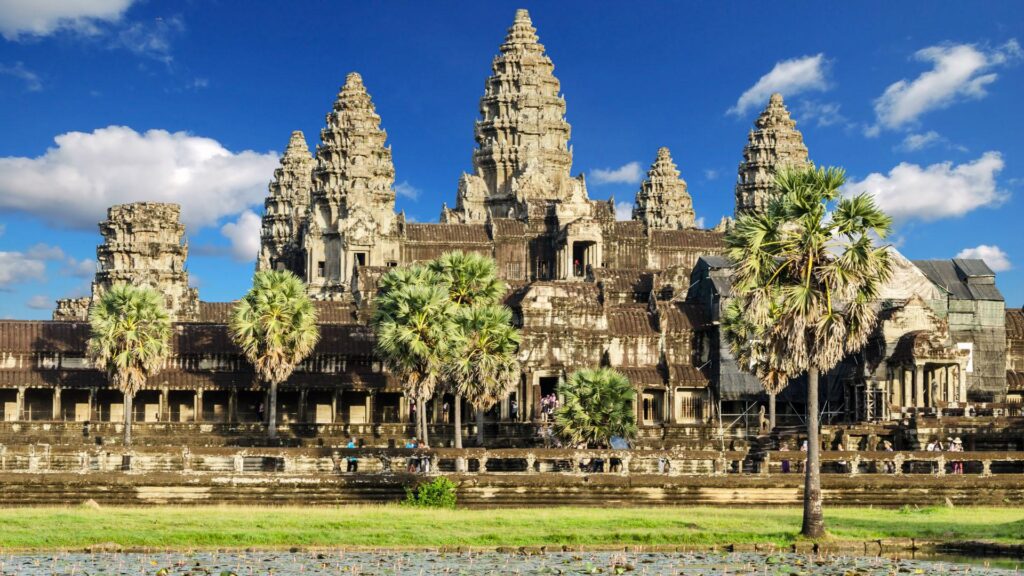
A free scan shows the junk files, broken settings and background clutter dragging Windows down - then fixes them in one click.Free scan · Windows 10 & 11Angkor is a vast temple city in Cambodia. It is one of the many lost cities in the world. Nowadays, it features just several remains of the capital of the Khmer Empire. The Empire dated from the 9th to the 15th century, and the remains include the famous Angkor Wat temple, Bayon Temple, and many more.
The Khmer Empire as a Hindu-Buddhist civilization which populated present-day Cambodia. The Angkor Wat Temple is the single largest religious monument in the world. Situated on a flat plain in northwestern Cambodia, the city was one of the largest and most populated in the world in the 11th and 12th century. The name itself means capital in Khmer language.


The end of the city came in 1431, when it was sacked and looted by Ayutthaya invaders. The empire and civilization, have been in decline for a while before that.
Angkor Wat
As mentioned previously, this temple is the single largest religious monument in the world. It is one temple within Angkor. Other temples are open for the public, and some of them are still covered by jungle.
#1 Best Overall
From the air, the centuries-old temple appears and vanishes as a hallucination. That is because of the jungle and forest surrounding it. At first sight, you see nothing more than an umber smudge in the forest canopy.
Fun Facts about the Temple
To get an idea of how big and significant the temple was, let’s talk about some of the fun facts. The original outer wall at one point enclosed the temple proper, city, and royal palace. In total, it occupied a space of 203 acres, or 820,000 square meters. Nothing remains of the wall nowadays.
Rank #2
The Khmer empire had a different building strategy. They bonded bricks together by using a vegetable compound, not mortar.
The temple is oriented to the west, which might be unusual for us. However, that is a direction associated with death in Hindu culture, and many believe that the temple is associated with funeral rituals. Another proof for that are the bas-reliefs, which read counterclockwise.
The many temples of Angkor
The Angkor Wat is not the only temple in the city and the region. In total, there are 292 temples in the complex. Fifth of those survived the Khmer civilization. Of those 292 temples, 72 are major temples and monuments, and 220 are minor ones.
Many more temples can be found in the nearby jungle. According to some counts, the entire complex contains more than 700 temples and shrines.
The majority of these temples have been restored and are still used by local people. They come in there to pray, leave offerings and candles in the sanctuaries. At night, the nearby forest and jungle are quite alive and loud, as they resound with choruses of frogs, cicadas, and crickets.
Independent reader supportYour contribution helps us test, update, and keep practical guides available for everyone.One of the Largest Cities
At its peak, Angkor was among the world’s largest and most populated city. It housed more than 750,000 residents, which is remarkable given how small the world population was at the time. The city sprawled across an area the size of New York City’s five boroughs. It was the most extensive urban complex of the preindustrial world.
The temple was rediscovered in the 1990s. Nowadays, the city draws more than a million tourists per year. Some of the buildings are well preserved.
Short History of the City
The earliest evidence of human habitation in the area dates back to 5000 BC. Some of the artifacts found in the temple are from pre-Bronze age and the era of hunter-gatherers. However, the city reaches its peak during the Khmer empire. At the time, it was the most powerful kingdom in the Southeast Asia region.
When Europe was still wallowing in the Dark Ages in the 12th century, Angkor had close to million inhabitants. By comparison, at the time, Paris, which was the largest city in Europe, had 30,000 inhabitants.
The city was established under Yasovarman I and expanded by Suryavarman II. Most of the temples that tourists visit were built by Jayavarman VII. He was the one who converted the Empire to Buddhism and raised monuments. Buildings built before his reign (from 1181 to 1219) are primarily Hindu in nature.
What’s actually slowing this PC down?
Pick the symptom - the matching free tool is one click away.
Quick Recap
Product prices and availability are accurate as of the date/time indicated and are subject to change. Any price and availability information displayed on Amazon at the time of purchase will apply.