Tyler Perry occupies a singular space in modern American cinema: a filmmaker whose popularity is undeniable, whose influence is massive, and whose work remains fiercely debated. For more than two decades, his films have drawn loyal audiences to theaters and streaming platforms, often outperforming expectations while being dismissed or misunderstood by traditional critical circles. That tension is exactly why Perry still matters, especially when ranking the films that best represent what he does well.
His movies are not just products; they are cultural events rooted in Black storytelling traditions that predate Hollywood’s current diversity conversations. Perry’s work blends stage-play melodrama, faith-based themes, broad comedy, and soap-opera intensity into a formula that speaks directly to audiences who have long felt overlooked. Understanding his appeal is essential to evaluating which of his films transcend formula and which simply repeat it.
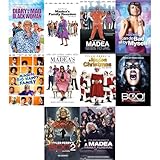
This ranking is not about defending every creative choice Perry has made, nor is it about dismissing the valid critiques surrounding his work. It’s about examining how his strongest films balance emotional storytelling, memorable performances, cultural resonance, and sheer rewatchability across an evolving career.
Popularity That Hollywood Can’t Replicate
Few filmmakers can claim the kind of built-in audience Tyler Perry commands, especially one cultivated largely outside traditional Hollywood systems. His early Madea films, while polarizing, created a direct pipeline to viewers who saw their families, churches, and communities reflected onscreen with unapologetic familiarity. That grassroots success allowed Perry to build an empire on his own terms, culminating in Tyler Perry Studios, one of the most significant Black-owned production hubs in the world.
Crashes, No Sound, or Screen Glitches?
Random freezes, missing sound and display glitches usually trace back to one bad driver. Find and replace yours safely.Free scan · under a minuteWindows Errors? Fix Them Before They Spread
Repair common Windows errors and clear accumulated junk for a smoother, more stable PC - no reinstall needed.Free scan · no reinstall#1 Best Overall

- Factory sealed DVD
When ranking his best films, popularity alone isn’t the deciding factor, but it does matter. Perry understands how to connect emotionally, and his top-tier movies harness that instinct while sharpening narrative focus and character depth. Those are the films that convert casual viewers into repeat watchers.
Polarization as a Measure of Cultural Reach
Criticism has followed Perry at every stage of his career, often targeting his use of stereotypes, tonal extremes, and rapid production pace. Yet the persistence of those critiques alongside sustained audience devotion reveals something deeper: his films spark conversation because they reach people. The best Tyler Perry movies are the ones that refine his signature elements rather than abandon them, using melodrama as a tool instead of a crutch.
At his strongest, Perry channels heightened emotion into stories about accountability, trauma, forgiveness, and survival. These films resonate beyond their immediate audience, offering insight into why his work remains relevant even as his style evolves.
How We Ranked Them: Storytelling, Performances, Cultural Impact, and Rewatch Value
To rank Tyler Perry’s best films, we focused on where his instincts as a storyteller, director, and cultural commentator align most effectively. This isn’t a technical exercise rooted in awards or critical consensus, but an evaluation of how well each movie delivers on Perry’s core promise: emotionally direct stories that connect with audiences in lasting ways. The highest-ranked films are the ones where craft, heart, and intention converge.
Storytelling That Knows When to Restrain and When to Go Big
Perry’s storytelling thrives on heightened emotion, but his strongest films understand the difference between intensity and excess. We prioritized movies that demonstrate narrative control, where melodrama is purposeful and character arcs feel earned rather than rushed. These are the films that move confidently from conflict to resolution without relying solely on shock or sermonizing.
Several of Perry’s best works also show an evolution in structure, pacing, and tone. Whether grounded in domestic drama or framed within genre storytelling, these films reveal a filmmaker increasingly aware of when to pull back and let the story breathe. Clarity of theme and emotional payoff were key factors here.
Performances That Elevate the Material
Acting plays a critical role in separating Perry’s most impactful films from his more disposable efforts. We looked closely at performances that transcend archetype, whether delivered by Perry himself or by collaborators who bring added depth to familiar dynamics. The highest-ranked films feature characters who feel lived-in, not just symbolic.
Many of these movies also showcase Perry’s growing strength as a director of actors. When he gives performers room to explore vulnerability, grief, humor, and contradiction, the material deepens significantly. Those performances linger long after the credits roll, anchoring the film’s emotional core.
Quick wins for a faster PC:
Clear out junk files and repair common Windows errorsFree Scan →Fix the driver behind crashes, sound loss and screen glitchesFind Drivers →Cultural Impact Beyond the Screen
Cultural resonance was essential to this ranking, particularly given Perry’s role in shaping modern Black popular cinema. The films that placed highest are the ones that sparked conversation, reflected lived experiences, or challenged audiences without alienating them. Impact isn’t always measured by controversy alone, but by longevity and relevance.
Some of Perry’s movies became reference points within Black households, church communities, and popular culture at large. Others signaled shifts in his creative direction, marking moments where he expanded his thematic reach or addressed social issues with greater nuance. Those turning points mattered in assessing his overall legacy.
Rewatch Value and Emotional Familiarity
Finally, we considered how often a film invites return viewing. Perry’s best movies aren’t just watched; they’re revisited, quoted, and passed down. Rewatch value comes from emotional accessibility, memorable scenes, and stories that feel comforting even when they’re confronting painful truths.
These are the films audiences put on when they want to laugh, cry, or feel understood. They reflect Perry at his most confident, delivering stories that hold up not just on first viewing, but years later, as both entertainment and cultural touchstones.
The Tool Desk
Outbyte Driver Updater FREEFix the driver behind crashes, sound loss and screen glitchesFind Drivers →Outbyte PC Repair FREERepair Windows errors before they cause bigger problemsFix Now →The Evolution of Tyler Perry’s Filmmaking: From Stage Plays to Studio Powerhouse
Tyler Perry’s film career cannot be separated from his roots in live theater. His earliest movies were direct extensions of his stage plays, carrying over heightened melodrama, broad comedy, and moral clarity designed to play to packed auditoriums. Those films prioritized accessibility and emotional immediacy over cinematic polish, speaking directly to audiences who felt unseen by mainstream Hollywood.
From Stage to Screen: A Distinct Narrative Voice
Early Perry films often felt like captured performances rather than fully translated cinematic experiences. Dialogue-heavy scenes, theatrical blocking, and clearly defined archetypes reflected their origins, but they also created an intimacy that resonated deeply with viewers. This approach established Perry’s voice quickly, even as critics questioned his technical refinement.
What mattered most was that his stories connected. Themes of faith, forgiveness, family fracture, and resilience formed a consistent emotional language that audiences recognized and trusted. That bond allowed Perry to build a loyal fanbase before Hollywood fully acknowledged his box office power.
The Madea Era and Cultural Visibility
Madea became both Perry’s calling card and his greatest creative complication. The character’s outsized humor and moral authority brought massive commercial success and turned Perry into a household name. At the same time, Madea films often overshadowed his quieter, more character-driven work.
What’s actually slowing this PC down?
Pick the symptom - the matching free tool is one click away.
While frequently dismissed by critics, these films played a crucial role in normalizing Black-centered stories within mainstream theatrical releases. They also gave Perry the financial independence to experiment, even when those experiments didn’t always land artistically.
Rank #2

- Shrink-wrapped
Technical Growth and Expanding Ambition
As Perry gained experience behind the camera, his filmmaking grew more confident and visually controlled. Later films show greater attention to pacing, composition, and performance nuance, especially when he stepped away from broad comedy. Collaborations with seasoned actors helped elevate material that might once have leaned too heavily on sentiment.
This period marks a noticeable shift toward emotional realism. Perry began allowing scenes to breathe, trusting silence and restraint in ways his early work rarely attempted. When successful, these choices resulted in some of the most critically respected films of his career.
A Studio Powerhouse on His Own Terms
The launch of Tyler Perry Studios fundamentally changed his position within the industry. No longer reliant on external systems, Perry became a rare example of a Black filmmaker owning both production and infrastructure at scale. That autonomy enabled prolific output across film, television, and streaming platforms.
Do these 3 things before closing this tab:
1Fix the driver behind crashes, sound loss and screen glitches2Repair Windows errors before they cause bigger problems3Scan for outdated or missing drivers - takes under a minuteWith that freedom came uneven results. The speed and volume of his productions sometimes worked against narrative depth, but they also demonstrated an unmatched work ethic and commitment to representation. At his best, Perry used this independence to tell stories Hollywood had long ignored.
Genre Experimentation and Thematic Maturity
In recent years, Perry has pushed beyond his established formulas, exploring thrillers, historical dramas, and social issue-driven narratives. These films reflect a creator more willing to take risks, even when they divide audiences. Not all experiments succeed, but they reveal an artist refusing to remain static.
This evolution is essential to understanding his best films. The highest-ranked entries capture moments where Perry balances his instinct for emotional accessibility with growing cinematic discipline. They represent not just popularity, but progress, charting the journey of a filmmaker who reshaped his lane while expanding what it could contain.
Ranked #10–#8: Early Experiments, Messy Hits, and Cult Favorites
These films sit at the lower end of the ranking not because they lack value, but because they represent Perry still figuring out how to translate his theatrical instincts into cinematic language. They are uneven, sometimes clumsy, but deeply instructive in understanding his appeal and evolution. For many fans, these titles were entry points that built trust long before the refinement arrived.
#10: Meet the Browns (2008)
Meet the Browns is a transitional work that shows Perry stretching beyond the Madea-centric formula while still relying heavily on it for comic momentum. The film introduces an ensemble that would later fuel his television empire, prioritizing warmth and familiarity over narrative precision. Its tonal swings between slapstick and earnest family drama can feel jarring, yet that instability also reflects Perry’s instinct to speak to multiple emotional registers at once.
Culturally, the film resonates as an ode to chosen family and community resilience, themes Perry would revisit with greater finesse later. While far from his tightest screenplay, Meet the Browns remains a cult favorite for its humor and heart, especially among audiences who connected with its down-home sincerity.
#9: Daddy’s Little Girls (2007)
Daddy’s Little Girls stands out as one of Perry’s earliest attempts to step away from his signature comic alter egos and focus on grounded drama. Idris Elba’s performance as a struggling father anchors the film, offering a restrained emotional center that contrasts with Perry’s usual melodrama. The courtroom plot and romantic subplot are underdeveloped, but the film’s emotional intent is clear and earnest.
What elevates it in hindsight is how it foreshadows Perry’s later interest in male vulnerability and systemic injustice. Though uneven in execution, the film has grown in appreciation over time, particularly for audiences drawn to its portrayal of Black fatherhood rarely centered in mainstream cinema.
Recommended Free Tools
#8: I Can Do Bad All By Myself (2009)
I Can Do Bad All By Myself is messy, overlong, and tonally inconsistent, yet it also represents one of Perry’s most self-aware projects of the era. Taraji P. Henson delivers a commanding performance that injects credibility and complexity into a film otherwise pulled between musical comedy, redemption drama, and broad farce. Madea functions more as a narrative catalyst than the main attraction, signaling Perry’s growing confidence in ensemble storytelling.
Despite its flaws, the film’s themes of accountability, self-sabotage, and emotional healing resonate strongly with audiences. Its rewatch value lies less in polish and more in performance, marking a point where Perry’s films began leaning toward character-driven impact over pure spectacle.
Ranked #7–#5: When Melodrama Meets Meaningful Performances
This middle stretch of the ranking captures Tyler Perry at a crossroads, where his instinct for heightened emotion begins colliding with more disciplined performances and socially conscious ambition. These films still lean into melodrama, but they are elevated by actors who ground the material and by themes that hint at Perry’s evolving understanding of character, marriage, trauma, and moral responsibility.
#7: Good Deeds (2012)
Good Deeds is one of Perry’s quieter, more restrained films, and that subtlety works both for and against it. Playing a wealthy businessman grappling with identity and purpose, Perry delivers a surprisingly introspective performance that departs from his usual bombast. Thandiwe Newton brings warmth and emotional clarity, helping the film feel more human than its premise suggests.
Free tools Windows power users keep installed
One-click scans. No signup required.
While the story’s moral lessons are blunt and occasionally simplistic, the film benefits from its focus on internal conflict rather than external chaos. In retrospect, Good Deeds feels like an experiment in adult romantic drama that prioritizes reflection over spectacle, making it a modest but meaningful entry in Perry’s filmography.
#6: For Colored Girls (2010)
For Colored Girls represents one of Perry’s boldest artistic swings, adapting Ntozake Shange’s choreopoem into a sprawling cinematic ensemble. The cast, including Janet Jackson, Kimberly Elise, Anika Noni Rose, and Whoopi Goldberg, delivers raw, often devastating performances that elevate the film beyond its uneven structure. At its best, the film captures pain, resilience, and solidarity with an intensity rarely seen in Perry’s work.
Critics rightly noted that Perry struggles with restraint, particularly in the film’s more sensational moments. Still, its cultural impact is undeniable, offering a platform for Black women’s voices and experiences in a mainstream studio release. Even with its flaws, For Colored Girls stands as a pivotal moment where Perry aimed for artistic seriousness on a much larger scale.
#5: Why Did I Get Married? (2007)
Why Did I Get Married? marks one of Perry’s most successful blends of ensemble storytelling and accessible relationship drama. The film benefits from strong chemistry among its cast, including Janet Jackson, Jill Scott, Sharon Leal, and Michael Jai White, all of whom bring nuance to characters wrestling with love, betrayal, and personal growth. The vacation setting allows the drama to unfold organically, giving conversations room to breathe.
What makes the film especially rewatchable is its relatability and balance. Perry’s trademark moralizing is present, but it’s softened by humor, empathy, and genuine insight into long-term relationships. This is a film where his melodrama feels purposeful, channeling emotional excess into questions that resonate across gender, age, and cultural lines.
Ranked #4–#2: Perry at His Most Confident, Polished, and Impactful
By this point in the ranking, Perry’s filmmaking feels fully assured. These are movies where his instincts align with craft, performances sharpen his themes, and the emotional payoff lands with clarity rather than excess. They represent moments when Perry understood exactly what kind of story he was telling and how best to tell it.
#4: Daddy’s Little Girls (2007)
Daddy’s Little Girls stands as one of Perry’s most grounded and emotionally effective dramas, largely because it resists the temptation to overreach. Idris Elba delivers a quietly powerful performance as a struggling father fighting for custody of his daughters, anchoring the film with sincerity and restraint. Gabrielle Union provides strong counterbalance, bringing warmth and intelligence to a role that could have easily slipped into cliché.
What elevates the film is its clear moral focus without heavy-handed sermonizing. Perry explores class, justice, and parental devotion through character-driven conflict rather than explosive plot twists. It remains one of his most rewatchable films because its emotional stakes feel authentic and its storytelling disciplined.
#3: Acrimony (2018)
Acrimony is Perry at his most polarizing, but also at his most technically confident. Taraji P. Henson delivers a ferocious, emotionally unfiltered performance that dominates the film and turns it into a psychological character study rather than a conventional thriller. The film’s slow-burn structure allows resentment, betrayal, and obsession to accumulate with operatic intensity.
While critics debated its extremes, Acrimony proved Perry’s ability to command modern genre storytelling and spark cultural conversation. The film became a streaming phenomenon, inspiring debate around gender, loyalty, and emotional labor in relationships. Love it or hate it, Acrimony is one of Perry’s most impactful films of the last decade.
#2: Madea’s Family Reunion (2006)
Madea’s Family Reunion represents the clearest synthesis of Tyler Perry’s strengths as a filmmaker. The film balances broad comedy with serious social commentary, weaving together themes of domestic abuse, generational trauma, and forgiveness without losing its audience. Unlike some later entries, the tonal shifts feel intentional and controlled.
The ensemble cast shines, and Madea herself functions less as chaos agent and more as moral anchor. Perry’s theatrical roots are evident, but the storytelling feels cinematic and purposeful. As both entertainment and cultural statement, Madea’s Family Reunion remains one of his most complete and resonant films.
Free tools Windows power users keep installed
One-click scans. No signup required.
Ranked #1: The Movie That Best Represents Tyler Perry’s Strengths as a Filmmaker
Diary of a Mad Black Woman (2005)
If there is one film that fully crystallizes Tyler Perry’s voice, purpose, and cultural impact, it is Diary of a Mad Black Woman. As his first feature film, it introduced the blueprint he would refine for decades: emotionally direct storytelling, faith-inflected morality, sharp humor, and an unflinching focus on Black women’s interior lives. More than a debut, it was a declaration of intent.
Kimberly Elise delivers one of the most indelible performances in Perry’s filmography, grounding the heightened emotions with raw vulnerability and strength. Her portrayal of Helen moves from devastation to self-possession in a way that feels earned, not manufactured. Steve Harris and Shemar Moore provide strong counterpoints, but the film never loses sight of whose story it is.
What makes Diary endure is its clarity of perspective. Perry centers a Black woman’s pain, rage, healing, and eventual empowerment without diluting it for mainstream comfort. The film’s melodrama is purposeful, functioning as emotional release rather than excess, and its humor serves as relief rather than distraction.
Madea’s presence is also at its most effective here, acting as both comic engine and moral compass. She is disruptive, yes, but never disconnected from the film’s emotional spine. Perry uses the character not to undercut seriousness, but to articulate hard truths in a language the audience immediately understands.
Do these 3 things before closing this tab:
1Repair Windows errors before they cause bigger problems2Fix the driver behind crashes, sound loss and screen glitches3Clear out junk files and repair common Windows errorsCulturally, Diary of a Mad Black Woman was a seismic moment. It proved there was a massive audience hungry for stories Hollywood had long ignored, and it launched Perry as a singular force in American cinema. Its success reshaped studio assumptions about Black-led films, faith-based storytelling, and the viability of cross-platform creators.
Even now, the film remains deeply rewatchable because its emotions feel honest and its conflicts familiar. It captures Tyler Perry at his most instinctive and sincere, before scale and output sometimes complicated his storytelling. More than any other entry in his catalog, Diary of a Mad Black Woman represents the core of what Perry does best: giving voice to lived experiences with empathy, conviction, and undeniable cultural resonance.
Independent reader supportYour contribution helps us test, update, and keep practical guides available for everyone.Recurring Themes, Archetypes, and What Perry Gets Right (and Wrong)
Across his filmography, Tyler Perry returns to a core set of ideas with remarkable consistency. His stories are fueled by faith, family, betrayal, forgiveness, and survival, often framed through the emotional journeys of Black women navigating romantic, financial, and spiritual upheaval. Whether working in broad comedy or heavy melodrama, Perry treats these themes as lived realities rather than abstract concepts.
Rank #4
![Tyler Perry's Madea - 6 Film Collection (Family Funeral/Boo!/Boo! 2/Christmas/Family Reunion/Witness Protection) [DVD]](https://m.media-amazon.com/images/I/41p1BQMs19L._SL160_.jpg)
- DVD Collection – Region Free playback (compatible with all DVD players worldwide)
- Official Australian manufactured release
- 6 Film Collection: A Madea Family Funeral, Boo! A Madea Halloween, Boo! 2: A Madea Halloween, A Madea Christmas, Madea's Family Reunion, Madea's Witness Protection
- Standard definition widescreen presentation for all films
- English language audio with widescreen presentation
The Centrality of Black Women’s Interior Lives
Perry’s greatest strength has always been his commitment to centering Black women as full emotional protagonists. Long before Hollywood regularly financed films focused on their interior lives, his movies foregrounded their pain, anger, resilience, and joy without apology. Characters like Helen in Diary of a Mad Black Woman, April in Why Did I Get Married?, and Brenda in A Fall from Grace are allowed to break, rebuild, and reclaim themselves onscreen.
What’s actually slowing this PC down?
Pick the symptom - the matching free tool is one click away.
This focus gives his best films their cultural weight and rewatch value. Audiences recognize these women not as symbols, but as reflections of lived experience, even when the storytelling leans heightened. Perry’s empathy for their struggles, particularly around love and self-worth, is what keeps viewers invested even when plots stretch plausibility.
Faith, Morality, and the Promise of Redemption
Faith functions as both narrative framework and moral compass throughout Perry’s work. His films frequently argue that redemption is possible, but rarely easy, and that personal accountability matters as much as divine grace. Prayer, church, and spiritual counsel are not background elements; they actively shape character decisions and outcomes.
Where this approach works best is when faith deepens emotional stakes rather than resolving conflict too neatly. Films like Diary of a Mad Black Woman and Why Did I Get Married? integrate spirituality into character arcs organically. When handled less carefully, faith can slip into didacticism, with lessons spelled out rather than dramatized.
Madea and the Power of the Trickster Archetype
Madea remains Perry’s most recognizable creation, functioning as a Southern trickster figure who blends comedy, wisdom, and confrontation. At her best, she punctures denial and speaks truths other characters cannot, using humor as a delivery system for hard lessons. In ensemble-driven films, she often stabilizes tonal shifts that might otherwise feel jarring.
The challenge comes when Madea overwhelms the story instead of serving it. As the character became more commercially central, some films leaned too heavily on broad antics at the expense of emotional grounding. The strongest entries use Madea sparingly and purposefully, allowing her to enhance, not dominate, the narrative.
Melodrama, Repetition, and Narrative Shortcuts
Perry’s reliance on melodrama is both a defining feature and a frequent point of criticism. His films embrace heightened emotion, extreme betrayals, and clear moral binaries, which can feel cathartic or simplistic depending on execution. When anchored by strong performances, this approach lands with operatic intensity rather than excess.
However, recurring archetypes sometimes calcify into predictability. The unfaithful husband, the long-suffering wife, the predatory antagonist, and the last-act reversal recur often enough to dull their impact. In his weaker films, narrative shortcuts replace character development, undercutting the emotional authenticity that defines his best work.
Evolution, Scale, and the Cost of Prolific Output
As Perry’s output expanded, so did the tension between speed and refinement. His most effective films feel personal and deliberate, while others reveal the strain of rapid production and formula reliance. The difference is evident in pacing, visual language, and the depth of supporting characters.
Still, even his missteps are rooted in a desire to speak directly to an audience Hollywood long overlooked. Perry’s willingness to prioritize accessibility and representation over critical consensus has allowed him to build a filmography that, at its best, resonates deeply and endures culturally. The films ranked highest in his catalog are the ones that balance instinct with craft, emotion with structure, and specificity with universality.
Final Verdict: Tyler Perry’s Legacy in Modern Black Cinema and Mainstream Hollywood
Tyler Perry’s career resists easy categorization because his legacy is not defined by critical consensus alone. It is defined by audience loyalty, cultural reach, and a body of work that speaks directly to Black life with an intimacy Hollywood historically avoided. The films that rise to the top of his catalog are the ones where emotional truth, disciplined storytelling, and purposeful humor align most clearly.
A Filmmaker Who Built His Own Lane
Perry’s greatest achievement may be structural rather than artistic. By building a self-sustaining ecosystem of studios, distribution, and talent pipelines, he reshaped what creative autonomy looks like for Black filmmakers in the mainstream. His success challenged the industry’s long-held assumptions about what stories could sell and who they were for.
This independence allowed him to make films rooted in faith, family, trauma, and resilience without diluting their cultural specificity. Even when his storytelling falters, the perspective remains unapologetically his, and that consistency is part of why his work resonates so deeply with his core audience.
Crashes, No Sound, or Screen Glitches?
Random freezes, missing sound and display glitches usually trace back to one bad driver. Find and replace yours safely.Free scan · under a minutePC Slower Than It Used to Be?
A free scan shows the junk files, broken settings and background clutter dragging Windows down - then fixes them in one click.Free scan · Windows 10 & 11Where the Best Films Rise Above the Formula
The highest-ranked Tyler Perry films are not the ones that avoid melodrama, but the ones that control it. Strong performances, especially from actors like Taraji P. Henson, Alfre Woodard, and Viola Davis, elevate familiar frameworks into something more grounded and affecting. These films balance heightened emotion with character-driven stakes, creating stories that linger beyond their climactic twists.
They also reflect Perry at his most self-aware, using Madea and other broad elements as contrast rather than crutches. In these moments, humor sharpens the drama instead of overwhelming it, and moral clarity emerges through character growth rather than sermonizing.
Evolution in the Streaming Era
Perry’s move into streaming has further complicated his legacy. The increased output has amplified both his strengths and weaknesses, producing films that feel urgently relevant alongside others that feel undercooked. Yet even his lesser efforts continue to dominate viewership metrics, reinforcing his rare ability to connect with audiences at scale.
This phase of his career underscores a central truth: Perry prioritizes immediacy and accessibility over prestige. While that approach can limit refinement, it also ensures his stories remain present, responsive, and widely consumed in an era where cultural attention is increasingly fragmented.
The Enduring Impact
Ranking Tyler Perry’s 10 best movies ultimately reveals a filmmaker at his strongest when instinct meets intention. His most effective films marry emotional directness with narrative discipline, offering catharsis without sacrificing credibility. They are deeply personal stories that also function as communal experiences for audiences who see their lives reflected onscreen.
Tyler Perry’s place in modern Black cinema and mainstream Hollywood is secure not because every film succeeds, but because his voice never wavers. At his best, he reminds us that representation is not just about being seen, but about being understood, even when the message arrives wrapped in laughter, tears, and unapologetic excess.
Quick Recap
Product prices and availability are accurate as of the date/time indicated and are subject to change. Any price and availability information displayed on Amazon at the time of purchase will apply.




