Do these 3 things before closing this tab:
1Scan for outdated or missing drivers - takes under a minute2Clear out junk files and repair common Windows errors3Fix the driver behind crashes, sound loss and screen glitchesFor a series that arrived carrying the weight of one of fantasy literature’s most devoted fanbases, The Wheel of Time has always been judged on a harsher curve. With Season 3, that curve finally bent in the show’s favor in a decisive way. The Amazon Prime Video epic has posted its highest Rotten Tomatoes score to date, a critical milestone that signals not just incremental improvement, but a genuine creative breakthrough.
The record-breaking score represents a rare moment where ambition, execution, and expectation align. Early seasons sparked debate about adaptation choices and pacing, but Season 3 has reframed the conversation entirely. Instead of asking whether the show lives up to Robert Jordan’s novels, critics are now assessing how confidently it stands on its own as prestige fantasy television.



Why Season 3 Resonated With Critics
The most consistent praise centers on focus. Season 3 sharpens its narrative around character-driven stakes, allowing arcs for Rand, Moiraine, and Egwene to unfold with clarity and emotional weight. The series no longer feels like it’s racing to justify its scale; it trusts its world, letting political tension, prophecy, and personal consequence breathe.
Production values also took a noticeable leap. Action sequences are more purposeful than flashy, visual effects feel integrated rather than ornamental, and the show’s world-building finally achieves cohesion. Critics noted that the series now looks and feels like a flagship fantasy property rather than a promising work-in-progress.
Quick wins for a faster PC:
Scan for outdated or missing drivers - takes under a minuteDriver Scan →Repair Windows errors before they cause bigger problemsFix Now →#1 Best Overall
What the Score Signals for the Show’s Future
A record Rotten Tomatoes score does more than validate creative decisions; it reshapes perception. For lapsed viewers who drifted away after earlier seasons, Season 3’s critical reception acts as an open invitation to return. For Amazon, it strengthens the case for long-term investment in a sprawling saga that was always designed to be a marathon, not a sprint.
In the broader fantasy TV landscape, the achievement matters. At a time when genre series are under increasing pressure to justify their budgets and cultural relevance, The Wheel of Time has demonstrated that patience and course correction can pay off. Season 3 doesn’t just mark the show’s high point so far; it positions the series as a serious contender in the modern fantasy canon.
From Divisive Beginnings to Critical Darling: How Season 3 Reversed the Show’s Narrative
When The Wheel of Time debuted, it arrived carrying enormous expectations and equally loud skepticism. Early seasons split audiences between viewers intrigued by its ambition and readers frustrated by deviations from Robert Jordan’s dense mythology. That friction defined the show’s reputation for years, often overshadowing its strengths.
Season 3 marks the moment where that conversation decisively shifted. Rather than chasing approval through constant recalibration, the series embraced a clearer creative identity. The result is a season that feels assured in its storytelling and confident in its place within the fantasy television landscape.
Learning From Early Missteps
One of the most noticeable changes in Season 3 is restraint. Earlier seasons often attempted to juggle too many plotlines at once, compressing character development in service of world-building. Season 3 slows the pace just enough to let emotional consequences land, giving scenes room to resonate.
That discipline extends to adaptation choices. Instead of broadly reworking lore, the show now focuses on translating the spirit of Jordan’s themes—power, destiny, and moral compromise—into television language. Critics responded positively to this shift, noting that the series feels less defensive and more deliberate.
A Clearer Creative Vision
Season 3 benefits from a sharpened narrative spine. Rand’s internal struggle, Moiraine’s recalibrated role, and Egwene’s rise are no longer competing for attention but reinforcing one another. This cohesion makes the story feel purposeful, with each episode building toward consequences rather than simply setting up future events.
Visually and tonally, the show also appears more unified. Costume design, set pieces, and cinematography now serve character and theme instead of spectacle alone. That alignment between form and function is a major reason critics describe Season 3 as the show finally realizing its potential.
Free tools Windows power users keep installed
One-click scans. No signup required.
Critical and Audience Reappraisal
The record-breaking Rotten Tomatoes score reflects more than goodwill; it signals a reevaluation. Critics who once approached the series cautiously are now engaging with it on its own merits, praising its maturity and narrative confidence. Audience response mirrors that shift, with renewed interest from viewers who previously stepped away.
This reappraisal matters because it reframes The Wheel of Time as a success story rather than a cautionary tale. Season 3 proves that long-form fantasy can course-correct without losing its core identity. In doing so, the series transforms its once-divisive reputation into one of the most compelling turnarounds in modern genre television.
Rank #2
Creative Course Correction: Writing, Pacing, and Fidelity to Robert Jordan’s World
Writing With Character First
Season 3’s most decisive improvement is its recommitment to character-driven storytelling. The scripts prioritize motivation and consequence, allowing decisions to ripple across episodes rather than resetting at the end of each hour. This gives arcs like Rand’s moral isolation and Egwene’s hard-earned authority a sense of inevitability instead of convenience.
Dialogue has also sharpened. Conversations now carry subtext rooted in power dynamics, prophecy, and fear, echoing Robert Jordan’s deliberate, often restrained prose. Critics have pointed out that Season 3 trusts its audience more, resisting exposition dumps in favor of implication and emotional context.
What’s actually slowing this PC down?
Pick the symptom - the matching free tool is one click away.
Pacing That Respects Long-Form Fantasy
Earlier seasons often felt compressed, as if racing to justify their epic scale. Season 3 finds a more confident rhythm, structuring episodes around thematic movement rather than checklist plotting. Climaxes are earned through accumulation, not escalation alone.
This recalibrated pacing has been key to the record-breaking Rotten Tomatoes score. Reviewers consistently cite the show’s improved sense of timing, noting that moments of quiet now carry as much weight as large-scale confrontations. The result is a season that feels intentional instead of reactive.
Fidelity to Theme Over Literalism
Season 3’s adaptation strategy marks a philosophical shift. Rather than chasing strict plot fidelity, the series leans into Jordan’s thematic foundations: the burden of destiny, the corruption of power, and the cost of leadership. That choice has resonated with both longtime readers and newcomers.
By grounding its deviations in recognizable emotional truths from the books, the show avoids feeling dismissive of its source. Critics have praised this balance, arguing that Season 3 finally understands what needs to be preserved and what can evolve for television.
Why This Shift Changed the Critical Narrative
The creative course correction reframed how critics evaluated the series. Instead of measuring Season 3 against what it wasn’t, reviewers assessed it as a confident fantasy drama with its own voice. That distinction is crucial in understanding the historic Rotten Tomatoes score.
This milestone signals that The Wheel of Time has crossed a threshold from adaptation under scrutiny to genre staple in its own right. For the broader fantasy TV landscape, it reinforces the idea that course correction is not only possible but can redefine a show’s legacy when executed with clarity and respect for its world.
Performances That Won Critics Over: Cast Growth, Breakout Characters, and Emotional Weight
If Season 3 marks The Wheel of Time’s creative turning point, the performances are its emotional proof. Critics have been unusually aligned in praising the cast’s evolution, noting how the ensemble now carries the narrative with a confidence that earlier seasons were still building toward. The result is a season where character psychology, not spectacle, drives momentum.
A Cast That Finally Feels Seasoned
Rosamund Pike’s Moiraine continues to anchor the series, but Season 3 allows her to play restraint as powerfully as authority. Her performance has drawn acclaim for communicating fatigue, doubt, and resolve through minimal dialogue, reflecting a woman grappling with the cost of being right too often. Reviewers have highlighted how this quieter Moiraine deepens the show’s thematic focus on leadership and sacrifice.
Rank #3
Beyond Pike, the younger cast shows clear maturation. Josha Stradowski’s Rand is no longer defined by confusion alone, instead conveying the frightening clarity of someone realizing what destiny demands. That shift has been central to critics reassessing the show’s emotional credibility.
Breakout Turns and Character Rebalancing
Season 3 also benefits from smarter character emphasis. Performances from Zoë Robins and Madeleine Madden have been singled out for adding layers to Nynaeve and Egwene, transforming them from archetypal fantasy figures into agents of moral tension and ambition. Their arcs feel less reactive and more intentional, which critics see as a sign of narrative trust.
Several supporting characters emerge as unexpected highlights, with antagonists in particular gaining dimension. Rather than functioning as symbolic threats, these figures feel unsettlingly human, a choice that reviewers argue elevates the series above conventional good-versus-evil fantasy television.
Emotional Stakes That Finally Land
What ultimately won critics over is how Season 3 allows emotion to linger. Scenes are permitted to breathe, letting performances communicate loss, fear, and resolve without undercutting the moment with exposition or spectacle. This approach has been cited as a key reason the season’s dramatic beats resonate more consistently.
Recommended Free Tools
That emotional weight feeds directly into the record-breaking Rotten Tomatoes score. Critics responded not just to improved writing or pacing, but to a sense that the cast now understands the gravity of the story they’re telling. For many reviewers, this is the season where The Wheel of Time stops aspiring to greatness and starts convincingly embodying it.
Spectacle with Substance: Production Values, Action, and the Maturing Visual Language
Season 3’s critical breakthrough isn’t driven by performance alone. Reviewers have consistently pointed to a leap in visual storytelling, where scale and spectacle are no longer deployed as proof of ambition, but as extensions of character and theme. The result is a season that looks more confident because it understands when to hold back.
A Fantasy World That Finally Feels Lived-In
The series’ production design has quietly undergone its most meaningful evolution yet. Sets feel textured and weathered rather than ornamental, grounding the fantasy in physical reality and helping the world feel inhabited instead of displayed. Critics have noted how locations now reflect cultural history and political tension, reinforcing narrative stakes without relying on exposition.
Costume design follows the same philosophy. Instead of signaling faction through visual shorthand, Season 3 allows clothing to express hierarchy, ideology, and personal transformation. This restraint has been widely praised as a sign that the show trusts its audience to read the world visually.
PC Slower Than It Used to Be?
A free scan shows the junk files, broken settings and background clutter dragging Windows down - then fixes them in one click.Free scan · Windows 10 & 11Crashes, No Sound, or Screen Glitches?
Random freezes, missing sound and display glitches usually trace back to one bad driver. Find and replace yours safely.Free scan · under a minuteAction with Narrative Purpose
Action sequences, long a point of scrutiny for the series, are now being cited as a strength. Battles are staged with clearer geography and emotional context, ensuring that viewers understand not just who is fighting, but why it matters. Rather than constant escalation, the season favors tension-building and strategic pacing, which critics say makes the climactic moments land harder.
Magic, in particular, has been refined. The One Power is portrayed with greater discipline and consequence, emphasizing its physical and emotional toll rather than its visual flash. This shift aligns spectacle with theme, reinforcing the series’ recurring question about the cost of power.
Rank #4

- Tor
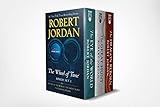
- The Wheel Of Time, 15 Book Set: New Spring, Eye The World, Great Hunt, Dragon Reborn, Shadow Rising, Fires Heaven, Lord Chaos, Crown Swords, Path Daggers, Winter'S Heart And Many More
A Visual Language That Knows When to Be Quiet
Perhaps the most significant change is the show’s growing comfort with stillness. Season 3 frequently allows silence, shadow, and composition to carry meaning, using framing and lighting to convey isolation, authority, or dread. Reviewers have highlighted how these quieter visual choices give the series an identity beyond its genre peers.
This maturation of visual language has played a major role in the record-breaking Rotten Tomatoes score. Critics aren’t responding to bigger fantasy television, but to better fantasy television, where craft supports story at every level. In an increasingly crowded streaming landscape, The Wheel of Time’s ability to marry spectacle with substance marks a turning point not just for the series, but for what long-form fantasy on television can aspire to be.
Critical Consensus vs. Fan Response: Where Reviewers and Audiences Finally Align
For the first time since its debut, The Wheel of Time is enjoying rare harmony between professional critics and its fanbase. Season 3’s record-breaking Rotten Tomatoes score reflects not just critical enthusiasm, but a parallel surge in audience approval that has followed each episode’s release. The divide that once defined conversations around the series has noticeably narrowed, replaced by a shared sense that the show has found its footing.
This alignment matters because it signals more than improved execution; it suggests restored trust. Viewers who drifted away after earlier seasons are returning with tempered expectations and finding a series that now rewards close attention. Longtime fans, meanwhile, are no longer defending potential but celebrating delivery.
Why Critics and Fans Are Responding the Same Way
Much of the convergence stems from how Season 3 balances accessibility with depth. Critics have praised its narrative discipline and thematic clarity, while audiences are responding to clearer stakes, more coherent character arcs, and a sense that every episode advances the story with purpose. The show no longer feels like it’s asking viewers to be patient; it’s actively paying off investment.
Importantly, the adaptation debate has cooled. While purists still note deviations from Robert Jordan’s novels, many fans now view changes as thoughtful reinterpretations rather than compromises. That shift mirrors critical assessments that applaud the series for adapting the spirit of the source material instead of attempting a rigid translation.
The Tool Desk
Outbyte PC Repair FREERepair Windows errors before they cause bigger problemsFix Now →Outbyte Driver Updater FREEFix the driver behind crashes, sound loss and screen glitchesFind Drivers →Social Buzz and the Return of Weekly Conversation
Beyond review aggregators, the cultural temperature around The Wheel of Time has changed. Weekly episode discussions, theory threads, and character debates have regained momentum across social platforms, suggesting organic engagement rather than curiosity-driven sampling. Audience reactions increasingly echo critical talking points, from praise of performance nuance to appreciation for the show’s restraint.
This kind of sustained conversation is something streaming originals struggle to maintain, especially in the fantasy genre. Season 3’s reception indicates that viewers aren’t just watching; they’re processing and anticipating, which is often a stronger indicator of longevity than raw viewership alone.
What This Milestone Means Going Forward
A record-breaking Rotten Tomatoes score carries tangible industry weight. It strengthens the show’s position within Prime Video’s slate and reframes The Wheel of Time as a long-term pillar rather than a high-risk experiment. For a genre often judged harshly after early missteps, this season demonstrates that course correction is possible without sacrificing ambition.
On a broader level, the consensus around Season 3 reinforces a growing truth about fantasy television. Audiences and critics alike are no longer satisfied by scale alone; they’re rewarding shows that pair world-building with emotional coherence and creative confidence. The Wheel of Time’s renewed reception suggests that when a series commits to craft and clarity, alignment follows.
Best Value
What This Milestone Means for Amazon Prime Video and the Future of Epic Fantasy TV
For Amazon Prime Video, Season 3’s record-breaking Rotten Tomatoes score represents more than a PR win. It validates a long-term strategy that prioritizes sustained creative growth over immediate cultural domination. In an era where streaming platforms often pull the plug after uneven early returns, The Wheel of Time stands as evidence that patience can pay dividends.
Prime Video has increasingly positioned itself as a home for ambitious genre storytelling, but ambition alone doesn’t guarantee credibility. This critical milestone reframes The Wheel of Time from a divisive adaptation into a proof-of-concept success, strengthening Amazon’s case as a serious competitor in prestige fantasy television rather than just a high-spend experimenter.
A Vote of Confidence in Long-Form Storytelling
The critical response to Season 3 signals industry approval for serialized fantasy that takes time to find its voice. Rather than chasing instant accessibility, the show leaned into character arcs, political tension, and thematic clarity, trusting viewers to stay engaged. That trust has now been rewarded with both critical and audience alignment.
For Prime Video executives, this kind of reception justifies continued investment not only in The Wheel of Time, but in similarly structured epics that demand narrative patience. It suggests that audiences are willing to commit to dense mythology if the storytelling matures with intention rather than excess.
Raising the Bar for Fantasy Adaptations
Season 3’s acclaim also recalibrates expectations for future fantasy adaptations. Critics have highlighted how the show refined its tone, streamlined its storytelling, and allowed performances to carry emotional weight rather than leaning solely on spectacle. These creative adjustments are now being treated as a roadmap rather than a correction.
That shift matters across the industry. As studios develop new fantasy properties, The Wheel of Time’s trajectory demonstrates that fidelity to tone and theme often resonates more than strict textual accuracy. Adaptation success, in this climate, is increasingly measured by cohesion and confidence rather than page-to-screen precision.
Implications for Renewals, Budgets, and Genre Trust
A record-setting Rotten Tomatoes score strengthens the show’s leverage behind the scenes. It bolsters the case for future seasons, stabilizes budget conversations, and reassures stakeholders that the series has crossed from risky to reliable. For a genre known for volatile audience reactions, that stability is invaluable.
More broadly, this milestone contributes to rebuilding trust between fantasy television and its audience. Viewers burned by rushed finales or abandoned storylines are responding to evidence that long-term planning still exists. If Prime Video capitalizes on this momentum, The Wheel of Time could help redefine how epic fantasy survives and thrives in the streaming era.
Recommended Free Tools
Is Now the Time to Start (or Return to) The Wheel of Time? A Season 3 Viewing Verdict
For viewers who bounced off The Wheel of Time early, Season 3 represents the clearest invitation yet to reconsider. The record-breaking Rotten Tomatoes score is not simply a reflection of goodwill, but a response to tangible improvements in pacing, character focus, and narrative confidence. This is the season where the show finally feels sure of what kind of epic it wants to be. That assurance translates directly to a more rewarding viewing experience.
For New Viewers: A Stronger, Clearer Entry Point
While The Wheel of Time remains a dense fantasy series, Season 3 benefits from sharper storytelling that makes its mythology feel less overwhelming. The world-building is more intuitive, driven by character decisions rather than exposition dumps. Newcomers may still need patience, but the payoff arrives faster and with greater emotional clarity than in previous seasons. Prime Video’s episodic structure also makes it easier to sample the series without committing blindly.
For Returning Fans: A Creative Course Correction That Pays Off
For those who felt frustrated by earlier creative choices, Season 3 plays like a recalibration rather than a reboot. Character arcs are allowed to breathe, political conflicts gain texture, and performances finally take center stage. Critics have consistently pointed to this season as evidence that the adaptation has found its narrative spine. The result is a version of The Wheel of Time that feels both more mature and more faithful in spirit, if not always in detail.
The Verdict: A Fantasy Series Hitting Its Stride
Season 3’s acclaim suggests The Wheel of Time has crossed an important threshold, moving from promising but uneven to confidently compelling. The Rotten Tomatoes milestone signals not just quality, but consistency, a crucial factor for long-form fantasy storytelling. For viewers deciding whether to invest their time, this season offers the strongest argument yet that the journey is worth it. If epic fantasy on television is entering a more disciplined era, The Wheel of Time now stands as one of its most credible standard-bearers.
Quick Recap
Product prices and availability are accurate as of the date/time indicated and are subject to change. Any price and availability information displayed on Amazon at the time of purchase will apply.




