Outdated Drivers Are Slowing You Down
One free scan finds every outdated or missing driver and matches the right update for your exact hardware.Free scan · exact hardware matchPC Slower Than It Used to Be?
A free scan shows the junk files, broken settings and background clutter dragging Windows down - then fixes them in one click.Free scan · Windows 10 & 11You Gotta Believe is the kind of sports movie that arrives quietly and then sticks with you, not because it reinvents the genre, but because it understands why these stories endure. Released as a heartfelt drama with documentary-like sincerity, the film dramatizes a real Little League team’s improbable run toward the 2002 Little League World Series, turning a regional youth baseball story into something that feels national, even universal. Anchored by performances from Luke Wilson and Greg Kinnear, it plays less like a glossy underdog fantasy and more like a memory shaped by grief, hope, and community.
From Real Dugouts to the Big Screen
The film is inspired by the true story of the Westside All-Stars of Fort Worth, Texas, a team of 12-year-olds whose season took on deeper meaning after personal tragedy struck one of their coaches during the championship run. Director Ty Roberts frames the story through the emotional reality of that moment, where baseball became both escape and purpose for kids barely old enough to understand loss. While the movie compresses timelines, heightens certain conflicts, and streamlines personalities for narrative clarity, its core events are rooted in documented history and firsthand accounts.
| # | Preview | Product | Price | |
|---|---|---|---|---|
| 1 |
|
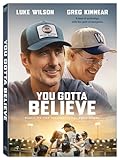
You Gotta Believe DVD | $15.91 | Buy on Amazon |
| 2 |

|
You Gotta Believe | $14.99 | Buy on Amazon |
| 3 |

|
I Believe in You | $5.99 | Buy on Amazon |
| 4 |

|
Think Like a Man | Buy on Amazon | |
| 5 |

|
Take This Heart | Buy on Amazon |
What gives You Gotta Believe its staying power is not just the wins and losses, but the way it treats belief as something earned rather than declared. The film resonates with audiences because it acknowledges the messy human reality beneath inspirational sports mythology, where resilience is built in small, uncinematic moments as much as in final innings. As the story moves from recreation fields to national attention, it raises the inevitable question that real-life adaptations always invite: how much of this actually happened, and what became of the people once the cheering stopped?
The Real-Life Story That Inspired the Movie: The Team, the Season, and the Stakes
The Westside All-Stars and a Season That Was Never Supposed to Matter This Much
At the center of You Gotta Believe are the real Westside All-Stars, a Little League team from Fort Worth, Texas, competing in the 2002 season. On paper, they were not a powerhouse program or a perennial contender, just a group of 11- and 12-year-old boys playing summer baseball in a competitive but largely local circuit. Their early games reflected that reality, with uneven performances and little indication that history was waiting for them beyond district play.
#1 Best Overall
- Coming of age family film with a perfect blend of humor, heart, determination, hope and inspiration
- Starring Luke Wilson, Greg Kinnear, Molly Parker, Sarah Gadon , Lew Temple and Patrick Renna
- From director Ty Roberts (12 MIGHTY ORPHANS)
- Rotten Tomatoes Popcornmeter 94%
- "a well-crafted, heart-warming story that the whole family can enjoy" - HeyUGuys
What set the season apart was not a sudden transformation into an unbeatable team, but the emotional gravity that came to define every inning they played. The movie captures this shift faithfully, though it simplifies the timeline. In real life, the stakes rose gradually, as baseball became a stabilizing force during a moment when the adults guiding the team were grappling with far more than wins and losses.
The Tragedy That Changed Everything
The defining real-life event behind the film was the illness and eventual death of assistant coach and father figure to the team, whose cancer diagnosis came during the heart of the season. In You Gotta Believe, this loss is streamlined into a more concentrated emotional arc, but the essence remains true. The players were acutely aware that they were playing for something larger than standings or trophies.
For the Westside All-Stars, practices and games became a space where grief was both present and temporarily set aside. Parents, coaches, and players have since described the season as one where baseball offered structure when life felt unsteady. The film’s depiction of dugout conversations and quiet moments of resolve mirrors the recollections of those who lived it, even if the dialogue itself is dramatized.
The Road to Williamsport, Fact Versus Film
The team’s run through district, regional, and sectional tournaments was real, and their advancement to the Little League World Series in Williamsport, Pennsylvania, was not a Hollywood invention. However, the movie condenses multiple elimination rounds and merges opposing teams to maintain narrative momentum. In reality, the journey was longer, more exhausting, and filled with narrow wins that tested the team’s endurance.
Recommended Free Tools
Where the film is most accurate is in showing how quickly the spotlight intensified. Local news coverage gave way to national attention, and suddenly these kids were representing more than their neighborhood. The pressure was real, and so was the sense of disbelief that they had reached a stage most Little League players only see on television.
What the Movie Heightens and What It Leaves Intact
You Gotta Believe heightens individual character arcs to give audiences identifiable emotional anchors, particularly among the coaches and a handful of players. Real-life responsibilities were shared more evenly among adults than the movie suggests, and certain conflicts are amplified for dramatic clarity. Still, the film resists the temptation to invent a fairy-tale ending or rewrite the team’s final outcome.
The true legacy of the Westside All-Stars lies not in a championship banner, but in how that season imprinted itself on everyone involved. The movie captures that spirit honestly, even when it reshapes the path to get there. Understanding what truly happened that summer is essential to appreciating not just the film, but the real people whose lives were forever marked once the last pitch was thrown.
From Reality to the Big Screen: What ‘You Gotta Believe’ Changed, Combined, or Heightened
Translating a lived, emotionally complex season into a two-hour sports drama required reshaping reality without losing its core truth. You Gotta Believe largely honors the spirit of the Westside All-Stars’ journey, but it also makes deliberate choices to streamline events, sharpen conflict, and heighten emotional stakes for a broader audience. Those adjustments say as much about Hollywood storytelling as they do about the resilience of the people involved.
Do these 3 things before closing this tab:
1Scan for outdated or missing drivers - takes under a minute2Clear out junk files and repair common Windows errors3Fix the driver behind crashes, sound loss and screen glitchesCompressed Timelines and Merged Obstacles
One of the film’s most noticeable changes is its sense of speed. The real team’s march to Williamsport unfolded over weeks of tournament play, travel delays, and cumulative fatigue. On screen, those layers are compressed into a handful of decisive games, giving the impression of a near-relentless sprint rather than a grind.
Several opposing teams are effectively combined into composite rivals, allowing the film to focus on recurring tension instead of rotating faces. This simplification keeps the narrative tight but glosses over how often the Westside players had to reset emotionally after each narrow win. In reality, that repetition was part of what forged their mental toughness.
Streamlined Leadership and Heightened Coaching Drama
The movie centralizes leadership around a small number of adult figures, framing them as singular emotional pillars for the team. In real life, responsibility was more evenly shared among coaches, parents, and volunteers, many of whom balanced long workdays with practices and travel. Their collective effort is condensed into fewer characters to give audiences clearer emotional through-lines.
Conflicts within the coaching staff are also heightened, with sharper disagreements and more explicit moments of doubt. Those tensions existed, but often surfaced quietly and privately rather than in the dramatic confrontations depicted on screen. The film amplifies these moments to externalize pressure that, in reality, was often internal.
Personal Struggles Brought to the Forefront
You Gotta Believe leans heavily into individual backstories, particularly surrounding family hardship and personal loss. While these elements are rooted in truth, the film often aligns multiple real-life experiences into single narrative arcs. This approach intensifies emotional impact but can give the impression that one or two players carried the weight of the entire team’s adversity.
What the film gets right is the way baseball functioned as emotional grounding. Former players have since said that practices and games provided a sense of normalcy during an otherwise unstable period. Even when the details are condensed, that emotional reality remains intact.
Rank #2
Authenticity in Outcome, Not Illusion
Notably, the film resists altering the team’s ultimate result. There is no manufactured championship or last-second miracle that didn’t happen. Instead, You Gotta Believe allows the season to end as it did in real life, reinforcing the idea that success is not always measured by trophies.
That choice preserves the story’s credibility and aligns with how the players remember the experience. Many have said the most lasting impact wasn’t how far they advanced, but how the journey reshaped their confidence and sense of possibility.
Free tools Windows power users keep installed
One-click scans. No signup required.
Where the Real Story Continues Beyond the Final Frame
The closing moments of the film suggest a turning point, but for the real Westside All-Stars, life moved forward in quieter ways. Most players did not pursue professional baseball, though several remained involved in the sport as coaches, mentors, or community volunteers. The lessons of teamwork and discipline carried into careers far removed from the diamond.
Coaches and family members have continued to speak about that season as a defining chapter rather than a peak. The film captures the moment when belief mattered most, but the real legacy lives in the years that followed. Understanding what the movie reshaped, and what it preserved, allows audiences to appreciate You Gotta Believe not just as an inspiring sports film, but as a respectful interpretation of a story that never truly ended when the lights went down.
The Coach, the Kids, and the Community: Who the Characters Are Based On in Real Life
While You Gotta Believe frames its story through a familiar sports-movie lens, its characters are drawn directly from real people whose lives were far more complicated than any two-hour narrative can fully capture. The film streamlines names, timelines, and personalities, but the emotional core of each figure traces back to a genuine source.
At its heart, the movie is less about a single hero and more about how leadership, childhood resilience, and collective support converged during one extraordinary season.
The Coach: Inspired by Jon Kelly’s Leadership
The film’s central adult figure is based on Jon Kelly, the real-life coach of the Fort Worth Westside All-Stars. Kelly was not a seasoned motivational speaker or career coach; he was a parent volunteering his time while privately battling terminal illness. That dual reality shaped both his coaching style and the emotional gravity surrounding the team.
In the movie, his speeches are sharpened and his presence slightly mythologized. In real life, former players have recalled a quieter influence, rooted more in consistency and trust than cinematic monologues. Kelly passed away not long after the season ended, making his impact on the team deeply personal rather than performative.
The Kids: Composite Characters, Real Experiences
Most of the young players in You Gotta Believe are composites rather than direct portrayals of individual boys. This was a deliberate choice, allowing the film to condense multiple personal struggles into a handful of recognizable arcs. Issues like family instability, self-doubt, and financial hardship were real, but not always experienced by the same child.
Today, the real players are adults living largely private lives. A few stayed connected to baseball through local leagues or youth coaching, while others moved into entirely different professions. What they share, according to interviews and community accounts, is a lasting bond formed during that season and a continued pride in representing Westside.
The Community: Westside’s Unseen Protagonist
One of the film’s quieter truths is that the team’s success was inseparable from its neighborhood. The real Westside community in Fort Worth rallied around the boys in ways the movie only briefly suggests. Fundraisers, transportation help, and emotional support filled in gaps that the team itself could not bridge alone.
While the film presents this support as a background presence, former players have emphasized it as essential. The adults who showed up consistently, often without recognition, helped turn a baseball season into a stabilizing force during a turbulent time. That collective effort remains one of the story’s most authentic elements.
Where They Are Today: Legacy Over Spotlight
Unlike many sports stories adapted for the screen, You Gotta Believe does not end with a pipeline to fame. The real coach is remembered locally as a mentor who led with compassion, not ambition. The players are now fathers, professionals, and community members carrying lessons that extend well beyond baseball.
Rank #3
The film reshapes individuals into archetypes, but the real legacy is quieter and more enduring. It lives in how those kids learned to show up for one another, how a community chose belief over circumstance, and how a single season became a reference point for the rest of their lives.
The Championship and the Aftermath: What Actually Happened After the Final Game
The film builds toward an emotionally triumphant finale, but the real-life ending was more complicated and, in many ways, more grounded. The Westside Little League team did not win the Little League World Series championship, though they did achieve something just as rare. They captured the Texas state title, won the Southwest Regional, and earned a place on baseball’s biggest youth stage in Williamsport.
The Real Outcome in Williamsport
In Williamsport, Westside advanced deep into the tournament and competed in the U.S. Championship game. Their run ended there, falling short of the ultimate title against a more established program. The movie streamlines this result, emphasizing the emotional victory over the literal scoreboard, a choice that aligns with the story’s themes but slightly blurs the historical record.
For the players, however, the loss did little to diminish the magnitude of the achievement. At the time, Westside became one of the first inner-city teams from Texas to reach that level of competition. That distinction, more than a trophy, cemented their place in Little League history.
What the Film Compresses and Reframes
You Gotta Believe condenses the Williamsport experience into a clean narrative arc, focusing on momentum and belief rather than the grind of multiple elimination games. In reality, the tournament unfolded over several tense days, with long waits, mounting pressure, and moments of doubt that never fully make it onscreen. The boys were not immune to nerves or fatigue, and the emotional swings were sharper than the film suggests.
The Tool Desk
Outbyte Driver Updater FREEScan for outdated or missing drivers - takes under a minuteDriver Scan →Outbyte PC Repair FREEClear out junk files and repair common Windows errorsFree Scan →The movie also minimizes the abruptness of the ending. When the real final game ended, there was no extended locker-room speech or cinematic pause. The season simply stopped, and the players returned home to a world that suddenly felt very different.
The Immediate Aftermath: Fame Without Infrastructure
Back in Fort Worth, the team was welcomed as heroes. Local media coverage surged, schools and churches held celebrations, and the players experienced a brief but intense spotlight. Unlike professional or collegiate athletes, there was no system in place to guide them through that attention.
Within weeks, most of the boys were back to their normal routines. Practices ended, summer turned into fall, and the extraordinary quickly became a memory. Several former players have said that transition was harder than the losses on the field, a reality the film only hints at.
Long-Term Impact Beyond the Scoreboard
While the movie frames the season as a defining climax, the real impact unfolded over years. The discipline, confidence, and sense of belonging forged during that run shaped how many of the players navigated adolescence and adulthood. For some, baseball remained a touchstone through high school or local leagues; for others, it became a reference point for resilience in entirely different careers.
Quick wins for a faster PC:
Scan for outdated or missing drivers - takes under a minuteDriver Scan →Clear out junk files and repair common Windows errorsFree Scan →Fix the driver behind crashes, sound loss and screen glitchesFind Drivers →The championship was never the end of the story. In truth, it was the moment that proved belief could briefly level the playing field, even if life afterward returned to its uneven terrain.
Where Are They Now? Updates on the Real Players, Coaches, and Families
More than two decades after the Fort Worth West Side Little League team stunned the baseball world, the real people behind You Gotta Believe are living lives far removed from Williamsport. The film freezes them in a moment of youthful possibility, but adulthood followed quickly and without ceremony. What remains is not a single shared path, but a web of individual outcomes shaped, in subtle ways, by that extraordinary summer.
The Players: From National Stage to Private Adulthood
Most of the boys who took the field in 2002 did not pursue professional baseball, a reality the film quietly acknowledges by ending before futures come into focus. Several continued playing through high school, and a handful competed at the collegiate level, but the Williamsport run did not become a launching pad to MLB stardom. Instead, it became a formative chapter they carried into careers in business, education, skilled trades, and public service.
Interviews over the years suggest the experience gave many of them an early comfort with pressure and public scrutiny. Being watched by millions at age 12 recalibrated what felt intimidating later in life. While the movie leans heavily into belief as a competitive tool, the real takeaway for many players was learning how quickly moments pass and how important it is to stay grounded when they do.
What’s actually slowing this PC down?
Pick the symptom - the matching free tool is one click away.
Rank #4
Coach Jon Kelley: A Legacy That Outlived the Season
The emotional center of You Gotta Believe is the story of head coach Jon Kelley, whose terminal illness became intertwined with the team’s improbable run. In reality, Kelley passed away in 2004, not long after the season ended. His influence, however, remained deeply embedded in the players’ lives, long after the cameras and crowds disappeared.
Former players have credited Kelley with teaching accountability and emotional honesty as much as baseball fundamentals. The film heightens his speeches and simplifies his arc, but those who knew him say his real impact was quieter and more consistent. He was a stabilizing presence during chaos, and that steadiness became his lasting imprint.
Assistant Coaches and Parents: The Unseen Infrastructure
While the movie centers on a single coach, the real team was supported by a network of assistant coaches, league volunteers, and parents who managed logistics, fundraising, and emotional fallout. Many of them returned immediately to regular jobs once the tournament ended. Their contributions, essential but largely invisible, rarely make it into retellings.
Several parents have spoken about the whiplash of returning to normalcy after national attention. The film suggests closure through inspiration, but in reality, families had to help their children process both pride and disappointment without guidance or precedent. That behind-the-scenes labor is part of the team’s untold legacy.
The Families: Life After the Spotlight
For the families, Williamsport became a shared reference point rather than a defining identity. Some framed it as a peak, others as a lesson in perspective. Birthdays, graduations, and personal losses eventually eclipsed baseball memories, even as the story continued to resurface through anniversaries and now, a feature film.
The release of You Gotta Believe has prompted renewed reflection among relatives who lived through the season. Many have expressed gratitude for the tribute, while noting that the film inevitably smooths over the emotional complexity of the time. The real story, they insist, includes exhaustion, uncertainty, and the challenge of helping children grow beyond a moment that once felt enormous.
A Legacy Revisited, Not Rewritten
Today, the real-life figures behind You Gotta Believe are not frozen in nostalgia, nor are they chasing it. The movie has reintroduced their story to a new generation, but it has not replaced their memories. Instead, it has reframed them, offering a cinematic interpretation of belief while the real legacy lives quietly in lessons learned and paths taken after the final out.
The distance between Hollywood storytelling and real life is widest here. The film ends with uplift and closure, but the true story continues, unfolding in ordinary, meaningful ways long after the crowd went home.
Legacy Beyond the Field: How the True Story Continues to Impact Youth Sports Today
The true legacy of You Gotta Believe does not live in box scores or championship banners. It lives in how youth sports programs, coaches, and families continue to reference the team’s journey as a case study in resilience, community, and emotional honesty. Long after the film’s final scene, the real story has quietly shaped conversations about what youth sports are meant to teach.
What makes this legacy endure is not the improbability of the run itself, but the circumstances surrounding it. The team’s experience unfolded amid personal hardship, medical uncertainty, and the pressure of national attention, all realities that still confront youth athletes today. That context has given the story lasting relevance beyond a single era of Little League.
Influence on Coaching Philosophies
Several coaches connected to the original team have remained involved in youth baseball, either directly or through mentorship roles. Their approach, shaped by that season, often emphasizes emotional development alongside competition. Winning, they argue, was never the point the movie suggests it was.
In interviews over the years, some have spoken about being more attentive to burnout, grief, and pressure in young athletes. The experience taught them that belief is not a rallying cry but a responsibility. The film heightens the motivational speeches, but the real lesson that carried forward was restraint, empathy, and long-term care.
Free tools Windows power users keep installed
One-click scans. No signup required.
Youth Sports Organizations and the Story’s Afterlife
The team’s journey has been cited in clinics, coaching seminars, and league meetings as an example of how communities can rally without exploiting young athletes. Unlike many underdog stories, this one is often used to caution against turning children into symbols. That nuance is largely absent from the film, which understandably leans into inspiration over introspection.
Some leagues have adopted policies around media exposure, parental boundaries, and post-tournament support that reflect lessons learned from past high-profile runs like this one. While You Gotta Believe simplifies the arc for narrative clarity, the real-world impact has been procedural and cultural rather than cinematic.
Best Value
The Players as Adults: Carrying Lessons Forward
Today, the former players are scattered across careers far removed from baseball. A few stayed connected to sports as coaches or volunteers, while others pursued entirely different paths. None, by most accounts, identify primarily as “that team” anymore.
What they do carry forward is a shared understanding of teamwork under pressure and the knowledge that achievement does not insulate anyone from loss or transition. The film frames belief as a momentary force that changes everything. The real legacy is subtler: belief as a skill, learned young, and applied unevenly across adult life.
The Tool Desk
Outbyte Driver Updater FREEScan for outdated or missing drivers - takes under a minuteDriver Scan →Outbyte PC Repair FREEClear out junk files and repair common Windows errorsFree Scan →Separating Hollywood Inspiration from Real-World Impact
You Gotta Believe offers a clean emotional payoff that youth sports rarely provide. The true story, however, continues to influence how adults think about protecting children in competitive environments. That influence is not loud, branded, or easily marketable.
The lasting impact of the team’s journey is found in policy shifts, coaching adjustments, and quiet personal philosophies rather than trophies or slogans. In that sense, the real story has traveled further than the movie suggests, embedding itself into the ongoing evolution of youth sports culture rather than remaining frozen in a single triumphant season.
Fact vs. Fiction: Separating Hollywood Mythmaking from the True Emotional Core
Every sports movie walks a tightrope between honoring real events and delivering emotional clarity. You Gotta Believe leans into familiar underdog beats, compressing years of complexity into a two-hour arc designed for maximum uplift. The result is effective cinema, but it inevitably reshapes the truth to fit a narrative rhythm that real life rarely provides.
At its core, the film is faithful to the emotional stakes rather than the logistical details. The central idea—that a group of young athletes rallied around belief, community, and a shared sense of purpose during an intensely difficult period—is grounded in reality. What changes is how cleanly that belief appears to operate, and how directly it translates into on-field success.
Recommended Free Tools
The Timeline: Streamlined for Storytelling
In real life, the team’s journey unfolded unevenly, with long stretches of uncertainty, administrative hurdles, and emotional fatigue that the film largely glosses over. Losses, setbacks, and moments of doubt were more frequent and less neatly resolved than the movie suggests. Hollywood collapses those stretches into montages or off-screen references, preserving momentum at the expense of accuracy.
The championship run itself is also simplified. The film frames the season as a near-mythic ascent, while the real path involved incremental progress, shifting expectations, and external pressures that never fully receded. This isn’t deception so much as narrative efficiency, but it changes how effortless belief appears to be.
Characters as Symbols, Not Full People
Several real individuals are merged, softened, or heightened to serve thematic clarity. Coaches become archetypes of perseverance, parents are portrayed as uniformly supportive, and internal disagreements are minimized. In reality, there were conflicting opinions about media attention, competitive intensity, and how much emotional weight children should be asked to carry.
Most notably, the film centers adult leadership as a stabilizing force, while the real story involved ongoing debate about where guidance ended and projection began. Those tensions were part of the lived experience, even if they complicate the inspirational tone the movie aims to maintain.
Do these 3 things before closing this tab:
1Repair Windows errors before they cause bigger problems2Scan for outdated or missing drivers - takes under a minute3Clear out junk files and repair common Windows errorsThe Emotional Truth That Remains Intact
Where You Gotta Believe succeeds is in capturing the feeling of a community holding its breath together. The exhaustion, the fragile hope, and the way small victories take on outsized meaning are all emotionally accurate, even when the specifics are rearranged. Former players and families have consistently noted that the film “gets the feeling right,” even when it misses the finer points.
The movie also preserves an essential truth about belief itself. It doesn’t eliminate grief, fear, or uncertainty; it simply allows people to move forward alongside them. That emotional framing aligns closely with how those involved remember the experience.
After the Final Frame: Reality Without the Music Cue
The film ends where audiences expect it to: on affirmation and release. Real life did not offer such a clean cutoff. Relationships evolved, some drifted, and the intensity of that season became something to be processed rather than celebrated indefinitely.
Today, the real individuals live largely private lives, shaped but not defined by that moment. The story didn’t become a lifelong identity, and that may be its healthiest outcome. In separating fact from fiction, what ultimately matters is not which scenes were embellished, but that the film preserves the story’s true emotional core without turning real children into permanent symbols.
What’s actually slowing this PC down?
Pick the symptom - the matching free tool is one click away.
The takeaway is simple but vital. You Gotta Believe is not a documentary, nor does it pretend to be. It is a cinematic interpretation of a real emotional event, one that trades precision for resonance. Understanding that distinction allows the film to inspire without erasing the quieter, more complicated legacy that continues long after the credits roll.
Quick Recap
Product prices and availability are accurate as of the date/time indicated and are subject to change. Any price and availability information displayed on Amazon at the time of purchase will apply.




