Free tools Windows power users keep installed
One-click scans. No signup required.
Matt Smith’s entrance into the Star Wars galaxy immediately signals that Starfighter is aiming for something sharper and more character-driven than a routine franchise installment. Best known for balancing eccentricity with real menace in Doctor Who and House of the Dragon, Smith has quietly become one of Hollywood’s most reliable actors for intelligent, unsettling antagonists. His casting as the film’s primary villain suggests a Dark Side presence defined less by spectacle alone and more by personality, ideology, and psychological tension.
For Shawn Levy, this choice aligns with his recent pivot toward genre storytelling that prioritizes emotional clarity and strong character contrasts, rather than mythic abstraction. Pairing Ryan Gosling’s controlled, introspective screen presence with Smith’s volatile energy hints at a narrative built around moral opposition and intimate stakes, even within Star Wars’ vast cosmic canvas. The dynamic suggests a villain who challenges the hero philosophically as much as physically, a tonal move that echoes the franchise’s most enduring confrontations.


Smith’s involvement also underscores Lucasfilm’s confidence in Starfighter as a tonal evolution rather than a nostalgic retread. By recruiting an actor associated with prestige television and unconventional genre work, the project positions itself as a standalone story with contemporary sensibilities, rather than a puzzle piece in a larger saga. Within Levy and Gosling’s developing vision for their corner of Star Wars, Smith’s villain appears poised to be a defining force, shaping the film’s identity as much as its star pilot protagonist.
Why Matt Smith Makes Sense as a Star Wars Villain — Range, Gravitas, and Cult Fandom Appeal
An Actor Built for Contradiction
Matt Smith’s greatest asset as a screen presence is his ability to play contradictions at once. He can project warmth and intelligence while letting something dangerous simmer just beneath the surface, a quality that has defined his most memorable roles. In a Star Wars context, that balance is invaluable, allowing a villain to feel ideologically persuasive rather than purely tyrannical. This approach aligns with a franchise that has always been most compelling when its antagonists believe they are right.
#1 Best Overall

- The Skywalker saga’s center trilogy introduces Luke Skywalker, who is drawn into the rebellion against the evil Galactic Empire when he is recruited by Obi-Wan Kenobi. Strong in the Force, Luke is confronted with a shocking truth — while Sith Lord Darth Vader faces a supreme decision.
Smith’s performances rarely rely on brute force or theatrical villainy alone. Instead, he specializes in characters who dominate scenes through language, stillness, and sudden volatility. That kind of menace feels particularly well-suited to Starfighter, which appears more interested in personal conflict and moral tension than galaxy-spanning apocalypse. The implication is a Dark Side figure who unsettles through conviction as much as power.
Gravitas Without Mythic Excess
One of the challenges facing modern Star Wars is introducing new villains without leaning too heavily on legacy iconography. Smith brings gravitas without the weight of over-familiar franchise baggage, allowing Starfighter to establish its own tonal identity. His background in prestige television and character-driven drama suggests a threat grounded in psychology rather than prophecy.
This choice complements Shawn Levy’s recent genre work, which favors emotional accessibility and clear character motivations over dense lore. Smith’s villain can function as a human-scale antagonist even within a cosmic setting, anchoring the story’s stakes in personal consequence. That restraint signals a film less concerned with replicating past mythic beats and more focused on forging a distinct narrative voice.
Cult Fandom Appeal and Strategic Casting
Smith’s casting also carries a calculated awareness of fandom culture. His long association with Doctor Who and genre-adjacent projects has earned him a dedicated, cross-generational fanbase that overlaps naturally with Star Wars audiences. This built-in enthusiasm helps generate excitement without relying solely on nostalgia or legacy characters.
Crashes, No Sound, or Screen Glitches?
Random freezes, missing sound and display glitches usually trace back to one bad driver. Find and replace yours safely.Free scan · under a minuteWindows Errors? Fix Them Before They Spread
Repair common Windows errors and clear accumulated junk for a smoother, more stable PC - no reinstall needed.Free scan · no reinstallFor Ryan Gosling, whose Starfighter role appears positioned as a reflective, inward-looking hero, Smith represents an ideal counterweight. Their contrasting screen energies promise a dynamic rooted in ideology and temperament rather than spectacle alone. Taken together, the casting suggests that Levy and Gosling are aiming to carve out a mature, character-first corner of the Star Wars universe, with Smith’s villain serving as the catalyst that defines its tone and ambition.
What We Know (and Don’t) About the Villain of ‘Star Wars: Starfighter’
Despite Matt Smith’s confirmed involvement, Lucasfilm is keeping details about his character deliberately opaque. There is no official name, species, or rank attached to the role, and notably, no indication that he is tied to any established Sith lineage or legacy antagonist. That silence feels intentional, suggesting a villain designed to emerge on his own terms rather than through inherited mythology.
What has been quietly emphasized in industry reporting is scale. Starfighter is not positioned as a saga-resetting epic but as a more contained, character-driven story, and Smith’s role reportedly reflects that focus. This is less about an emperor-in-waiting and more about an adversary whose influence is felt through proximity, pressure, and ideological friction.
A Dark Side Presence, But Not a Familiar One
While it’s widely assumed Smith’s character will draw from the Dark Side, there is no confirmation that he is a Sith in the traditional sense. Recent Star Wars projects have increasingly blurred those lines, favoring Force-sensitive antagonists, rogue acolytes, or morally rigid zealots who operate outside established orders. Starfighter appears poised to continue that trend.
Do these 3 things before closing this tab:
1Clear out junk files and repair common Windows errors2Fix the driver behind crashes, sound loss and screen glitches3Repair Windows errors before they cause bigger problemsThat ambiguity is important. By avoiding clear labels, the film gains flexibility to explore how power and belief manifest in a post-Skywalker era. Smith’s villain may embody the Dark Side as philosophy rather than institution, which aligns with the film’s apparent interest in moral tension over cosmic destiny.
Designed as a Counterpoint to Gosling’s Protagonist
Everything about the casting suggests intentional contrast. Ryan Gosling’s screen persona, particularly in recent years, leans toward introspection, restraint, and emotional interiority. Smith, by contrast, excels at externalizing conflict, whether through volatile charm, righteous fury, or unsettling calm.
Rank #2

- The Skywalker saga begins with the story of Anakin Skywalker, a young boy living on the desert planet Tatooine who is unusually strong with the Force. Trained to be a Jedi by Obi-Wan Kenobi, Anakin bristles under the restraints imposed by the Jedi Order — leading to dire consequences throughout the entire galaxy.
That dynamic hints at a villain constructed less as an obstacle and more as a mirror. If Gosling’s character is navigating doubt, responsibility, or quiet disillusionment, Smith’s antagonist may represent conviction taken to its most dangerous extreme. The conflict, then, becomes ideological as much as physical, a duel of belief systems rather than just lightsabers.
How This Fits Levy’s Star Wars Approach
Shawn Levy’s involvement further contextualizes what kind of villain Smith is likely playing. Levy’s genre films consistently prioritize clarity of motivation and emotional legibility, even within heightened worlds. His antagonists tend to be defined not by mystery boxes but by understandable, if unsettling, human drives.
What’s actually slowing this PC down?
Pick the symptom - the matching free tool is one click away.
In that sense, Smith’s role may be less about shocking reveals and more about sustained presence. A villain who remains emotionally readable, even when morally irredeemable, fits Levy’s storytelling instincts and supports Starfighter’s apparent goal of accessibility without simplicity.
The Strategic Value of What We Don’t Know
The lack of concrete information may be the most telling detail of all. Lucasfilm has learned, sometimes the hard way, that over-defining villains too early can limit narrative flexibility and audience engagement. By keeping Smith’s character undefined, Starfighter preserves the freedom to let performance, rather than lore, do the heavy lifting.
For now, what’s clear is intention. Matt Smith is not entering Star Wars as a disposable obstacle or a cameo-heavy curiosity. He is positioned as a central force within the film’s dramatic engine, one whose presence shapes tone, theme, and character. What remains unknown is the exact shape of that threat, and in a franchise often burdened by its own history, that uncertainty feels less like omission and more like opportunity.
Shawn Levy’s Blockbuster Sensibility and How It Shapes the Film’s Tone
Shawn Levy is not a filmmaker known for irony-heavy deconstruction or deliberately opaque storytelling, and that sensibility matters deeply for a project like Star Wars: Starfighter. Across franchises like Night at the Museum, Stranger Things, Free Guy, and Deadpool & Wolverine, Levy has consistently favored emotional clarity, strong character identification, and forward momentum. His films aim to be inviting first and layered second, designed to pull audiences in rather than challenge them at arm’s length.
Recommended Free Tools
That approach suggests Starfighter will prioritize tone that is earnest without being naïve and epic without becoming self-serious. Levy understands how to balance spectacle with character grounding, ensuring that large-scale action always serves an emotional throughline. In a franchise often pulled between mythic grandeur and dense lore, that balance may prove essential.
Accessibility as a Creative Strategy
Levy’s blockbuster instincts lean toward accessibility, but not at the expense of sophistication. His films tend to present complex emotional ideas through clear, readable conflicts, allowing audiences to invest quickly without feeling overwhelmed by exposition. Applied to Star Wars, this could mean a story that welcomes casual viewers while still offering thematic weight for longtime fans.
Matt Smith’s villain fits cleanly into that framework. Rather than an antagonist built primarily on mythology or shocking twists, Smith’s presence signals a character-driven threat, one whose psychology is legible even as their actions escalate. That kind of villain supports Levy’s preference for emotional comprehension over narrative obscurity.
Ryan Gosling, Emotional Restraint, and Tonal Control
Levy’s collaboration with Ryan Gosling further reinforces expectations about tone. Gosling’s screen persona often thrives on understatement, internal conflict, and quiet moral gravity, qualities Levy has shown skill in framing without over-explaining. The pairing suggests Starfighter will lean into controlled performances rather than heightened theatrics, allowing tension to emerge from contrast rather than volume.
The Tool Desk
Outbyte Driver Updater FREEScan for outdated or missing drivers - takes under a minuteDriver Scan →Outbyte PC Repair FREERepair Windows errors before they cause bigger problemsFix Now →Rank #3
Within that tonal ecosystem, Smith’s villain becomes a deliberate counterweight. Where Gosling internalizes, Smith externalizes. Levy’s direction is well-suited to staging that contrast cleanly, ensuring the film’s emotional stakes remain clear even as the conflict scales up.
A Modern Star Wars Without Cynicism
Perhaps most telling is what Levy’s involvement implies about what Starfighter is not trying to be. This does not appear to be a cynical revisionist take on Star Wars, nor an exercise in nostalgia overload. Levy’s films rarely mock their own emotional stakes, and they seldom retreat into detachment or irony.
Instead, Starfighter seems positioned as a modern Star Wars entry that believes in its own story. Matt Smith’s villain, framed through Levy’s sensibility, is likely meant to be taken seriously as a dramatic force rather than a symbolic commentary on the franchise itself. The tone, by all indications, aims for sincerity, propulsion, and emotional coherence, qualities that may ultimately define where Starfighter lands within the evolving Star Wars landscape.
Ryan Gosling’s Role in the Star Wars Universe and the Hero–Villain Dynamic
Ryan Gosling’s entry into Star Wars represents a deliberate recalibration of what a franchise lead can be at this stage of the saga’s evolution. He is not being positioned as a mythic prodigy or legacy extension, but as a grounded point of access into a larger conflict. That choice aligns with Starfighter’s apparent focus on character-forward storytelling rather than inherited destiny.
Gosling’s strength has long been his ability to suggest depth without overt exposition, allowing audience engagement to build through observation rather than declaration. In a Star Wars context, that restraint carries particular weight, offering a protagonist whose moral compass is shaped by experience rather than prophecy. It signals a hero defined by reaction and decision, not preordained importance.
A Protagonist Built for Contrast, Not Spectacle
The significance of Matt Smith’s casting becomes sharper when viewed through Gosling’s presence. Smith’s intensity and outward volatility are well-matched against Gosling’s controlled interiority, creating a hero–villain dynamic rooted in behavioral contrast rather than ideological speeches. This is a conflict likely expressed through choices, pressure, and escalation rather than monologues or operatic declarations.
Such a pairing allows Shawn Levy to stage drama through rhythm and pacing instead of scale alone. Gosling’s quiet resolve invites the audience inward, while Smith’s antagonist pushes outward, creating tension that feels personal even within a galactic framework. The result promises a rivalry that functions as a narrative engine, not just a structural necessity.
Positioning Gosling Within the Franchise’s Future
Starfighter also appears designed to integrate Gosling into Star Wars without burdening him with legacy expectations. Unlike previous leads tied directly to the Skywalker lineage or its immediate aftermath, Gosling’s role seems intentionally modular, capable of standing alone while remaining expandable. That flexibility is critical as Lucasfilm continues to explore standalone narratives that can evolve into broader arcs if successful.
For Gosling, the project fits a recent pattern of selective franchise engagement paired with strong auteur collaboration. Working with Levy offers creative stability while allowing Gosling to operate within a controlled tonal space, one that values emotional clarity over spectacle-first storytelling. Within that framework, the hero–villain dynamic with Smith becomes central, not just to Starfighter’s plot, but to how the film defines its place in the modern Star Wars canon.
How ‘Starfighter’ Fits Into Lucasfilm’s Post-Skywalker Strategy
In the years since The Rise of Skywalker, Lucasfilm has been recalibrating what Star Wars looks like without its most famous bloodline at the center. Starfighter appears positioned squarely within that recalibration, emphasizing character-driven storytelling and tonal specificity over mythic inheritance. Rather than extending existing legacies, the film looks designed to establish its own gravitational pull.
Rank #4
Matt Smith’s casting is particularly telling in that context. Lucasfilm has increasingly leaned on actors who bring strong tonal associations with them, using performance history to signal narrative intent. Smith’s presence suggests a film more interested in psychological pressure and instability than operatic villainy tied to ancient prophecy.
A Shift From Saga Continuation to Tonal Experimentation
Starfighter aligns with Lucasfilm’s growing willingness to treat Star Wars as a genre-flexible universe rather than a single narrative mode. Projects like Andor proved there is room for grounded tension and moral ambiguity, and Starfighter appears poised to explore similar terrain through a blockbuster lens. Smith’s antagonistic energy reinforces that approach, hinting at a villain who destabilizes the story rather than anchoring it in familiar archetypes.
This is where Shawn Levy’s involvement becomes strategically important. Levy has built a career balancing accessible spectacle with emotional precision, and Starfighter seems engineered to operate in that middle space. Smith’s volatility paired with Gosling’s restraint suggests a film that prioritizes momentum and consequence over lore-heavy exposition.
Building Standalone Pillars for the Next Era
Lucasfilm’s post-Skywalker strategy increasingly favors films that can function independently while leaving room for expansion. Starfighter fits that model cleanly, introducing new characters without demanding deep familiarity with existing canon. Smith’s villain, unburdened by legacy ties, allows the narrative to escalate organically rather than retroactively connect to past conflicts.
That independence also gives the creative team freedom to define tone without compromise. Smith’s casting implies a willingness to let antagonists feel dangerous, unpredictable, and personal, rather than symbolic extensions of a larger mythos. In doing so, Starfighter positions itself as a potential foundation rather than a narrative appendage.
Aligning Creative Ambition With Franchise Stability
For Levy and Gosling, Starfighter represents a chance to leave a distinct authorial mark while operating within Lucasfilm’s carefully managed ecosystem. Gosling brings credibility and restraint, while Smith injects volatility that keeps the story from settling into comfort. Together, they reflect a broader Lucasfilm philosophy that values contrast, tension, and character specificity as tools for reinvention.
Quick wins for a faster PC:
Fix the driver behind crashes, sound loss and screen glitchesFind Drivers →Clear out junk files and repair common Windows errorsFree Scan →Scan for outdated or missing drivers - takes under a minuteDriver Scan →If Starfighter succeeds, it won’t be because it advances the Skywalker saga, but because it demonstrates how Star Wars can evolve without it. Smith’s villain is central to that experiment, embodying a move toward antagonists defined by presence and consequence rather than inherited destiny. In that sense, Starfighter isn’t just another entry on the release slate, but a test case for what the next era of Star Wars cinema can sustain.
Independent reader supportYour contribution helps us test, update, and keep practical guides available for everyone.The Bigger Picture: What Matt Smith’s Casting Signals About the Film’s Ambitions
Matt Smith’s arrival as the primary antagonist immediately reframes Starfighter as a film aiming higher than functional franchise storytelling. This is a casting choice rooted in performance range rather than iconography, signaling that Levy and Lucasfilm are prioritizing character-driven tension over visual shorthand. Smith carries a reputation for making antagonists feel intelligent, unstable, and unsettlingly human, qualities that naturally elevate the dramatic stakes.
Rather than leaning on the operatic grandeur of classic Star Wars villains, Smith suggests a more intimate kind of threat. His best roles thrive on psychological unpredictability, where menace comes as much from dialogue and presence as from action. That approach aligns with Starfighter’s apparent goal of grounding its conflict in personal consequence rather than galactic abstraction.
A Villain Built for Momentum, Not Mythology
Smith’s casting hints that Starfighter is designed to move quickly, with a villain who can carry scenes without relying on extensive backstory. This kind of antagonist works best in a film that values propulsion and escalation, allowing tension to build through choices and confrontations instead of lore revelations. It’s a practical decision for a standalone story that still needs to feel substantial.
Best Value
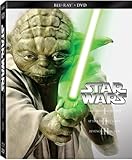
- Brand New in box. The product ships with all relevant accessories
That momentum-first philosophy dovetails with Shawn Levy’s filmmaking instincts. Levy has consistently favored clean narrative engines powered by performance, and Smith fits neatly into that framework. The result is likely a villain who sharpens the story’s pace rather than slowing it down with exposition.
Complementing Gosling and Expanding Levy’s Star Wars Footprint
Opposite Ryan Gosling, Smith offers a deliberate contrast that feels architected rather than incidental. Gosling’s controlled, internalized screen presence creates space for a more volatile antagonist, allowing conflict to emerge through rhythm and restraint. This dynamic suggests a film less interested in spectacle alone and more invested in how opposing energies collide.
For Levy, bringing in an actor like Smith also reflects a broader ambition within the Star Wars sandbox. It signals confidence in telling stories that stand on performance credibility as much as brand recognition. If Starfighter succeeds, Smith’s villain won’t just be remembered as a threat within the story, but as evidence that Star Wars can still attract actors looking for complexity, risk, and creative distinction.
Fan Reaction, Franchise Expectations, and Why This Casting Matters Right Now
Initial fan response to Matt Smith’s casting has been notably measured rather than explosive, which may be exactly why it feels promising. Online discussion has centered less on lore implications and more on performance potential, with many fans citing Smith’s ability to humanize villains without softening them. In a franchise often defined by legacy characters and iconography, that focus signals cautious optimism rather than knee-jerk skepticism.
Free tools Windows power users keep installed
One-click scans. No signup required.
A Calculated Shift in What Fans Are Asking For
There is a growing sense among Star Wars audiences that restraint may be more valuable than escalation at this point in the franchise’s life cycle. Smith’s casting speaks to that appetite, suggesting Starfighter is less concerned with creating the next mythic overlord and more interested in tension that feels immediate and character-driven. Fans have seen what maximalism looks like; what they are increasingly responding to is control.
That reaction reflects broader expectations for this film specifically. As a standalone story positioned outside the main saga, Starfighter carries the burden of proving its relevance through execution rather than lineage. Casting an actor known for intensity and unpredictability reinforces the idea that this project intends to earn attention through craft, not nostalgia.
Why This Moment Matters for Star Wars, Levy, and Gosling
The timing of Smith’s addition also matters. Star Wars is in a recalibration phase, balancing theatrical ambitions with a streaming-driven identity that has reshaped audience habits. Bringing in a villain who signals tonal precision over spectacle suggests Lucasfilm is actively refining what a theatrical Star Wars release should feel like in 2026 and beyond.
For Shawn Levy, this choice aligns with his ongoing evolution toward larger, more character-focused genre storytelling. For Ryan Gosling, it reinforces a pattern of selecting projects where star power is used to anchor mood and perspective rather than dominate the narrative. Together, their collaboration with Smith positions Starfighter as a deliberate statement: Star Wars can still feel modern, actor-driven, and purposeful without abandoning its cinematic roots.
Ultimately, Matt Smith’s casting matters not because it promises a new icon, but because it represents confidence in performance as the engine of engagement. If Starfighter succeeds, it will be remembered less for expanding mythology and more for reaffirming that strong casting, clear tone, and focused storytelling remain the franchise’s most reliable hyperdrive.
Quick Recap
Product prices and availability are accurate as of the date/time indicated and are subject to change. Any price and availability information displayed on Amazon at the time of purchase will apply.