The Tool Desk
Outbyte Driver Updater FREEScan for outdated or missing drivers - takes under a minuteDriver Scan →Outbyte PC Repair FREEClear out junk files and repair common Windows errorsFree Scan →Kevin Costner has spent decades shaping America’s screen memory of the frontier, so the first trailer for Kevin Costner’s The West lands with a sense of inevitability and purpose. Unveiled as a sweeping historical documentary rather than a dramatized epic, the footage signals a project driven less by nostalgia than by excavation. This is the West as lived, fought over, mythologized, and misunderstood, presented with the weight of a lifelong fascination finally given its proper form.
What distinguishes The West from earlier frontier documentaries is its refusal to flatten history into legend. The trailer teases a rigorously sourced, multi-perspective chronicle that centers Indigenous nations, settlers, soldiers, and power brokers within the same moral frame, allowing the contradictions of westward expansion to stand unresolved. Costner’s approach favors historical texture over romance, suggesting a work intent on interrogating how the American West was built, at what cost, and why its stories still shape national identity.


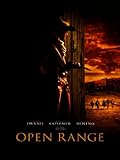
Costner’s involvement lends the project an authority few figures could replicate. From Dances with Wolves to Open Range and his stewardship of modern Western television, he has consistently treated the genre as cultural heritage rather than entertainment shorthand. The West feels like the culmination of that commitment, with the trailer positioning Costner not as a narrator chasing grandeur, but as a curator determined to restore gravity, complexity, and relevance to one of America’s most enduring myths.
What the Trailer Reveals: Scope, Tone, and the Story of the American West
The first trailer for Kevin Costner’s The West immediately establishes scale as its defining feature. Sweeping aerials of plains, deserts, and mountain ranges are paired with archival photographs and battlefield illustrations, signaling a documentary that stretches across geography and centuries. Rather than narrowing its focus to a single era or legend, the footage suggests an ambitious, continent-spanning examination of how the West was shaped through conflict, migration, ambition, and survival.
What’s actually slowing this PC down?
Pick the symptom - the matching free tool is one click away.
#1 Best Overall
A West Bigger Than Myth
One of the trailer’s most striking qualities is its resistance to the simplified frontier narrative long embedded in popular culture. Indigenous leaders, settlers, enslaved people, soldiers, and industrial forces all appear within the same historical frame, presented not as background elements but as central drivers of the story. The West here is not a backdrop for heroism but a contested space where competing visions of land, freedom, and power collided.
This approach positions The West as a corrective as much as a chronicle. The trailer emphasizes consequence over conquest, with images of treaties, displacement, and resistance woven alongside moments of exploration and expansion. It is a portrait of American growth that acknowledges triumph without ignoring trauma.
A Serious, Reflective Tone
Tonally, the trailer is restrained and deliberate, favoring reflection over spectacle. Costner’s measured narration, paired with a somber musical score, underscores a documentary that treats its subject with historical gravity rather than cinematic flourish. Even the most visually arresting shots are grounded by a sense of reckoning, suggesting that the series is less interested in celebrating the West than in understanding it.
The pacing reinforces that intent. Instead of rapid montage, the trailer allows images and voices to breathe, giving weight to testimony and context. This signals a project confident enough to let history speak without rushing toward predetermined conclusions.
Outdated Drivers Are Slowing You Down
One free scan finds every outdated or missing driver and matches the right update for your exact hardware.Free scan · exact hardware matchWindows Errors? Fix Them Before They Spread
Repair common Windows errors and clear accumulated junk for a smoother, more stable PC - no reinstall needed.Free scan · no reinstallCostner’s Credibility as Curator
What ultimately elevates the trailer is how clearly it reflects Kevin Costner’s long relationship with the Western genre. His presence feels less like branding and more like stewardship, shaped by decades of engaging with frontier stories from multiple angles. The trailer frames him not as a star revisiting familiar territory, but as a guide inviting viewers to reconsider what they think they know.
That distinction matters in a documentary landscape crowded with revisionist takes and surface-level retrospectives. The West positions itself as both accessible and rigorous, grounded in scholarship but driven by narrative clarity. The trailer makes a compelling case that Costner’s involvement brings not only visibility, but a seriousness of purpose capable of restoring depth and relevance to the American West as a living historical conversation.
How ‘Kevin Costner’s The West’ Reframes Western History for a Modern Audience
What distinguishes Kevin Costner’s The West is its refusal to treat history as settled mythology. Rather than reinforcing the familiar iconography of lone heroes and inevitable progress, the series reframes the Western expansion as a contested, human process shaped by competing worldviews. The trailer suggests a narrative built not on legend, but on lived experience, where ambition, survival, and consequence coexist in uneasy tension.
This approach speaks directly to contemporary audiences who are increasingly skeptical of simplified historical narratives. By foregrounding complexity instead of nostalgia, The West positions itself as a dialogue between past and present, asking viewers to reconsider how national identity has been constructed and whose stories were left out along the way.
Free tools Windows power users keep installed
One-click scans. No signup required.
Centering Multiple Perspectives
A key element of the series’ modern sensibility is its commitment to multiplicity. Indigenous nations, settlers, soldiers, lawmakers, and immigrants are presented not as supporting figures in a predetermined saga, but as active participants shaping the trajectory of the frontier. The trailer’s emphasis on treaties, broken promises, and resistance signals a recalibration of whose voices are given authority.
This is not framed as revisionism for its own sake, but as historical completeness. By weaving these perspectives together, The West moves beyond binary narratives of heroes and villains, offering a fuller account of how power, survival, and displacement defined the era. It invites viewers to sit with uncomfortable truths rather than resolve them neatly.
History as Consequence, Not Destiny
Unlike many traditional Western documentaries that chart expansion as an unstoppable force, The West emphasizes cause and effect. Every act of exploration carries repercussions, every decision reshapes communities and landscapes. The trailer’s imagery underscores this idea, pairing moments of opportunity with scenes of loss and upheaval.
This framing aligns the series with a more contemporary understanding of history as a series of choices rather than an inevitable march forward. It challenges the romantic fatalism that has long surrounded Western storytelling, replacing it with a more responsible and human-centered interpretation.
Rank #2
Why Costner’s Voice Still Matters
Kevin Costner’s involvement is central to why this reframing feels credible rather than performative. His decades-long engagement with Western narratives gives him both cultural authority and earned perspective. The trailer positions him less as a narrator delivering answers and more as a facilitator guiding viewers through complex terrain.
In an era when historical documentaries often struggle to balance accessibility with depth, Costner’s presence bridges that divide. His familiarity draws audiences in, while his restraint signals respect for the material. The result is a series that feels attuned to modern expectations without severing its connection to the genre’s roots, reaffirming the Western as a vital lens through which America continues to examine itself.
Kevin Costner’s Enduring Authority in the Western Genre — From Dances with Wolves to The West
Kevin Costner’s authority in the Western genre is not a matter of nostalgia; it is the result of sustained engagement, creative risk, and cultural impact across four decades. His relationship with the American West has evolved alongside public understanding of its history, allowing him to serve as both participant and interpreter. The reveal of The West feels less like a new direction than the latest chapter in a long conversation he has been helping shape since the early 1990s.
Dances with Wolves and the Rewriting of a Genre
Costner’s directorial debut with Dances with Wolves marked a turning point for modern Westerns. At a time when the genre was widely considered obsolete, the film re-centered Indigenous perspectives and treated the frontier as a place of cultural collision rather than simple conquest. Its success, both critically and commercially, proved that audiences were willing to engage with more morally complex Western storytelling.
That film did not offer easy absolution, but it challenged inherited myths with empathy and patience. The approach resonates strongly with what The West promises in its trailer, suggesting continuity rather than reinvention. Costner’s early insistence on listening to marginalized voices now feels foundational to the documentary’s guiding philosophy.
From Frontier Myth to Lived Reality
Throughout projects like Open Range and Hatfields & McCoys, Costner has consistently stripped the Western of its glamor without stripping it of meaning. Violence carries weight, authority is fragile, and survival often comes at ethical cost. These stories treat the West not as legend but as a lived environment shaped by consequence and compromise.
This sensibility informs The West’s documentary structure. Rather than leaning on spectacle or nostalgia, the series appears committed to context, causality, and human experience. Costner’s career-long refusal to flatten history into myth gives the project an authenticity that feels earned rather than assumed.
Yellowstone and the Modern Western Audience
With Yellowstone, Costner reintroduced the Western to a mass television audience, proving the genre could still command cultural attention. The series bridged past and present, translating frontier conflicts into contemporary struggles over land, power, and identity. It reaffirmed Costner’s role as a steward of Western storytelling rather than a relic of it.
That relevance matters for The West. The documentary arrives at a moment when viewers are more historically curious and more skeptical of simplified narratives. Costner’s recent success demonstrates his ability to meet that audience where it is, without diluting complexity or historical tension.
A Credible Guide Through Contested History
What ultimately distinguishes Kevin Costner’s The West within the documentary landscape is not just access or scale, but trust. Costner has spent decades earning credibility with audiences by treating Western history as something to be examined, not celebrated uncritically. His presence signals seriousness of intent rather than celebrity endorsement.
As the trailer suggests, he approaches the material as a guide, not an arbiter. That posture allows the series to confront contested histories with clarity and restraint. In doing so, Costner reinforces why his voice still matters, and why the Western, when handled with care, remains one of the most powerful frameworks for understanding the American story.
Documentary Ambition and Craft: Format, Storytelling Approach, and Historical Voices
At its core, Kevin Costner’s The West positions itself as a long-form historical examination rather than a highlight reel of frontier mythology. The format favors breadth without sacrificing depth, using a multi-episode structure that allows individual eras, conflicts, and communities to be explored on their own terms. This approach signals an intention to slow history down, letting consequence and continuity take precedence over spectacle.
Recommended Free Tools
Rather than compressing centuries into sweeping generalizations, the series appears designed to let stories unfold chronologically and thematically. The trailer emphasizes moments of transition—expansion, displacement, adaptation—suggesting a narrative architecture built around cause and effect. It is the difference between observing history and interrogating it.
A Measured, Cinematic Storytelling Style
Visually, The West embraces cinematic scale without leaning on reenactment-heavy dramatization. Expansive landscapes, period photography, and carefully curated archival materials ground the storytelling in physical reality rather than romantic abstraction. The imagery feels purposeful, reinforcing geography as a central force shaping human behavior.
Costner’s narration, restrained and deliberate, functions less as performance and more as connective tissue. His voice guides rather than dominates, allowing the material itself to carry emotional weight. That tonal discipline reflects a confidence in the subject matter and a respect for the audience’s intelligence.
Centering Multiple Perspectives, Not a Single Myth
One of the project’s most distinguishing elements is its commitment to plural historical voices. The West integrates historians, scholars, and cultural experts to frame events within broader social and political contexts. These voices challenge inherited narratives, particularly those shaped by 20th-century Western cinema.
Equally important is the inclusion of Indigenous perspectives, presented not as footnotes but as essential to understanding the region’s history. The trailer suggests these accounts are treated with seriousness and authority, acknowledging displacement, resistance, and survival as central chapters rather than peripheral ones. This recalibration reframes the West as contested ground, shaped by competing realities.
Costner’s Role as Curator, Not Mythmaker
Costner’s involvement is most evident in the project’s editorial restraint. He does not position himself as the hero of the narrative, nor does the series revolve around his legacy as an actor. Instead, he functions as a curator of history, assembling voices and evidence into a coherent, challenging whole.
That distinction matters within the documentary landscape. In an era of personality-driven nonfiction, The West resists turning history into a brand exercise. Costner’s credibility allows the series to maintain focus on substance, reinforcing the idea that the Western genre, when treated with rigor and humility, can still illuminate the American experience with rare clarity.
Separating Myth from Reality: The Themes and Historical Questions at the Heart of the Series
At its core, Kevin Costner’s The West is less concerned with preserving familiar imagery than interrogating why those images took hold in the first place. The trailer frames the American West not as destiny fulfilled, but as consequence unfolding, shaped by ambition, violence, belief, and geography. This thematic shift signals a series intent on dismantling myth without discarding the power that myth still holds over American identity.
Do these 3 things before closing this tab:
1Repair Windows errors before they cause bigger problems2Scan for outdated or missing drivers - takes under a minute3Clear out junk files and repair common Windows errorsThe Cost of Expansion and the Price of Progress
One of the central questions posed by the series is deceptively simple: progress for whom. The West has long been framed as a story of opportunity and reinvention, but the documentary emphasizes that expansion carried measurable human costs. Settler success is examined alongside displacement, broken treaties, and environmental exploitation, placing growth and suffering in the same historical frame.
Rather than judging the past by modern standards, the series asks viewers to sit with contradiction. Ambition and brutality coexist, often within the same individuals and institutions. This approach resists easy moral binaries, instead presenting history as a series of choices made under pressure, fear, and limited understanding.
Violence as Structure, Not Spectacle
Western iconography has traditionally aestheticized violence, transforming conflict into ritualized entertainment. The West reframes violence as systemic rather than sensational, showing how it functioned as an organizing force in territories lacking stable governance. Lawlessness is not romanticized; it is contextualized as a symptom of rapid expansion and contested authority.
The trailer’s imagery suggests a deliberate distancing from heroic shootouts and simplified justice. Instead, violence is depicted as unpredictable, often arbitrary, and deeply consequential. This framing aligns with modern historical scholarship while challenging audiences raised on cinematic shorthand.
Reexamining the Frontier as a Cultural Invention
Another key theme is the idea of the frontier itself as a constructed concept. The series explores how politicians, journalists, artists, and later filmmakers shaped the West into a symbolic proving ground for American exceptionalism. By unpacking these layers, The West reveals how mythology served national narratives long after the physical frontier had closed.
Costner’s involvement adds weight to this examination. His career has been instrumental in shaping modern Western mythology, making his participation in its deconstruction both credible and culturally resonant. The series does not reject the genre’s legacy, but it insists on understanding how storytelling shaped memory as much as events shaped history.
History as Ongoing Conversation, Not Fixed Verdict
The West positions history as dynamic rather than settled. Archival material, expert analysis, and lived perspectives intersect to suggest that understanding the past is an evolving process. The documentary invites viewers to question inherited assumptions and recognize whose stories were amplified and whose were erased.
This framing gives the trailer its quiet urgency. The West is not presented as a corrective meant to replace one myth with another, but as an invitation to engage with complexity. In doing so, it reinforces the idea that confronting uncomfortable truths is not an act of rejection, but one of historical maturity.
Quick wins for a faster PC:
Fix the driver behind crashes, sound loss and screen glitchesFind Drivers →Clear out junk files and repair common Windows errorsFree Scan →Why ‘The West’ Arrives Now: Cultural Relevance, Legacy, and the Revival of Western Storytelling
The timing of Kevin Costner’s The West feels deliberate rather than coincidental. American culture is in the midst of reassessing foundational narratives, from national origin stories to the myths embedded in popular entertainment. Westerns, long treated as cultural shorthand for rugged individualism and moral clarity, are being reconsidered with sharper historical tools and broader perspectives.
This renewed scrutiny creates space for a documentary that neither condemns nor celebrates the genre outright. The West enters a conversation already happening across classrooms, museums, and streaming platforms, where audiences are asking how history was framed and who benefitted from those frames. Costner’s series positions itself not as an answer, but as a guide through that reckoning.
The Western’s Return as Cultural Barometer
Western storytelling has quietly regained prominence in recent years, reflecting anxieties about identity, land, power, and belonging. Series like Yellowstone and films revisiting frontier themes signal a desire to return to foundational myths during moments of social uncertainty. The West speaks directly to that impulse, but redirects it toward historical grounding rather than nostalgic escape.
By arriving now, the documentary acknowledges that Westerns are once again shaping public imagination. Rather than allowing that revival to exist without context, Costner’s project interrogates the roots of those images. It suggests that understanding why Westerns endure is inseparable from understanding the history they abstracted.
Quick wins for a faster PC:
Repair Windows errors before they cause bigger problemsFix Now →Fix the driver behind crashes, sound loss and screen glitchesFind Drivers →Kevin Costner’s Authority Within the Genre
Costner’s involvement lends the project a rare dual credibility. He is both a steward of Western mythology and a figure willing to interrogate it, having spent decades portraying characters shaped by frontier ideals. From Dances with Wolves to Open Range and his contemporary influence through Yellowstone, Costner’s career mirrors the genre’s evolution.
That legacy gives The West a level of trust that few documentaries could command. When Costner reframes familiar stories, it carries the weight of lived artistic investment rather than academic distance. The series benefits from his understanding of how myth operates emotionally, not just historically.
Documentary Storytelling in an Era of Reassessment
The West also arrives at a moment when historical documentaries are expected to do more than recount events. Audiences increasingly demand layered narratives that confront power structures, omissions, and contradictions without sacrificing storytelling momentum. Costner’s project appears calibrated for that expectation, blending cinematic presentation with scholarly restraint.
Rather than positioning itself as a revisionist takedown, the documentary reflects a maturing genre that values nuance over provocation. It trusts viewers to sit with ambiguity and to recognize that national identity is shaped as much by selective memory as by recorded fact.
Best Value
Legacy, Memory, and Who Gets to Tell the Story
At its core, The West engages with questions of authorship and inheritance. Who defined the frontier, and who lived within its realities without controlling the narrative? By foregrounding these tensions, the series aligns with broader cultural efforts to broaden historical ownership.
That approach makes the trailer’s reveal feel less like promotion and more like positioning. The West is framed as part of an ongoing dialogue about how America remembers itself. Its arrival now underscores that the Western is not fading away, but being reshaped by a culture finally ready to examine the stories it once accepted without question.
What to Expect Next: Release Plans, Episode Structure, and Early Critical Buzz
As the trailer begins circulating, attention now turns to how Kevin Costner’s The West will roll out and how audiences will experience its scope. The project is being positioned not as a one-off special, but as a multi-part event series designed to be absorbed over time, allowing its themes to accumulate weight rather than rush toward conclusion.
Release Timeline and Platform Strategy
While an exact premiere date has yet to be locked publicly, the documentary is expected to debut later this year, aligning with the fall window traditionally favored for prestige nonfiction. Industry observers note that the rollout mirrors strategies used for recent high-profile historical series, with staggered weekly episodes intended to sustain conversation and critical engagement.
The trailer’s unveiling suggests confidence from the network and producers, signaling that the series is far enough along to invite scrutiny rather than tease abstraction. This is not a proof-of-concept release, but a statement of readiness.
Episode Structure and Narrative Design
Kevin Costner’s The West is structured as a chaptered exploration rather than a linear march through dates. Each episode reportedly focuses on a defining theme or historical tension, such as expansion, conflict, survival, and cultural collision, allowing the series to examine cause and consequence without flattening complexity.
Costner’s narration serves as connective tissue rather than omniscient authority. The structure leaves room for historians, firsthand accounts, and Indigenous perspectives to coexist, reinforcing the series’ commitment to plurality without losing narrative momentum.
Early Critical Reactions and Industry Buzz
Although full reviews are still forthcoming, early reactions from critics and historians who have previewed footage suggest cautious enthusiasm. Praise has centered on the documentary’s visual ambition and its refusal to rely solely on archival shorthand, opting instead for cinematic reenactments and location-driven storytelling.
Do these 3 things before closing this tab:
1Scan for outdated or missing drivers - takes under a minute2Clear out junk files and repair common Windows errors3Fix the driver behind crashes, sound loss and screen glitchesPerhaps more notably, Costner’s involvement is being cited as an asset rather than a distraction. His presence lends continuity to the Western tradition while signaling that this project is not about nostalgia, but responsibility.
A Prestige Western for a Reflective Moment
What emerges from the early buzz is a sense that The West is less concerned with rewriting history than with reframing how it has been told. Costner’s credibility, built over decades of engagement with frontier narratives, allows the series to ask harder questions without alienating its audience.
As anticipation builds, the documentary appears poised to occupy a rare space between scholarship and spectacle. If it delivers on the promise of its trailer, Kevin Costner’s The West may stand as both a culmination of a storied career and a meaningful step forward for historical documentary storytelling in America.
Quick Recap
Product prices and availability are accurate as of the date/time indicated and are subject to change. Any price and availability information displayed on Amazon at the time of purchase will apply.

