For a movie built on repetition, Groundhog Day has inspired one of the most enduring debates in film history: just how long was Phil Connors actually trapped reliving February 2nd? The question has lingered for decades because the film itself refuses to answer it, turning a high-concept comedy into a kind of cinematic riddle. Viewers sense that Phil’s transformation couldn’t happen overnight, yet the story deliberately withholds the math.
That ambiguity is not a narrative oversight but a central feature of why the film continues to resonate. Groundhog Day isn’t interested in measuring time so much as redefining it, using repetition as a moral and emotional pressure cooker. Whether Phil endured a few years or several lifetimes reframes how we interpret his despair, his mastery of the town, and the sincerity of his eventual redemption.
| # | Preview | Product | Price | |
|---|---|---|---|---|
| 1 |

|
Groundhog Day - 4K + Blu-ray + Digital | $21.99 | Buy on Amazon |
| 2 |

|
Groundhog Day | $16.40 | Buy on Amazon |
| 3 |
|
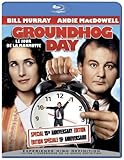
Groundhog Day (Special 15th Anniversary Edition) | $13.07 | Buy on Amazon |
| 4 |
![Groundhog Day [Blu-ray] [1993]](https://m.media-amazon.com/images/I/51pRfGmWEJL._SL160_.jpg)
|
Groundhog Day [Blu-ray] [1993] | $17.96 | Buy on Amazon |
| 5 |
![Groundhog Day (15th Anniversary Special Edition) [Blu-ray]](https://m.media-amazon.com/images/I/51Zacl9tLtL._SL160_.jpg)
|
Groundhog Day (15th Anniversary Special Edition) [Blu-ray] | $8.87 | Buy on Amazon |
The mystery also invites audiences to participate, turning casual viewers into amateur detectives and philosophers. Filmmakers, screenwriters, and even Bill Murray himself have offered conflicting estimates over the years, while fans scrutinize piano lessons, ice sculpting skills, and emotional burnout for clues. In that space between what the film shows and what it withholds, Groundhog Day becomes less about counting days and more about understanding what it truly takes for someone to change.
What the Film Actually Shows: Counting Days Through On-Screen Clues
If Groundhog Day never gives us a calendar count, it does offer breadcrumbs. The film quietly embeds measurable progress markers that allow viewers to approximate the passage of time without ever pinning it down. These clues are subtle, cumulative, and deliberately incomplete, reinforcing the idea that Phil’s ordeal is felt rather than tallied.
The Tool Desk
Outbyte PC Repair FREERepair Windows errors before they cause bigger problemsFix Now →Outbyte Driver Updater FREEFix the driver behind crashes, sound loss and screen glitchesFind Drivers →#1 Best Overall
- A weatherman (Bill Murray) is trapped in a personal time warp on the worst day of his life. Co-stars Andie MacDowell.
Rather than tracking days with title cards or narration, the movie asks us to notice what Phil learns, how long learning realistically takes, and how deeply he changes along the way. The loop may reset every morning, but Phil himself does not.
Skill Mastery as a Timeline
The most frequently cited clue is Phil’s sudden competence at complex skills. When we first see him attempt piano, he can barely follow a lesson; later, he performs a polished jazz rendition at the Groundhog Day banquet. Learning an instrument at that level typically takes years, not weeks, even with obsessive practice.
The same applies to ice sculpting. Phil moves from awkwardly hacking at a block of ice to carving an intricate, emotionally expressive piece in seconds. These moments aren’t played as magical shortcuts; the film presents them as earned fluency, implying a staggering amount of repetition behind the scenes.
Knowledge of the Town and Its People
Phil’s encyclopedic understanding of Punxsutawney is another quiet indicator. He knows names, habits, medical conditions, and chance encounters with surgical precision. He times his movements perfectly to catch a falling child, save choking diners, and change lives in passing.
Do these 3 things before closing this tab:
1Clear out junk files and repair common Windows errors2Fix the driver behind crashes, sound loss and screen glitches3Repair Windows errors before they cause bigger problemsWhat’s crucial is how casually he does this. The effortlessness suggests not dozens or hundreds of attempts, but thousands. Phil isn’t just rehearsing the day; he’s internalized it.
Emotional Exhaustion and Behavioral Phases
The film also charts Phil’s psychological evolution in recognizable stages. He cycles through indulgence, nihilism, despair, self-destruction, and eventually altruism. These aren’t quick emotional beats but prolonged states, each given room to breathe.
His suicide attempts, in particular, feel less like impulsive acts and more like the culmination of long-term hopelessness. The film allows that despair to settle, implying a length of time that far exceeds a short-term breakdown.
The Absence of Urgency
Perhaps the most telling clue is what disappears: Phil’s impatience. Early in the loop, he is frantic to escape, testing boundaries and demanding answers. Later, that urgency fades, replaced by calm purpose and even serenity.
By the time Phil dedicates himself to helping others without expectation, he no longer behaves like someone counting days. He acts like someone who has stopped measuring time altogether, which may be the film’s most meaningful hint of all.
Early Estimates and Fan Math: From Weeks to Decades in Punxsutawney
Once viewers accepted that Phil’s transformation couldn’t plausibly happen in a matter of weeks, the debate naturally shifted from emotional clues to arithmetic. Fans began treating Groundhog Day like a puzzle box, combing through the film for measurable details that could anchor the loop to something resembling real time.
What emerged was a spectrum of estimates that grew more ambitious with each rewatch. Early guesses stayed conservative, while later theories ballooned into decades, all driven by one question: how long would it actually take to become that version of Phil Connors?
The “Few Weeks” and “Several Months” Camps
The most restrained interpretations peg the loop at a few weeks to a couple of months. These readings tend to focus on narrative economy rather than realism, assuming the film compresses Phil’s progress for storytelling purposes.
Outdated Drivers Are Slowing You Down
One free scan finds every outdated or missing driver and matches the right update for your exact hardware.Free scan · exact hardware matchPC Slower Than It Used to Be?
A free scan shows the junk files, broken settings and background clutter dragging Windows down - then fixes them in one click.Free scan · Windows 10 & 11Supporters of this view often point out that we only see a fraction of Phil’s days onscreen. In theory, montage logic could allow for accelerated learning and growth, even if it stretches believability.
But this estimate quickly collapses when measured against the skills Phil acquires. Mastery isn’t suggested; it’s shown. And that’s where the math gets uncomfortable.
Skill Acquisition and the 10,000-Hour Problem
The piano becomes the most cited data point. Phil doesn’t just play competently; he performs confidently, improvisationally, and under social pressure. Many fans invoke the widely popularized idea that musical fluency requires thousands of hours of deliberate practice.
Rank #2
- A weatherman (Bill Murray) is trapped in a personal time warp on the worst day of his life. Co-stars Andie MacDowell.
Even with unlimited time per day and no need for sleep, reaching that level would likely take years. When you factor in his parallel mastery of ice sculpting, French poetry, and social nuance, the timeline stretches further.
Quick wins for a faster PC:
Fix the driver behind crashes, sound loss and screen glitchesFind Drivers →Repair Windows errors before they cause bigger problemsFix Now →Scan for outdated or missing drivers - takes under a minuteDriver Scan →This is where estimates begin to jump from months to years, often landing somewhere between five and ten.
Counting Days Through Repetition and Coverage
Other fans approach the problem spatially rather than skill-based. Punxsutawney may be small, but Phil appears to know every corner of it, every schedule, and every random variable that could interrupt his day.
Mapping out how many iterations it would take to discover, test, and perfect all those micro-events yields staggering numbers. Catching the falling boy alone likely required hundreds of failures before success became automatic.
Stack those repetitions across dozens of simultaneous “side quests,” and suddenly even a decade feels conservative.
What’s actually slowing this PC down?
Pick the symptom - the matching free tool is one click away.
The Case for Decades, or Longer
The most extreme estimates push Phil’s imprisonment into multiple decades, sometimes even a full lifetime. These theories argue that Phil didn’t just learn skills; he exhausted entire ways of being.
He experiences indulgence until it bores him, nihilism until it hollows him out, and despair until it no longer shocks him. Fans who favor this view argue that only an immense span of time could drain novelty from existence so completely.
At that scale, the exact number stops mattering. What matters is that Phil didn’t escape the loop by waiting it out, but by outgrowing it.
Behind-the-Scenes Answers: What Harold Ramis and the Filmmakers Said
If fan math sends Phil Connors into decades or lifetimes, the filmmakers themselves have never offered a single, fixed answer. Instead, their comments over the years form a shifting, revealing record of how the meaning of the loop evolved even for the people who created it.
Free tools Windows power users keep installed
One-click scans. No signup required.
What’s striking is not that the answers differ, but why they do.
Harold Ramis and the “About 10 Years” Estimate
In the years immediately following Groundhog Day’s release, director and co-writer Harold Ramis often suggested that Phil was trapped for roughly ten years. It was a practical number, grounded in the visible skill acquisition audiences could observe without pushing the story into overt fantasy.
Ramis explained that he wanted enough time for Phil’s transformation to feel earned, but not so much that the film collapsed under the weight of its own metaphysics. Ten years, in his view, gave Phil space to learn, fail, despair, and rebuild himself while still keeping the narrative emotionally accessible.
That estimate became the most commonly cited “official” answer for a long time.
Later Reflections: When Ten Years No Longer Felt Like Enough
As the film’s legacy grew and fans began scrutinizing it more intensely, Ramis revisited the question with a noticeably different tone. In later interviews, he acknowledged that ten years might actually be too short given what Phil accomplishes.
At one point, Ramis casually floated much longer spans, even joking about the loop lasting closer to 30 or 40 years. The humor wasn’t dismissive; it reflected a recognition that the deeper you examine Phil’s internal journey, the harder it becomes to confine it to a neat, calendar-friendly number.
The ambiguity, Ramis suggested, had become part of the film’s power.
Screenwriter Danny Rubin’s Much Longer View
Original screenwriter Danny Rubin has consistently leaned toward a far more expansive interpretation. Rubin has said that, in his mind, Phil’s loop could plausibly span hundreds or even thousands of years.
His reasoning is philosophical rather than logistical. Rubin viewed the loop as a spiritual crucible, one that strips away ego layer by layer until genuine compassion emerges. From that perspective, the amount of time required isn’t about piano lessons or ice sculptures, but about exhausting every shallow motivation Phil has.
In some interviews, Rubin has even suggested that a number like 10,000 years better fits the story’s metaphysical ambition.
Why the Filmmakers Never Locked It Down
Crucially, neither Ramis nor Rubin ever attempted to canonize a definitive answer on screen. There’s no line of dialogue, no visual marker, and no secret production note meant to settle the debate.
That restraint was intentional. Ramis believed that pinning down an exact duration would shrink the story’s universality, turning an existential parable into a puzzle with a solution key.
By leaving the loop unmeasured, the film invites viewers to project their own sense of what real change costs. Whether that feels like ten years, fifty, or a lifetime says as much about the audience as it does about Phil Connors.
The Case for Centuries: Skill Mastery, Piano Lessons, and Human Limits
If the filmmakers’ philosophical arguments open the door to a long loop, the film’s practical details quietly kick it off its hinges. What Phil Connors accomplishes in Punxsutawney isn’t just self-improvement; it’s mastery across multiple disciplines that, in real-world terms, pushes far beyond decades.
This is where the “centuries” theory gains its most persuasive footing.
The Piano Problem
Phil doesn’t simply learn to play the piano; he becomes excellent. By the end of the film, he performs a complex jazz-inflected piece at a public recital with confidence, expression, and technical precision.
Recommended Free Tools
Professional musicians often point out that reaching that level typically requires thousands upon thousands of hours of deliberate practice. Even with perfect daily repetition and no physical fatigue carrying over between days, compressing that journey into ten or even twenty years begins to strain credibility.
When you factor in that Phil starts as a complete novice, the timeline stretches naturally toward many decades, if not longer.
Ice Sculpting, Languages, and Social Precision
The piano isn’t an isolated case. Phil becomes an accomplished ice sculptor, capable of producing intricate, expressive pieces under time pressure. He demonstrates fluency in French poetry. He navigates social interactions with uncanny precision, remembering everyone’s personal histories, emotional triggers, and future mishaps.
Individually, each skill could be explained away as montage shorthand. Collectively, they suggest a level of accumulated knowledge and muscle memory that feels encyclopedic.
Free tools Windows power users keep installed
One-click scans. No signup required.
Phil isn’t dabbling. He’s curating a lifetime’s worth of expertise, across art, language, and human behavior.
Rank #4
- The disk has English audio and subtitles.
The Limits of Human Change
Perhaps the strongest argument for centuries isn’t technical at all, but psychological. Phil doesn’t just learn skills; he exhausts identities.
We see him cycle through nihilism, hedonism, manipulation, despair, and altruism. Each phase feels lived-in, not rushed, as though he has truly wrung it dry before moving on. Real personal transformation, especially at Phil’s starting point, rarely happens on a tidy schedule.
The film implies repetition so prolonged that even selfishness becomes boring.
Do these 3 things before closing this tab:
1Fix the driver behind crashes, sound loss and screen glitches2Repair Windows errors before they cause bigger problems3Scan for outdated or missing drivers - takes under a minuteWhy Time Stops Mattering
At a certain scale, the exact number becomes almost irrelevant. Whether Phil is trapped for 200 years or 2,000, the point is that he outlives his old self.
By the time the loop breaks, Phil behaves less like a man who has learned lessons and more like someone who has evolved beyond the need for them. That kind of change doesn’t feel earned in years; it feels earned in eras.
Which may be why the idea of centuries doesn’t just fit the evidence. It feels emotionally right for a story about becoming fully, patiently human.
Independent reader supportYour contribution helps us test, update, and keep practical guides available for everyone.Alternative Interpretations: Is the Loop Meant to Be Uncountable?
For some viewers, the debate over days, years, or centuries misses the deeper intention entirely. Groundhog Day may not be inviting a precise calculation so much as gesturing toward a kind of time that resists measurement. The loop isn’t a sentence with a fixed duration; it’s a condition Phil has to outgrow.
Mythic Time, Not Calendar Time
One compelling interpretation frames the loop as mythic rather than literal. Like a fairy tale curse or a Zen parable, the repetition exists outside ordinary chronology, closer to an eternal present than a ticking clock. In that reading, asking how long Phil is trapped is like asking how many years Sisyphus has been pushing the boulder.
The days repeat, but time doesn’t progress in a conventional sense. What changes is Phil’s inner life, not the world around him. The loop ends not when enough time passes, but when the story’s moral condition is fulfilled.
Comedy Logic Over Hard Science
Groundhog Day is meticulous in its emotional logic, but deliberately loose with its mechanics. The film never establishes rules about memory limits, physical fatigue, or cognitive decay, all of which would matter if the loop were meant to be quantified precisely. Instead, the repetition functions as a comedic and philosophical device.
This elasticity allows the film to compress lifetimes of experience into moments without explanation. Phil can master the piano or memorize an entire town because the story needs him to, not because a stopwatch permits it. The loop behaves like a narrative tool, not a simulation.
What’s actually slowing this PC down?
Pick the symptom - the matching free tool is one click away.
Filmmaker Ambiguity by Design
Both Harold Ramis and Danny Rubin have spoken over the years about resisting a definitive answer. Rubin initially imagined a loop lasting around 10,000 years, while Ramis later suggested something closer to several decades. Neither number made it into the film, and that omission feels intentional rather than evasive.
By refusing to lock the timeline, the filmmakers preserved the story’s universality. The moment a number becomes canon, the loop risks shrinking into trivia. Ambiguity keeps the focus where it belongs: on change, not duration.
An Experience the Audience Completes
Perhaps the most elegant interpretation is that the loop lasts exactly as long as each viewer feels it should. Some watch Phil’s arc and sense decades of weariness etched into his performance. Others see a fable that operates on emotional truth alone, where “long enough” is the only meaningful metric.
In that sense, the loop is collaborative. The film provides the repetition; the audience supplies the scale. And like Phil’s journey itself, the answer depends on how deeply you’re willing to sit with it.
PC Slower Than It Used to Be?
A free scan shows the junk files, broken settings and background clutter dragging Windows down - then fixes them in one click.Free scan · Windows 10 & 11Outdated Drivers Are Slowing You Down
One free scan finds every outdated or missing driver and matches the right update for your exact hardware.Free scan · exact hardware matchNarrative Purpose Over Numbers: Time, Transformation, and Moral Growth
If Groundhog Day has endured as more than a clever high-concept comedy, it’s because the time loop isn’t a puzzle to be solved. It’s a moral framework. The question of how long Phil Connors is trapped matters less than what the experience extracts from him.
Time as a Moral Pressure Cooker
The repetition of February 2 functions like an ethical stress test. By removing consequences and forward motion, the film isolates Phil’s character flaws and forces him to confront them without distraction. Arrogance, cruelty, and nihilism all play out to their logical ends when time no longer punishes bad behavior.
In this sense, the loop isn’t about endurance but exposure. Phil can’t outrun himself with deadlines or career ambitions. The days keep resetting until he changes, not because the universe is cruel, but because the story demands accountability.
Transformation Measured in Behavior, Not Years
Phil’s growth is tracked through actions rather than timestamps. He stops manipulating Rita, starts helping townspeople without expectation, and eventually finds satisfaction in the act itself rather than the outcome. These shifts register immediately on a human level, even if they imply a massive unseen stretch of time.
That’s why pinning down an exact number of days can feel beside the point. Whether it took ten years or a thousand, the transformation reads as earned because the film shows us the cost. We feel the weight of repetition through performance and structure, not calendars.
Redemption as the Exit Condition
Crucially, Phil doesn’t escape the loop through mastery alone. Learning piano, ice sculpting, or emergency medicine isn’t enough. The day only breaks when his internal motivation changes, when kindness becomes reflex rather than strategy.
That’s the film’s quiet thesis. Time isn’t the antagonist; ego is. The loop ends not when Phil has lived long enough, but when he’s lived well enough, reinforcing that the story’s true math is ethical, not chronological.
The Most Convincing Answer—and Why the Film Refuses to Confirm It
After decades of debate, spreadsheets, and fan calculations, one estimate has quietly emerged as the most persuasive: Phil Connors likely spends somewhere between 30 and 40 years reliving Groundhog Day.
This range accounts for everything the film shows and implies—his deep musical mastery, fluency in French, medical competence, and the profound behavioral shift from narcissism to generosity. It’s long enough to feel existentially crushing, but not so vast that Phil becomes something other than human.
Why 30 to 40 Years Actually Makes Sense
Learning piano to the level Phil displays alone suggests decades, not months. Add in sculpting ice with artistic confidence, memorizing the lives of an entire town, and internalizing moral habits so thoroughly they become instinctive, and the math starts pointing toward a multi-decade loop.
Harold Ramis himself floated numbers in this range in later interviews, describing the experience as taking “a lifetime or two.” While Ramis’s comments were never canonized on screen, they align with what the film subtly communicates through performance and pacing rather than exposition.
Why the Film Never Locks It Down
And yet, for all that evidence, Groundhog Day deliberately refuses to confirm any number.
The moment the film quantifies Phil’s imprisonment, the metaphor collapses into logistics. A specific count would invite judgment—too long, too short, too cruel—when the story is trying to guide us toward reflection rather than calculation. Ambiguity keeps the focus on meaning instead of mechanics.
Ambiguity as a Feature, Not a Flaw
By leaving the duration unresolved, the film allows every viewer to project their own sense of scale onto Phil’s suffering and growth. For some, it feels like a few unbearable years. For others, an eternity. That flexibility is why the story continues to resonate across generations.
The loop becomes less about time served and more about time used. What matters isn’t how many days Phil relived, but how completely he transformed within them.
In that sense, Groundhog Day offers its final, quiet provocation: if real change takes as long as it takes, and no one is counting, what would you do if tomorrow kept repeating until you became the person you were meant to be?
Quick wins for a faster PC:
Repair Windows errors before they cause bigger problemsFix Now →Scan for outdated or missing drivers - takes under a minuteDriver Scan →Quick Recap
Product prices and availability are accurate as of the date/time indicated and are subject to change. Any price and availability information displayed on Amazon at the time of purchase will apply.




