There’s a certain comfort in knowing exactly what kind of movie you’re getting with High Rollers, the sequel to 2024’s modest VOD hit Cash Out. John Travolta, firmly settled into his late-career groove of glossy crime programmers, once again steps into the role of a professional thief who plans with confidence, talks with swagger, and never seems too rattled when things go sideways. The promise here isn’t reinvention so much as escalation, taking a serviceable streaming thriller and asking whether a bigger target can make the formula feel fresh.
The first film flirted with old-school heist pleasures on a relatively small scale, leaning more on Travolta’s screen presence than on intricate plotting. Cash Out worked because it knew its lane, offering a clean, functional crime story designed to fill an evening rather than linger in the memory. High Rollers raises the stakes by shifting the action to a full-blown casino robbery, a setting that invites flashier set pieces and a higher tolerance for excess.
| # | Preview | Product | Price | |
|---|---|---|---|---|
| 1 |
|
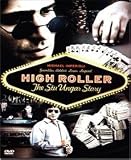
High Roller: The Stu Ungar Story | $17.53 | Buy on Amazon |
| 2 |

|
High Roller - The Stu Ungar Story | $7.13 | Buy on Amazon |
| 3 |

|
High Roller: The Stu Ungar Story | $24.53 | Buy on Amazon |
| 4 |

|
High Roller: The Stu Ungar Story | $8.01 | Buy on Amazon |
Raising the Ante Without Changing the Game
This sequel arrives at a moment when VOD crime thrillers live or die by familiarity, and High Rollers wears its genre DNA openly. The casino setting signals ambition, but the real question is whether director Randall Emmett can stretch the material beyond upgraded window dressing. Travolta remains the gravitational center, playing his thief with the same relaxed authority, though the film’s success hinges on whether that familiar cool can still carry a story that feels like a calculated risk rather than a desperate double down.
John Travolta as Mason Goddard: Late-Career Star Power or Familiar Autopilot?
Travolta’s Mason Goddard is cut from the same cloth as many of his recent VOD protagonists: seasoned, unflappable, and operating with a grin that suggests he’s always three moves ahead. It’s a persona Travolta has refined over the past decade, and High Rollers rarely asks him to deviate from it. The question isn’t whether he’s convincing as a master thief, but whether conviction alone is enough to keep the performance from feeling preprogrammed.
Outdated Drivers Are Slowing You Down
One free scan finds every outdated or missing driver and matches the right update for your exact hardware.Free scan · exact hardware matchPC Slower Than It Used to Be?
A free scan shows the junk files, broken settings and background clutter dragging Windows down - then fixes them in one click.Free scan · Windows 10 & 11#1 Best Overall
The Comfort of a Well-Worn Persona
There’s an ease to Travolta’s work here that borders on seductive. He delivers lines with practiced rhythm, carries himself like a man who knows the movie will bend to his will, and sells Mason as a professional who treats crime like a business transaction. For fans of his late-career thrillers, this familiarity is part of the appeal, a reliable star presence anchoring an otherwise standard genre exercise.
At the same time, that comfort limits the character’s dimensionality. Mason rarely seems genuinely challenged by the casino job, even when the script insists the stakes are higher than before. Travolta’s calm, while charismatic, flattens moments that could have benefited from visible strain or doubt, making the heist feel less dangerous than advertised.
Star Power Versus Dramatic Urgency
High Rollers leans heavily on Travolta’s name to sell its escalation from Cash Out, and his screen presence still carries weight. He knows how to command a frame, especially in scenes built around negotiation, deception, or controlled menace. When the film slows down to let him work, it briefly taps into the pleasures of classic crime cinema.
Yet there’s a sense that the performance is on autopilot, hitting familiar beats without pushing into new territory. Travolta never embarrasses himself, but he also never surprises, content to coast on a persona that has served him well in the VOD marketplace. In a genre crowded with similar offerings, Mason Goddard feels less like an evolution and more like a dependable rerun, polished enough to watch, but unlikely to redefine the game.
The Casino Heist Blueprint: Does ‘High Rollers’ Raise the Stakes or Play It Safe?
If Cash Out functioned as a low-risk proof of concept, High Rollers promises escalation by swapping smaller-time criminal maneuvering for the glossy promise of a casino score. On paper, it’s a classic sequel upgrade: bigger location, louder money, higher visibility. In execution, the film mostly treats the casino as a backdrop rather than a pressure cooker, content to rearrange familiar genre pieces instead of stress-testing them.
The blueprint is recognizable to the point of predictability, hitting expected beats of surveillance, inside access, and carefully timed distractions. High Rollers doesn’t botch the fundamentals, but it rarely challenges them either. For seasoned heist viewers, the pleasure comes less from surprise and more from watching how competently the machine runs.
A Heist Built on Familiar Architecture
Director Randall Emmett stages the casino job with clean, functional clarity, prioritizing comprehension over spectacle. The geography of the heist is easy to follow, and the film avoids the choppy editing that plagues many VOD thrillers. Still, the staging feels cautious, more concerned with not confusing the audience than with creating sustained tension.
The casino itself never quite becomes a character in the way the best entries in the genre demand. Its security systems are talked up but rarely felt, and the sense of constant surveillance never tightens the screws on Mason’s crew. What should feel like a high-wire act instead plays out like a rehearsal run-through, professionally executed but emotionally muted.
The Tool Desk
Outbyte Driver Updater FREEFix the driver behind crashes, sound loss and screen glitchesFind Drivers →Outbyte PC Repair FREERepair Windows errors before they cause bigger problemsFix Now →Escalation Without Evolution
As a sequel, High Rollers understands the need to raise the stakes, but it confuses scale with risk. The dollar amounts are bigger, the setting flashier, yet the dramatic consequences remain curiously low. Mason’s plan unfolds with minimal resistance, reinforcing the sense that this is a job he’s always destined to win.
That confidence aligns with Travolta’s unflappable persona, but it works against the film’s suspense. Cash Out at least flirted with unpredictability; here, the narrative feels locked onto rails. The result is a heist that looks more ambitious than it feels, delivering escalation in theory rather than experience.
VOD Sensibilities in a Casino Suit
High Rollers ultimately behaves like a VOD thriller wearing a casino costume, polished enough to pass at a glance but conservative in its ambitions. It avoids the excess, chaos, and stylistic bravado that define the genre’s upper tier, opting instead for a restrained approach that keeps costs down and pacing steady. That restraint makes it accessible, but it also makes it safe.
Rank #2
- Based on a true story, Michael Imperioli stars as poker legend, Stu Ungar. A gambler by the age of 10, Ungar won millions playing card games. He was one of two people ever to win the World Series of Poker three times - twice before age 26. But, in spite of his success, a life of excess and addiction left him in tremendous debt and could only end in tragedy.Running Time: 110 min. Format: DVD MOV
For viewers steeped in heist cinema, the film’s reluctance to gamble is its most defining trait. High Rollers doesn’t collapse under its own weight, nor does it embarrass itself with half-baked twists. It simply plays the hand it’s dealt, competently and cautiously, leaving the audience mildly entertained but never breathless.
Direction and Pacing: Action Craftsmanship vs. VOD Assembly-Line Feel
High Rollers is directed with a steady, workmanlike hand, prioritizing clarity over flair at every turn. The blocking is clean, the geography always understandable, and the action unfolds without the disorienting snap-cuts that plague lesser VOD efforts. It’s competent filmmaking, but competence alone isn’t enough in a genre built on momentum and surprise.
There’s a sense that the director is more concerned with getting the pieces into place than pushing scenes to their breaking point. Every beat lands where it’s supposed to, but few are allowed to linger or escalate into something memorable. The result is a film that moves efficiently without ever feeling urgent.
Pacing That Coasts on Familiarity
The pacing mirrors Mason’s confidence: smooth, controlled, and rarely rattled. Setups are given ample time, sometimes too much, while payoffs arrive exactly when expected. For a casino heist, the rhythm lacks the rising pressure that should make every decision feel like a potential disaster.
This approach worked better in Cash Out, where novelty did some of the heavy lifting. As a sequel, High Rollers feels more self-assured but less hungry, content to cruise on established dynamics rather than sharpen them. The film never drags, but it also never accelerates into that breathless zone where heist thrillers thrive.
Quick wins for a faster PC:
Repair Windows errors before they cause bigger problemsFix Now →Fix the driver behind crashes, sound loss and screen glitchesFind Drivers →Clear out junk files and repair common Windows errorsFree Scan →Professional Direction, Limited Personality
The action sequences are staged with restraint, favoring coverage and continuity over inventive choreography. Gunfights and confrontations are cleanly executed but visually anonymous, interchangeable with dozens of other mid-budget crime thrillers crowding the VOD marketplace. You can feel the efficiency of an assembly-line process smoothing out any rough, potentially interesting edges.
Travolta’s presence anchors this approach, his relaxed authority matching the film’s controlled direction. He’s never rushed, and neither is the camera, but that shared calm drains the scenes of danger. High Rollers is well-directed in the technical sense, yet it rarely asserts a personality beyond functional professionalism, leaving the action feeling less like a gamble and more like a scheduled transaction.
Supporting Players, Double Crosses, and Criminal Chemistry
If High Rollers ever threatens to find an extra gear, it’s usually because of its supporting cast. The film leans heavily on familiar crime-thriller archetypes, but a few performances inject just enough texture to suggest a messier, more volatile movie lurking beneath the surface. Unfortunately, that potential rarely survives the screenplay’s insistence on keeping everyone firmly within their lanes.
Familiar Faces, Predictable Roles
The ensemble surrounding Travolta is populated by tough guys, conflicted allies, and suspicious newcomers who broadcast their narrative function almost immediately. Each character arrives with a clear expiration date, and the film does little to complicate expectations once those roles are established. It’s serviceable casting rather than inspired, designed to keep the plot moving rather than deepen the world.
That said, the actors themselves do what they can with limited material. A few side characters hint at interesting backstories or shifting loyalties, but the script rarely pauses long enough to explore them. In a genre built on mistrust, High Rollers opts for clarity over tension, flattening what should be a web of competing agendas.
Double Crosses Without the Bite
Betrayals are baked into the DNA of any casino heist, and High Rollers dutifully checks those boxes. The problem isn’t the presence of double crosses, but their timing and execution, which feel pre-ordained rather than shocking. Twists land cleanly but softly, more like confirmations of suspicion than genuine reversals.
Rank #3
As a sequel, this predictability stings more than it would in a standalone film. Cash Out at least played with the audience’s expectations before revealing its hand, while High Rollers seems content to let seasoned viewers stay comfortably ahead of the plot. The film trusts familiarity over surprise, and the result is intrigue without adrenaline.
Travolta’s Chemistry Keeps Things Afloat
John Travolta remains the gravitational center, and his interactions with the supporting cast are where the film finds its most consistent energy. His Mason operates on charm and quiet dominance, and the way other characters react to him often tells a more interesting story than the dialogue itself. There’s a lived-in ease to these exchanges that suggests a crew with real history, even when the script doesn’t fully earn it.
Recommended Free Tools
Still, chemistry alone can’t manufacture stakes. Travolta is clearly comfortable in this late-career groove, playing a criminal who’s always three steps ahead, but that confidence bleeds into complacency. When everyone feels slightly too relaxed, even the betrayals start to feel like part of the plan, robbing the casino heist of the chaos and desperation that should make it crackle.
Style Over Substance? Cinematography, Action Beats, and Production Value
If High Rollers hopes to compensate for its low-tension plotting, it does so by leaning hard into surface-level polish. The film looks competent, occasionally slick, but rarely expressive, favoring clean digital compositions over visual personality. It’s the kind of cinematography that never distracts, yet almost never elevates the material either.
A Glossy Casino, Seen a Hundred Times Before
The casino setting should be the film’s visual playground, but director and cinematographer treat it as familiar real estate rather than an opportunity for tension or spectacle. Neon lights, reflective floors, and glass-heavy interiors are framed efficiently, not imaginatively. Compared to Cash Out, which at least flirted with moodier lighting and tighter spatial control, High Rollers feels flatter and more anonymous.
There’s a persistent sense that the camera is documenting events instead of shaping them. Wide shots establish geography, close-ups underline dialogue, and that’s largely where the visual storytelling ends. For a genre that thrives on visual misdirection and spatial trickery, the film plays it surprisingly straight.
Free tools Windows power users keep installed
One-click scans. No signup required.
Action Without Impact
The action beats arrive sporadically and leave just as quickly, staged with professionalism but little urgency. Shootouts are cleanly edited and easy to follow, yet they lack the escalation or chaos that makes a heist spiral feel dangerous. Even when plans go sideways, the direction never fully commits to the messiness of failure.
Travolta’s Mason is positioned as a mastermind who avoids brute force, which is fine in theory, but it further drains the action of physical stakes. When violence does break out, it feels like an obligation to the genre rather than an organic consequence of bad decisions. Cash Out at least made its action feel like a pressure valve; here, it’s more like punctuation.
VOD Polish, VOD Limitations
From a production standpoint, High Rollers sits squarely in the upper tier of modern VOD fare. Sets are convincing, performances are well-lit, and nothing looks outright cheap. But the film also carries that unmistakable straight-to-streaming restraint, where ambition is carefully rationed to stay within budget.
That restraint becomes more noticeable as a sequel. Where Cash Out felt like a modest swing that overperformed on attitude, High Rollers plays it safer, smoothing out edges instead of sharpening them. The result is a film that looks professional but rarely feels alive, content to coast on genre familiarity rather than push its own aesthetic identity forward.
Genre Expectations and Franchise Fatigue: How ‘High Rollers’ Compares to the First ‘Cash Out’
Sequels in the VOD crime space live or die by familiarity. Audiences want the same pleasures, just sharpened, escalated, or reframed enough to justify another round. High Rollers understands those expectations on paper, returning to Mason, upping the stakes to a casino job, and leaning into the sleek professionalism of modern heist mechanics. What it struggles with is giving that familiarity a sense of forward momentum.
Rank #4
A Bigger Job, Smaller Thrill
On paper, a casino heist should be a natural upgrade from the first film’s smaller-scale criminal maneuvering. Casinos promise surveillance paranoia, moving targets, and systems stacked on systems. High Rollers gestures at all of this without fully exploiting it, using the setting more as a backdrop than a narrative engine.
Cash Out benefited from feeling scrappier, like a crew thinking their way through limited options. High Rollers, by contrast, assumes the casino alone will provide spectacle, but rarely digs into the logistical tension that makes these stories sing. The result is a plot that looks bigger but feels curiously weightless.
Travolta on Cruise Control
John Travolta remains the franchise’s main selling point, and he’s clearly comfortable slipping back into Mason’s tailored suits and measured authority. His performance is smooth, controlled, and lightly ironic, the kind of late-career work built on presence rather than transformation. For fans of Travolta’s VOD era, that’s a feature, not a bug.
Do these 3 things before closing this tab:
1Clear out junk files and repair common Windows errors2Fix the driver behind crashes, sound loss and screen glitches3Repair Windows errors before they cause bigger problemsWhat’s missing is a sense of evolution. In Cash Out, Mason’s confidence felt like a mask over risk; here, it feels settled, almost complacent. Travolta is enjoyable to watch, but the film rarely challenges him with moral ambiguity or genuine unpredictability, leaving his star power to carry scenes that could have used sharper writing or more dangerous reversals.
Familiar Beats, Diminishing Returns
High Rollers hits the expected genre markers with efficiency: assembling the crew, outlining the plan, introducing a wrinkle or two along the way. The problem isn’t that these beats exist, but that they unfold with minimal surprise. Cash Out, for all its limitations, occasionally hinted at instability beneath the formula; the sequel sands that down in favor of smooth execution.
This is where franchise fatigue creeps in. High Rollers doesn’t embarrass itself or betray the original, but it also doesn’t meaningfully expand the series’ identity. It plays like a competent encore rather than a necessary continuation, delivering exactly what seasoned VOD viewers expect, and not much more.
Final Verdict: Is ‘High Rollers’ a Worthwhile Spin at the Streaming Roulette Table?
A Comfortable Bet for Genre Loyalists
High Rollers ultimately lands as a serviceable sequel that knows exactly who it’s playing to. If Cash Out worked for you as a low-friction crime thriller anchored by a relaxed, charismatic John Travolta, this follow-up won’t disappoint, but it won’t surprise either. It’s a movie content to operate within the grooves of modern VOD filmmaking, prioritizing polish and familiarity over risk.
What’s actually slowing this PC down?
Pick the symptom - the matching free tool is one click away.
The casino-heist angle promises escalation, yet the film rarely cashes in on the inherent tension of that environment. Director Ives keeps things moving at a steady clip, but the staging seldom rises above functional, and the script avoids bold detours that might complicate the plan or the characters. Everything works, but very little lingers.
Travolta Still Deals the Strongest Hand
Travolta remains the primary reason to tune in. His Mason is calm, controlled, and quietly amused by the chaos around him, a performance that leans into late-career ease rather than urgency. It’s enjoyable in the way many of his recent VOD outings are: reassuring, familiar, and anchored by a star who knows exactly how to sell competence.
That said, the film’s reluctance to push Mason into genuinely uncomfortable territory limits the impact. High Rollers never forces Travolta to dig deeper or recalibrate the character, leaving his presence as a stabilizing force rather than a dramatic engine. He elevates the material, but the material rarely meets him halfway.
Low Stakes, Modest Rewards
As a sequel, High Rollers feels less like a progression and more like a replay with upgraded surroundings. It doesn’t betray Cash Out’s tone or ambition, but it also doesn’t sharpen them. The heist unfolds cleanly, the obstacles are manageable, and the danger never quite spikes, making the experience pleasant but fleeting.
In the end, High Rollers is a decent way to spend a quiet evening if you’re in the mood for a slick, undemanding crime thriller. It won’t redefine the genre or Travolta’s late-career resurgence, but it delivers a smooth, low-risk ride. At the streaming roulette table, it’s a safe bet, just don’t expect a big payout.
Quick Recap
Product prices and availability are accurate as of the date/time indicated and are subject to change. Any price and availability information displayed on Amazon at the time of purchase will apply.

