What’s actually slowing this PC down?
Pick the symptom - the matching free tool is one click away.
Hidden wastes no time dismantling the assumptions it has carefully built once the family finally leaves the bunker. For nearly the entire film, survival has meant staying underground, hiding from “Breathers” who supposedly roam the surface. The final act flips that logic on its head, revealing that what we feared alongside the characters was never the whole truth.
As Ray, Claire, and young Zoe emerge into daylight, the world above appears eerily quiet rather than overrun. Abandoned neighborhoods and empty streets suggest collapse, but not the monster-infested wasteland they were promised. That uneasy calm is the first signal that the real danger may not be what they were hiding from.
| # | Preview | Product | Price | |
|---|---|---|---|---|
| 1 |
|
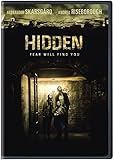
Hidden (2015) | $13.23 | Buy on Amazon |
| 2 |

|
Hidden (2015) | $11.96 | Buy on Amazon |
| 3 |

|
Hidden Figures Exclusive with eBook (Blu-ray+DVD+Digital HD+eBook) | $30.00 | Buy on Amazon |
| 4 |

|
Hideaway Complete Series DVD | $38.98 | Buy on Amazon |
| 5 |
![Under Suspicion [DVD]](https://m.media-amazon.com/images/I/41HVwCa4C-L._SL160_.jpg)
|
Under Suspicion [DVD] | $12.47 | Buy on Amazon |
The Moment the Truth Breaks Through
The illusion shatters when armed soldiers confront the family, not as rescuers but as executioners. These men aren’t hunting monsters; they are purging survivors of a chemical attack that has altered human biology. The so-called “Breathers” are victims like Ray and Claire, people who survived exposure but were deemed unacceptable by those enforcing a brutal version of normalcy.
In a devastating reveal, Chloe’s hardened fingernails and heightened instincts confirm that the entire family has already changed. Ray’s death during the escape is not framed as a monster’s casualty, but as the final cost of a man who refused to stop protecting his child. Claire’s reaction is not horror at what they are, but clarity about what they must become.
#1 Best Overall
- Hidden - DVD Used Like New
Reframing the Threat Above Ground
The surface world isn’t safer; it’s simply more honest about its cruelty. Survival now means running from a system that treats difference as contamination and fear as justification for genocide. When Claire and Zoe flee into the forest, the film makes its final pivot, aligning us with the very figures we were conditioned to fear.
Above ground, Hidden reveals itself as a story about who gets to define humanity after catastrophe. The monsters were never beneath the floorboards; they were enforcing order with guns and gas masks. What emerges at the end isn’t hope in the traditional sense, but something sharper and more unsettling: the resolve to live, even when the world insists you shouldn’t.
The Big Reveal Explained: Who the ‘Breathers’ Really Are
The term “Breathers” is deliberately misleading, a piece of fear-driven propaganda designed to simplify and dehumanize. For most of Hidden, the word conjures images of feral creatures lurking in the dark, validating the family’s life underground. The reveal reframes that fear entirely: Breathers are not monsters, but survivors of a chemical attack whose bodies adapted instead of dying.
Survivors, Not Mutants
The film makes it clear that the chemical weapon didn’t just kill indiscriminately; it altered those who lived through it. Hardened nails, heightened senses, and a stronger fight-or-flight response mark these survivors as biologically changed, but still recognizably human. They breathe differently, move differently, and are perceived as different, which is all the justification the authorities need.
Quick wins for a faster PC:
Scan for outdated or missing drivers - takes under a minuteDriver Scan →Repair Windows errors before they cause bigger problemsFix Now →Crucially, Hidden never depicts this transformation as a loss of humanity. Ray, Claire, and Zoe retain empathy, familial love, and moral awareness throughout. The changes are physical adaptations, not moral corruption, exposing how easily society equates difference with danger.
The Role of the Soldiers and the Manufactured Enemy
The soldiers serve as the film’s quiet antagonists, not through villainous speeches but through methodical efficiency. Their mission isn’t containment; it’s eradication. By labeling survivors as Breathers, they reduce complex human beings to a threat category, making genocide feel like protocol rather than murder.
This dynamic flips traditional post-apocalyptic storytelling. The armed, organized faction is not rebuilding civilization but enforcing a rigid definition of who qualifies as human. The Breathers exist outside that definition, and that exclusion is fatal.
Why the Family Was Always Being Hunted
The underground shelter was never protection from monsters; it was protection from people. Ray’s obsessive rules and secrecy stem from an unspoken understanding that discovery would mean execution, not rescue. The knocking, the noises, and the sense of being watched weren’t signs of Breathers closing in, but of a world above that had already decided their fate.
Ray’s death crystallizes this truth. He doesn’t die because he fails to hide from monsters, but because he is identified as one. His sacrifice ensures Zoe escapes not into safety, but into a future where survival requires embracing what the world fears.
What the Name “Breathers” Really Means
On a symbolic level, the name is bitterly ironic. Breathers are the ones still breathing after catastrophe, yet they are treated as if they don’t deserve to. The label strips them of individuality and justifies violence under the guise of sanitation and order.
Hidden uses that word to expose how language shapes fear. Once the truth is revealed, the title itself reads differently, no longer pointing to unseen creatures in the dark, but to people forced to exist in the margins simply for continuing to live.
Rank #2
The Family’s Transformation: Mutation, Survival, and Moral Evolution
Physical Change as Adaptation, Not Punishment
By the film’s final act, the family’s altered appearance is no longer a shocking twist but a logical outcome of prolonged exposure. Their pale skin, heightened senses, and aversion to light aren’t signs of decay; they are survival mechanisms shaped by a poisoned world. Hidden reframes mutation as nature’s last defense, not a moral failing or cosmic punishment.
The tragedy is not that the family has changed, but that the world refuses to see those changes as anything but contamination. In a more compassionate society, these adaptations might have been studied, understood, even integrated. Instead, difference becomes a death sentence.
From Hiding to Confrontation
Ray and Claire begin the film believing survival means invisibility. Their bunker life is defined by silence, routine, and fear of being noticed, a mindset shaped by years of persecution. This approach keeps them alive, but it also traps them in a constant state of moral paralysis.
Ray’s final stand marks a shift from concealment to defiance. He chooses to be seen, knowing visibility will kill him, because protecting Zoe matters more than preserving himself. Survival, in Hidden, ultimately demands not just adaptation, but choice.
Zoe as the Next Stage of Evolution
Zoe’s transformation is both biological and ethical. Unlike her parents, she grows into her identity without fully internalizing the shame attached to it. Her abilities manifest alongside a clearer understanding of the world’s cruelty, but also its fragility.
When Zoe escapes into the forest, she isn’t running from what she is. She is stepping into a future where hiding is no longer viable, and where survival may require confronting the systems that created the Breathers in the first place. Her wide, watchful eyes in the final shot suggest awareness, not monstrosity.
Moral Evolution in a Collapsing World
Hidden argues that the true measure of humanity is not physical purity, but ethical flexibility. The soldiers remain unchanged, clinging to rigid rules even as they commit atrocities. The family, meanwhile, evolves morally, learning when to obey, when to hide, and when to resist.
This contrast is the film’s quiet indictment. In a world obsessed with eliminating perceived threats, it is the so-called monsters who retain empathy, sacrifice, and love. The Breathers don’t lose their humanity as they change; they reveal how easily everyone else already has.
Ray’s Choice and the Meaning of Sacrifice in the Ending
Ray’s death is not framed as a tragic inevitability, but as a conscious moral decision. By the time the soldiers breach the bunker, he understands that hiding has reached its limit. The world will not stop hunting his family, and survival now requires a different kind of courage.
Free tools Windows power users keep installed
One-click scans. No signup required.
Choosing Death Over Complicity
When Ray draws the soldiers’ attention to himself, he is refusing to let fear dictate his final act. He could continue running, continue hiding, but that would mean accepting a system that survives by exterminating anything it doesn’t understand. His sacrifice interrupts that cycle, even if only briefly.
This moment redefines heroism within Hidden. Ray does not win through strength or strategy; he wins by choosing responsibility. His death buys Zoe time, but more importantly, it affirms that some lives are worth protecting even when the cost is absolute.
Sacrifice as a Rejection of the Soldiers’ Logic
The soldiers operate on a rigid moral framework where obedience replaces thought. Anyone labeled a Breather is already condemned, stripped of individuality or potential. Ray’s final stand directly challenges that worldview by asserting that love and agency still matter, even in a collapsing world.
By forcing the soldiers to kill him in the open, Ray exposes the cruelty of their mission. The act doesn’t stop them, but it reveals the moral emptiness at the core of their authority. In contrast, Ray’s choice restores meaning to a world defined by eradication.
The Tool Desk
Outbyte Driver Updater FREEFix the driver behind crashes, sound loss and screen glitchesFind Drivers →Outbyte PC Repair FREEClear out junk files and repair common Windows errorsFree Scan →Passing the Burden to Zoe
Ray’s sacrifice is also an act of trust in Zoe. He recognizes that she is stronger, more adaptable, and better equipped to face what comes next. His death clears the path for her not just to survive, but to exist without the constant shadow of her parents’ fear.
This is why the ending doesn’t linger on grief. Ray’s choice transforms loss into inheritance, passing forward the values that matter most. In Hidden, sacrifice is not about martyrdom; it is about ensuring that the next generation has a chance to live differently than the last.
Fear as the Real Enemy: How the Film Reframes the Apocalypse
Hidden ultimately reveals that the apocalypse is not defined by monsters or environmental collapse, but by panic institutionalized into policy. The film steadily dismantles the assumption that survival requires extermination, reframing fear itself as the most destructive force left in the world. By the end, it becomes clear that humanity didn’t fall because something new emerged, but because it refused to adapt to change.
The Myth of the Breathers
For most of the film, the Breathers are treated as an unknowable external threat, a catch-all label that justifies violence. The twist exposes that they are not invaders, but survivors altered by a biological shift, one that grants resilience rather than malevolence. What terrifies the soldiers is not what the Breathers do, but what they represent: a version of humanity that no longer fits the old rules.
Recommended Free Tools
This revelation forces a reevaluation of every prior act of “defense.” The soldiers are not protecting civilization; they are enforcing stagnation. By refusing to recognize the Breathers as people, they preserve a sense of control rooted in fear of the unfamiliar.
Survival as Compliance
Hidden draws a sharp line between surviving and living. The bunker, once a sanctuary, becomes a symbol of fear-based existence, where safety is achieved only through isolation and denial. Ray and Claire’s rules are shaped by terror, not malice, but they still pass that fear onto Zoe.
The soldiers operate on the same logic, just scaled up. Their uniforms and protocols are extensions of the bunker mentality, where obedience replaces empathy and elimination becomes easier than understanding. The film suggests that this version of survival is ultimately self-defeating, consuming everything it claims to protect.
Fear’s Inheritance, and Its End
Zoe represents the possibility of breaking that cycle. Unlike her parents, she does not fear what she is becoming, because she has grown into it naturally rather than resisting it. Her survival at the end is not framed as triumph over the world, but as escape from the fear that shaped it.
The final image of Zoe stepping into the open reframes the apocalypse as a transition rather than an ending. The world hasn’t been destroyed; it has changed, and fear is the only thing making that change lethal. Hidden leaves us with a haunting implication: the true catastrophe was never the Breathers, but humanity’s refusal to see itself in them.
Rank #4
- Hideaway - Complete Series - DVD
Government, Genocide, and ‘Curing’ Humanity: The Dark Subtext of the Threat
Once the truth about the Breathers is revealed, Hidden quietly pivots from creature feature to political horror. The real antagonist is no longer an undefined infection or an external enemy, but an institutional response to change. What the soldiers call containment and cure is, in practice, systematic eradication of a population that no longer conforms to a narrow definition of “human.”
The film never delivers an explicit exposition dump about the government’s plan, but its absence is the point. Orders are followed without explanation, language is sanitized, and moral responsibility is diffused through protocol. In that vacuum, genocide becomes easier to execute because it is framed as necessity rather than choice.
The Myth of the Cure
The soldiers’ repeated insistence on a cure functions as both justification and psychological shield. By defining the Breathers as sick, the state avoids confronting the possibility that they are simply different. The idea of curing them preserves the illusion that the old world can be restored, that evolution itself can be reversed through force.
Do these 3 things before closing this tab:
1Clear out junk files and repair common Windows errors2Scan for outdated or missing drivers - takes under a minute3Repair Windows errors before they cause bigger problemsHidden suggests that no cure exists because nothing is technically wrong. The Breathers are not deteriorating; they are adapting. The government’s response is not medical but ideological, rooted in the fear that survival without traditional humanity undermines every existing system of authority.
Language as a Weapon
The term “Breathers” is deliberately dehumanizing, reducing individuals to a single altered function. Like the bunker rules and military jargon, it strips away identity and replaces it with threat assessment. Once people are defined by what they are no longer, violence becomes procedural.
This linguistic distancing mirrors real-world historical atrocities, where extermination is preceded by classification. Hidden doesn’t need to name those parallels outright; it trusts the audience to recognize the pattern. The horror lies in how ordinary the process feels, not in how extreme it is.
Control Over Continuation
At its core, the film frames the government’s actions as an attempt to freeze humanity at a preferred moment. Evolution represents loss of control, and control is the true currency of power in Hidden. By eliminating the Breathers, the state is not saving humanity, but choosing which version of it deserves to continue.
Crashes, No Sound, or Screen Glitches?
Random freezes, missing sound and display glitches usually trace back to one bad driver. Find and replace yours safely.Free scan · under a minuteWindows Errors? Fix Them Before They Spread
Repair common Windows errors and clear accumulated junk for a smoother, more stable PC - no reinstall needed.Free scan · no reinstallZoe’s survival directly challenges that authority. She exists outside the old categories, immune to the narratives used to justify extermination. In that sense, the ending is not just about escape, but about the collapse of a worldview that mistook preservation for progress.
Independent reader supportYour contribution helps us test, update, and keep practical guides available for everyone.Why the Ending Feels Inevitable Yet Tragic: Tone, Perspective, and Misdirection
By the time Hidden reaches its final reveal, the outcome feels preordained, even as it devastates. The film carefully conditions the audience to accept its logic, then exposes how that logic was built on a lie. What makes the ending linger is not shock, but recognition.
A World Defined by Fear Before Facts
From its opening moments, Hidden establishes a tone of paranoia rather than discovery. The bunker, the rigid rules, and the constant warnings about the creatures aboveground create a closed emotional system where fear replaces evidence. We are never encouraged to question the premise because the characters themselves cannot afford to.
This emotional claustrophobia makes the reveal inevitable. When the truth emerges, it does not contradict what we have seen so much as recontextualize it. The film has been honest all along, just never complete.
Do these 3 things before closing this tab:
1Clear out junk files and repair common Windows errors2Fix the driver behind crashes, sound loss and screen glitches3Repair Windows errors before they cause bigger problemsBest Value
Perspective as the Film’s Greatest Trick
Hidden’s most effective misdirection is its unwavering commitment to the family’s point of view. We experience the world exactly as Ray, Claire, and Zoe do, interpreting danger through sound, shadow, and secondhand information. The “monsters” remain indistinct because the family cannot afford to see them clearly.
When the soldiers are revealed as the true hunters, the shift is devastating because nothing about their behavior changes. Only our understanding does. The Breathers were never the threat; they were simply the survivors we were taught to fear.
Tragedy Rooted in Survival, Not Death
The ending’s tragedy is not that Ray and Claire die, but that their deaths were unavoidable once the rules of the world were set. They adapted to survive, and that adaptation marked them for extermination. Their love, sacrifice, and humanity ultimately cannot protect them from a system that has already decided they no longer qualify as human.
Zoe’s escape does not undo that loss. It reframes it. She survives because she can pass, because she exists between definitions, and because the world has not yet learned how to categorize her. The inevitability of the ending lies in the fact that survival itself has become a crime, and tragedy is simply the cost of refusing to disappear quietly.
What’s actually slowing this PC down?
Pick the symptom - the matching free tool is one click away.
What the Ending Ultimately Means: Otherness, Empathy, and Redefining Monsters
Hidden’s final moments are less concerned with plot resolution than moral recalibration. By revealing who the real monsters are, the film forces the audience to confront how easily fear reshapes ethics when survival becomes absolute. The ending reframes the entire story as a cautionary tale about what happens when humanity defines itself by exclusion.
The Breathers as a Mirror, Not a Threat
The Breathers are not invaders or villains in the traditional sense. They are the result of human adaptability, bodies altered by catastrophe but minds still capable of love, family, and moral choice. Ray and Claire’s transformation never erases their empathy, which is precisely why the film positions them as tragic rather than dangerous.
By labeling them as inhuman, the world above absolves itself of guilt. The extermination becomes procedural, not personal. Hidden argues that monstrosity is not biological but ideological, rooted in the decision to deny complexity in favor of control.
Fear as a System, Not an Emotion
The soldiers are not sadistic caricatures; they are efficient, calm, and utterly convinced of their righteousness. This is what makes them unsettling. They represent a system that prioritizes containment over understanding, order over nuance, and eradication over coexistence.
In this light, the apocalypse never truly ends. It simply evolves into something quieter and more organized. The world is rebuilt on fear refined into policy, where empathy is a liability and difference is a diagnosis.
Zoe and the Hope of Unfixed Identity
Zoe’s survival is the film’s most complex statement. She escapes not because she is stronger or luckier, but because she exists between definitions. She is altered but not visibly marked, human but no longer fully recognized as such.
This ambiguity grants her mobility in a world obsessed with categories. Zoe represents the possibility of a future not yet locked into fear-based thinking, though the film is careful not to promise safety. Her escape is hopeful, but fragile, contingent on remaining unseen.
Redefining What a Monster Really Is
Hidden ultimately asks a simple but devastating question: who decides what counts as human? The answer, the film suggests, is whoever survives long enough to enforce it. Monsters are not those who change to live, but those who refuse to see change as anything other than a threat.
The ending lingers because it offers no comfort, only clarity. In Hidden, survival is not the victory. Understanding is. And the true horror is realizing how easily fear can convince us that extermination is mercy, and that love, once altered, is no longer worthy of protection.
Quick Recap
Product prices and availability are accurate as of the date/time indicated and are subject to change. Any price and availability information displayed on Amazon at the time of purchase will apply.




