Disney’s live-action Lilo & Stitch has finally offered something fans have been waiting years to see: a clear, up-close look at Stitch himself. The newly released image marks the first real visual confirmation of how the beloved blue alien translates from hand-drawn animation into a photoreal, CG-driven world, and it immediately signals how seriously Disney is taking this particular remake. For a character whose design is inseparable from his charm, mischief, and emotional pull, this reveal was always going to be a defining moment.
At first glance, Stitch looks strikingly familiar, and that appears to be entirely intentional. His oversized ears remain expressive and bat-like, his wide-set eyes retain their curious menace, and his squat, chaotic proportions feel lifted straight from the 2002 original. What’s new is the texture: fur rendered with tactile softness, subtle lighting across his face, and a slightly more grounded anatomy that places him comfortably alongside human actors without losing his cartoon soul. Disney’s approach here suggests restraint rather than reinvention, prioritizing recognition over realism for its own sake.
Fan reactions have largely reflected cautious optimism, a notable shift from the skepticism that often greets Disney’s live-action announcements. Early responses praise the balance between nostalgia and modernization, reading the image as proof that the studio understands Stitch isn’t meant to look like a real animal, but a believable version of an animated icon. Expectations now center on whether the film can preserve the original’s emotional core and offbeat humor, but visually, at least, Disney seems to have passed the first and most difficult test.
From 2D Chaos to CG Creature: How the Design Compares to the 2002 Animated Stitch
The biggest question surrounding Stitch’s live-action debut was never whether he would look realistic, but whether he would still look like Stitch. Disney’s newly revealed image answers that by anchoring the CG model firmly in the character’s original silhouette, preserving the squat torso, oversized head, and comically large ears that defined his 2D incarnation. This adherence signals a deliberate choice to protect recognizability above all else, a lesson learned from past remakes that drifted too far from their animated roots.
What’s actually slowing this PC down?
Pick the symptom - the matching free tool is one click away.
#1 Best Overall

- STITCH STUFFED PLUSH: Kids Preferred presents this super soft, cute, charmingly detailed stuffed animal. Babies, toddlers, and kids love this classic and collectible comfy friend.
- CARING FRIEND: This plush toy is a comforting pal and perfect for get well wishes, birthdays and more! It is a huggable travel friend for kids on road trips & airplanes, or a cute bedroom decoration.
- COLLECTIBLE FUN: Plush animals are fun to collect and trade and make great keepsakes for children, teens & adults. Favorite stuffed toys are soothing for toddlers & make carefree pets! Machine wash.
- PLAYTIME PLUSH: This loveable plush stuffed toy from Lilo and Stitch is sure to become a playtime and bedtime favorite. It’s easy for little ones to hold, making it appropriate for kids of all ages.
- COZY COMPANION: The perfect size for little hands and big cuddles, this ultra soft stuffed toy is as cute as they are soft and warm. For years to come it’ll be the perfect friend for boys and girls.
Preserving the Iconic Shape
In the 2002 film, Stitch’s design thrived on exaggeration, with limbs that felt slightly too short and a posture that communicated constant, barely contained chaos. The live-action version mirrors this philosophy, resisting the temptation to “correct” his proportions for realism. His stance still reads as feral and unpredictable, suggesting that the animators prioritized personality over anatomical plausibility.
This fidelity extends to facial structure, where the wide-set eyes and flattened nose remain almost cartoonishly expressive. Rather than narrowing his features to suit a photoreal world, Disney has leaned into their oddness, ensuring Stitch remains visually disruptive in the best way. It’s a clear sign that the studio understands his appeal lies in standing out, not blending in.
From Flat Color to Tactile Texture
The most noticeable evolution comes in texture, where hand-drawn simplicity gives way to layered CG detail. Stitch’s fur appears soft and slightly uneven, catching light in a way that grounds him within a physical environment without making him look like a real animal. The effect recalls the careful balance struck by films like Paddington, where believability supports charm rather than smothering it.
Importantly, the texture work doesn’t overpower the design. The blue remains vibrant, avoiding the muted palettes that dulled characters in earlier live-action adaptations. This choice reinforces the sense that Disney wants Stitch to feel alive and tangible, but never ordinary.
Expression, Comedy, and Emotional Range
Stitch’s success has always depended on his ability to pivot between menace, comedy, and unexpected vulnerability. The new image suggests that this expressive range has been carefully preserved, with eye movement and facial articulation clearly designed to sell emotion rather than realism alone. His gaze still carries that familiar mix of curiosity and threat, a visual shorthand fans instantly recognize.
This attention to expression hints at broader creative priorities for the film. If Stitch can convincingly emote alongside human actors, the remake stands a better chance of capturing the original’s emotional resonance. Fan expectations, shaped by both affection and caution, now rest on whether this visual promise translates into performance, timing, and heart on screen.
Cute, Chaotic, or Concerning? What the Image Signals About Disney’s Creative Direction
A Deliberate Rejection of Hyper-Realism
Perhaps the most telling aspect of the new image is what it avoids. Unlike The Lion King or even elements of Pinocchio, Disney has resisted the urge to push Stitch toward photoreal animal logic. He is clearly computer-generated, proudly artificial, and unapologetically strange.
That choice signals a creative correction. After years of criticism that live-action remakes drained personality in favor of technical realism, this Stitch feels like a course adjustment, one that prioritizes character readability and emotional immediacy over visual plausibility. Disney appears to be acknowledging that some animated icons simply shouldn’t be “fixed.”
Leaning Into Chaos Without Losing Warmth
The image also leans into Stitch’s inherent chaos. His posture, expression, and slightly off-kilter proportions suggest motion, mischief, and unpredictability, even in a static frame. This isn’t a sanitized mascot version of the character; it’s Experiment 626 as an ongoing problem.
At the same time, the design carefully preserves warmth. The eyes remain large and readable, the face open enough to sell empathy when the story inevitably demands it. That balance suggests the filmmakers are keenly aware that Lilo & Stitch lives or dies on tonal control, where destruction and tenderness coexist.
Fan Reactions Reflect Cautious Optimism
Early fan response has landed somewhere between relief and guarded excitement. Many viewers have praised the decision to keep Stitch visibly cartoonish, especially after previous remakes prompted backlash for uncanny redesigns. Social media reactions frequently point out that he “looks like Stitch,” which, for this subgenre, is no small compliment.
Rank #2
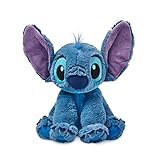
- Out of This World Comfort: Cuddle up with the beloved Experiment 626 with our medium-sized Stitch plush from Disney's Lilo & Stitch, designed for supreme softness and huggability.
- Quality Craftsmanship: This Stitch plush features detailed plush sculpting, embroidered features for added character authenticity, pieced spots, and a furry tuft, ensuring a high-quality Stitch teddy bear.
- Unique Textural Details: Equipped with soft, flexible ears, felt claws, and a distinctive tail, this medium Stitch stuffed animal provides a variety of textures for tactile exploration.
- Collectible Companion: Pair this Stitch plush with our matching Angel Plush, sold separately, to complete your Lilo & Stitch collection and bring the animated story to life in your home.
- Inspired by the Classic Film: Perfect for fans of Disney’s Lilo & Stitch, this plush toy captures the adventurous spirit of Stitch, making it one of the ideal Lilo and Stitch gifts for girls and boys.
Still, skepticism lingers. Fans burned by uneven remakes like Dumbo or Lady and the Tramp are quick to note that a strong character design doesn’t guarantee a faithful tone or narrative depth. The image reassures, but it also raises the bar for everything that follows.
Crashes, No Sound, or Screen Glitches?
Random freezes, missing sound and display glitches usually trace back to one bad driver. Find and replace yours safely.Free scan · under a minuteWindows Errors? Fix Them Before They Spread
Repair common Windows errors and clear accumulated junk for a smoother, more stable PC - no reinstall needed.Free scan · no reinstallWhat This Means for Disney’s Broader Strategy
Zooming out, Stitch’s design feels emblematic of a larger shift in Disney’s live-action philosophy. Rather than translating animated films into realism at all costs, the studio appears more open to hybrid aesthetics that honor their source material’s identity. It’s an approach that suggests flexibility rather than formula.
If successful, Lilo & Stitch could join Paddington and Sonic the Hedgehog as proof that audiences accept stylization when it serves character and story. The new image doesn’t just sell Stitch; it quietly argues for a more character-first future in Disney’s ongoing remake era.
Technical Breakdown: CGI, Texture, and How Stitch Fits Into a Live-Action World
A Stylized CG Approach Rather Than Photorealism
From a technical standpoint, the new image confirms that Disney is avoiding full photorealism for Stitch, opting instead for a deliberately stylized CG build. His proportions remain exaggerated, with oversized ears, rounded limbs, and a compact torso that mirrors the animated original rather than attempting anatomical realism. This choice immediately separates Stitch from past missteps where realism stripped characters of their expressive identity.
The CG work prioritizes readability over simulation. Stitch’s silhouette is instantly recognizable, even at a glance, which is crucial for a character whose appeal depends on quick emotional cues and comedic timing. It’s a reminder that animation principles, not just visual fidelity, are guiding the design.
The Tool Desk
Outbyte PC Repair FREEClear out junk files and repair common Windows errorsFree Scan →Outbyte Driver Updater FREEFix the driver behind crashes, sound loss and screen glitchesFind Drivers →Texture Work That Bridges Animation and Reality
The most telling update lies in Stitch’s texture. His fur has visible depth and softness, but it avoids hyper-detailed strands that would push him into uncanny territory. Instead, the surface reads as tactile without being distracting, closer to a plush brought to life than a real animal rendered pixel by pixel.
This restrained texture work allows Stitch to sit believably in a live-action frame while still feeling like a cartoon at heart. The skin around the eyes and mouth remains smooth and flexible, preserving the elasticity needed for expressive facial animation. It’s a smart compromise that suggests Disney has learned from both its successes and its visual overcorrections.
Lighting and Integration Within Real Environments
Lighting plays a critical role in selling Stitch’s presence, and the image shows careful attention to how he absorbs and reflects light. Highlights fall naturally across his fur, grounding him in the physical space without flattening his color or washing out his iconic blue tone. Shadows anchor him to the environment, helping avoid the floating CG effect that often betrays digital characters.
What stands out is how the lighting enhances mood rather than calling attention to itself. Stitch doesn’t look pasted into the scene; he looks like an intentional disruption of it, which aligns perfectly with his narrative role. The technical integration reinforces character rather than overshadowing it.
Do these 3 things before closing this tab:
1Repair Windows errors before they cause bigger problems2Fix the driver behind crashes, sound loss and screen glitches3Clear out junk files and repair common Windows errorsRespecting the Animated Design While Updating the Tools
Comparing this version to the 2002 animated Stitch reveals a clear philosophy: update the tools, not the soul. The facial structure, eye placement, and mouth shape remain faithful, ensuring that classic expressions translate cleanly into three dimensions. Even the slight asymmetry in his posture feels intentional, echoing the hand-drawn looseness of the original animation.
This fidelity sends a clear message to fans that the remake isn’t interested in reinventing Stitch, only recontextualizing him. The CG isn’t trying to outdo the animation; it’s trying to serve it. That distinction matters, especially for a character whose emotional arc is inseparable from his visual design.
Rank #3

- - Official Disney Authenticity - 100% officially licensed Disney product, faithfully recreating the beloved Experiment 626 from Lilo & Stitch, perfect for collectors and fans of all ages.
- Comfortable Touch: Made of high-quality soft plush fabric, the touch is delicate and smooth, skin friendly without getting stuck. Whether held in the arms or pressed on the face, you can feel a full sense of comfort, bringing warm companionship to children and adults.
- Creative Ornament: This Stitch toy is not only a cute plush toy, but can also be used as a creative ornament to decorate homes. Whether placed on the sofa in the living room, at the bedside of the bedroom, or in the corner of the desk, they can add a touch of lively color to the room, creating a warm and interesting atmosphere.
- Exquisite Craftsmanship: Every Stitch doll is meticulously crafted, from facial features to body stitching, striving for perfection in every detail. Eyes are bright and lively, as if they can see through everything; The limbs are flexible and movable, demonstrating the lively and active characteristics, showcasing Disney's high-quality craftsmanship.
- Accompanying Growth: Stitch, as a classic cartoon character of Disney, is deeply loved by people of all ages. It symbolizes bravery, kindness, and adventurous spirit, accompanying generation after generation as they grow up, becoming an indispensable companion in their childhood, and carrying countless beautiful memories.Note: This product is vacuum-packed. Upon receipt, please gently tap it or place it in a dryer on a low heat setting to restore its fluffiness and fullness.
What the Image Signals About Disney’s Creative Priorities
Technically, this Stitch suggests a character-first pipeline rather than a technology-first showcase. Every visible decision, from texture density to eye scale, points toward preserving emotional clarity and comedic flexibility. It reflects a growing understanding within Disney that live-action adaptations succeed when they respect the mechanics of animation rather than abandoning them.
For fans, this raises expectations beyond surface-level accuracy. If the same care extends to performance capture, interaction with human actors, and scene blocking, Stitch could feel genuinely alive rather than digitally impressive. The image doesn’t just demonstrate technical competence; it quietly promises restraint, intention, and a willingness to let character guide the technology instead of the other way around.
Fan Reaction and Online Discourse: Nostalgia, Optimism, and Early Concerns
The release of Stitch’s new look immediately ignited conversation across social media, fan forums, and comment sections, with reactions skewing far more positive than skeptical. For many millennials who grew up with the 2002 original, the image struck a familiar emotional chord before any technical analysis even began. That sense of recognition matters, especially for a character so deeply tied to childhood memory and emotional comfort.
At a glance, the response reflects cautious optimism rather than blind enthusiasm. Fans seem relieved more than anything else, interpreting the image as proof that Disney understands how fragile the goodwill around Lilo & Stitch really is. In the ecosystem of live-action remakes, that’s already a notable win.
Nostalgia as the Dominant Emotional Lens
Much of the online discourse frames the image through nostalgia, with fans pointing out how instantly readable Stitch’s personality remains. The wide-set eyes, mischievous grin, and slightly chaotic posture all triggered comparisons to specific moments from the animated film. Screenshots and side-by-side images circulated quickly, often accompanied by comments about how “he still feels like Stitch.”
This response underscores how emotionally specific the original design is. Stitch isn’t just a mascot; he’s a character people remember feeling for. The fact that the new image sparked emotional recall rather than defensive critique suggests Disney has successfully tapped into that memory without overplaying it.
Measured Optimism After Past Live-Action Missteps
There’s also a noticeable awareness of Disney’s uneven track record with live-action adaptations. Fans frequently reference previous remakes where early images looked promising but failed to translate into cohesive films. As a result, praise for Stitch’s design is often paired with qualifiers about story, tone, and emotional authenticity.
This cautious optimism feels earned. The image alone won’t convince skeptics that the film understands the quieter, stranger heart of Lilo & Stitch, but it has reopened the door to trust. In online spaces, that trust manifests less as hype and more as willingness to wait and see.
Early Concerns: Expressiveness, Voice, and Emotional Weight
Despite the generally warm reception, some concerns surfaced quickly and repeatedly. A common thread centers on expressiveness in motion, with fans wondering whether Stitch’s facial flexibility will hold up outside of a single, well-composed image. Others raised questions about vocal performance and whether the character’s iconic blend of chaos and vulnerability can survive in a more realistic environment.
There’s also a broader anxiety about tone. Lilo & Stitch is remembered not just for comedy, but for its melancholy, its sense of isolation, and its deeply human take on family. Online discourse reflects a hope that the live-action version won’t sand down those emotional edges in favor of broader appeal.
Quick wins for a faster PC:
Clear out junk files and repair common Windows errorsFree Scan →Fix the driver behind crashes, sound loss and screen glitchesFind Drivers →Repair Windows errors before they cause bigger problemsFix Now →What Fans Want Most Going Forward
More than anything, fans are asking for consistency between intention and execution. The image suggests respect, restraint, and understanding, and audiences now want to see that philosophy applied to relationships, pacing, and emotional storytelling. Stitch can look perfect, but if the film loses sight of ohana as an emotional anchor, design alone won’t be enough.
Rank #4

- Cute And Playful Design: Stitch's unique alien creature image, with big eyes, a round head, and a small body, presents a cute sitting posture, as if she is acting cute towards you, making people love her at first glance.
- Comfortable Touch: Made of high-quality soft plush fabric, the touch is delicate and smooth, skin friendly without getting stuck. Whether held in the arms or pressed on the face, you can feel a full sense of comfort, bringing warm companionship to children and adults.
- Creative Ornament: This Stitch toy is not only a cute plush toy, but can also be used as a creative ornament to decorate homes. Whether placed on the sofa in the living room, at the bedside of the bedroom, or in the corner of the desk, they can add a touch of lively color to the room, creating a warm and interesting atmosphere.
- Exquisite Craftsmanship: Every Stitch doll is meticulously crafted, from facial features to body stitching, striving for perfection in every detail. Eyes are bright and lively, as if they can see through everything; The limbs are flexible and movable, demonstrating the lively and active characteristics, showcasing Disney's high-quality craftsmanship.
- Accompanying Growth: Stitch, as a classic cartoon character of Disney, is deeply loved by people of all ages. It symbolizes bravery, kindness, and adventurous spirit, accompanying generation after generation as they grow up, becoming an indispensable companion in their childhood, and carrying countless beautiful memories.Note: This product is vacuum-packed. Upon receipt, please gently tap it or place it in a dryer on a low heat setting to restore its fluffiness and fullness.
For now, the conversation feels surprisingly unified. Nostalgia has been honored, optimism cautiously extended, and concerns clearly articulated without tipping into backlash. That balance reflects a fandom ready to embrace the remake, provided Disney continues to treat Stitch not as a visual effect, but as the emotional center of the story.
Independent reader supportYour contribution helps us test, update, and keep practical guides available for everyone.Stitch as the Emotional Anchor: Why Getting the Character Right Matters Most
Stitch has always been more than a mascot, and the newly released image seems to understand that responsibility. While the design modernizes his texture and physicality, it preserves the asymmetry and softness that defined the original animation. His eyes, slightly oversized and deeply set, do most of the emotional work, signaling that Disney’s priority isn’t realism for its own sake, but emotional legibility.
That balance matters because Stitch is the story’s emotional conduit. In the animated film, his destructive impulses are inseparable from his loneliness, and his gradual transformation only works because audiences feel his confusion and fear as much as his chaos. The image suggests a creative direction that values those inner conflicts, resisting the temptation to turn Stitch into a purely comedic CGI spectacle.
Recommended Free Tools
Reading the Design: Familiar, but Intentionally Grounded
Compared to the 2002 animated version, the live-action Stitch looks slightly heavier, more tactile, and more present in the real world. His fur appears denser, his proportions marginally adjusted to interact believably with human characters, yet the silhouette remains unmistakable. This isn’t a radical reinterpretation, but a translation, one that seems designed to support performance rather than distract from it.
Fans have responded positively to that restraint. Online reactions frequently highlight relief that Stitch doesn’t feel over-rendered or uncanny, a common pitfall in Disney’s recent remakes. Instead, the image suggests a character designed to emote in close-ups, where small shifts in expression can carry scenes that rely on silence, awkwardness, or emotional discomfort.
Why Stitch’s Emotional Clarity Sets the Tone for the Entire Film
If Stitch works, the film works. His relationship with Lilo hinges on mutual recognition, two outsiders finding stability in each other, and that dynamic only lands if Stitch feels emotionally present. The image implies a version of the character capable of stillness, vulnerability, and introspection, qualities that are essential to preserving the original film’s tone.
This is where expectations are now focused. Fans aren’t demanding perfection, but they are watching closely for signs that Disney understands Stitch as a character first and a visual effect second. The new look doesn’t answer every concern, but it signals an awareness that the heart of Lilo & Stitch was never just its premise or humor, but the fragile emotional bond at its center.
Free tools Windows power users keep installed
One-click scans. No signup required.
Where This Fits in Disney’s Live-Action Strategy and Remake Track Record
Disney’s approach to live-action remakes has shifted noticeably over the past decade, moving from direct visual translations toward more selective reinterpretations. Early efforts like Beauty and the Beast and The Lion King leaned heavily on familiarity and spectacle, sometimes at the expense of emotional immediacy. More recent projects suggest a growing awareness that nostalgia alone isn’t enough to sustain audience goodwill.
The new Stitch image lands squarely in that recalibration phase. Rather than chasing hyper-realism or visual bravado, the design appears to prioritize character readability and emotional access. That restraint reflects lessons learned from audience reactions to remakes that felt technically impressive but emotionally distant.
Learning From Past Missteps and Unexpected Wins
Disney’s remake track record is uneven, but patterns have emerged. Films like Cinderella and Pete’s Dragon earned praise for expanding emotional depth without betraying their source, while others struggled when photorealism flattened expressive animation into something inert. Audience fatigue has grown louder, especially when remakes feel more corporate than creative.
Against that backdrop, Lilo & Stitch occupies a different emotional lane. The original was intimate, offbeat, and culturally specific, qualities that don’t automatically scale up into live-action spectacle. The careful handling of Stitch’s design suggests Disney understands that this remake succeeds or fails on sensitivity rather than size.
Recommended Free Tools
Best Value

- This product has polybag packaging that may reveal what's inside and cannot be hidden.
- Official Disney Lilo & Stitch Plush Toy – Authentic, officially licensed Stitch plushie from the beloved Disney’s Lilo & Stitch universe, perfect for fans and collectors alike.
- Huggably Soft Plush Fabric – Made with premium, soft deluxe materials that are gentle to touch and ideal for cuddles, nap time, or playtime adventures.
- Charming Tropical Design – Features Stitch in colorful tropical shorts, capturing his mischievous personality and island vibes.
- Perfect Size for Kids & Travel – At approximately 7.5 inches tall, this lovable stuffed animal fits easily in backpacks, car seats, and bedrooms — great for on-the-go fun (also available in other looks, each sold separately).
A Smaller Story in a Franchise-Heavy Era
Unlike Disney’s fairy tales or musical epics, Lilo & Stitch has always been a quieter story about broken families and emotional displacement. That makes it an unusual but potentially strategic choice in an era dominated by interconnected franchises and billion-dollar expectations. The image of Stitch reinforces the idea that this film isn’t trying to compete visually with Marvel or Star Wars.
Instead, it positions itself as a character-driven family film, one that leans into warmth and awkwardness rather than bombast. For parents and millennials who grew up with the original, that signals a remake aimed more at emotional continuity than reinvention.
What the Image Suggests About Disney’s Current Priorities
The decision to present Stitch in a grounded, expressive form hints at a broader creative directive. Disney appears increasingly conscious of audience sensitivity to uncanny CGI and overproduction, especially when beloved animated characters are involved. The emphasis here is on believability in performance, not just visual fidelity.
Fan reactions reflect cautious optimism shaped by history. Viewers aren’t declaring victory based on a single image, but many recognize it as a promising sign that Disney may finally be aligning its technical resources with a deeper understanding of why certain stories endure. In that sense, Stitch’s new look isn’t just a design reveal, but a litmus test for how thoughtfully Disney can handle its own legacy.
What to Expect Next: Story Changes, Tone, and the Road to Release
The first look at Stitch doesn’t just answer questions about visual fidelity; it quietly frames expectations for the story Disney plans to tell this time around. By resisting exaggerated realism or hyperactive redesigns, the studio signals that the emotional architecture of Lilo & Stitch remains intact. That choice suggests a remake less interested in reinvention and more focused on translation, preserving the heart of the original while adapting its rhythms to live-action.
Subtle Adjustments, Not a Structural Overhaul
Story-wise, early indicators point toward refinement rather than radical change. The central relationship between Lilo and Nani is expected to remain the film’s emotional anchor, with Stitch functioning as both catalyst and mirror for their fractured family dynamic. Any updates are likely to appear in pacing, expanded character moments, or slightly modernized humor rather than sweeping plot revisions.
The new Stitch design supports that approach. His softened textures and expressive eyes echo the original animation’s emotional elasticity, suggesting scenes will linger on quiet reactions as much as chaos. That bodes well for a film whose most enduring line was never about aliens or space chases, but about belonging.
A Tone Rooted in Warmth, Not Spectacle
Tonally, the image reinforces a grounded sensibility that aligns more with intimate family dramas than blockbuster spectacle. This version of Stitch looks capable of mischief without tipping into visual overload, a balance that matters when live-action remakes often struggle to reconcile realism with cartoon energy. The implication is a film that trusts stillness and sincerity as much as slapstick.
For fans, that restraint is encouraging. Online reactions have leaned toward cautious approval, with many praising the design for avoiding the uncanny pitfalls that plagued earlier CGI characters. The optimism isn’t uncritical, but it reflects a belief that Disney may finally be calibrating tone with intention rather than defaulting to scale.
The Road to Release and Final Expectations
As the project moves closer to release, the real test will be how this version of Stitch interacts with human performances and real-world settings. Visual success in isolation is one thing; emotional cohesion across an entire film is another. If Disney can maintain this balance throughout, Lilo & Stitch could emerge as one of the studio’s more thoughtful live-action adaptations.
Ultimately, this remake doesn’t need to justify its existence through novelty. Its success will hinge on emotional authenticity, cultural respect, and a willingness to stay small in a landscape obsessed with bigger. The new look at Stitch suggests Disney understands that, and for a story built on the idea that no one gets left behind, that understanding may be the most important element of all.
Quick Recap
Product prices and availability are accurate as of the date/time indicated and are subject to change. Any price and availability information displayed on Amazon at the time of purchase will apply.




