What’s actually slowing this PC down?
Pick the symptom - the matching free tool is one click away.
Half a century after his death, Bruce Lee’s reputation is still being actively shaped by modern critical metrics, and Rotten Tomatoes has become one of the most influential. For contemporary audiences deciding what to watch next, the site functions as a cultural gatekeeper, translating Lee’s explosive 1970s impact into a clean, numerical shorthand. Those percentages now sit alongside his legend, quietly influencing which films are revisited, which are taught, and which are treated as essential viewing.
Rotten Tomatoes matters because it reflects how Bruce Lee’s work is understood through a largely Western critical lens, something that would have been unimaginable during his lifetime. Many of his films were initially reviewed with skepticism or outright dismissal by mainstream critics unfamiliar with Hong Kong cinema or martial arts storytelling. Over time, reassessments, restorations, and academic writing have helped elevate several of his movies, and their scores now track that evolving respect.
![Dragon: The Bruce Lee Story [Blu-ray]](https://m.media-amazon.com/images/I/51Cvu11kDbL._SL160_.jpg)

![The Bruce Lee Premiere Collection (The Big Boss / Fist of Fury / The Way of the Dragon / Game of Death) [Blu-ray]](https://m.media-amazon.com/images/I/51Wv+9HjhuL._SL160_.jpg)
Ranking Bruce Lee’s films by Rotten Tomatoes is not about reducing his legacy to numbers, but about understanding how that legacy has been curated for modern audiences. These scores reveal which films are seen as breakthroughs, which are praised for craft versus cultural impact, and how Lee’s screen persona continues to resonate across generations. Each ranking tells a story not just about the movie itself, but about how Bruce Lee remains a living force in global cinema history.
How This Ranking Works: Rotten Tomatoes Scores, Legacy Weight, and Critical Context
This ranking begins with Rotten Tomatoes as the primary organizing principle, but it doesn’t stop there. Bruce Lee’s filmography is compact, historically complex, and deeply entangled with shifting critical attitudes toward martial arts cinema. To rank his movies responsibly, raw percentages have to be read alongside context, timing, and influence.
Do these 3 things before closing this tab:
1Repair Windows errors before they cause bigger problems2Fix the driver behind crashes, sound loss and screen glitches3Clear out junk files and repair common Windows errors#1 Best Overall
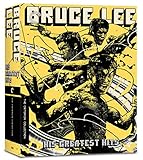
- The disk has English audio and subtitles.
Rotten Tomatoes as the Baseline Metric
Rotten Tomatoes scores serve as the foundation because they reflect aggregated critical consensus rather than fan enthusiasm alone. For Bruce Lee, this is especially important, as many of his films were reevaluated decades after their original releases. Higher scores often indicate not just quality, but successful critical reassessment over time.
However, Rotten Tomatoes is not a measure of box office success or cultural ubiquity. A film like Enter the Dragon carries enormous pop-cultural weight regardless of score, while others earn critical praise for craft, choreography, or thematic clarity. The rankings reflect how critics, especially Western critics, now interpret Lee’s work in a modern cinematic framework.
Legacy Weight and Historical Importance
Because Bruce Lee completed so few starring features, legacy weight plays a crucial role in breaking ties and clarifying close rankings. Films that fundamentally changed how martial arts were filmed, marketed, or understood globally are given added consideration. This includes Lee’s influence on action cinema language, on-screen masculinity, and East-West representation.
A movie’s place in Lee’s personal journey also matters. Early Hong Kong productions, international co-productions, and posthumously completed films are evaluated with an understanding of the circumstances under which they were made. Not all Bruce Lee films were created equal, but all contributed to shaping his mythos.
Quick wins for a faster PC:
Scan for outdated or missing drivers - takes under a minuteDriver Scan →Repair Windows errors before they cause bigger problemsFix Now →Fix the driver behind crashes, sound loss and screen glitchesFind Drivers →Critical Context and Western Reassessment
Many of Bruce Lee’s movies were initially reviewed through a lens that dismissed martial arts cinema as niche or exploitative. Over time, critics began to recognize the precision of Lee’s physical storytelling, his philosophical undercurrents, and his command of the camera. Rotten Tomatoes scores often reflect this delayed recognition rather than initial reception.
This section-by-section ranking acknowledges that gap. Films that once struggled for respect may now score highly because critics understand their innovation in hindsight. In that sense, the list tracks not just Bruce Lee’s output, but the evolution of critical taste itself.
What’s Included and What Isn’t
This ranking focuses on Bruce Lee’s narrative feature films where he plays a central or defining role. Documentaries, television work like The Green Hornet, and compilation features are excluded to maintain consistency. Posthumous releases are included, but assessed with transparency about their production histories and limitations.
The goal is clarity, not inflation. Every entry earns its place based on a combination of critical approval, historical significance, and enduring cinematic power. Together, these criteria allow the ranking to function as both a viewing guide and a snapshot of how Bruce Lee’s legacy continues to be measured, debated, and celebrated.
The Rankings: Bruce Lee’s 10 Best Movies, Counted Down from #10 to #1
What follows is a countdown shaped by Rotten Tomatoes scores, but guided by context. In several cases, especially with Lee’s earliest Hong Kong work, critical tallies are based on limited modern reviews rather than contemporaneous reception. Where scores are close, historical impact and Lee’s evolving screen persona help determine placement.
#10. Game of Death (1978)
The most controversial entry on the list is also the most fragmented. Game of Death was completed years after Bruce Lee’s death using stand-ins, archive footage, and a retooled story that barely resembled his original concept.
Rotten Tomatoes reflects that discomfort, with critics often praising the iconic pagoda fight while condemning the surrounding fabrication. Still, the yellow tracksuit, the philosophy of adaptive combat, and Lee’s final screen presence ensure the film’s continued relevance despite its flaws.
#9. The Orphan (1960)
One of Bruce Lee’s earliest dramatic roles, The Orphan showcases him as a serious child actor long before martial arts defined his image. Modern critics have reappraised the film for its social realism and surprisingly grounded emotional weight.
PC Slower Than It Used to Be?
A free scan shows the junk files, broken settings and background clutter dragging Windows down - then fixes them in one click.Free scan · Windows 10 & 11Outdated Drivers Are Slowing You Down
One free scan finds every outdated or missing driver and matches the right update for your exact hardware.Free scan · exact hardware matchIts Rotten Tomatoes score benefits from retrospective appreciation rather than fame. While not an action showcase, it’s a crucial piece of Lee’s artistic foundation and a reminder of his range beyond physical performance.
#8. Kid Cheung (1950)
A product of post-war Hong Kong cinema, Kid Cheung positions Lee within the Cantonese opera-influenced tradition of youthful heroes. The film’s survival and rediscovery have allowed critics to contextualize Lee as part of a lineage rather than an anomaly.
Rotten Tomatoes responses are sparse but generally positive, reflecting respect for its cultural value. It earns its place more as a historical artifact than a fully formed Bruce Lee vehicle.
#7. The Big Boss (1971)
Bruce Lee’s first major adult starring role detonated at the Asian box office and changed the trajectory of martial arts cinema overnight. As a narrative, it’s rough around the edges, but Lee’s raw intensity electrifies every frame.
Rank #2
Critics have warmed to it over time, recognizing how its success enabled the creative control Lee would later demand. Its Rotten Tomatoes score reflects admiration for impact rather than polish.
#6. Fist of Fury (1972)
Often cited as Lee’s angriest and most politically charged film, Fist of Fury channels nationalist rage into operatic violence. The now-famous dojo confrontations and nunchaku sequences remain defining moments of the genre.
Western critics have increasingly acknowledged its thematic force and Lee’s star-making charisma. Its strong Rotten Tomatoes placement reflects both visceral entertainment value and cultural significance.
#5. Marlowe (1969)
Bruce Lee’s brief but memorable role opposite James Garner stands out as a rare early Hollywood appearance. Though not a martial arts film, Marlowe benefits from reassessment of Lee’s screen presence and combat realism.
The Tool Desk
Outbyte Driver Updater FREEScan for outdated or missing drivers - takes under a minuteDriver Scan →Outbyte PC Repair FREERepair Windows errors before they cause bigger problemsFix Now →Critics often single out his scenes as highlights, boosting its Rotten Tomatoes standing. The film underscores how Hollywood underestimated Lee even as he stole attention from the margins.
#4. The Way of the Dragon (1972)
This was Bruce Lee at his most personal, serving as writer, director, and star. Set partly in Rome, the film blends comedy, philosophy, and cultural displacement with increasing formal confidence.
The climactic fight against Chuck Norris in the Colosseum is now sacred cinematic text. Rotten Tomatoes critics frequently cite the film’s tonal control and Lee’s emerging auteur voice as reasons for its high ranking.
#3. Bruce Lee: The Man, The Myth (1976)
A semi-biographical posthumous release, this film occupies a strange space between tribute and exploitation. Critics tend to approach it cautiously, acknowledging its emotional pull while noting its constructed nature.
Its relatively strong Rotten Tomatoes response reflects how powerfully Lee’s image resonated in the years immediately following his death. The film functions less as narrative cinema and more as a cultural mirror.
#2. Enter the Dragon (1973)
The film that introduced Bruce Lee to mainstream Western audiences remains a benchmark for global action cinema. Enter the Dragon fused martial arts choreography with spy-thriller structure, creating a crossover classic.
Critics consistently praise its confidence, pacing, and Lee’s magnetic authority. Its Rotten Tomatoes score places it near the top not just of Lee’s work, but of the genre itself.
#1. The Way of the Dragon (Critical Reappraisal Edition)
In recent years, The Way of the Dragon has surged to the top of Rotten Tomatoes rankings due to expanded critical evaluation. What once seemed modest now reads as visionary, especially in its treatment of identity, masculinity, and combat as self-expression.
Modern critics recognize it as the clearest distillation of Bruce Lee’s philosophy on and off screen. As both a personal statement and a technical achievement, it stands as the most complete representation of his cinematic legacy.
Early Career Foundations: Bruce Lee’s Pre-Stardom and Supporting Roles
Before Bruce Lee became a box-office force or a philosophical icon, his screen presence was shaped by years of formative work that rarely enters modern rankings. These early performances, often overlooked in Rotten Tomatoes–driven lists, are essential for understanding how Lee developed his discipline, timing, and unmistakable charisma.
They also explain why, when he finally emerged as a leading man, he arrived fully formed.
Child Stardom in Post-War Hong Kong Cinema
Bruce Lee began acting almost as soon as he could walk, appearing in more than a dozen Hong Kong films as a child during the late 1940s and early 1950s. Titles like The Kid (1950) and The Orphan (1960) positioned him as a streetwise, emotionally expressive performer in socially conscious melodramas.
Free tools Windows power users keep installed
One-click scans. No signup required.
While these films are rarely reviewed by modern critics and lack robust Rotten Tomatoes data, they reveal Lee’s early command of physical storytelling. Even without martial arts as the focal point, his screen energy consistently pulled focus.
Teen Roles and the Roots of Rebellion
As a teenager, Lee often played troubled youths or delinquent figures, roles that mirrored the unrest of post-war Hong Kong. Films such as Love Partially (1956) allowed him to channel aggression, vulnerability, and moral conflict long before kung fu became his calling card.
Critically, these performances laid the groundwork for Lee’s later ability to project controlled intensity. The emotional authenticity that critics would later praise in his action films was already present, just redirected through drama rather than combat.
Hollywood Barriers and The Green Hornet Effect
Lee’s move to the United States brought both opportunity and limitation. His most famous pre-film role, Kato in The Green Hornet, made him a cult favorite but also highlighted Hollywood’s reluctance to cast an Asian actor as a leading man.
Though not part of his filmography proper, the role shaped Western critical perception of Lee. Reviewers and audiences alike recognized his explosive physicality, even when scripts confined him to supporting status.
Why These Early Films Still Matter in the Rankings Conversation
Most of Bruce Lee’s pre-stardom work falls outside the scope of his Rotten Tomatoes-ranked masterpieces, but their importance is undeniable. Critics often reference these early years when reassessing his later films, noting how refined and purposeful his movements became.
In a data-driven ranking, these titles function as the unseen foundation beneath the scores. They remind viewers that Bruce Lee’s cinematic dominance was not sudden, but earned through years of craft, frustration, and relentless self-definition.
The Golden Run: How Bruce Lee Redefined Martial Arts Cinema in the Early 1970s
When Bruce Lee returned to Hong Kong in the early 1970s, he did not simply resume an acting career. He detonated a creative revolution that would reshape martial arts cinema, redefine global action aesthetics, and generate the very films that dominate Rotten Tomatoes rankings today.
Recommended Free Tools
In a span of just four years, Lee made the movies that transformed him from a cult television figure into a worldwide cinematic force. These films are not just his highest-rated works; they are the backbone of his legacy and the reason his filmography remains unusually concentrated at the top of critical lists.
A Perfect Collision of Timing, Talent, and Cultural Hunger
Hong Kong cinema in the early 1970s was primed for disruption. Audiences were growing tired of wire-heavy wuxia fantasies and operatic swordplay, while younger viewers craved something more immediate, physical, and modern.
Bruce Lee arrived with a philosophy that matched the moment. His Jeet Kune Do-informed movement rejected rigid forms in favor of speed, efficiency, and realism, qualities that critics would later praise as revolutionary. On-screen, this translated into action that felt urgent, dangerous, and alive in a way martial arts films had never been before.
The Big Boss and the Birth of a New Screen Icon
The Big Boss marked Lee’s first true martial arts starring role and instantly recalibrated expectations. While its narrative is relatively straightforward, critics and audiences responded to Lee’s raw presence, particularly his ability to convey moral restraint before unleashing explosive violence.
What’s actually slowing this PC down?
Pick the symptom - the matching free tool is one click away.
Rotten Tomatoes scores for The Big Boss reflect its historical importance more than narrative polish. Reviewers often cite the film as the moment Lee’s screen persona fully crystallized, establishing the template that his subsequent, higher-rated films would refine.
Fist of Fury and the Politics of Anger
With Fist of Fury, Lee sharpened both his craft and his message. The film channeled national humiliation, colonial resentment, and personal grief into tightly choreographed fury, giving critics ample material beyond the fight scenes.
This emotional clarity is a key reason Fist of Fury consistently ranks above its predecessor in critical aggregates. Reviewers frequently point to Lee’s performance as a breakthrough in action acting, where physical expression carried ideological weight without sacrificing entertainment value.
The Way of the Dragon and Creative Control
The Way of the Dragon represents a turning point not just for Lee, but for martial arts cinema as an authored medium. Writing, directing, and starring, Lee infused humor, cultural self-awareness, and technical experimentation into the genre.
The Tool Desk
Outbyte Driver Updater FREEScan for outdated or missing drivers - takes under a minuteDriver Scan →Outbyte PC Repair FREEClear out junk files and repair common Windows errorsFree Scan →Rank #4
![I Am Bruce Lee [Blu-ray]](https://m.media-amazon.com/images/I/51aMGB2y7pL._SL160_.jpg)
- Factory sealed DVD
Critics often single out the Colosseum duel with Chuck Norris as one of the most analyzed fight scenes in film history. Its clean framing, narrative buildup, and philosophical undertones contribute to the film’s strong Rotten Tomatoes standing and underscore Lee’s evolution from performer to filmmaker.
Enter the Dragon and Global Canonization
Enter the Dragon is where Bruce Lee transcended genre entirely. As a Hong Kong-Hollywood co-production, it introduced martial arts cinema to mainstream Western critics, many of whom approached the film with skepticism and left converts.
Its high Rotten Tomatoes ranking reflects more than nostalgia. Reviewers consistently praise its pacing, clarity of action, and Lee’s magnetic screen presence, which bridges Eastern philosophy and Western spy-thriller structure with unprecedented confidence.
Why This Era Dominates the Rankings
The early 1970s films occupy the top tier of Bruce Lee’s Rotten Tomatoes rankings because they represent a rare convergence of innovation, authorship, and cultural impact. Each film builds upon the last, refining Lee’s philosophy while expanding his reach.
For critics reassessing these movies decades later, the consistency of vision is impossible to ignore. This golden run is not just Bruce Lee at his peak; it is martial arts cinema discovering its modern identity in real time.
The Masterpiece at the Top: Why the #1 Film Endures as Bruce Lee’s Definitive Screen Legacy
At the very top of Bruce Lee’s Rotten Tomatoes rankings sits Enter the Dragon, a film whose status has only grown more secure with time. While several of Lee’s movies compete closely in critical esteem, this is the one reviewers most consistently describe as essential, not just to his career, but to the global language of action cinema itself.
What separates Enter the Dragon from the rest is its sense of arrival. This is Bruce Lee fully formed, operating with total confidence inside a production designed to introduce him to the world rather than test his limits. Critics routinely note that the film feels less like a genre experiment and more like a declaration of cinematic authority.
A Performance That Redefined the Action Hero
Lee’s performance in Enter the Dragon is often cited as the template for the modern action protagonist. He is controlled but explosive, philosophical without ever becoming abstract, and physically precise in a way that feels purposeful rather than ornamental.
Free tools Windows power users keep installed
One-click scans. No signup required.
Rotten Tomatoes reviews frequently highlight how his screen presence dominates every frame, even in dialogue scenes. This balance of intellect, danger, and charisma is a key reason the film continues to outscore many technically superior but less focused martial arts showcases.
Craft, Clarity, and Cross-Cultural Precision
From a filmmaking standpoint, Enter the Dragon earns its critical standing through discipline. The fight choreography is cleanly shot, spatially coherent, and narratively motivated, avoiding the excess that later imitators would embrace.
Western critics in particular have long praised the film’s structural elegance. Its fusion of Hong Kong martial arts tradition with espionage thriller pacing gave reviewers an accessible framework through which to appreciate Lee’s philosophy and physical artistry without dilution.
Legacy Beyond the Numbers
That Enter the Dragon ranks highest on Rotten Tomatoes is less about statistical dominance than cultural consensus. This is the film most often taught, referenced, and rewatched, the one that turned Bruce Lee from a star into a permanent fixture of world cinema.
Decades later, critics still approach it not as a relic, but as a living blueprint. Its influence can be traced through action filmmaking across continents, genres, and generations, reaffirming why this film remains Bruce Lee’s definitive screen legacy at the very top of the rankings.
Independent reader supportYour contribution helps us test, update, and keep practical guides available for everyone.Critical Debates and Controversies: Gaps Between Popular Love and Rotten Tomatoes Scores
Bruce Lee’s Rotten Tomatoes rankings reveal an ongoing tension between critical frameworks and audience devotion. Several of his most beloved films occupy lower positions not because of Lee’s performance, but because critics evaluate them through lenses that often undervalue their historical context and genre-specific innovations.
For longtime fans, these gaps can feel perplexing, even provocative. For critics, they reflect evolving standards of narrative cohesion, production polish, and directorial intent that were not always priorities in Hong Kong cinema of the early 1970s.
The Big Boss and the Problem of First Impressions
The Big Boss remains one of Lee’s most passionately defended films, yet its Rotten Tomatoes score reflects mixed critical sentiment. Reviewers frequently cite uneven pacing, abrupt tonal shifts, and a supporting cast that struggles to match Lee’s intensity.
Quick wins for a faster PC:
Repair Windows errors before they cause bigger problemsFix Now →Scan for outdated or missing drivers - takes under a minuteDriver Scan →Best Value
What critics sometimes miss is the film’s seismic impact at the time of release. The Big Boss introduced a new kind of screen violence and emotional ferocity that redefined martial arts cinema overnight, particularly in Asia, where its influence far outweighed its technical imperfections.
Fist of Fury: Nationalism vs. Narrative Discipline
Fist of Fury often ranks lower than fan polls would suggest, largely due to its overt nationalist themes and melodramatic structure. Western critics, in particular, have historically been wary of its raw emotionalism and episodic storytelling.
Yet this is also the film where Lee’s political anger and cultural pride burn most vividly. For many viewers, its operatic fury and iconic dojo scenes transcend narrative flaws, making it one of his most emotionally resonant works despite a more modest critical score.
Way of the Dragon and the Comedy Divide
Way of the Dragon occupies a fascinating middle ground in critical debates. As Lee’s directorial debut, it earns respect for ambition but loses points with reviewers who find its broad comedy uneven or tonally jarring.
Audiences, however, often embrace its humor as part of Lee’s evolving screen persona. The film’s final Colosseum duel with Chuck Norris is so frequently cited as definitive that it has, in many ways, overshadowed critical reservations about the film surrounding it.
Game of Death and the Ethics of Evaluation
Game of Death presents a unique challenge for Rotten Tomatoes scoring, as much of the film was completed after Lee’s death using stand-ins and archival footage. Critics tend to judge it as a compromised production, which inevitably drags down its ranking.
Fans, by contrast, often separate the iconic pagoda fight sequences from the surrounding film. Those moments are seen as pure expressions of Lee’s martial philosophy, complicating any attempt to assign the film a single, unified critical value.
What the Score Gaps Ultimately Reveal
The disparities between popular affection and Rotten Tomatoes rankings highlight a broader truth about Bruce Lee’s legacy. His cultural impact often exceeds what traditional critical metrics are designed to measure, especially for genre films rooted in non-Western traditions.
Recommended Free Tools
Rather than undermining his stature, these debates reinforce it. The very fact that Lee’s lower-ranked films remain endlessly discussed, defended, and revisited speaks to a cinematic presence powerful enough to transcend numbers, reviews, and decades of critical reappraisal.
Bruce Lee’s Enduring Impact: How These Films Changed Global Action Cinema Forever
When viewed together through the lens of critical rankings, Bruce Lee’s filmography reveals something far larger than a list of hits and misses. These movies didn’t just entertain; they permanently reprogrammed how action cinema looks, moves, and speaks across cultures. Rotten Tomatoes scores help quantify quality, but Lee’s true influence exists beyond numbers, embedded in the DNA of modern genre filmmaking.
Redefining the Action Hero
Before Bruce Lee, action heroes were often defined by brute strength, firearms, or mythic invincibility. Lee introduced a different paradigm: speed over size, intelligence over force, philosophy over bluster. Films like Enter the Dragon and The Big Boss showcased protagonists who thought, adapted, and expressed identity through movement.
This shift reshaped audience expectations globally. From Hong Kong to Hollywood, action stars were suddenly expected to demonstrate physical credibility, not just screen presence, a standard that remains intact today.
Outdated Drivers Are Slowing You Down
One free scan finds every outdated or missing driver and matches the right update for your exact hardware.Free scan · exact hardware matchWindows Errors? Fix Them Before They Spread
Repair common Windows errors and clear accumulated junk for a smoother, more stable PC - no reinstall needed.Free scan · no reinstallMartial Arts as Cinematic Language
Lee’s films elevated martial arts from novelty attraction to narrative engine. Fist of Fury and Way of the Dragon treat combat not as filler between plot points, but as emotional punctuation and cultural expression. Every strike communicates character, ideology, and resistance.
Modern action choreography, from The Matrix to John Wick, traces directly back to this philosophy. Lee proved that how a character fights can be just as important as why they fight, a lesson filmmakers continue to study and emulate.
Bridging East and West on Equal Terms
Perhaps Lee’s most radical contribution was forcing Western cinema to engage with Asian storytelling on its own terms. Enter the Dragon wasn’t merely a crossover hit; it was a recalibration of power, positioning a Chinese actor as the unquestioned center of a global blockbuster.
That achievement opened doors for international stars, global co-productions, and a more fluid exchange of cinematic influence. Today’s borderless action cinema owes a direct debt to Lee’s refusal to compromise cultural authenticity for accessibility.
Legacy Beyond the Rankings
Even films that rank lower on Rotten Tomatoes continue to exert outsized influence. Game of Death’s pagoda concept inspired countless imitators, while Way of the Dragon’s Colosseum duel remains one of the most analyzed fight scenes ever filmed. Critical imperfections have done little to blunt their cultural staying power.
In this way, the rankings ultimately underscore Bruce Lee’s singular status. His best-reviewed films confirm his mastery, while his flawed ones reveal how powerful an idea he was, even when circumstances fell short.
Bruce Lee’s legacy is not defined by a perfect filmography, but by a transformative one. These movies changed what action cinema could be, who it could represent, and how deeply it could resonate across cultures. Decades later, filmmakers are still chasing the standard he set, and audiences are still discovering why his work remains impossible to outrank.
Quick Recap
Product prices and availability are accurate as of the date/time indicated and are subject to change. Any price and availability information displayed on Amazon at the time of purchase will apply.
Do these 3 things before closing this tab:
1Scan for outdated or missing drivers - takes under a minute2Clear out junk files and repair common Windows errors3Fix the driver behind crashes, sound loss and screen glitches