Bruce Lee’s filmography is deceptively small, but its impact is immeasurable. In just a handful of starring roles, Lee didn’t simply redefine martial arts cinema; he reshaped how the world understood action heroes, Asian masculinity, and physical performance on screen. Every ranking of his movies is really an attempt to map how myth and artistry collided in a career that burned fast, changed everything, and then ended far too soon.
To understand why these films still matter, you have to see them as cultural interventions as much as entertainment. Lee arrived at a moment when Hollywood marginalized Asian actors and Hong Kong cinema was still finding its international voice. His movies fused philosophical inquiry, personal expression, and explosive choreography into something entirely new, turning fight scenes into narrative arguments about identity, discipline, and self-definition.
![Dragon: The Bruce Lee Story [Blu-ray]](https://m.media-amazon.com/images/I/51Cvu11kDbL._SL160_.jpg)

![Fist of Fury - Limited Edition [4K UHD Blu-Ray]](https://m.media-amazon.com/images/I/41Ol1eqfppL._SL160_.jpg)
This ranking isn’t just about which Bruce Lee movie has the best fights or the cleanest filmmaking. It’s about tracing the evolution of an icon across incomplete masterpieces, studio compromises, and revolutionary breakthroughs, and understanding how each film contributed to a global shift in cinema language that still echoes today.
The Context That Shaped a Legend
Bruce Lee’s movies emerged from a unique crossroads of East and West, colonial Hong Kong and exclusionary Hollywood, tradition and reinvention. His work reflects a performer fighting against industry limits in real time, pushing for creative control, authentic representation, and a new physical truth on screen. That tension is baked into every frame, giving even his weaker films historical importance beyond their polish.
Free tools Windows power users keep installed
One-click scans. No signup required.
#1 Best Overall
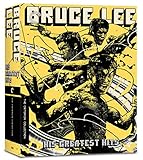
- The disk has English audio and subtitles.
From Screen Presence to Global Myth
Lee’s on-screen persona transcended narrative, transforming him into a modern myth whose influence spans continents and generations. His films became templates for action cinema, inspiring everyone from Jackie Chan and Jet Li to Quentin Tarantino and modern MMA culture. Ranking them is not about diminishing any entry, but about recognizing how each step brought Bruce Lee closer to becoming a permanent force in global cinema rather than a fleeting star.
How the Ranking Works: Criteria, Cultural Weight, and Choreographic Innovation
Ranking Bruce Lee’s films demands a different framework than most action star filmographies. His career is brief, his body of work small, and several titles exist in compromised or unfinished forms. Instead of chasing surface-level polish, this list weighs how each film advances Lee’s artistic mission, reshapes action cinema, and deepens his screen philosophy.
The goal is to guide viewers from the least essential entry to the most culturally and cinematically vital, while explaining why even the weaker films remain historically meaningful. Each ranking reflects not just what works on screen, but what each movie contributed to Bruce Lee’s evolving vision of martial arts as personal expression.
Filmmaking Quality and Creative Control
Technical execution matters, but context matters more. Early films shaped by studio demands or incomplete posthumous edits are evaluated with an understanding of the limitations Lee faced at the time. Direction, editing, and narrative coherence are considered alongside how much agency Lee had in shaping the final product.
Do these 3 things before closing this tab:
1Scan for outdated or missing drivers - takes under a minute2Repair Windows errors before they cause bigger problems3Fix the driver behind crashes, sound loss and screen glitchesMovies where Lee exerted greater control naturally score higher, not simply because they are better made, but because they reveal his intentions more clearly. These films show him moving from performer to auteur, redefining what a martial arts movie could be.
Fight Choreography as Philosophy
Bruce Lee’s fight scenes are not judged solely on speed or spectacle. The ranking prioritizes clarity, realism, and the way combat functions as storytelling. Lee rejected ornamental choreography in favor of directness, efficiency, and emotional truth, turning fights into extensions of character rather than set pieces.
Films that best articulate Jeet Kune Do principles on screen, stripping movement down to necessity and purpose, rise higher on the list. These moments didn’t just look different; they permanently altered how action cinema understood physical authenticity.
Cultural Impact and Global Influence
Each film is evaluated for how far its impact traveled beyond its release. Some titles transformed Lee into a regional star, while others detonated globally, reshaping Hollywood’s relationship with Asian performers and martial arts cinema. Influence on later filmmakers, fighters, and popular culture weighs heavily in the ranking.
A movie’s position reflects not only how it was received at the time, but how it continues to reverberate across genres, continents, and generations. The higher the placement, the more the film feels like a turning point rather than a stepping stone.
Legacy, Myth, and the Incomplete Masterpiece
Bruce Lee’s death complicates any ranking, especially when unfinished projects became part of his legend. Posthumous films are assessed carefully, separating Lee’s genuine creative contributions from studio reconstruction and myth-making. Their value lies less in completeness and more in what they reveal about the direction he was heading.
Ultimately, this ranking treats Bruce Lee’s filmography as a living document of artistic evolution. From constrained beginnings to revolutionary breakthroughs, each entry marks a moment where Lee pushed cinema closer to his ideal of truth through movement, discipline, and self-expression.
The Apprenticeship Era: Early Roles and Lesser Bruce Lee Appearances (Ranked)
Before Bruce Lee exploded onto the global stage, his screen career unfolded in fragments: child performances in Hong Kong melodramas, supporting roles shaped by studio demands, and brief American appearances that hinted at an untapped force. These films matter less for martial mastery and more for tracing Lee’s formation as a performer, thinker, and cultural disruptor.
Windows Errors? Fix Them Before They Spread
Repair common Windows errors and clear accumulated junk for a smoother, more stable PC - no reinstall needed.Free scan · no reinstallOutdated Drivers Are Slowing You Down
One free scan finds every outdated or missing driver and matches the right update for your exact hardware.Free scan · exact hardware matchWhat follows ranks these lesser Bruce Lee appearances from least essential to most revealing, judged not by star power but by how clearly they foreshadow the revolution to come.
7. Golden Gate Girl (1941)
Bruce Lee’s screen debut arrives almost as a historical footnote. Appearing as an infant in this wartime drama, Lee has no agency as a performer, and the film itself holds little connection to his later identity. Its value is purely archival.
Still, Golden Gate Girl marks the literal beginning of a cinematic life that would later reshape global action cinema. It belongs at the bottom of the ranking because it offers context, not insight.
Rank #2
6. The Beginning of the Boy (1946)
One of several postwar Hong Kong films featuring Lee as a child actor, this social drama casts him as a troubled youth navigating moral pressures. His performance is earnest but conventional, shaped by studio expectations rather than personal philosophy.
What’s notable is Lee’s natural screen presence, even at a young age. While there’s no martial arts on display, the emotional directness he later championed is already visible in flashes.
5. The Orphan (1960)
Often cited as Lee’s most respected pre-stardom performance, The Orphan places him in a dramatic supporting role as a delinquent torn between loyalty and redemption. Directed by Patrick Lung Kong, the film reflects a socially conscious Hong Kong cinema far removed from kung fu spectacle.
Lee’s acting here is raw and grounded, revealing an ability to communicate internal conflict without physicality. It ranks higher because it shows Lee as a serious dramatic actor, not merely a future action icon.
4. Marlowe (1969)
Bruce Lee’s appearance as a hired thug opposite James Garner is brief but electric. His single fight scene with Garner crackles with speed, aggression, and realism that feel imported from another cinematic universe.
Though the role is small and racially constrained, Marlowe offers a painful glimpse of what Hollywood refused to do with Lee. It ranks prominently because it demonstrates how dramatically he outclassed the material he was given.
3. The Green Hornet (1966–1967)
While technically a television series, The Green Hornet is essential to understanding Lee’s apprenticeship era. As Kato, Lee became a cult sensation, routinely stealing scenes with his precision, charisma, and lethal calm.
The show’s limitations frustrated Lee, but it introduced American audiences to his philosophy of movement. More importantly, it revealed the ceiling Hollywood imposed, even as audiences clearly recognized where the real star power lived.
2. Kid Cheung (1950)
As a teenage Bruce Lee portraying a rebellious street fighter, Kid Cheung comes closest to previewing the man he would become. The film leans into youthful aggression and physical confidence, even if the choreography remains primitive.
The Tool Desk
Outbyte PC Repair FREEClear out junk files and repair common Windows errorsFree Scan →Outbyte Driver Updater FREEFix the driver behind crashes, sound loss and screen glitchesFind Drivers →Lee’s performance bridges his childhood acting and adult persona. It earns its high ranking for showing the first alignment between his screen image and his emerging personal identity.
1. The Orphan (1960)
Revisited at the top of this list, The Orphan stands as the most artistically significant film of Bruce Lee’s apprenticeship era. Unlike his other early appearances, it places him in a morally complex world that demands restraint, vulnerability, and psychological depth.
There are no iconic fights, but there is truth, discipline, and emotional clarity. In hindsight, it feels less like a stepping stone and more like a quiet manifesto, proof that Bruce Lee’s cinematic revolution was never only about fists, but about authenticity.
Breaking Through: The Hong Kong Revolution Begins (Mid-Tier Rankings)
With his apprenticeship behind him, Bruce Lee returned to Hong Kong at exactly the right historical moment. The local film industry was hungry for a new kind of star, and Lee arrived with a philosophy, a physical vocabulary, and an intensity that would permanently alter martial arts cinema.
These films represent the ignition point of the Bruce Lee phenomenon. While not yet the fully realized masterpieces that would follow, each marks a decisive step in his transformation from gifted performer into global icon.
8. The Big Boss (1971)
The Big Boss is where the legend officially begins, even if the film itself struggles to keep up with its star. Initially restrained by the studio’s desire to emphasize stoicism over spectacle, Lee spends much of the first half suppressing his rage, making the eventual violence feel explosive.
When Lee finally unleashes his fury, the impact is seismic. His speed, vocal intensity, and animalistic presence shattered the polite rhythms of earlier kung fu cinema, helping the film become a box-office sensation across Asia. It ranks lower only because its direction and storytelling often feel crude compared to what Lee would soon demand and achieve.
7. Fist of Fury (1972)
If The Big Boss introduced Bruce Lee as a force, Fist of Fury defined him as a symbol. Playing Chen Zhen, Lee channels national humiliation, grief, and righteous anger into a performance that resonates far beyond the genre’s conventions.
What’s actually slowing this PC down?
Pick the symptom - the matching free tool is one click away.
The fight choreography is sharper, more ferocious, and more ideologically charged. Lee’s confrontations with Japanese occupiers transformed martial arts films into vehicles for cultural catharsis, influencing everything from Hong Kong cinema to later revenge narratives worldwide. Its raw power is undeniable, even if its emotional bluntness keeps it just short of Lee’s most refined work.
6. Way of the Dragon (1972)
Way of the Dragon is the first Bruce Lee film that feels entirely authored by Bruce Lee the filmmaker. Writing, directing, and starring, he allows humor, vulnerability, and philosophy to coexist with violence, revealing a fuller picture of his artistic ambitions.
The film’s climax, a now-mythic duel with Chuck Norris in the Colosseum, remains one of the most studied fight scenes in cinema history. Its clean geography, escalating psychology, and respect between combatants reflect Lee’s evolving belief in martial arts as expression rather than domination. It ranks in the mid-tier not for lack of brilliance, but because it functions as a bridge between breakthrough and transcendence.
These films mark the moment Bruce Lee stopped knocking on doors and began kicking them down. What follows is not merely refinement, but culmination, where his ideas, body, and philosophy finally align on a global stage.
Recommended Free Tools
Perfecting the Philosophy: Bruce Lee at His Creative and Physical Peak
By the early 1970s, Bruce Lee was no longer reacting against the limitations of the genre. He was actively redefining it, stripping away ornamentation in favor of clarity, intent, and personal truth. These final films capture Lee at the moment where his physical mastery, cinematic intelligence, and philosophical worldview finally moved in unison.
5. Game of Death (1978)
Game of Death is an incomplete film, but its importance to Bruce Lee’s legacy is impossible to ignore. What survives of Lee’s original footage offers the clearest cinematic expression of his Jeet Kune Do philosophy, articulated through combat rather than dialogue. Each floor of the pagoda becomes a living argument against rigid styles, dogma, and ego.
Lee’s fights with Kareem Abdul-Jabbar and Dan Inosanto are deceptively simple, emphasizing adaptability, distance, and efficiency over spectacle. His movements here are leaner, calmer, and more surgical than ever before, suggesting a martial artist who had fully moved beyond proving himself. Though the released version is compromised by stand-ins and studio reconstruction, the surviving material is foundational, influencing generations of fighters, filmmakers, and game designers.
4. Enter the Dragon (1973)
Enter the Dragon is where Bruce Lee’s ideas achieved global reach without dilution. Backed by Warner Bros. yet creatively uncompromising, the film positions Lee as both mythic warrior and modern philosopher, equally comfortable delivering a kick or a koan. His performance radiates control, confidence, and an almost serene authority.
Quick wins for a faster PC:
Repair Windows errors before they cause bigger problemsFix Now →Fix the driver behind crashes, sound loss and screen glitchesFind Drivers →The choreography is pristine, favoring speed, rhythm, and spatial awareness over excess. Lee’s final mirror-room confrontation is not just an action set piece but a visual thesis on perception, illusion, and self-knowledge. More than his most famous film, Enter the Dragon is his most complete, distilling everything he believed about combat, cinema, and identity into a form the world was finally ready to receive.
The Magnum Opus: Why the Greatest Bruce Lee Film Still Defines Martial Arts Cinema
By the time Bruce Lee reached the pinnacle of his filmography, he had already changed how action was shot, edited, and understood. What remained was a film that fused his physical brilliance with raw emotion, cultural urgency, and a clarity of purpose no martial arts movie had achieved before. This is the point where Bruce Lee stops being a movie star and becomes a cinematic force.
1. Fist of Fury (1972)
Fist of Fury is Bruce Lee at his most explosive, most personal, and most influential. Where Enter the Dragon presents the philosopher and Way of the Dragon showcases the tactician, Fist of Fury unleashes the emotional core that powered everything Lee believed about strength, dignity, and resistance. It is not simply his best film, but the film that permanently redefined what martial arts cinema could express.
Lee’s portrayal of Chen Zhen is fueled by grief, fury, and moral clarity, transforming the revenge narrative into something mythic. His rage is not performative; it is disciplined, coiled, and terrifyingly precise. Every strike feels like a statement, every movement charged with purpose rather than spectacle.
The fight choreography is lean and devastating, emphasizing speed, timing, and psychological dominance. Lee’s nunchaku sequence remains one of the most iconic moments in action cinema, not because of its flash, but because of its control and intent. The violence is sharp and decisive, stripping away excess to reveal combat as expression rather than exhibition.
Rank #4
![Dragon: The Bruce Lee Story - 4K Ultra HD + Blu-ray [4K UHD]](https://m.media-amazon.com/images/I/41pYw-hI-IL._SL160_.jpg)
- Genre: Drama
- Number of Discs: 2
- Number of Tracks: 0
- Playback Duration: 120
- Rating: PG13
What elevates Fist of Fury beyond genre excellence is its cultural resonance. The film channels historical humiliation, colonial tension, and national identity into visceral drama without losing narrative momentum. Lee becomes both individual and symbol, embodying defiance in a way that resonated deeply across Asia and later around the world.
Cinematically, the film cemented the template for modern martial arts storytelling. Countless revenge films, sports dramas, and action heroes trace their DNA directly back to Chen Zhen’s journey. The emphasis on emotional stakes, physical authenticity, and moral conviction became the foundation for everything from Jackie Chan’s early dramatic work to modern MMA-inspired cinema.
More than any other Bruce Lee film, Fist of Fury feels alive with urgency. It captures an artist fully in command of his body, his philosophy, and his cultural moment. Over fifty years later, its impact remains undiminished, standing not just as Bruce Lee’s greatest achievement, but as a cornerstone of global action cinema itself.
Unfinished Business and Aftermath: Death, Mythmaking, and Posthumous Releases
Bruce Lee’s sudden death in July 1973 did more than shock the world; it froze his image at the precise moment he was reshaping global cinema. At 32, Lee had completed only four feature-length kung fu films as an adult, yet his influence already felt disproportionate to his filmography. The abruptness of his passing transformed a rising superstar into a permanent cultural figure, collapsing biography into legend almost overnight.
His death also created a rupture in his artistic arc. Lee was no longer merely performing in films; he was actively redefining their structure, philosophy, and politics. The work left unfinished would become as debated and mythologized as the films he completed.
The Game of Death and the Cost of Completion
At the center of this unfinished legacy stands Game of Death, Lee’s most ambitious project and the one most compromised by his absence. Conceived as a philosophical action film about ego, adaptability, and martial arts truth, Lee envisioned a pagoda structure in which each level represented a different combat ideology. The surviving footage, particularly the yellow tracksuit fights against Dan Inosanto, Ji Han-jae, and Kareem Abdul-Jabbar, reveals a stripped-down, intellectual approach to combat unlike anything in 1970s action cinema.
The 1978 theatrical release, however, bears little resemblance to Lee’s intent. Studio reshoots, body doubles, and a patchwork narrative turned a personal statement into a curiosity. While often ranked lowest among Lee’s major works, Game of Death remains essential viewing precisely because of what it represents: a glimpse of where Bruce Lee was headed rather than where he had been.
PC Slower Than It Used to Be?
A free scan shows the junk files, broken settings and background clutter dragging Windows down - then fixes them in one click.Free scan · Windows 10 & 11Crashes, No Sound, or Screen Glitches?
Random freezes, missing sound and display glitches usually trace back to one bad driver. Find and replace yours safely.Free scan · under a minutePosthumous Exploitation and the Rise of Bruceploitation
Lee’s death triggered an unprecedented wave of imitation films, many misleadingly marketed to capitalize on his name, image, or perceived style. Actors were rechristened with names like Bruce Li, Bruce Le, and Dragon Lee, flooding international markets with low-budget approximations. These films diluted his image while paradoxically proving how singular he truly was.
None of these imitators replicated Lee’s physical intelligence, philosophical grounding, or screen presence. In contrast to Lee’s precision and restraint, Bruceploitation leaned into excess, reinforcing why his authentic work remains untouchable. The era underscores an important truth in any ranking of his films: even his weakest authentic effort outweighs countless imitators combined.
Mythmaking, Memory, and the Films That Matter Most
The scarcity of Bruce Lee’s completed films has intensified their importance. With no late-career decline, no reinvention phase, and no nostalgia-era misfires, his screen persona exists in a state of permanent potency. Each film feels definitive, not just representative of a moment, but of an entire philosophy of movement, self-expression, and resistance.
This is why ranking Bruce Lee’s films carries unusual weight. From the raw ambition of The Big Boss to the refined mastery of Fist of Fury and the global sophistication of Enter the Dragon, his filmography forms a clean, ascending arc. The unfinished and posthumous works do not weaken that legacy; they sharpen it, reminding viewers that what Bruce Lee left behind was not a complete catalogue, but an open challenge to cinema itself.
The Tool Desk
Outbyte PC Repair FREEClear out junk files and repair common Windows errorsFree Scan →Outbyte Driver Updater FREEScan for outdated or missing drivers - takes under a minuteDriver Scan →Bruce Lee’s Enduring Legacy: How These Films Shaped Action Cinema Forever
Bruce Lee’s films did more than elevate martial arts cinema; they rewired the grammar of action filmmaking. Before Lee, fight scenes were often staged as theatrical displays, wide shots emphasizing form over feeling. His movies introduced a new intimacy and urgency, where speed, precision, and emotional intent became inseparable from spectacle.
Each entry in his filmography pushed that evolution forward, which is why ranking them is inseparable from understanding their impact. Even his earliest starring roles hinted at a philosophy that would soon transform how action heroes moved, fought, and expressed themselves on screen.
Redefining Screen Combat and Choreography
Lee’s most enduring technical contribution was his insistence on realism and efficiency. His fights favored economy of motion, explosive timing, and authentic reaction, rejecting the ornamental excess common in earlier kung fu cinema. Films like Fist of Fury and Enter the Dragon demonstrated that action could feel both brutally real and mythically charged.
This approach became the blueprint for modern action choreography. From Jackie Chan’s physical storytelling to Jet Li’s athletic precision and even the stripped-down brutality of contemporary Hollywood action, Lee’s influence is embedded in the rhythm of how fights are staged, edited, and performed.
What’s actually slowing this PC down?
Pick the symptom - the matching free tool is one click away.
Best Value
The Birth of the Global Action Star
Enter the Dragon did something no martial arts film had done before: it positioned an Asian actor as a worldwide box-office draw without compromise. Lee was not exoticized or secondary; he was the center of gravity, shaping the film’s tone, philosophy, and physical language. That achievement permanently altered casting assumptions in international cinema.
Every globally recognized martial arts star since exists in the shadow of that breakthrough. The path from Lee to figures like Chow Yun-fat, Donnie Yen, and even crossover stars in Western franchises traces directly back to the authority and magnetism Lee established on screen.
Philosophy as Action Cinema’s Hidden Engine
What truly separates Bruce Lee’s films from imitators is the intellectual current running beneath the punches. Themes of identity, resistance, self-mastery, and cultural pride are not subtext but active forces within the action. His characters fight not just opponents, but systems, expectations, and internal limitations.
This fusion of philosophy and physicality elevated martial arts cinema into something more resonant. It invited audiences to see combat as expression, not violence for its own sake, influencing everything from character-driven action narratives to the moral frameworks of modern fight films.
Why These Films Still Define the Viewing Order
Because Lee’s career forms a clean, ascending arc, the ranking of his films doubles as a roadmap to the genre’s evolution. The raw power of The Big Boss, the nationalistic fury of Fist of Fury, the formal experimentation of Way of the Dragon, and the global refinement of Enter the Dragon each mark a step forward. Even Game of Death, fractured though it is, reveals ideas that action cinema would spend decades trying to catch up to.
Taken together, these films do not merely represent Bruce Lee’s legacy; they actively sustain it. They remain reference points, challenges, and measuring sticks, ensuring that any serious discussion of action cinema inevitably begins, and repeatedly returns, to Bruce Lee.
Recommended Viewing Order for Newcomers and Returning Fans
For all the talk of rankings, Bruce Lee’s films are best understood as a progression rather than a checklist. Each one builds on the last, refining his screen persona, sharpening his philosophy, and expanding his global reach. Whether you are discovering Lee for the first time or revisiting his work with fresh perspective, the order in which you watch matters.
First-Time Viewers: Start With the Icon
Begin with Enter the Dragon. It is the most accessible, technically polished, and internationally fluent of Lee’s films, offering a complete picture of his charisma, physical precision, and philosophical edge. The tournament structure provides clear stakes, while the mirror-room finale remains one of the most studied action sequences ever filmed.
From there, move backward to Way of the Dragon. Watching it second reveals how personal Lee’s vision truly was, from the comedic rhythms to the operatic clash with Chuck Norris. Seen after Enter the Dragon, the film feels less like a curiosity and more like a manifesto.
Next, watch Fist of Fury. Its raw emotion, nationalistic anger, and explosive pacing show Lee weaponizing martial arts cinema as cultural resistance. The film’s historical context deepens its impact, especially as Lee’s controlled fury contrasts sharply with his later, more philosophical calm.
Finish with The Big Boss. While rougher and more episodic, it offers crucial insight into Lee’s earliest screen persona and the industry he was pushing against. The film’s limitations only underline how quickly and decisively he evolved.
Returning Fans: Follow the Artistic Evolution
For viewers already familiar with Bruce Lee’s mythology, chronological order offers the richest experience. Start with The Big Boss to observe the raw material, then move through Fist of Fury and Way of the Dragon to see Lee steadily assert creative control. End with Enter the Dragon, which feels less like a sequel and more like a culmination.
Game of Death should be approached last and with context. Though compromised by Lee’s death and studio interference, its surviving footage contains some of his most forward-thinking ideas about combat, performance, and individuality. As a coda, it reinforces how far ahead of his time Lee truly was.
A Legacy Best Understood in Motion
Bruce Lee’s films are not just meant to be watched; they are meant to be traced, compared, and felt in sequence. Each viewing order reveals different aspects of his genius, whether you are drawn to technical innovation, philosophical depth, or cultural impact. What remains constant is the clarity of his vision and the permanence of his influence.
Seen in the right order, Bruce Lee’s filmography becomes more than a ranking. It becomes a cinematic argument for why action cinema changed forever when Bruce Lee stepped in front of the camera, and why it has never quite escaped his shadow since.
Quick Recap
Product prices and availability are accurate as of the date/time indicated and are subject to change. Any price and availability information displayed on Amazon at the time of purchase will apply.
Quick wins for a faster PC:
Repair Windows errors before they cause bigger problemsFix Now →Scan for outdated or missing drivers - takes under a minuteDriver Scan →Clear out junk files and repair common Windows errorsFree Scan →



