Quick wins for a faster PC:
Fix the driver behind crashes, sound loss and screen glitchesFind Drivers →Repair Windows errors before they cause bigger problemsFix Now →Scan for outdated or missing drivers - takes under a minuteDriver Scan →In Westeros, dragons are not just weapons of war or symbols of fantasy spectacle. They are the reason the Targaryens conquered the Seven Kingdoms, the source of their near-mythic authority, and the force that turns individual rulers into world-shaping figures. From Aegon the Conqueror’s Black Dread to Daenerys Targaryen’s reborn brood, every dragon introduced across Game of Thrones and House of the Dragon reinforces the same truth: whoever controls the dragons controls the future.
What makes dragons so central to the story is how they collapse the line between political power and divine destiny. Castles, armies, and bloodlines all matter in Westeros, but dragons override them in an instant. They are living proof that the Targaryens are not merely another noble house, but something closer to a chosen dynasty, feared as much as they are revered.
| # | Preview | Product | Price | |
|---|---|---|---|---|
| 1 |

|
The Noble Collection Game of Thrones - Drogon Dragon Sculpt | $37.50 | Buy on Amazon |
| 2 |
|
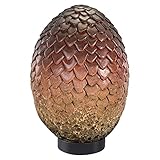
The Noble Collection Game of Thrones Drogon Egg (Red) | $59.00 | Buy on Amazon |
| 3 |

|
The Noble Collection Game of Thrones - Rhaegal Dragon Sculpt | $37.50 | Buy on Amazon |
Dragons as Instruments of Absolute Power
At their most basic level, dragons are unmatched weapons. A single dragon can burn cities, shatter armies, and end wars before they truly begin, which is why Aegon’s Conquest succeeded where countless invasions failed. In both series, the presence or absence of dragons immediately reshapes the political board, turning succession disputes into apocalyptic conflicts.
House of the Dragon makes this especially clear during the Dance of the Dragons, when both factions possess multiple dragons. Power is no longer about having a dragon, but about which dragon, how large it is, and how skilled its rider may be. The civil war becomes less about thrones and more about mutually assured destruction.
#1 Best Overall
- Officially authorized by HBO
- Amazingly detailed
- Hand painted
- Measures approx. 4.5 inches in height
Prophecy, Magic, and the Targaryen Identity
Dragons are inseparable from prophecy in the world of A Song of Ice and Fire. They are tied to ancient Valyrian blood magic, the Prince That Was Promised, and the belief that Targaryens are closer to gods than men. Daenerys emerging unburnt with three hatchlings is not just a miracle, but a narrative signal that magic has returned to the world.
This prophetic weight gives dragons a spiritual dimension that no army or crown can replicate. When dragons thrive, magic strengthens, seasons grow stranger, and fate seems to reassert itself. Their extinction and rebirth mark the rise and fall of entire eras.
Supremacy Through Fear and Loyalty
Dragons inspire loyalty among followers and terror among enemies, often at the same time. Lords bend the knee not because they love Targaryen rule, but because they understand the cost of defiance. Even centuries later, stories of dragonfire linger as political leverage.
Yet dragons also expose the fragility of Targaryen supremacy. They bond to individual riders, not the throne itself, and when those bonds fracture, so does the realm. Every dragon introduced across both series carries this tension, embodying both the peak of Targaryen dominance and the seeds of its undoing.
Free tools Windows power users keep installed
One-click scans. No signup required.
How This Ranking Works: Criteria, Canon, and Show Timeline Clarifications
Before diving into each individual dragon, it’s important to establish how this ranking and breakdown is structured. Dragons in Game of Thrones and House of the Dragon are not interchangeable monsters; they exist at different points in history, vary wildly in size and temperament, and serve very different narrative purposes. This section sets the ground rules so the list that follows is clear, consistent, and faithful to what the shows present on screen.
What “Ranking” Means in This Context
This is not a simple strongest-to-weakest power list. Instead, dragons are ranked through a combination of factors: physical size and age, combat effectiveness, bond with their rider, and overall narrative impact. A younger dragon with limited battle experience may rank lower than an older one, even if it plays a crucial emotional role in the story.
Narrative importance matters just as much as raw firepower. Some dragons reshape the fate of the realm through conquest or civil war, while others symbolize the rebirth of magic or the decline of Targaryen dominance. This ranking weighs both spectacle and story significance rather than treating dragons as interchangeable weapons.
Show Canon Only, With Lore-Informed Context
This article strictly follows television canon from Game of Thrones and House of the Dragon. Events, deaths, and dragon riders are based on what has appeared on screen, not on alternate versions from Fire & Blood or A Song of Ice and Fire where the shows diverge. When book lore is relevant for clarity, it is used only to enhance understanding, not override the shows’ established facts.
PC Slower Than It Used to Be?
A free scan shows the junk files, broken settings and background clutter dragging Windows down - then fixes them in one click.Free scan · Windows 10 & 11Outdated Drivers Are Slowing You Down
One free scan finds every outdated or missing driver and matches the right update for your exact hardware.Free scan · exact hardware matchThat distinction matters because House of the Dragon, in particular, occasionally streamlines or alters historical details for dramatic effect. This list reflects the dragons as audiences have met them, not hypothetical versions that exist only in text.
Timeline Order and Historical Overlap
The dragons span nearly two centuries of Westerosi history. House of the Dragon takes place roughly 170 years before the birth of Daenerys Targaryen, during the height of Targaryen power when dragons were numerous and growing larger with each generation. Game of Thrones depicts the long aftermath of their extinction, with only three dragons returning at the very end of that era.
Because of this gap, dragons from the two series never coexist, but they are still ranked together for comparison. Age, size, and battlefield legacy are always evaluated relative to their historical context, not as if they lived at the same time.
Why There Are Exactly 12 Dragons So Far
This list includes every named, clearly depicted dragon that has appeared across both series as of now. Hatchlings seen briefly, skulls shown as set dressing, or dragons referenced but never shown do not count toward this total. Each dragon included has a distinct identity, rider history, and narrative role that meaningfully impacts the story.
What’s actually slowing this PC down?
Pick the symptom - the matching free tool is one click away.
The goal is clarity, not completeness for its own sake. By focusing on these 12 dragons, the list provides a clean, manageable guide for viewers trying to keep track of names, allegiances, and legacies as dragon lore becomes increasingly complex.
The Living Legends: The Most Powerful and Influential Dragons Ranked
Ranking dragons across two different eras is never simple. House of the Dragon showcases fully grown weapons of mass destruction at the height of Targaryen power, while Game of Thrones presents younger dragons reshaping a broken world. This ranking weighs size, battle impact, rider influence, and on-screen legacy within each dragon’s historical context.
1. Vhagar
Vhagar stands as the single most fearsome dragon ever seen alive on television. Already ancient during House of the Dragon, she is vast enough to dwarf castles and powerful enough to decide wars almost singlehandedly. As the mount of Laena Velaryon and later Aemond Targaryen, Vhagar becomes the ultimate symbol of unchecked Targaryen might and the most destructive force of the Dance of the Dragons.
2. Drogon
Drogon is the physical embodiment of Daenerys Targaryen’s rise and fall. Larger and more aggressive than his siblings, he matures rapidly and becomes the dominant predator of Game of Thrones’ later seasons. His role in the destruction of King’s Landing cements him as the most consequential dragon of the modern era.
3. Meleys
Known as the Red Queen, Meleys is one of the fastest and most formidable dragons of House of the Dragon. Ridden by Rhaenys Targaryen, she combines immense size with combat experience and intelligence. Her presence alone alters political calculations, making her one of the deadliest assets on either side of the conflict.
4. Caraxes
Caraxes, the Blood Wyrm, is instantly recognizable by his lean, serpentine build and unsettling movements. Though not the largest dragon, his aggression and battle instincts make him exceptionally dangerous. As Prince Daemon Targaryen’s mount, Caraxes becomes a symbol of chaos, intimidation, and ruthless effectiveness.
5. Sunfyre
Sunfyre is widely regarded as the most beautiful dragon ever seen, with radiant gold scales and pink wing membranes. Ridden by King Aegon II, his significance lies not just in appearance but in what he represents politically. Sunfyre embodies the legitimacy Aegon claims, making the dragon’s fate deeply tied to the emotional core of the civil war.
6. Dreamfyre
One of the oldest dragons still alive during House of the Dragon, Dreamfyre carries the weight of Targaryen history. Though she sees limited direct combat on screen, her size and legacy place her among the great dragons of the era. As Helaena Targaryen’s mount, Dreamfyre reflects a gentler bond that contrasts sharply with the violence around her.
The Tool Desk
Outbyte PC Repair FREERepair Windows errors before they cause bigger problemsFix Now →Outbyte Driver Updater FREEFix the driver behind crashes, sound loss and screen glitchesFind Drivers →7. Syrax
Syrax is closely associated with Rhaenyra Targaryen and the promise of her rule. While well-fed and powerful, Syrax is less battle-hardened than her contemporaries. Her importance comes from symbolism and proximity to power rather than raw destruction.
8. Seasmoke
Seasmoke serves as the loyal and capable mount of Laenor Velaryon. Smaller than the great war dragons, he is still a seasoned and reliable presence. Seasmoke represents the naval strength of House Velaryon and the broader reach of dragon power beyond the Iron Throne.
9. Rhaegal
Rhaegal grows into a formidable dragon under Daenerys’ command, though he never matches Drogon’s dominance. His bond with Jon Snow briefly suggests a rebirth of ancient Targaryen destiny. His sudden death underscores how vulnerable even dragons remain in a changing world.
10. Viserion
Viserion’s legacy is defined by tragedy and transformation. Initially the gentlest of Daenerys’ dragons, his death beyond the Wall and resurrection by the Night King create one of the show’s most haunting images. As an undead weapon, Viserion reshapes the rules of dragon warfare entirely.
Do these 3 things before closing this tab:
1Fix the driver behind crashes, sound loss and screen glitches2Repair Windows errors before they cause bigger problems3Scan for outdated or missing drivers - takes under a minute11. Vermax
Vermax is young and still growing during House of the Dragon. Ridden by Jacaerys Velaryon, he represents the next generation of dragonriders rather than overwhelming force. His importance lies in future potential and political symbolism more than battlefield dominance.
12. Arrax
Arrax is the smallest and least experienced dragon on this list, but his impact is enormous. His fatal encounter with Vhagar marks the true beginning of open war in House of the Dragon. Arrax’s story proves that even the weakest dragon can change history in an instant.
The War Dragons: Riders, Battles, and the Dance of the Dragons
By the time dragons dominate the skies of Westeros, they are no longer symbols of divine rule. They are weapons of mass destruction, bound to human ambition and dynastic grudges. The War of the Five Kings and, centuries earlier, the Dance of the Dragons both reveal how fragile the balance becomes once dragonfire is unleashed in earnest.
Dragonriders and Shifting Allegiances
A dragon’s power is inseparable from its rider, and loyalty often matters as much as size. Rhaenyra’s Syrax, Daemon’s Caraxes, and Rhaenys’ Meleys represent calculated authority, speed, and experience, while Aemond’s bond with Vhagar turns personal grievance into geopolitical catastrophe. Even younger dragons like Vermax and Arrax are drawn into conflicts far larger than their riders are prepared to face.
Recommended Free Tools
In Game of Thrones, Daenerys Targaryen’s dragons reflect a more solitary kind of rule. Drogon, Rhaegal, and Viserion operate without rival dragonriders, giving Daenerys unmatched dominance. That imbalance makes their losses and betrayals feel even more devastating when the world catches up to dragon warfare.
The Battles That Redefined Dragon Warfare
House of the Dragon places dragons directly into military engagements, most notably at Rook’s Rest. The clash between Meleys, Sunfyre, and Vhagar shows how even the greatest dragons can be overwhelmed by numbers, planning, and ruthlessness. Victory is rarely clean, and survival often comes at a crippling cost.
Rank #2
- Authentic prop replica.
- Intricately detailed and hand painted.
- Stand included.
- Egg measures 8" in height.
Arrax’s death at Storm’s End marks a different kind of turning point. What begins as a diplomatic mission spirals into the first true bloodshed of the Dance, proving that dragons cannot be restrained once fear and fury take hold. From that moment on, escalation is inevitable.
The Dance of the Dragons and the Cost of Supremacy
The Dance is not just a civil war but an extinction event in slow motion. Dragons kill dragons, riders die with them, and the myth of Targaryen invincibility erodes in full view of the realm. Even powerful figures like Caraxes and Vhagar meet brutal ends, reinforcing that no dragon, no matter how legendary, is immune.
This era explains why dragons nearly vanish by the time Game of Thrones begins. Their unchecked use during the Dance accelerates their downfall, turning the greatest advantage House Targaryen ever possessed into its most tragic legacy.
From Civil War to Conquest
Daenerys’ dragons inherit that history, even if she does not fully understand it. Drogon’s dominance echoes Vhagar’s terror, while Rhaegal and Viserion’s fates reflect how vulnerable dragons become once the world adapts. When Viserion rises again as an undead weapon, the rules of war shift entirely, proving that dragons remain central to Westeros’ fate, even beyond death.
Across both series, these war dragons define eras, topple armies, and expose the limits of power. Their battles are spectacular, but their true impact lies in how they reshape the political and emotional landscape of Westeros every time they take to the sky.
The Tragic and Fallen: Dragons Lost Too Soon and What Their Deaths Changed
For all their mythic power, dragons in Game of Thrones and House of the Dragon are not immortal symbols. Their deaths arrive suddenly, often brutally, and each loss alters the balance of power in ways no army ever could. These fallen dragons do more than shock audiences; they redefine the limits of Targaryen dominance and accelerate the collapse of eras built on fire and fear.
Arrax: The Death That Started the Dance
Arrax’s death at Storm’s End is the most pivotal dragon loss in House of the Dragon. Ridden by Lucerys Velaryon, Arrax is young, undersized, and utterly outmatched by Vhagar, turning a political confrontation into a catastrophe. His destruction marks the first dragon-on-dragon kill of the Dance and shatters any illusion that the conflict could remain contained.
Narratively, Arrax’s death transforms the civil war from maneuvering to massacre. It hardens Rhaenyra’s resolve, unleashes cycles of revenge, and proves that dragons, once loosed, cannot be controlled by crowns or councils. The war becomes inevitable because a dragon has died.
Meleys: The Fall of the Red Queen
Meleys, ridden by Princess Rhaenys Targaryen, enters the Battle of Rook’s Rest as one of the most formidable dragons alive. Known as the Red Queen, Meleys nearly turns the tide against both Sunfyre and Vhagar, showcasing what experience and size can still accomplish. Her death only comes through ambush and overwhelming force.
The loss of Meleys signals a grim truth of the Dance. Even the strongest dragons can be sacrificed through strategy rather than strength. Rhaenys’ death alongside Meleys strips Rhaenyra of one of her most capable allies and demonstrates how quickly the war consumes its most seasoned players.
Caraxes and Vhagar: Mutual Destruction at the Gods Eye
Caraxes and Vhagar represent two ends of Targaryen dragon history. Caraxes is lean, battle-hardened, and fiercely bonded to Daemon Targaryen, while Vhagar is ancient, colossal, and the last living weapon of Aegon’s Conquest. Their final clash above the Gods Eye is less a battle than an extinction-level event.
Both dragons perish in the fight, taking their riders with them. Vhagar’s death ends an era, eliminating the most powerful dragon Westeros has ever known. Caraxes’ fall, meanwhile, extinguishes one of the Blacks’ greatest assets, reinforcing that victory in the Dance comes only through mutual annihilation.
Rhaegal: Proof That Dragons Can Be Hunted
Rhaegal’s death in Game of Thrones is abrupt, shocking, and deliberately unceremonious. Struck down by scorpion bolts from Euron Greyjoy’s fleet, he never sees his killer coming. For the first time since the dragons returned, they are no longer untouchable.
This moment changes how warfare functions in Westeros. Dragons are no longer absolute superiority weapons but targets that can be planned for and destroyed. Rhaegal’s death signals the end of Daenerys’ illusion of invincibility and accelerates her descent into desperation.
Viserion: Death, Resurrection, and a New Kind of Horror
Viserion’s death beyond the Wall is one of the most consequential moments in the entire saga. Killed by the Night King’s ice spear, he becomes the first dragon ever lost to the supernatural forces of the North. His resurrection as an undead weapon fundamentally alters the stakes of the war against the dead.
As an ice dragon, Viserion shatters the Wall itself, an act no living dragon ever accomplished. His transformation proves that dragons are not just tools of Targaryen power but adaptable forces that can be corrupted and repurposed. Death does not remove dragons from the story; it makes them even more dangerous.
Why These Losses Matter More Than Victories
Each fallen dragon leaves behind more than ash and grief. Their deaths expose weaknesses, shift political momentum, and permanently alter how power is perceived in Westeros. By the time only Drogon remains, dragons are no longer a dynasty but a fading miracle.
Taken together, these losses explain why dragons disappear from history despite their unmatched might. They are too powerful to coexist with restraint and too vulnerable to survive constant war. In both series, the fallen dragons serve as warnings, not legends, etched into the bones of the realm.
The Wild and Unclaimed: Dragons Without Riders and the Threat They Represented
Not every dragon in Westerosi history answered to a Targaryen saddle. Some rejected human control entirely, becoming living symbols of chaos that even dragonlords feared. These wild dragons complicate the fantasy of absolute dominion, proving that dragons are not weapons to be sheathed at will but forces that can slip beyond command.
In both series, unclaimed dragons represent the point where Targaryen power begins to fracture. They are reminders that blood alone does not guarantee mastery, and that a dragon without a rider is often more dangerous than one bound to a cause.
The Cannibal: The Old Terror of Dragonstone
The Cannibal is the most feared wild dragon in House of the Dragon, a massive, ancient beast who preys on other dragons and their eggs. Unlike his kin, he never allowed a rider and actively hunted Targaryen hatchlings, making him an existential threat to the dynasty itself. His presence near Dragonstone turns the birthplace of dragons into a haunted territory.
What makes the Cannibal especially unsettling is his age. He may predate the Targaryens entirely, suggesting dragons are not solely their creation or inheritance. In narrative terms, he embodies the idea that dragons existed before Valyria and will endure long after its heirs fall.
Sheepstealer: The Dragon Who Almost Chose a Side
Sheepstealer earns his name through survival, feeding on livestock rather than people and avoiding direct confrontation. During the Dance of the Dragons, he becomes the focus of desperate attempts to recruit wild dragons into the war. His eventual bond with the dragonseed Nettles proves that even the untamed can be reached, but never fully controlled.
Unlike other dragons, Sheepstealer’s story ends not in death but disappearance. Rider and dragon vanish into legend, reinforcing the idea that some dragons simply refuse to be written into history’s neat conclusions. Their freedom is their power.
Grey Ghost: The Dragon Who Wanted to Be Left Alone
Grey Ghost is the quietest and most elusive of the wild dragons. Pale, reclusive, and rarely seen, he avoids humans and other dragons alike, feeding on fish along the coast. His isolation does not save him, however, as he is eventually killed by Sunfyre during the Dance.
Grey Ghost’s death underscores a brutal truth of dragon warfare. Even dragons that take no side are pulled into conflict and destroyed by it. Neutrality offers no protection when monsters are unleashed.
The Tool Desk
Outbyte PC Repair FREERepair Windows errors before they cause bigger problemsFix Now →Outbyte Driver Updater FREEFix the driver behind crashes, sound loss and screen glitchesFind Drivers →Why Unclaimed Dragons Frightened Kings More Than Enemies
Wild dragons expose the limits of Targaryen supremacy. They cannot be commanded, predicted, or reliably weaponized, making them liabilities in a world obsessed with control. Their existence forces rulers to confront the possibility that dragons answer to instinct, not lineage.
Narratively, these creatures deepen the tragedy of both series. Dragons are not lost because the world stops believing in them but because no one can truly own them. The wild dragons stand as the final proof that fire cannot be ruled forever.
Independent reader supportYour contribution helps us test, update, and keep practical guides available for everyone.Every Dragon Explained: Full A–Z Breakdown of All 12 Dragons So Far
With the wild dragons setting the limits of Targaryen control, the full roster across Game of Thrones and House of the Dragon comes into focus. From war-forged legends to reclusive survivors, each dragon carries a distinct identity shaped by rider, temperament, and fate. Listed alphabetically, this breakdown clarifies who’s who in Westeros’ increasingly crowded skies.
Caraxes
Caraxes, known as the Blood Wyrm, is Prince Daemon Targaryen’s fearsome mount. Long-necked, scarred, and unusually vocal, he reflects Daemon’s volatile nature and thrives in battle. His role in the Dance of the Dragons culminates in one of the most catastrophic dragon duels in Targaryen history.
Do these 3 things before closing this tab:
1Clear out junk files and repair common Windows errors2Fix the driver behind crashes, sound loss and screen glitches3Repair Windows errors before they cause bigger problemsRank #3
- Officially authorized by HBO
- Amazingly detailed
- Hand Painted
- Measures approx. 4.5 inches in height.
Dreamfyre
Dreamfyre is one of the oldest living dragons during House of the Dragon, bonded to Queen Helaena Targaryen. Elegant but immense, she spends most of the war confined, her power more symbolic than tactical. Her later destruction foreshadows the eventual extinction of dragons themselves.
Drogon
Drogon is Daenerys Targaryen’s personal dragon and the largest to appear in Game of Thrones. Black-scaled and fiercely independent, he is the embodiment of Daenerys’ fire and fury. By the series’ end, Drogon becomes the last known living dragon, carrying both loss and legacy into the unknown.
Grey Ghost
Grey Ghost is a pale, reclusive wild dragon who avoids human contact entirely. Feeding on fish and haunting the coasts, he represents a dragon uninterested in war or dominion. His death at Sunfyre’s claws proves that even isolation cannot escape the Dance’s devastation.
Meleys
Meleys, the Red Queen, is ridden by Princess Rhaenys Targaryen. Swift, battle-hardened, and massive, she is among the most dangerous dragons alive during the Dance. Her death is a turning point, signaling that no dragon, however experienced, is invincible.
What’s actually slowing this PC down?
Pick the symptom - the matching free tool is one click away.
Rhaegal
Rhaegal, named after Rhaegar Targaryen, is one of Daenerys’ three dragons. Green and bronze, he never shares Drogon’s bond with their mother and struggles with captivity. His sudden death underscores how fragile dragons become once the world learns how to kill them.
Seasmoke
Seasmoke is originally bonded to Laenor Velaryon, making him a symbol of Valyrian blood beyond House Targaryen. Sleek and silver-grey, he later accepts a new rider during the Dance, challenging rigid ideas of lineage. His story expands who is allowed into dragonlord history.
Sheepstealer
Sheepstealer survives by preying on livestock and avoiding humans, earning both fear and myth. His bond with Nettles proves that dragonriding is not exclusively noble or inherited. When they vanish together, Sheepstealer becomes a living refusal of recorded history.
Sunfyre
Sunfyre is King Aegon II’s dragon, renowned for his golden beauty. Despite severe injuries, he continues to fight, driven by brutal resilience rather than grace. His arc mirrors the cruelty of the Dance itself, where survival often replaces honor.
Recommended Free Tools
Syrax
Syrax is Queen Rhaenyra Targaryen’s dragon and one of the most familiar in House of the Dragon. Well-fed and closely guarded, she embodies royal privilege more than warfare. Her fate reflects the cost of keeping dragons chained to politics rather than nature.
Vhagar
Vhagar is a living relic of Valyria and the largest dragon in House of the Dragon. Ridden by multiple dragonlords, she becomes a weapon of overwhelming destruction under Aemond Targaryen. Her presence turns battles into massacres and reshapes the balance of power.
Viserion
Viserion, pale and gold, is the gentlest of Daenerys’ dragons. His death and resurrection by the Night King transform him into a weapon against the living. More than any other dragon, Viserion proves that fire can be corrupted, not just extinguished.
Dragon Lore Connections: Parallels Between Game of Thrones and House of the Dragon
Although separated by nearly two centuries, Game of Thrones and House of the Dragon are in constant conversation through their dragons. The newer series reframes creatures viewers once saw as mythic miracles into political instruments with long, bloody histories. Every dragon Daenerys hatches carries the shadow of what was lost during the Dance of the Dragons.
Quick wins for a faster PC:
Clear out junk files and repair common Windows errorsFree Scan →Fix the driver behind crashes, sound loss and screen glitchesFind Drivers →Repair Windows errors before they cause bigger problemsFix Now →Dragons as Power, Not Symbols
House of the Dragon establishes dragons as strategic assets rather than mystical wonders. Vhagar, Caraxes, and Sunfyre are deployed like weapons of mass destruction, changing the outcome of wars through sheer presence. By the time of Game of Thrones, that understanding is gone, which makes Daenerys’ early victories feel miraculous rather than inevitable.
This contrast explains why Westeros initially underestimates Daenerys. The realm remembers dragons as extinct legends, not living forces shaped by tactics and riders. House of the Dragon shows exactly why that institutional memory once inspired absolute fear.
The Fragility of the Dragon-Rider Bond
Both series dismantle the idea that dragonriding is a permanent or invincible bond. Laenor’s death, Nettles’ unconventional partnership with Sheepstealer, and Aemond’s violent claiming of Vhagar all show how unstable these relationships can be. Game of Thrones echoes this instability when Rhaegal and Viserion are lost, proving that even Daenerys cannot fully protect what she commands.
Rather than destiny, the bond is shown as conditional, shaped by trust, proximity, and circumstance. This thematic throughline reinforces George R.R. Martin’s skepticism of inherited power. Dragons may choose riders, but they can just as easily abandon or destroy them.
Outdated Drivers Are Slowing You Down
One free scan finds every outdated or missing driver and matches the right update for your exact hardware.Free scan · exact hardware matchPC Slower Than It Used to Be?
A free scan shows the junk files, broken settings and background clutter dragging Windows down - then fixes them in one click.Free scan · Windows 10 & 11Extinction Through Human Conflict
House of the Dragon answers one of Game of Thrones’ biggest lingering questions: how dragons vanished. The Dance does not end with heroic sacrifice but with systematic self-destruction. Dragons kill other dragons, are killed by mobs, or waste away when their world no longer supports them.
By contrast, Daenerys’ dragons represent a fragile rebirth rather than a restoration. Their deaths feel abrupt because the audience has already seen how easily dragons can be erased once humans turn against them. The tragedy is not that dragons die, but that history keeps repeating the same mistake.
Myth Becoming Memory
Game of Thrones presents dragons as creatures half-forgotten, wrapped in prophecy and exaggeration. House of the Dragon strips that mythmaking away, showing the daily realities of feeding, housing, and controlling beings that never should have been domesticated. Together, the shows illustrate how history hardens into legend.
By the time Tyrion speaks of dragons in dusty books, viewers now understand how much context has been lost. House of the Dragon does not contradict Game of Thrones; it completes it, turning myth back into memory, and memory into warning.
What Comes Next: Future Dragons, Lore Teases, and Canon Limits
With twelve dragons now firmly established across Game of Thrones and House of the Dragon, the franchise stands at an inflection point. The age of dragons has been fully mapped on screen, but not fully exhausted. What remains are the margins of history, where lore, prophecy, and canon constraints quietly shape what can and cannot appear next.
The Dragons Still Waiting in the Wings
House of the Dragon has not yet exhausted the roster laid out in Fire & Blood. Dragons like Sheepstealer, the Cannibal, and Grey Ghost loom large as narrative wild cards, creatures defined more by rumor and fear than by clear allegiance. Their presence would deepen the show’s exploration of dragons as uncontrollable forces rather than obedient weapons.
There is also Morning, the last dragon born during the Dance, whose existence reframes the extinction narrative. Morning’s survival does not contradict the fall of dragons but complicates it, suggesting decline rather than instant annihilation. If introduced, she would serve as a quiet epilogue to an era already collapsing under its own weight.
Eggs, Prophecy, and the Illusion of Continuity
Dragon eggs remain one of the most potent connective threads between both series. House of the Dragon repeatedly emphasizes how many eggs exist, where they are stored, and how casually they are moved or gifted. This careful accounting retroactively strengthens Daenerys’ story, turning her three eggs into survivors of a long, careless diaspora.
Free tools Windows power users keep installed
One-click scans. No signup required.
Yet prophecy continues to mislead. Targaryens believe dragons guarantee their future, just as viewers once assumed Daenerys’ dragons would restore the old world. Both shows reject that assumption. Eggs can hatch, but they cannot fix what history has already broken.
Canon Boundaries and the End of Expansion
There are firm limits to what future series can introduce without breaking canon. By the time of Game of Thrones, dragons are functionally extinct, with no hidden populations waiting to be revealed. Any new dragon story must therefore move backward in time or stay tightly confined to known historical gaps.
George R.R. Martin’s source material reinforces this boundary. Fire & Blood and A Song of Ice and Fire are not power fantasies but cautionary histories. Dragons do not return endlessly; they vanish when people prove incapable of living alongside them.
Why the Dragon Count Matters
Accounting for all twelve dragons is not a trivia exercise, but a thematic one. Each dragon reflects a specific moment in Westeros’ relationship with power, control, and consequence. From Balerion’s world-shaping terror to Drogon’s lonely flight into the unknown, their stories chart the rise and fall of absolute force.
As the franchise continues to expand, dragons will remain central, but never limitless. Their scarcity is the point. In a world obsessed with inheritance and domination, the dragons remind us that even the most fearsome weapons cannot survive human ambition forever.
In the end, the true legacy of these twelve dragons is not how many battles they won, but how clearly they expose the cost of believing power can ever be permanent.
Quick Recap
Product prices and availability are accurate as of the date/time indicated and are subject to change. Any price and availability information displayed on Amazon at the time of purchase will apply.




