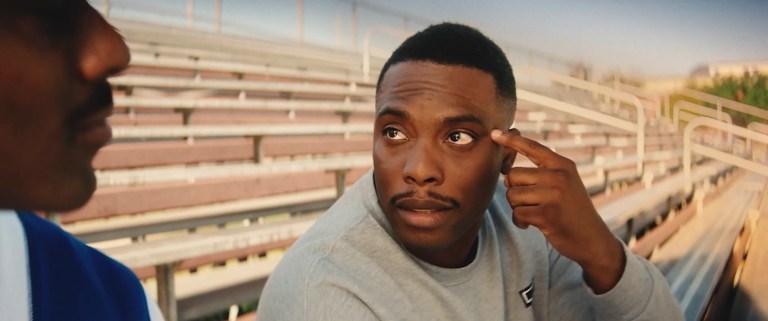
Jason Momoa’s recent comments about A Minecraft Movie 2 may have been brief, but in franchise terms, they were anything but small. When a leading star publicly acknowledges not just interest but an active production window, it signals a shift from speculative sequel chatter to something closer to studio reality. For a project tied to one of the most valuable gaming IPs on the planet, that distinction matters.
Momoa’s remarks suggest that Warner Bros. and Mojang aren’t waiting to see how the first film performs before laying the groundwork for what comes next. By hinting that production could begin sooner rather than later, he effectively confirms that the studio views Minecraft not as a one-off experiment, but as a long-term cinematic property. In an era where studios are increasingly cautious with big-budget adaptations, that kind of confidence is telling.
What It Signals About Studio Confidence
Actors rarely speak this openly about sequel timelines unless conversations are already happening behind the scenes. Momoa’s willingness to discuss when production might start implies that key creative and logistical pieces are already being explored, from scheduling to story direction. For fans, it’s a reassuring sign that the franchise has momentum rather than uncertainty.
Just as importantly, his comments help set expectations for the sequel’s timeline. Even without a formal greenlight announcement, acknowledging a potential production window reframes A Minecraft Movie 2 as a “when,” not an “if.” That clarity keeps audience interest high and positions the Minecraft movie universe as a growing player in the blockbuster landscape rather than a single roll of the dice.
#1 Best Overall
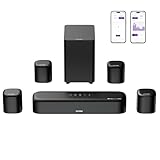
- 7.1ch Dolby Atmos Surround Sound System for TV: This 7.1ch sound bar features 3 main channels for crisp dialogue and 4 surround speakers. Power the rear right surround speaker to pair it wirelessly with sound bar. The setup delivers an immersive surround sound audio experience, making you feel fully engaged in the action. Note: Recommended for space of 108 to 270 ft².
- 4 Surround Speakers for Home Theater Sound System: The Aura A60 Pro soundbar for tv comes with 2 wired front surround speakers and 2 wired rear surround speakers, positioned to create a wide, room-filling soundstage. The rear speakers connect wirelessly with the soundbar, minimizing cable clutter and optimizing space efficiency.
- Dolby Atmos Delivers an Immersive 3D Soundscape: This 7.1ch dolby atmos soundbar enhances your listening experience with multidimensional audio that surrounds you from every direction, upgrading your home theater with powerful, dynamic sound that brings each scene to life.
- 5.25-inch Wired Subwoofer with BassMX Technology: The Aura A60 Pro sound bar comes with a 5.25" wired subwoofer powered by BassMX technology to boost low-frequency performance. An optimized magnetic structure and diaphragm produce deep, powerful bass. Enjoy enhanced low-end sound and experience the impact of every beat.
- Precision Audio Tuning Redefined: Customize your audio experience with the Ultimea App, designed for precise sound control. It provides 121 professionally tuned EQ presets across styles such as Bass, Pop, Classical, and Rock, along with 10-band control and 6 tailored EQ modes including Movie, Music, Voice, Sport, Game, and Night. Using the advanced “Customize” option, you can adjust audio details to suit your personal taste, ensuring every sound is tuned exactly how you prefer.
What Jason Momoa Actually Said: Breaking Down the Production Timeline Reveal
Jason Momoa’s comments didn’t come as a formal announcement, but they were far more concrete than typical sequel teases. While promoting other projects, the actor acknowledged that discussions around A Minecraft Movie 2 are already active and suggested that production could begin surprisingly soon. His phrasing made it clear this wasn’t a distant, hypothetical follow-up, but something being mapped out in real time.
Rather than tying the sequel’s fate solely to box office performance, Momoa framed the timeline as part of an ongoing plan. That distinction is key, especially for a franchise built on one of the most recognizable brands in global entertainment. Studios rarely let actors speak that openly unless internal expectations are already aligned.
Reading Between the Lines of Momoa’s Timeline Hint
Momoa indicated that, if everything lines up, cameras could roll as early as the next production cycle. He stopped short of naming a specific start date, but the implication was clear: the sequel isn’t waiting years in the wings. For a visual-effects-heavy project like Minecraft, that suggests early development work may already be underway.
The casual confidence of his comments also matters. Actors are typically cautious about sequel talk, especially before a first film has fully launched. Momoa speaking freely about timing implies a level of certainty that goes beyond hopeful speculation.
Recommended Free Tools
What This Means for the Cast and Creative Team
From a logistical standpoint, an early production window benefits returning cast members. Locking in schedules sooner reduces the risk of conflicts, particularly for a star like Momoa, whose calendar is consistently packed with franchise commitments. It also allows Warner Bros. to maintain creative continuity, a major factor in building a sustainable cinematic universe.
For the filmmakers, it signals trust from the studio. Starting sequel prep early means confidence in the tone, visual language, and audience appeal of the first movie. That kind of backing is rarely extended unless the studio believes it has a franchise-level hit on its hands.
Why This Timeline Makes Sense for Minecraft as a Brand
Minecraft isn’t a trend-driven property; it’s a platform with long-term staying power. By moving quickly toward a sequel, Warner Bros. and Mojang can capitalize on sustained audience engagement rather than treating the film as a standalone experiment. Momoa’s comments reflect an understanding that momentum matters just as much as box office totals.
If production does begin within the window he suggested, A Minecraft Movie 2 would land squarely in the modern blockbuster playbook: fast follow-ups, consistent releases, and a clear commitment to franchise growth. For fans, that’s not just encouraging news, it’s a sign that the Minecraft movie universe is being built to last.
How a Potential Start Date Fits Into Warner Bros.’ Broader Minecraft Strategy
From a studio perspective, Momoa’s comments line up neatly with how Warner Bros. has been approaching major IP management in recent years. Rather than waiting to see how a film performs before even considering a sequel, the studio has increasingly favored parallel development, keeping creative momentum alive while audience interest is still peaking. A quicker transition into production suggests Minecraft is being treated as a long-term pillar, not a one-off experiment.
That approach is especially important for a property with Minecraft’s global footprint. The game has remained culturally relevant for over a decade, and Warner Bros. appears intent on mirroring that durability on the big screen. Starting sequel prep early helps ensure the films arrive as part of a consistent cadence, rather than years apart, which can dilute brand enthusiasm.
Timing the Franchise, Not Just the Film
A potential early start date also gives Warner Bros. flexibility in shaping the release calendar. With DC projects, MonsterVerse entries, and other tentpoles competing for premium windows, knowing when Minecraft 2 could realistically be ready allows the studio to plan strategically rather than reactively. That kind of foresight is crucial for a VFX-heavy franchise that requires long post-production runways.
Rank #2

- Simplified 5.1ch Dolby Atmos Setup: Enjoy immersive 4D sound with real Dolby Atmos and 5.1-channel audio. Five built-in speakers, including two side-firing drivers, create wide surround without rear speakers. Precision DSP ensures <0.5 ms latency for smooth, theater-like sound. Setup takes less than 1 minute.
- Voice Clarity Enhancement: VoiceMX technology uses advanced DSP algorithms to isolate and enhance vocal frequencies in real time. Dialogue remains crisp and easy to follow by separating speech from background effects and music, even at low volumes or during intense scenes.
- 300W Output with 6-Driver System: Featuring five precision-tuned full-range drivers and a dedicated wired wooden subwoofer, the system delivers up to 300W of peak power for bold, room-filling sound. With a frequency response of 45 Hz–18 kHz and a maximum SPL of 99 dB, it reproduces everything from subtle nuances to explosive cinematic effects.
- 18 mm High-Excursion Driver: Powered by BassMX technology, the wired wooden subwoofer features a 18 mm high-excursion driver, a 5.3L tuned cabinet, and a high-density magnetic circuit. This design delivers deeper, tighter bass with greater air displacement and enhanced low-frequency performance—bringing more realism to every scene.
- HDMI eARC for True Dolby Atmos: HDMI eARC supports up to 37 Mbps of bandwidth, unlocking the full potential of lossless Dolby Atmos 5.1-channel audio. Compared to standard ARC, eARC delivers richer surround effects and greater detail. CEC integration allows the TV and soundbar to work together with unified control.
It also positions Minecraft as a reliable family-friendly counterbalance within the studio’s slate. While some franchises skew older or darker, Minecraft occupies a four-quadrant space that plays well across international markets. Keeping that pipeline active strengthens Warner Bros.’ overall portfolio.
Free tools Windows power users keep installed
One-click scans. No signup required.
Beyond the Box Office: A Platform Play
An early production timeline isn’t just about theatrical returns. Minecraft is uniquely suited for cross-platform synergy, from merchandising and gaming tie-ins to potential streaming extensions. Advancing the sequel sooner gives Warner Bros. and Mojang more room to coordinate those efforts, aligning film releases with in-game events or broader brand initiatives.
In that context, Momoa’s remarks feel less like casual sequel chatter and more like a glimpse into a larger plan. If A Minecraft Movie is the foundation, Warner Bros. appears ready to start building upward almost immediately, treating the franchise as an evolving ecosystem rather than a single cinematic bet.
Is ‘A Minecraft Movie 2’ Officially Happening? What Greenlight Signals Look Like
At this stage, A Minecraft Movie 2 has not been formally announced by Warner Bros., but the signs point toward a sequel being more likely than not. Jason Momoa openly discussing potential production timing is itself a meaningful indicator, as studios typically discourage cast from speculating publicly unless conversations are already happening behind the scenes. In franchise filmmaking, silence usually means uncertainty, while measured openness suggests momentum.
What Momoa’s comments imply is not that cameras are about to roll tomorrow, but that the sequel is already being treated as a viable next step rather than a hypothetical idea. That distinction matters. Studios rarely wait for opening-weekend box office results to begin internal sequel planning, especially with IP as massive and pre-sold as Minecraft.
What a “Soft Greenlight” Looks Like in Hollywood
Before a sequel is officially announced, there is often a soft greenlight phase where development quietly begins. This can include early script drafts, availability checks with key cast, preliminary VFX planning, and internal scheduling discussions. Momoa referencing a production window strongly suggests Minecraft 2 is operating within this phase.
For Warner Bros., this approach minimizes downtime if the first film performs as expected. Instead of scrambling to assemble the creative team post-release, the studio can transition smoothly into pre-production. That efficiency is especially valuable for effects-driven films that require years of planning before release.
Cast Confidence Is a Telltale Sign
Actors of Momoa’s stature are typically looped in early when a studio is serious about continuing a franchise. His confidence in discussing timing implies that contracts, or at least option clauses, are already in place. That kind of foresight aligns with tentpole planning rather than one-off experimentation.
It also suggests the studio expects continuity, not just in story but in star power. Keeping the same core cast helps establish Minecraft as a recognizable cinematic universe, which is essential when targeting younger audiences and families who respond strongly to familiarity.
The Tool Desk
Outbyte PC Repair FREERepair Windows errors before they cause bigger problemsFix Now →Outbyte Driver Updater FREEScan for outdated or missing drivers - takes under a minuteDriver Scan →Box Office Still Matters, but Expectations Are Clear
While final greenlights often hinge on performance metrics, Minecraft enters theaters with unusually strong built-in advantages. The brand recognition is global, multi-generational, and deeply embedded in pop culture. For Warner Bros., the threshold for success may be less about record-breaking numbers and more about sustainable franchise potential.
In that context, Momoa’s comments feel calibrated rather than speculative. They reflect a studio that already sees Minecraft as a long-term play and is preparing accordingly. An official announcement may still be months away, but the groundwork suggests A Minecraft Movie 2 is less a question of if and more a matter of when.
Rank #3

- Your purchase includes: 1 AV receiver, 5 speakers, 1 Sub-Woofer and Speaker wire.Waterproof : No
- Dimensions: AV Receiver – 17” W x 6” H x 12” D | Four Speakers (each) – 4” W x 6” H x 4” D | Center speaker – 10” W x 4” H x 4” D | Subwoofer – 11” W x 11” H x 13” D
- Technical specs: HDMI – 4 | Standby Power Consumption – ≤ 0.2 W | Frequency Response – 28Hz/25kHz
- Bluetooth for streaming all your favorite music and podcasts. No wireless functionality
- Easy setup with Yamaha YPAO room optimization and flexible speaker placement options, including virtual cinema front
Cast, Characters, and Creative Team: Who Could Return for the Sequel
If A Minecraft Movie 2 moves forward on the timeline Jason Momoa has hinted at, the expectation is clear: continuity will be a priority. Warner Bros. appears intent on treating Minecraft as an ongoing franchise rather than a standalone experiment, and that starts with keeping the faces audiences already associate with the world.
Jason Momoa’s Role in the Franchise’s Future
Momoa’s early confidence suggests his involvement is not just likely but foundational. As the film’s marquee star, his character is positioned to anchor the sequel, offering a familiar entry point for returning viewers while giving the creative team room to expand the story. His schedule awareness implies that any sequel plans are already being built around his availability.
From a franchise perspective, retaining Momoa sends a strong signal of stability. It reassures audiences that Minecraft’s cinematic identity will remain consistent, which is especially important for younger fans who gravitate toward recognizable heroes.
Returning Faces and Potential New Players
While Warner Bros. has not confirmed additional cast returns, industry precedent suggests the core ensemble would be prioritized. Sequels that maintain tonal continuity often lean heavily on existing character dynamics, refining them rather than rebooting the emotional framework. That approach would align well with Minecraft’s emphasis on collaboration and shared adventure.
At the same time, the sequel format naturally opens the door to new characters. Expanding the Minecraft universe on screen could introduce fresh personalities, possibly inspired by the game’s expansive biomes, mobs, and player-created archetypes, giving the story new energy without sacrificing familiarity.
The Creative Team Likely to Stay Intact
Behind the camera, continuity may be just as important. Effects-driven franchises benefit from creative teams who already understand the technical language and visual rules of the world they’ve built. If pre-production truly begins soon, retaining key directors, writers, and VFX supervisors would allow the sequel to move faster and more efficiently.
Do these 3 things before closing this tab:
1Scan for outdated or missing drivers - takes under a minute2Repair Windows errors before they cause bigger problems3Fix the driver behind crashes, sound loss and screen glitchesThis is where Momoa’s comments carry extra weight. Early scheduling only works if the studio has confidence in its creative foundation. Keeping the same leadership ensures that A Minecraft Movie 2 can evolve organically, building on established tone and world-building rather than starting from scratch.
What This Means for the Sequel’s Timeline
The likelihood of returning cast and creatives strengthens the case for a relatively streamlined production schedule. With relationships already in place, development hurdles are reduced, allowing the sequel to progress more smoothly from script to shoot.
For fans, that translates into a reassuring message. The people shaping Minecraft’s cinematic future appear ready to commit, and that level of continuity suggests Warner Bros. is aiming for a sequel that feels like a true next chapter, not a course correction.
What Early Production Timing Suggests About the Sequel’s Story and Scale
Jason Momoa’s indication that A Minecraft Movie 2 could move into production sooner rather than later sends a clear signal about studio confidence. Early momentum typically means the creative roadmap is already mapped out, with story beats and character arcs defined well ahead of cameras rolling. For a world as flexible and massive as Minecraft, that kind of readiness is especially telling.
What’s actually slowing this PC down?
Pick the symptom - the matching free tool is one click away.
Rather than scrambling to justify a follow-up, the sequel appears positioned as a planned expansion. That suggests the first film was designed with longevity in mind, allowing the sequel to build forward instead of resetting the board.
Rank #4

- An all-in-one home theater package - The YHT-4970U comes with a Dolby Atmos AV Receiver (Yamaha RX300A), a 5.1 speaker package (two front channel speakers, a center channel speaker, two surround channel speakers, and a powered subwoofer), plus a subwoofer cable and speaker wire all in one box.
- Step into lifelike sonic worlds - Dolby Atmos and DTS Virtual:X for deeply dimensional, lifelike sound that draws you into every moment of your favorite entertainment, plus crystal-clear dialogue so you can hear every word.
- Stunning visual realism - Supports ultra-high definition 4K/120 and 8K/60 video, high-performance HDMI switching, advanced Dolby Vision and HDR10+ dynamic range technologies, HDMI eARC/ARC and next-gen gaming features like ALLM and VRR.
- Room Correction - Experience perfect sound in any room. An included setup microphone measures your room’s acoustics and speaker characteristics, allowing the receiver to automatically optimize sound performance.
- Easy streaming with Bluetooth Multipoint - Stream all your favorite music, podcasts and audiobooks wirelessly. Built-in Bluetooth Multipoint lets you pair two source devices and instantly switch between them.
A Bigger World, Not a Restart
Accelerated production often points to a sequel that expands its scope rather than reinventing its premise. In Minecraft terms, that could mean exploring more biomes, deeper lore, and larger-scale threats that weren’t feasible in an introductory chapter. The franchise’s sandbox nature lends itself naturally to escalation, making a broader narrative feel earned rather than forced.
From an industry perspective, studios only greenlight this kind of growth when they believe the audience is ready to go bigger. If Warner Bros. is comfortable moving quickly, it implies confidence that viewers connected with the world and want to see more of it.
Storytelling That Assumes Familiarity
Early production timing also hints that the sequel won’t spend much time reintroducing the basics. Much like successful franchise follow-ups, A Minecraft Movie 2 can assume a level of audience familiarity and jump straight into new challenges and character dynamics. That frees up screen time for more ambitious storytelling.
PC Slower Than It Used to Be?
A free scan shows the junk files, broken settings and background clutter dragging Windows down - then fixes them in one click.Free scan · Windows 10 & 11Outdated Drivers Are Slowing You Down
One free scan finds every outdated or missing driver and matches the right update for your exact hardware.Free scan · exact hardware matchFor fans of the game, this is an encouraging sign. Minecraft thrives on progression and discovery, and a sequel that hits the ground running mirrors the experience of players who’ve already mastered the fundamentals and are ready for the next level.
Technical Confidence and Visual Ambition
Moving quickly into production is often easier when the technical pipeline is already proven. Visual effects-heavy films benefit enormously from established tools, assets, and workflows, and Minecraft’s block-based aesthetic requires careful planning to balance fidelity with cinematic spectacle. Early scheduling suggests those systems are already in place.
That foundation allows the sequel to push further visually without ballooning development time. If Momoa’s comments are any indication, A Minecraft Movie 2 isn’t just moving faster—it’s doing so because the creative and technical groundwork has already been laid.
Independent reader supportYour contribution helps us test, update, and keep practical guides available for everyone.How Fan Response and Box Office Performance Are Shaping the Sequel’s Momentum
If production timing reflects internal confidence, fan response and box office performance are the external forces accelerating that confidence into action. In the case of A Minecraft Movie, both appear to be aligning in a way studios rarely ignore. Jason Momoa’s comments about an early production start land differently when viewed through that lens.
Quick wins for a faster PC:
Scan for outdated or missing drivers - takes under a minuteDriver Scan →Clear out junk files and repair common Windows errorsFree Scan →Audience Buy-In Matters More Than Opening Weekend
While box office numbers remain a crucial metric, modern franchise planning places just as much weight on audience reception. Social media engagement, repeat viewings, and fan-driven conversation all factor into whether a sequel gets fast-tracked or quietly shelved. Early reactions suggest that audiences didn’t just show up out of curiosity—they connected with the world.
For Warner Bros., that kind of sustained interest signals long-term franchise potential. It’s the difference between a one-off adaptation and a cinematic universe with room to grow.
Box Office Performance as a Greenlight, Not a Gamble
Strong theatrical performance doesn’t just justify a sequel; it reshapes the risk calculation. When a film performs solidly, studios are more willing to commit resources earlier, lock in cast availability, and reserve release windows years in advance. Momoa hinting at a near-term production window suggests those conversations are already happening.
This also benefits the cast and creative team. Momentum keeps schedules aligned, budgets intact, and creative vision cohesive, rather than forcing a sequel to restart after years of uncertainty.
PC Slower Than It Used to Be?
A free scan shows the junk files, broken settings and background clutter dragging Windows down - then fixes them in one click.Free scan · Windows 10 & 11Outdated Drivers Are Slowing You Down
One free scan finds every outdated or missing driver and matches the right update for your exact hardware.Free scan · exact hardware matchBest Value

- 5.1.2ch Surround Sound System: A 5.1.2-channel system featuring up-firing speakers, surround sound, and a powerful subwoofer creates lifelike, multidimensional audio. Feel the Sky Around You—raindrops falling from above, helicopters circling overhead, thunder rumbling in all directions. Sound isn’t just around you, it engulfs you, as if the ceiling disappeared. This is Dolby Atmos: not just heard, but felt.
- Up-Firing Drivers with Neodymium Core: The up-firing channels use neodymium internal magnets and 18-core large voice coils to enhance height precision and vertical throw. This aerospace-grade configuration ensures better high-frequency dynamics, delivering focused and elevated sound images that unlock the true potential of Dolby Atmos.
- 360° SurroundX Audio: SurroundX technology combines two rear surround speakers and dual up-firing Atmos drivers to build a true 360° sound field. Powered by intelligent spatial algorithms, the system precisely positions audio around and above you—enhancing Dolby Atmos with a more natural, three-dimensional soundstage. Note: Not compatible with DTS.
- Lossless Audio Transmission: Unlock full Dolby Atmos performance with HDMI eARC, supporting up to 37Mbps bandwidth for lossless 5.1.2-channel audio. Compared to regular ARC, eARC delivers richer detail and better surround effects with no compression. With CEC, your TV and soundbar work as one—power, volume, and input sync automatically for effortless control.
- Advanced App Control: Customize every detail of your audio experience with the Ultimea App. Fine-tune your surround sound with 13-step level adjustment (-6 to +6), optimize with a 10-band graphic EQ, and choose from 121 preset sound settings. Enjoy seamless OTA updates that unlock new features and keep your system performing at its peak.
Fans as Franchise Architects
Minecraft’s fanbase is uniquely participatory, and that has real influence on how the sequel takes shape. Feedback around favorite elements, standout characters, and world-building choices gives filmmakers valuable insight into what resonated most. That data can guide creative decisions without sacrificing originality.
Momoa’s enthusiasm reflects that feedback loop. When actors sense genuine excitement rather than passive interest, it often translates into stronger commitment and quicker turnaround times.
A Timeline Fueled by Confidence
Taken together, audience enthusiasm and financial performance create the conditions for speed. Jason Momoa’s remarks about production potentially starting sooner rather than later suggest the sequel isn’t waiting to prove itself—it already has. For fans, that means less time in limbo and more confidence that A Minecraft Movie 2 is moving from possibility to inevitability.
In an industry where hesitation can stall even proven franchises, this kind of momentum speaks volumes.
When Fans Might Actually See ‘A Minecraft Movie 2’ in Theaters
With Jason Momoa suggesting that cameras could start rolling sooner rather than later, the big question for fans becomes less if and more when. In modern blockbuster terms, a quick move into production usually signals a release window that’s closer than it might seem.
If production begins within the next year, a theatrical debut roughly 18 to 24 months later would be a realistic industry expectation. That would position A Minecraft Movie 2 for a release that feels timely rather than delayed, capitalizing on audience excitement while the first film’s impact is still fresh.
What a Faster Production Schedule Really Means
A shorter gap between films is especially important for a franchise like Minecraft, where momentum and cultural relevance are everything. Warner Bros. moving quickly suggests confidence not just in the sequel, but in Minecraft as a long-term theatrical brand rather than a one-and-done adaptation.
It also means fewer scheduling hurdles. Locking in Momoa and other key cast members early prevents the sequel from being pushed back due to crowded calendars, something that has derailed many would-be franchises in the past.
Recommended Free Tools
Animation, Visual Effects, and the Waiting Game
Even with an early production start, fans should expect a careful post-production phase. Minecraft’s distinct visual identity, combined with the scale of its digital environments, demands time to get right. Visual effects-heavy films can’t be rushed without sacrificing quality, and Warner Bros. is likely aware that this world needs to feel richer and more expansive the second time around.
That said, starting sooner gives the studio breathing room. It allows the creative team to polish the film without pressure, rather than scrambling to meet an arbitrary release date.
A Sequel That Feels Inevitable, Not Hypothetical
Momoa’s comments subtly shift the conversation from speculation to expectation. This isn’t a sequel stuck in development purgatory; it’s one actively being planned with real-world timelines attached. For fans, that distinction matters.
If all signs continue to point in the same direction, A Minecraft Movie 2 could arrive in theaters sooner than many expect. More importantly, it looks poised to arrive with purpose, building on success rather than chasing it. In a landscape full of stalled adaptations, that kind of clarity is its own kind of victory.
Quick Recap
Product prices and availability are accurate as of the date/time indicated and are subject to change. Any price and availability information displayed on Amazon at the time of purchase will apply.