Do these 3 things before closing this tab:
1Repair Windows errors before they cause bigger problems2Scan for outdated or missing drivers - takes under a minute3Clear out junk files and repair common Windows errorsThe Nickel Boys is fiction inspired by a real Florida institution: the Florida Industrial School for Boys, commonly known as the Dozier School for Boys. The school’s history includes survivor accounts of abuse, federal findings of unconstitutional conditions and failures of oversight, and an investigation into deaths and burials on its grounds. Whitehead’s characters and plot are fictionalized; the institution and documented abuses were real.
Is The Nickel Boys based on a true story?
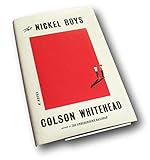
Colson Whitehead’s novel is not a documentary account or a retelling of one specific case. Its fictional Nickel Academy draws on the history of Dozier, a state juvenile institution in Marianna, Florida. The University of Florida’s P.K. Yonge Library of Florida History describes the novel as a fictional presentation of life at Dozier. The novel’s events and characters should therefore be distinguished from the real institution and the testimony and official investigations associated with it. University of Florida Libraries



What was the Dozier School for Boys?
The Florida Industrial School for Boys was established near Marianna in 1900. It was a state juvenile institution, not simply a conventional school, and it operated until June 30, 2011. The campus had segregated dormitories for white and Black inmates. University of Florida Libraries
What happened at the White House?
Former inmates said boys were brutally beaten in a small campus building known as the “White House.” Survivors who came forward became known as the White House Boys. The University of Florida library overview says former inmates began speaking publicly in the 1980s about beatings during the 1950s and 1960s; it also recounts allegations of sexual abuse and boys disappearing. These are survivor accounts and allegations, and should not be confused with findings about specific incidents unless those findings are identified separately. University of Florida Libraries
What’s actually slowing this PC down?
Pick the symptom - the matching free tool is one click away.
#1 Best Overall
What did the federal investigation find?
In December 2011, the U.S. Department of Justice announced findings about Dozier and the Jackson Juvenile Offender Center. Together, the two facilities made up the North Florida Youth Development Center. DOJ said Florida’s oversight system had failed to detect and sufficiently address harmful practices. Its investigation found reasonable cause to believe a pattern or practice of unconstitutional conduct and/or violations of federal law had occurred. U.S. Department of Justice, December 2, 2011
- Failure to protect young people from harm.
- Unconstitutional disciplinary confinement.
- Deliberate indifference to risks of self-injury and suicide.
- Due-process violations.
- Failure to provide necessary rehabilitation.
The department linked these problems to inadequate training, supervision, oversight, and accountability. Its findings concerned institutional conditions and practices; they are not a determination that every allegation or individual death at Dozier was caused by abuse. DOJ stated: “Following a comprehensive investigation, the Justice Department today announced its findings that the state of Florida’s oversight system failed to detect and sufficiently address harmful practices at both the Arthur G. Dozier School for Boys and the Jackson Juvenile Offender Center (JJOC), which together constituted the North Florida Youth Development Center (NYFDC).” The facilities closed on June 30, 2011. U.S. Department of Justice, Office of Public Affairs
What did investigators find about deaths and graves?
A University of South Florida team conducted historical and forensic research into deaths and burials at the former campus. Its final report, submitted in January 2016 to the Florida Cabinet and Governor and the Department of Environmental Protection, aimed to document the burial ground, identify who might have been buried there, and investigate the circumstances surrounding deaths. Florida Institute of Forensic Anthropology and Applied Science, USF University of South Florida Libraries
Published summaries describe several different counts, which refer to different categories or investigations and should not be combined into one total:
| Figure | What it describes | Source and date |
|---|---|---|
| 98 deaths | Boys aged 6–18 whose deaths were documented between 1914 and 1973, as reported in the library overview’s account of the USF investigation. | University of Florida P.K. Yonge Library of Florida History, 2021. Source |
| 51 boys’ remains | Remains found during the four-year excavation, according to the Bob Graham Center’s summary. | University of Florida Bob Graham Center for Public Service, 2020. Source |
| 81 student deaths and 31 on-site burials | Figures the same library overview attributes to an earlier law-enforcement inquiry. | University of Florida P.K. Yonge Library of Florida History, 2021. Source |
These figures describe different records, time periods, or categories. The discovery of remains does not by itself establish how a person died. The available sources do not settle the cause or manner of every individual death, nor the complete present-day status of identification and repatriation. They also do not establish that all recovered remains were identified or that every death resulted from staff abuse.
What is known about the 1914 fire?
The University of Florida library overview says a fire in the white boys’ dormitory in 1914, probably arson, killed two employees and, as far as records could determine, nine students. The student figure carries that source’s qualification; it should not be presented as an unqualified final count. University of Florida Libraries
Independent reader supportYour contribution helps us test, update, and keep practical guides available for everyone.How to understand the evidence
| Evidence | What it can establish | What it does not establish on its own |
|---|---|---|
| Survivor testimony | Former inmates’ accounts of their experiences, including reported beatings and other abuse. | A universal account of every boy’s experience or proof of every allegation. |
| DOJ investigation | Federal findings about institutional practices, harmful conditions, and failures of oversight at the facilities investigated. | The cause of every death or the truth of every individual allegation. |
| USF historical and forensic work | Archival and physical evidence concerning deaths and burials at the campus. | A definitive cause or manner of death for every person, or a complete account of identification and repatriation. |
Further reading
For the fictional work that prompted the question, The Nickel Boys is Colson Whitehead’s 2019 novel, not a nonfiction account. The University of Florida Libraries lists it with ISBN 978-0385537070. Its Dozier collection page also points readers toward nonfiction further reading, including survivor accounts and a teen-oriented account of the forensic investigation. University of Florida Libraries
Quick Recap
Best Value
Product prices and availability are accurate as of the date/time indicated and are subject to change. Any price and availability information displayed on Amazon at the time of purchase will apply.
The Tool Desk
Outbyte PC Repair FREERepair Windows errors before they cause bigger problemsFix Now →Outbyte Driver Updater FREEScan for outdated or missing drivers - takes under a minuteDriver Scan →



