Quick wins for a faster PC:
Clear out junk files and repair common Windows errorsFree Scan →Scan for outdated or missing drivers - takes under a minuteDriver Scan →Repair Windows errors before they cause bigger problemsFix Now →Shivkumar Sharma did not initially want to play the santoor. His father, Uma Dutt Sharma, chose it for him; Sharma’s eventual mastery came through years of practice and experimentation aimed at solving the instrument’s difficulty with sustained notes and classical ornamentation.
Why Sharma was reluctant to learn the santoor
As a child, Sharma had studied vocal music and tabla. According to Susheela Misra’s retrospective account for Scroll.in, his father brought him a santoor after a posting in Srinagar and directed him to learn it. Sharma recalled that he knew the instrument from Kashmiri soofiana mousiqui, where its struck notes seemed too brief for the kind of melodic development he associated with Hindustani classical music.
Misra reports Sharma’s recollection: “To me it seemed an instrument with no potential, and no future.” The article does not specify when the interview behind that quotation took place. His response was reluctance, not an early ambition to make the instrument his own.
What made the santoor difficult to adapt
The santoor is played by striking strings with light mallets called kalams. Misra describes the central musical problem Sharma faced: a struck note fades, while Hindustani classical performance often depends on sustaining and shaping a tone. Smooth transitions between pitches and ornaments such as meend—an expressive glide between notes—were therefore difficult to produce on the instrument.
Do these 3 things before closing this tab:
1Scan for outdated or missing drivers - takes under a minute2Clear out junk files and repair common Windows errors3Fix the driver behind crashes, sound loss and screen glitches#1 Best Overall

- Quality Persian 9 Kharak Santoor
- Tuning: G-Scale 90 * 26.5 * 7 cm
- Walnut wood, Strings: Brass And Bronze
- Net Weight: 2.90 kg (2.80 ~ 3.10 kg)
- It comes with hard case , extra of strings, two hammers and the tuning wrench
That limitation did not mean the santoor could not be used for classical music. It meant Sharma had to find ways to connect or extend its notes and to shape phrases within the instrument’s percussive design.
How practice and experimentation changed his playing
Misra credits sustained riyaz, or disciplined practice, alongside practical experimentation. Sharma worked with his kalams and explored ways of prolonging or linking notes. Over time, these techniques let him build more connected melodic phrases and develop a fuller classical recital approach, rather than treating the instrument’s short attacks as an insurmountable barrier.
Rank #2
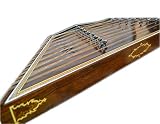
- Instrument: 9 Kharak Sadeghi Goldar Santoor
- Tuning: G-Scale 89 * 28 * 7 cm
- Net Weight: 2.90 kg (2.80 ~ 3.10 kg)
- Weight with Hard Case: 5.30
- It comes with hard case , extra of strings, two hammers and the tuning wrench
The account presents this as an iterative process: close attention to what the instrument could do, repeated practice, and adjustments to the playing technique. It does not claim that a single trick or modification solved every challenge.
How Sharma modified the instrument
Sharma also described changes to the santoor’s construction. In Misra’s article, he is quoted as saying: “I have added 16 more strings to the original hundred, added four more bridges to the existing 25, and reduced the clusters of four strings, to three strings each.” He associated these changes with greater tonal clarity.
The Tool Desk
Outbyte Driver Updater FREEScan for outdated or missing drivers - takes under a minuteDriver Scan →Outbyte PC Repair FREEClear out junk files and repair common Windows errorsFree Scan →Rank #3

- Persian Santoor SAS-302
- Maker: Sadeghi | Model: Char-khat | Tuning: G-Scale
- Body Wood: Walnut | Bridges: Walnut | Strings: Steel and Bronze
- It comes with Hard Case, Hammers (Mezrab), Tuning Key, Extra Strings
Those figures are Sharma’s reported account in Misra’s feature; they are not independently corroborated here. His description concerns the instrument he developed and should not be read as a specification for every Indian classical santoor.
From performances to recognition as a solo instrument
Misra places Sharma’s technical work within a broader performance history. Her account says he played both tabla and santoor at the 1955 Haridas Sammelan, aged 17, and won first prize for tabla at the Inter-University Youth Festival in 1956 and 1958. These dates and details are presented as part of her retrospective narrative.
Rank #4
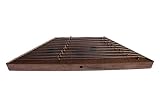
- Tuning: SOL (G) Tuning
- It has 2 stamps ( One of them inside)
- Maker: Hamid Mousavi
- It comes with: Hard case Extra Strings Two hammers Tuning wrench
The article also describes resistance to allocating the santoor a full National Programme on All India Radio, followed by its eventual acceptance as a solo concert instrument. In Misra’s telling, Sharma’s performances and the musical possibilities he developed helped establish the santoor in that role. The account does not show that his instrument changes alone determined its acceptance, or that all musicians shared his initial reservations.
Independent reader supportYour contribution helps us test, update, and keep practical guides available for everyone.What “mastering” the santoor meant
Sharma’s achievement, as this account portrays it, was not simply learning to play an unfamiliar instrument. He addressed a mismatch between the santoor’s struck, quickly fading sound and the sustained phrasing and ornamentation associated with Hindustani classical music. Practice, experimentation with technique, and reported construction changes all formed part of his response.
Best Value

- Minimum height 68 cm - Maximum height 114 cm
- Fits all sizes of Persian Santoors.
That combination helped him turn an instrument he had once considered unsuitable into a vehicle for solo classical performance. The chronology and quotations here follow Susheela Misra’s retrospective Scroll.in feature, published May 15, 2022.
Quick Recap
Product prices and availability are accurate as of the date/time indicated and are subject to change. Any price and availability information displayed on Amazon at the time of purchase will apply.




