Windows Errors? Fix Them Before They Spread
Repair common Windows errors and clear accumulated junk for a smoother, more stable PC - no reinstall needed.Free scan · no reinstallCrashes, No Sound, or Screen Glitches?
Random freezes, missing sound and display glitches usually trace back to one bad driver. Find and replace yours safely.Free scan · under a minuteGeralt of Rivia does not appear to hate elves as a people. The evidence from Blood of Elves, the Witcher Saga novel by Andrzej Sapkowski, points to something narrower: Geralt resists being pulled into political violence, and he judges an immediate threat by what an attacker is doing, not by the attacker’s race. The question assumes a blanket dislike that the available text does not establish.
Why the premise is too broad
Readers who ask why Geralt “doesn’t like” elves usually have a specific scene in mind: an elf who is hostile to him, a faction that clashes with his companions, or a line of dialogue that sounds dismissive. Each of these is a particular encounter. None of them, as far as the evidence shows, amounts to a general statement of contempt for elven people. Treating a handful of hostile encounters as a doctrine goes further than the text does.



The setting: a peace that has ended
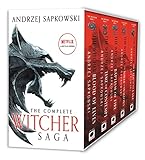
The most reliable framing comes from the publisher. Hachette’s description of Blood of Elves says that humans, dwarves, gnomes, and elves had lived in relative peace, that this peace has ended, and that the races are fighting again. It also places Geralt in a protective role around Ciri as war and prejudice shape the conflict.
That context matters for reading Geralt’s behaviour. In a world where every people has reason to distrust the others, a witcher who is hired by many sides and loyal to none will be wary of everyone. The prejudice is part of the landscape he moves through; the publisher copy describes it as something the characters live inside, not as a conclusion Geralt has adopted on his own.
The Tool Desk
Outbyte Driver Updater FREEFix the driver behind crashes, sound loss and screen glitchesFind Drivers →Outbyte PC Repair FREEClear out junk files and repair common Windows errorsFree Scan →#1 Best Overall
The threat line: what it shows and what it does not
The line most often cited in discussions of this question is an excerpt attributed to Geralt: “What do I care if it’s a bandit or an elf who runs me through with an arrow from behind some bushes?” It appears in unofficial hosted excerpts rather than in a publisher edition, so check the wording and punctuation against the edition you own before quoting it.
If the wording holds, the line is revealing because of what it ranks. The danger is an attacker hiding in cover with a bow. The attacker’s identity is treated as secondary. Geralt is describing a threat he has to handle, and he places an elf and a bandit in the same category because both can kill him from the bushes. That is pragmatism about an enemy, not a statement about elves.
The line does not say Geralt would welcome an elf who is not attacking him, and it does not settle how he feels about elven society. Those questions need the full novel and the scenes around the line, which a single excerpt cannot supply.
The publisher tagline is not Geralt’s view
Hachette’s series page includes the sentence “The only good elf, it seems, is a dead elf.” This is promotional copy describing the hostile world of the novel. It is not dialogue, not an author’s statement, and not an expression of Geralt’s opinion. It is useful as evidence of the atmosphere the books create, and it is a common source of the impression that the saga treats elves as enemies. Attributing it to Geralt or to Sapkowski would misrepresent the source.
Rank #3
The television profile: adaptation, not book canon
The official television series site describes Geralt as conflicted about political unrest, deeply protective of loved ones and innocents, and someone who would rather avoid violence where possible. That is a fair summary of the character as the series presents him, and it fits the pattern in the books: he is reluctant to take sides in conflicts that are not his own.
The profile belongs to the television adaptation. It can support a reading of Geralt’s temperament, but it should not be cited as proof of what the novels say, and differences between the books and the series should be kept in view.
Rank #4
How to weigh each source
| Source | What it can support | What it cannot support |
|---|---|---|
| Hachette description of Blood of Elves | The novel’s setting: a broken peace, renewed fighting, prejudice, and Geralt’s protective role around Ciri | Scene-by-scene readings of Geralt’s private attitudes |
| Hachette series page tagline | The hostile tone of the world | Any claim about what Geralt believes, or what Sapkowski intended |
| Unofficial excerpt with the bandit-or-elf line | Geralt’s pragmatic response to an attacker, if the wording is confirmed | A general rule about how he treats elves |
| Official television series profile | How the series characterises Geralt’s reluctance toward political violence | Canon for the novels or the games |
No interview or direct authorial statement explaining why Geralt would or would not like elves has been located. Anyone who presents Sapkowski as having supplied a definitive answer is going beyond what is documented.
Independent reader supportYour contribution helps us test, update, and keep practical guides available for everyone.Hostility to a faction is not hostility to a people
The distinction that resolves most of the apparent contradictions is between a faction or an armed individual and an entire people. Geralt’s wariness toward a particular group, or his refusal to join a war that is not his, is consistent with the evidence. Extending that wariness to every elf requires a step the text does not take.
Quick wins for a faster PC:
Scan for outdated or missing drivers - takes under a minuteDriver Scan →Clear out junk files and repair common Windows errorsFree Scan →Fix the driver behind crashes, sound loss and screen glitchesFind Drivers →When you read the novel, look at three things: who is attacking Geralt and why, whether he has a reason to think the threat is political rather than personal, and how he responds when an elf is not a danger to him. Those scenes show his stance more clearly than any single line.
For the full context, read Blood of Elves itself. A publisher description and a television profile can frame the question, but the answer lies in the way Geralt acts across the book, which is where the evidence for his pragmatism and neutrality is strongest.
Quick Recap
Product prices and availability are accurate as of the date/time indicated and are subject to change. Any price and availability information displayed on Amazon at the time of purchase will apply.




