Recommended Free Tools
A half note is written as an open oval notehead with a stem. Its duration is half that of a whole note and twice that of a quarter note. In 4/4 time, when a quarter note gets one beat, a half note lasts two beats. In British English, a half note is called a minim.
How a half note looks
Look for an unfilled oval notehead with a stem. A whole note also has an open notehead, but no stem; a quarter note has a filled-in notehead and a stem.


A half rest is a separate symbol for silence lasting the same relative duration as a half note. It is not a half note with a modified notehead.
How long a half note lasts
Note values describe durations in relation to one another: one half note equals two quarter notes, and two half notes equal one whole note. In the familiar 4/4 example, a whole note spans four quarter-note beats, so a half note spans two. The NSW Department of Education’s simple note values lesson and the University of Massachusetts resource Fundamentals of Theory: Unit 4 describe this relative value.
#1 Best Overall
To hear the 4/4 relationship, tap four even pulses. Hold one pitch across pulses one and two, then another across pulses three and four. The two sustained notes fill the same four pulses as one whole note. You can also compare one half note with two quarter notes: both occupy two quarter-note units.
Why “two beats” depends on the meter
A half note does not have a fixed duration in seconds, and it is not always two beats. Its proportional relationship to other note values stays the same, but the meter and its beat unit determine how musicians count it. In 4/4, with the quarter note as the beat, count a half note across “one, two.” In other meters, identify the beat unit before assigning a beat count; in 2/2, for example, the half note may itself be the beat unit. Open Music Theory’s Rhythmic Values explains how meter affects the beat, while the University of Massachusetts resource cautions against treating a note name as a fixed beat count.
Rank #2
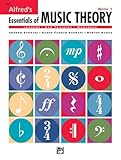
- An all-in-one music theory course designed for students of any age — whether listeners or performers — who want a solid understanding of the language of music
- Covers foundational concepts including staff, notes, pitches, clefs, time signatures, note values, dynamics, flats, sharps, and whole and half steps across 25 concise lessons
- Combines reading and writing exercises with ear-training support (CDs sold separately) and unit reviews to reinforce learning and test knowledge retention
- Compatible with optional computer software featuring randomized drilling and scorekeeping for interactive, self-paced study
- Part of a complete product line including Teacher's Answer Keys, Flash Cards, Double Bingo games, and Reproducible Teacher's Activity Kits for studio and classroom use
Dotted half notes and ties
A dot adds half of the note’s original value. A dotted half note therefore lasts one half-note value plus one quarter-note value. In 4/4 when a quarter note gets the beat, that totals three beats. See Open Music Theory’s explanation of rhythmic values and Music Theory’s Rhythm Basics.
A tie joins two notes of the same pitch so their durations continue as one sustained sound; it can carry the sound across a barline. A slur is different: it curves between notes of different pitches. Open Music Theory covers dots, ties, and rests in its rhythmic values guide.
Free tools Windows power users keep installed
One-click scans. No signup required.
Quick Recap
Rank #4

- Format: Book & 2 CDs
- Category: Textbook - General
- Contributors: By Andrew Surmani, Karen Farnum Surmani, and Morton Manus
- Pub Date: 8/2004
- Series: Essentials of Music Theory
Product prices and availability are accurate as of the date/time indicated and are subject to change. Any price and availability information displayed on Amazon at the time of purchase will apply.




