The numbered Final Fantasy series has 16 mainline games, running from Final Fantasy I (original release 1987) to Final Fantasy XVI (2023). Played in original release order, they are listed below. Most of them tell separate stories, so you can start with any entry, but a few do continue directly from one another, and those are worth knowing before you begin.
The 16 numbered games in release order
The years below are each game’s original release year. They are not launch dates in every region or on current platforms. The sequence follows the numbered history on Square Enix’s official Final Fantasy Portal, and the years match a June 2026 Popverse guide to the series. PlayStation’s 2025 Final Fantasy guide also confirms the count of 16 numbered mainline titles.
| # | Preview | Product | Price | |
|---|---|---|---|---|
| 1 |

|
FINAL FANTASY RESONANCE - PlayStation 5 | $49.99 | Buy on Amazon |
| 2 |

|
FINAL FANTASY I-VI Collection Anniversary Edition - 2024 (NSW) | $45.99 | Buy on Amazon |
| 3 |
|
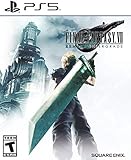
FINAL FANTASY VII REMAKE INTERGRADE | $32.45 | Buy on Amazon |
| Order | Game | Original release year |
|---|---|---|
| 1 | Final Fantasy (I) | 1987 |
| 2 | Final Fantasy II | 1988 |
| 3 | Final Fantasy III | 1990 |
| 4 | Final Fantasy IV | 1991 |
| 5 | Final Fantasy V | 1992 |
| 6 | Final Fantasy VI | 1994 |
| 7 | Final Fantasy VII | 1997 |
| 8 | Final Fantasy VIII | 1999 |
| 9 | Final Fantasy IX | 2000 |
| 10 | Final Fantasy X | 2001 |
| 11 | Final Fantasy XI | 2002 |
| 12 | Final Fantasy XII | 2006 |
| 13 | Final Fantasy XIII | 2009 |
| 14 | Final Fantasy XIV | 2010 |
| 15 | Final Fantasy XV | 2016 |
| 16 | Final Fantasy XVI | 2023 |
Older North American numbering
Two entries were numbered differently in older North American releases. The original Final Fantasy IV appeared there as Final Fantasy II, and the original Final Fantasy VI appeared as Final Fantasy III. Square Enix’s history page records both. When you cite older packaging, guides or forum threads, give the original Roman numeral first and the North American title in parentheses.
Do you need to play them in order?
No. PlayStation’s guide states that the mainline stories have no direct connections except clearly defined sequels. Each numbered game has its own setting and cast, so there is no single chronology that runs through the whole line. Release order is simply the order the games were made and shows how the series developed. Two sets of entries are the exceptions.
Free tools Windows power users keep installed
One-click scans. No signup required.
#1 Best Overall
- Cinematic pixel art - What if FINAL FANTASY had continued to push the limits of pixel art? The first FINAL FANTASY to join the HD‑2D lineup, FINAL FANTASY RESONANCE delivers a visually striking experience that feels both nostalgic and new, enhanced by dynamic camera angles and pixelized 3D models that make every moment more dramatic and immersive.
- A return to the familiar - A classic RPG adventure unfolds in a world filled with beloved FINAL FANTASY elements—airships, crystals, espers and moogles woven into the fabric of the story, and so much more.
- Strategic turn-based battles - Exploit enemy weaknesses to stagger them—breaking their defenses to seize extra turns and gain the upper hand with powerful Resonance attacks in cinematic battles shaped by smart choices.
- FINAL FANTASY legends - Bolster your team with Visions, echoes of beloved FINAL FANTASY characters, who fight alongside you with unique skills and abilities for deep party customization.
- Hours of side content to discover - The world is full of secrets, including the wandering swordmaster Gilgamesh, a Colosseum with deadly monsters and rewards to match, the Chamber of Arms with formidable foes sealed within legendary weapons, and a showdown with Ultima Weapon.
Final Fantasy X and X-2
PlayStation identifies Final Fantasy X-2 as a direct sequel to Final Fantasy X. Play X first, then X-2.
Final Fantasy VII, its remake and Rebirth
Square Enix describes Final Fantasy VII Remake as a standalone first game in a multi-part project. It covers the party’s escape from Midgar and goes deeper into those events. PlayStation identifies Final Fantasy VII Rebirth as the second installment. The project is a reworked, multi-part retelling rather than a visual refresh of the full original. If you want the story in the form it first appeared, play the 1997 original before the remake project. That is a suggested order, not a requirement set by the publisher.
Rank #2
- The games that inspired a generation come to life once more, in the ultimate 2D pixel remaster!
- These games are newly developed remaster editions based on the original titles. Some of the changes and additional elements found in other remakes of these games are not included.
- The Anniversary Edition includes a pixel character sticker sheet.
- Universally updated 2D pixel graphics, including the iconic FINAL FANTASY character designs created by Kazuko Shibuya, the original artist and current collaborator.
- Beautifully rearranged soundtrack in a faithful FINAL FANTASY style, overseen by original composer Nobuo Uematsu.
The franchise also includes prequels and spin-offs connected to VII. They are not part of the numbered list, and this guide does not map them.
What “in order” can mean
- Release order: the 16-game table above. This is the clearest answer for a newcomer who wants to see how the series developed.
- Story chronology: not established across the numbered line. A chronology only makes sense inside a sub-series, such as X followed by X-2, or the VII project.
- Whole franchise: PlayStation’s 2025 guide says the franchise has well over 100 games once remakes, spin-offs and sub-sequels are counted. Square Enix’s history page also covers titles outside the numbered line, including Final Fantasy Tactics, Crystal Chronicles, World of Final Fantasy and Stranger of Paradise. A complete franchise-wide list needs an agreed cutoff, such as numbered games only, or numbered games plus their direct sequels.
Choosing a starting point
Two practical factors matter most: how connected a game is to the others, and what kind of game it is. Final Fantasy XIV is an MMORPG, while the other numbered entries are single-player games. PlayStation’s guide also notes that the series has changed its combat systems over time, so the feel of play differs from one entry to the next. Availability varies by title, platform and region, so check your platform’s store or the publisher’s store before buying.
Rank #3
- Immerse yourself in the city of Midgar like never before, with improved textures, lighting, and background environments
- Players can switch between two game modes: "Graphics Mode" prioritizes 4K high-resolution graphics; "Performance Mode" prioritizes smooth action at 60 frames per second
- Capture and share your memorable moments from the game with a fully customizable “Photo Mode”
- Players can enjoy immersive battles by using the DualSense PlayStation 5 controller with its haptic feedback integration
- Play the brand-new episode featuring Yuffie and experience new combat and gameplay additions
Playing the first six games together
If you want to play the first six entries as a group, the Final Fantasy I–VI Pixel Remaster collection is one option. PlayStation describes it as six remastered 2D standalone adventures with modernized interfaces, rearranged soundtracks and extras. Each of those six games stands on its own, so you do not need to play them in any particular order. Confirm which platforms and editions are currently offered before purchasing.
Quick Recap
Product prices and availability are accurate as of the date/time indicated and are subject to change. Any price and availability information displayed on Amazon at the time of purchase will apply.




