Outdated Drivers Are Slowing You Down
One free scan finds every outdated or missing driver and matches the right update for your exact hardware.Free scan · exact hardware matchWindows Errors? Fix Them Before They Spread
Repair common Windows errors and clear accumulated junk for a smoother, more stable PC - no reinstall needed.Free scan · no reinstallA common seven-part teaching framework for understanding music includes rhythm, melody, harmony, dynamics, timbre, texture, and form. These terms help listeners describe how music is organized and how its parts create an effect. The number seven is a useful convention, not a universal or exhaustive list: some frameworks count pitch separately or include style and articulation.
The seven elements of music
Each element draws attention to a different feature of a piece. They often work together: a change in rhythm, for example, may also alter the texture or help mark a new section.

1. Rhythm
Rhythm is how sounds and silences are organized in time. It includes patterns of duration and accent—the pulses, beats, and pauses that shape how music moves.
2. Melody
Melody is a sequence of pitches heard as a musical line, such as a tune you might hum. Pitch means how high or low a sound is.
#1 Best Overall

3. Harmony
Harmony concerns pitches heard together, often as chords, and how they relate to a melody. It can support a tune, create tension, or give a passage a particular character.
4. Dynamics
Dynamics describe how loud or soft music is, as well as changes in loudness. A gradual increase or sudden shift in volume can shape a listener’s sense of energy or emphasis.
Rank #2
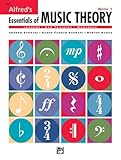
- An all-in-one music theory course designed for students of any age — whether listeners or performers — who want a solid understanding of the language of music
- Covers foundational concepts including staff, notes, pitches, clefs, time signatures, note values, dynamics, flats, sharps, and whole and half steps across 25 concise lessons
- Combines reading and writing exercises with ear-training support (CDs sold separately) and unit reviews to reinforce learning and test knowledge retention
- Compatible with optional computer software featuring randomized drilling and scorekeeping for interactive, self-paced study
- Part of a complete product line including Teacher's Answer Keys, Flash Cards, Double Bingo games, and Reproducible Teacher's Activity Kits for studio and classroom use
5. Timbre
Timbre, sometimes called tone color, is the quality that helps distinguish one voice or instrument from another—even when both produce the same pitch. It is why a note played on a flute sounds different from the same note sung by a person.
6. Texture
Texture describes how many musical parts are heard and how they relate. A piece might feature one unaccompanied melody, a melody supported by accompaniment, or several independent lines sounding together.
Rank #3

- Designed For Students Of Any Age.
- Provides A Better Understanding Of The Language Of Music.
- Learn The Essentials With Lessons And Exercises.
- Offers A Review Section At Each Ending To Test Your Knowledge.
7. Form
Form is the way a piece is organized into sections. Repetition and contrast help listeners recognize when musical ideas return or when the music moves into something new.
Why do some lists include pitch as a separate element?
Frameworks draw the boundaries differently. Some treat pitch as part of melody; others name it separately, and may also include style or articulation. For example, NAfME’s discussion of the 2014 U.S. music standards lists pitch, rhythm, harmony, dynamics, timbre, texture, form, and style/articulation, while other NAfME resources list melody without a separate pitch category. See NAfME’s discussion of Black music aesthetics and the standards, its intermediate-level small instrumental ensemble resource, and its accomplished-level composition and theory resource. The difference is a matter of how a teaching framework groups and counts concepts, not a sign that one list is universally correct.
Independent reader supportYour contribution helps us test, update, and keep practical guides available for everyone.How to use the elements when listening
Use the terms as prompts for noticing what is happening in a piece, rather than as a checklist that every tradition or performance must fit. You might listen for a repeating rhythmic pattern, follow the melody, notice how other pitches support it, or identify changes in timbre and texture. Then consider how those choices contribute to expressive intent and the piece’s social, cultural, or historical context. NAfME’s composition and music theory responding unit connects musical elements with expressive intent in context.
The seven-part list is a practical starting point, but it does not capture every way people make, deliver, or understand music. NAfME’s discussion of the standards notes their grounding in Western European aesthetics and calls for broader attention to Black musical aesthetics and musical practices; the elements remain useful, but should not be treated as an exhaustive account of every musical tradition. Read NAfME’s discussion for that context.
Best Value

- Format: Book & 2 CDs
- Category: Textbook - General
- Contributors: By Andrew Surmani, Karen Farnum Surmani, and Morton Manus
- Pub Date: 8/2004
- Series: Essentials of Music Theory
Where to explore the framework further
NAfME describes the 2014 U.S. music standards as voluntary and flexible, and provides curriculum units and adaptable assessments. Its Standards overview is a free starting point for educators and curious listeners; no particular instrument or tool is needed to learn the basic concepts.
Quick Recap
Product prices and availability are accurate as of the date/time indicated and are subject to change. Any price and availability information displayed on Amazon at the time of purchase will apply.




